Pool refurbishment and restoration

Swimming pool refurbishment. Find the fault, repair what needs it.

A pool does not always need every tile removed. A careful assessment can identify local defects, preserve sound work and help the operator compare a targeted repair with a larger refurbishment.

What refurbishment covers

Restoring tiled pools across the UK.

Swimming pool refurbishment, restoration and renovation all mean much the same thing to most owners: bringing a tired or failing pool back into sound, safe and good-looking condition without building a new one. For a tiled pool, that work is in the tiles, the joints and the background behind them, and that is what PoolRevive does.

We are the pool side of TileTrust Ltd, a Warrington tiling business with more than 25 years in the trade, and we refurbish commercial and private pools across the UK. A typical refurbishment brings together several of these, in the order the pool needs them:

We work on tiled pools. Liner, fibreglass and painted pools, pool plant and leak detection are specialist trades of their own, and we will tell you if your pool needs one of them.

01 · Tap testing

Checking for hollow-sounding tiles

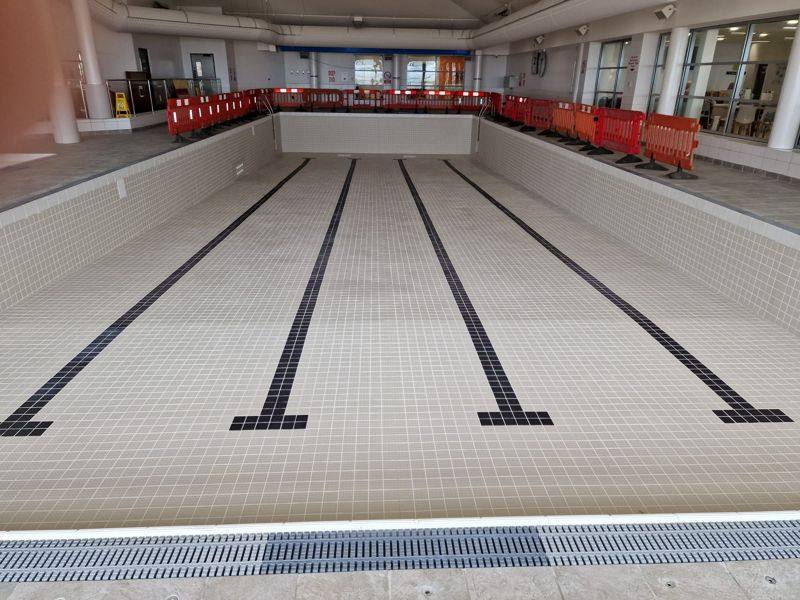
When the pool is safely drained and accessible, we can check tiled areas methodically with a light tap, comparing the sound of neighbouring tiles and noting changes across the surface. A different, dull or drummy sound can be a warning sign of a void or a possible loss of bond. We map the areas so the findings can be discussed against visible cracks, loose edges, grout condition and the pool’s history.

  • A tap test is a screening check, not proof on its own that a tile has failed.
  • Tile size, substrate, membranes and the original fixing method can all affect the sound.
  • Where the cause or boundary is uncertain, a selective lift or test opening may be needed to inspect the adhesive bed and background.
02 · Targeted tile repair

Cut out and replace damaged tiles

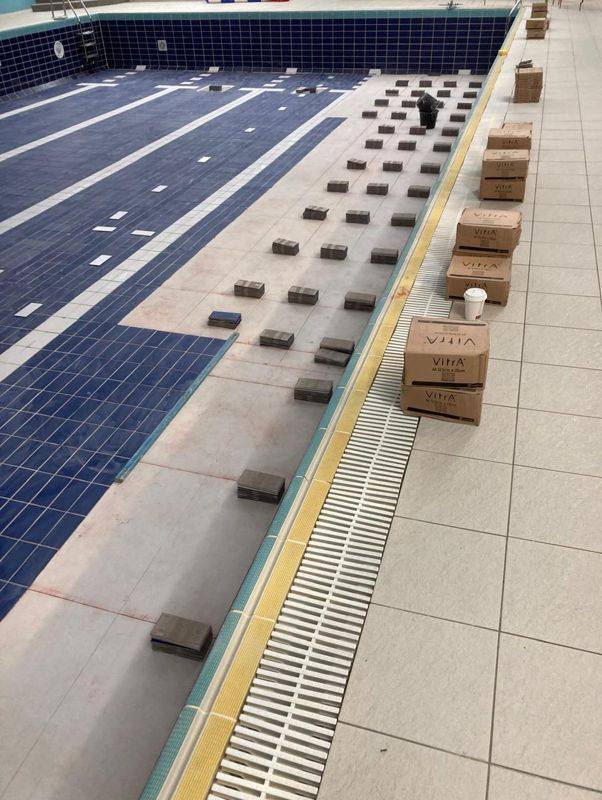
Loose, cracked or missing tiles around pool floors, walls, steps, corners, channels and outlets can often be repaired locally when the surrounding work and substrate are sound. We carefully remove the failed tile and grout, protect adjoining tiles, take out weak or contaminated bedding and inspect the area before rebuilding it.

  • Repair boundaries are set by what is found beneath the tile.
  • Replacement tile, bedding and joint materials are selected for the location and pool conditions.
  • Movement and perimeter joints are kept as flexible joints; they are not simply filled with rigid grout.
03 · Background repairs

Repairing local render or uneven areas

If the background is damaged, loose or out of plane, it needs suitable preparation before new tiles go back. We remove unsound material and rebuild the repair to a stable, tile-ready finish using a system chosen for the substrate, thickness and whether the area will be immersed. For suitable pool-wall render repairs, ARDEX AM 100 is one example listed by its manufacturer for swimming pool use. Product choice and application must follow the current technical data sheet and the site specification. See common pool problems for how we deal with debonded render and weak screed.

04 · Regrouting

Restore joints without defaulting to a full retile

Where tiles remain securely bonded and the underlying system is suitable, worn grout can sometimes be removed to the required depth and replaced. The joint is cleaned and prepared, filled fully and finished neatly to the tile face. Regrouting is not a fix for loose tiles, failed render, structural movement or a leaking pool shell; those issues need to be assessed separately.

Choosing the grout system

A grout system chosen for each surface.

We use pool-suitable epoxy grouts, but not necessarily the same epoxy on every project. Tile type and surface, joint width and depth, the pool’s use and the installation conditions all affect which product will perform and finish well.

Epoxy grout

We choose the pool-suitable epoxy that best fits the tile surface, joint size and site conditions. Correct preparation, full compaction, careful wash-down and full cure are essential.

Cementitious grout

Available for pool surrounds and, if preferred, for pool interiors where the selected grout and specification are suitable. We explain the expected care and maintenance before work starts.

Movement joints

Flexible movement joints are assessed and renewed with a suitable sealant system where required; they are not replaced with rigid epoxy or cement grout.

The right product for each job

We choose a pool-suitable epoxy grout to suit the tiles, joint size and pool conditions, so we don’t always use the same product on every job. Preparation and repair products are chosen separately for the background.

Epoxy may offer a longer-lasting, easier-to-maintain joint in demanding pool conditions, but it cannot strengthen a loose tile or repair movement, waterproofing or structural problems. Cement grout may need a different maintenance routine. No grout has a guaranteed lifespan; preparation, installation, pool chemistry and maintenance all matter.

Cleaning and final checks

The right chemical clean. Thorough extraction.

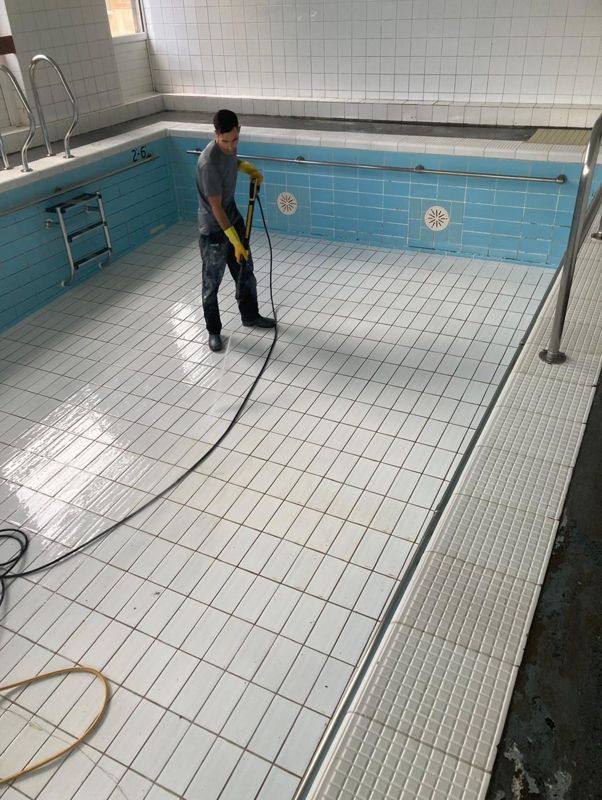
The chemical clean is chosen for the job: removing old grout before new joints go in, lifting calcium scale and rust marks, cleaning the pool surround or giving the whole pool a general clean. The correct product for that job cleans without harming the existing grout, and a small test area confirms it first.

Assess and protect

Identify scale, staining, dirt or residue; check the surface and protect sensitive fittings and adjacent finishes.

Clean to suit

Apply an appropriate cleaner and controlled agitation for the condition and surface, observing the required dilution and contact time.

Rinse and wet-vac

Lift and remove loosened soil, rinse water and slurry with suitable wet-vacuum equipment; repeat as needed to remove residue.

Inspect the finish

Check tile faces and joints for residue or haze, and confirm that grout is clean, full and evenly finished before handover.

For new epoxy joints, cleaning is carried out within the product’s working window and with the wash method specified by its manufacturer. Refill, chemical treatment and return to service wait until the system has cured in line with its current product instructions and the pool operator’s requirements.

Protecting your operating schedule

We know every closure day matters.

A closed pool affects lessons, memberships, bookings and revenue. We work hard to meet agreed dates and plan the sequence carefully: confirm the scope, materials, access and working areas in advance; coordinate with the operator; keep progress under review; and flag hidden defects or programme risks promptly.

Refurbish where it makes sense

Keeping sound tiles and repairing the affected areas can avoid the cost and disruption of stripping and replacing everything. Regrouting or local repair may give a pool more useful service life, but the right option depends on the shell, waterproofing, tile bond, background, movement joints and water conditions. We explain the findings and quote the agreed scope before work begins. Cure and refill times are built into the programme rather than skipped to meet a date.

Product references are examples, not a blanket specification. Suitability, mixing, application, cleaning, cure and return-to-service timing are checked against the latest manufacturer technical data and the requirements for each pool.

Good to know

Swimming pool refurbishment questions

All questions
What does swimming pool refurbishment include?

For a tiled pool it usually means an inspection with tap testing, a chemical clean, repairs to loose, cracked or missing tiles and the background behind them, regrouting or epoxy regrouting, renewed movement joints and, where tiles cannot be saved, partial or full retiling. The scope is agreed after the inspection.

Is refurbishment the same as restoration or renovation?

People use the words interchangeably. We use refurbishment to mean bringing an existing tiled pool back into sound, safe and good-looking condition, without rebuilding the pool shell.

Do you refurbish commercial pools as well as private ones?

Yes. We work on leisure centre, school, hotel, health club, holiday park and hydrotherapy pools as well as private pools at home, across the UK from our base in Warrington.

Do you refurbish liner, fibreglass or painted pools?

No. PoolRevive works on tiled pools. For a liner, fibreglass or painted pool, a specialist in that finish is the right choice.

How much does swimming pool refurbishment cost?

It depends on the size of the pool, the condition of the tiles, joints and background, any hidden defects found once the pool is drained, and the site. We quote the agreed scope after an inspection rather than publishing prices.

How long does a pool refurbishment take?

It depends on the scope. A clean and regrout is shorter than tile and background repairs or a retile, and draining, cure times and a controlled refill all need to fit in. We agree a programme before the pool is drained.

Start with an estimate

Tell us about your pool.

Send a few details and we’ll get back to you to understand the job. Photos of the tiles, grout and problem areas help us a lot, and you can add them below.

We aim to reply within two working days.

What affects the estimate?

  • The pool area and which surfaces need work
  • Joint size and the grout or tiles involved
  • The condition of the tiles, joints and background
  • Access to the pool and the working areas
  • Preparation, cleaning and any repairs needed first
  • The programme and when the pool can close

Photos of the tiles, grout and problem areas. Large photos are made smaller before sending.