
University swimming pools, shared by athletes, students and the public.
University pools are some of the busiest in the country: performance squads, students, staff, swimming lessons and public sessions often share the same water. We carry out tile repairs, regrouting and surround work on these pools, planned around the training and competition calendar.
Where British swimmers train
Some of the most important pools in British swimming sit on university campuses. Aquatics GB runs Performance Centres at Loughborough University and the University of Bath, alongside its centre at Manchester Aquatics Centre, and the University of Stirling is home to many of the swimmers on Aquatics GB's World Class Programme. Other university pools support performance squads, triathletes and water polo teams.
University pools also feed student competition. BUCS (British Universities and Colleges Sport) runs Short Course, Long Course and Team Swimming Championships every year, and recent Short Course and Long Course Championships have been held at Ponds Forge International Sports Centre in Sheffield.
The same water is usually shared with students, staff and the local community through lane swimming, lessons and lifeguard courses. When a university pool closes for repairs, it affects all of them at once, so the work has to be right first time and finished when promised.
Why these pools need to stay open and safe
Every week a university pool is shut is a week lost for the athletes, students and local swimmers who share it, and there are fewer pools to go to elsewhere. The Local Government Association reports that, according to Sport England's Active Places data, more than 1,200 swimming pools have shut since 2010 (a net loss of around 500), and that almost a quarter of local authorities are already short of the water space they need. Sport England's Active Lives survey for 2023-24 found that 30% of children in Year 7 cannot swim 25 metres competently, confidently and proficiently.
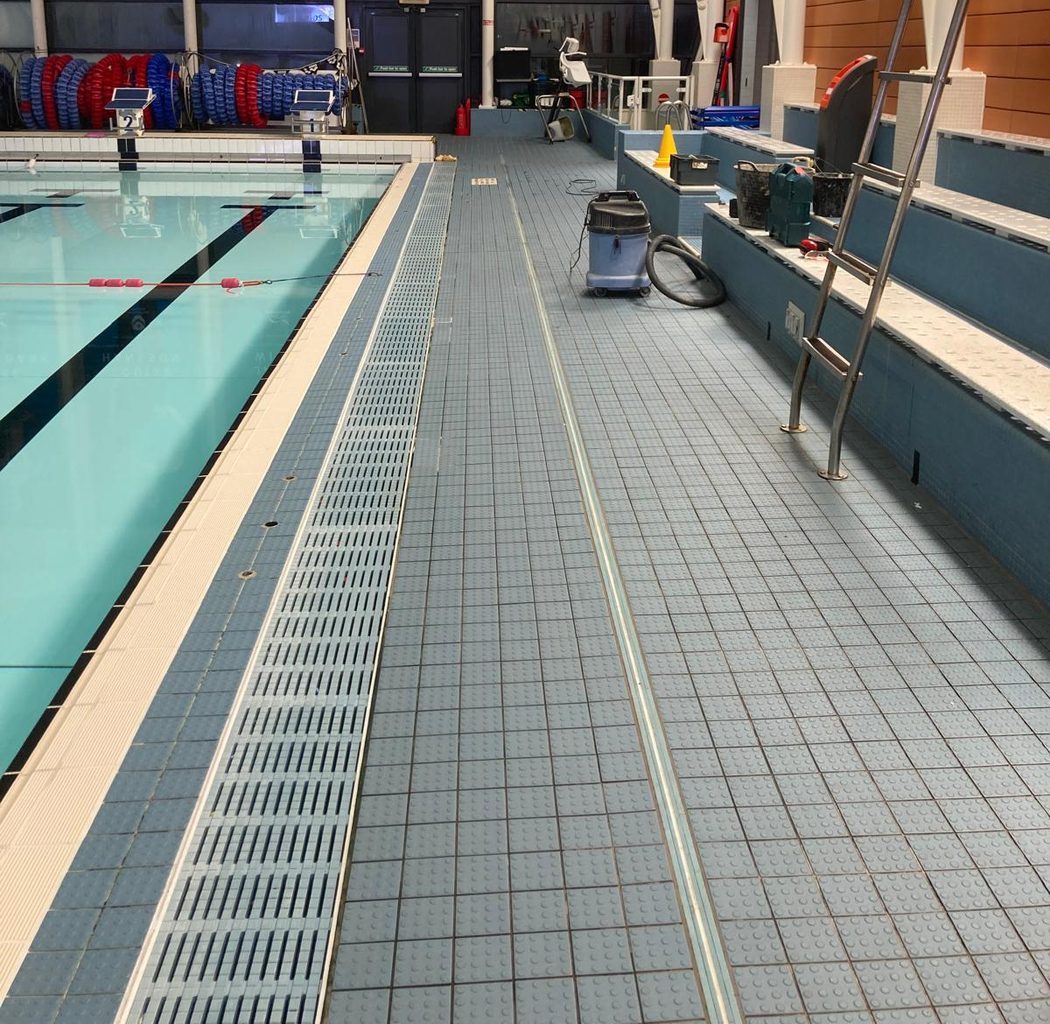
Safety comes first. A loose, cracked or missing tile on the surround, a broken pool edge tile or a damaged starting block plinth is a cut and trip hazard for people in bare feet. Pool operators manage these risks under the HSE's guidance HSG179, Health and safety in swimming pools, and dealing with small defects early is usually quicker than waiting until they need a longer closure.
Because these pools are needed all the time, night works are sometimes an option: where the pool and the job allow it, repairs can be carried out after the pool closes for the day, so it stays in use. We agree what can be done at night with the pool's own team before work starts.
Tiling and repairs for university pools
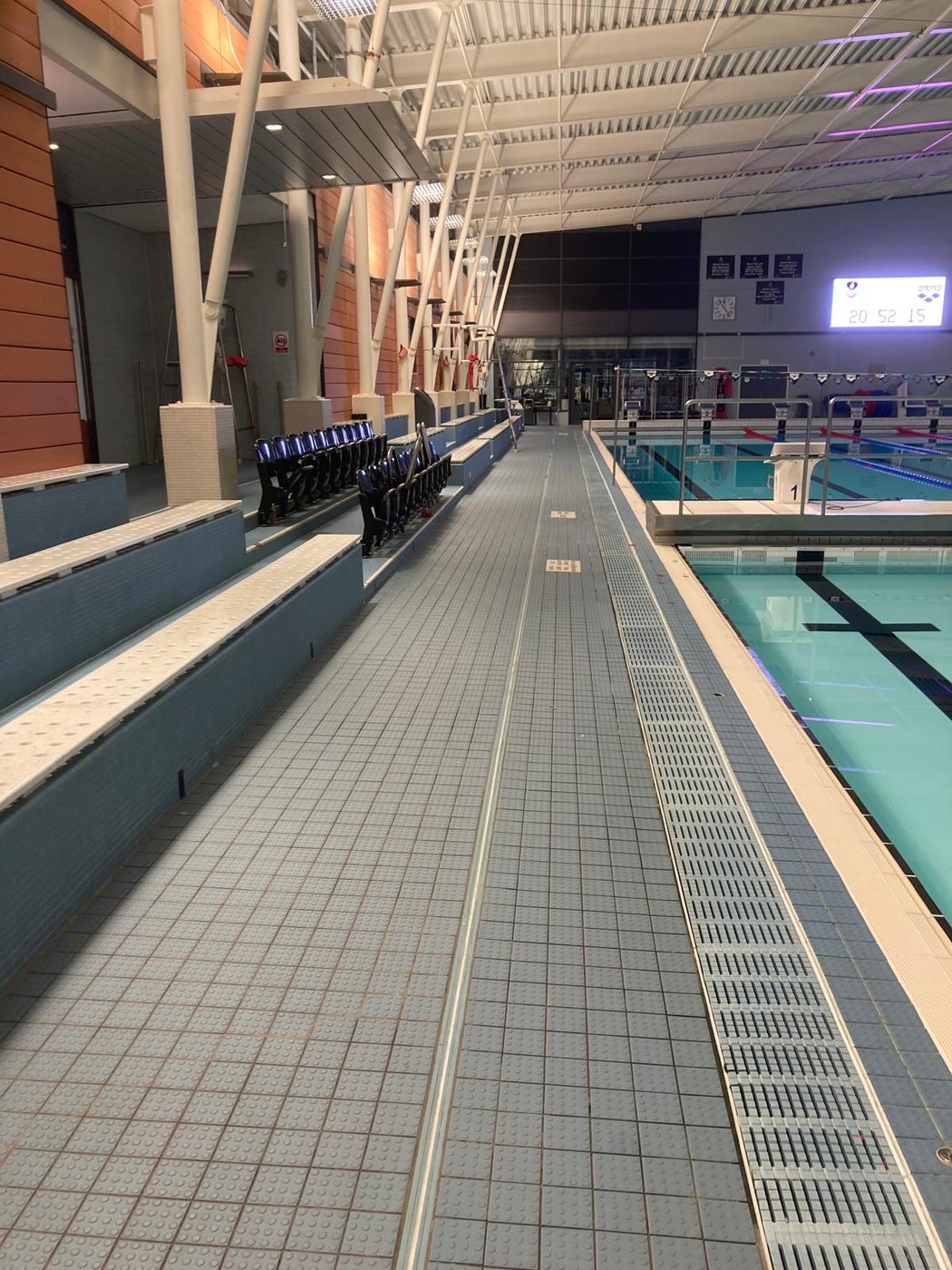
Our work is the tiled finish of the pool tank, surround and seating areas: finding what has failed, repairing it with materials suited to the pool, and leaving the surface sound and easy to keep clean.
We start with an assessment of the tiles and joints, including a tap test for hollow tiles, so the estates team knows whether the pool needs local repairs, a regrout or something larger before anyone books a closure.
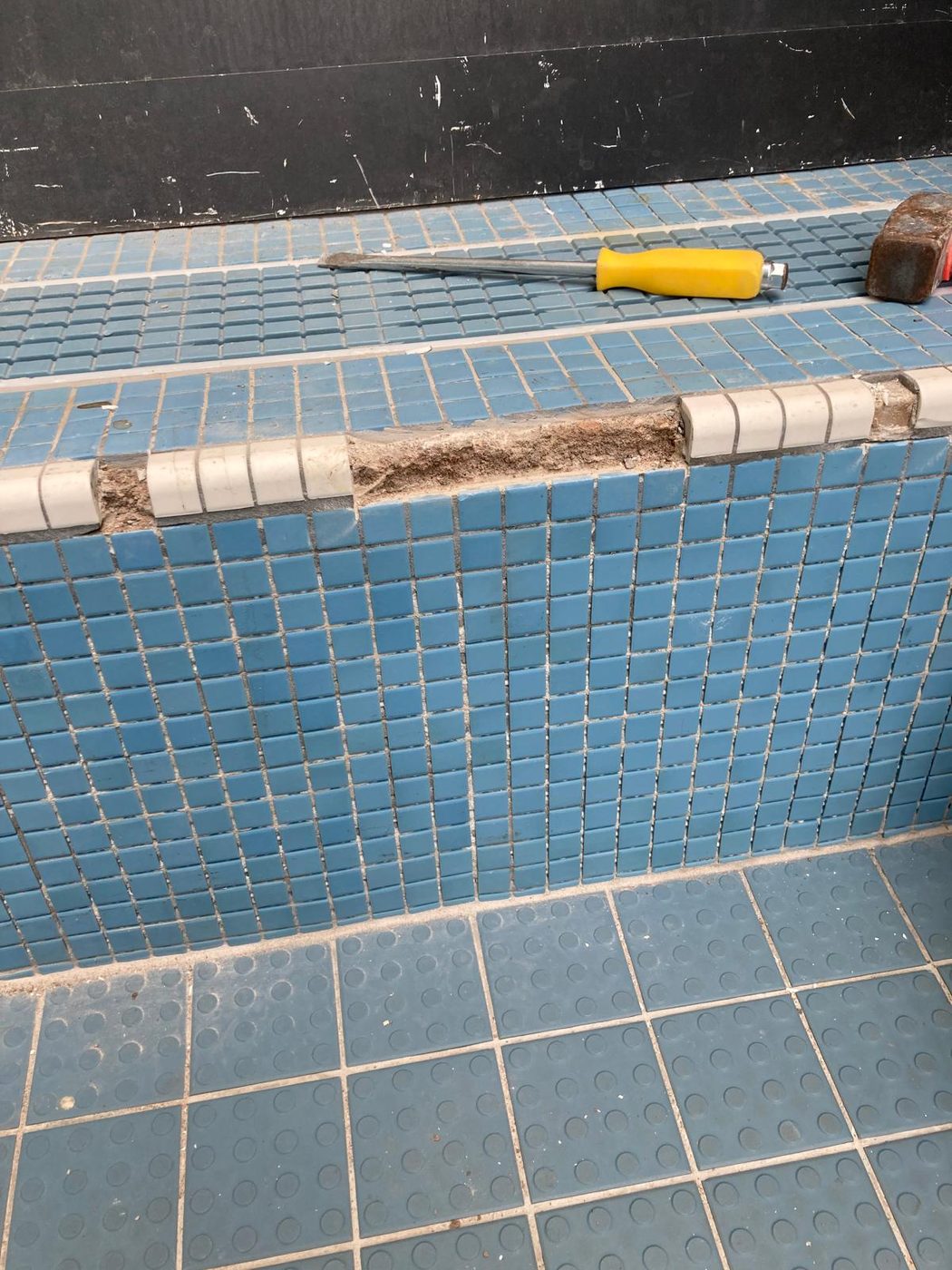
- Pool edge, backer and mosaic edge tile repairs
- Pool surround floor repairs
- Repairs to the tiled plinths that the starting blocks are fixed to
- Poolside seating area repairs
- Patch screed repairs before retiling
- Patch tiling and full or partial regrouting, including epoxy regrouting
The details that matter in a racing pool
A competition pool has details a leisure pool may not: lane markings and target lines on the floor and end walls, tiled plinths for the starting blocks, and end walls that swimmers push off thousands of times a week. Loose or hollow tiles in these areas need attention quickly.
Pool length matters too. World Aquatics rules allow a 50m pool with touch panels to be no shorter than 50.000m and no more than 10mm longer, and British records can only be set in a pool that holds a pool length certificate. Retiling or rebuilding an end wall can change the measured length, so before any end-wall work we agree with the operator whether the pool holds a certificate and whether it will need re-measuring afterwards.
Where a pool has a movable floor or a boom to split it into two 25m pools, we plan access and protection around them with the pool's own team.
University pools we have worked on
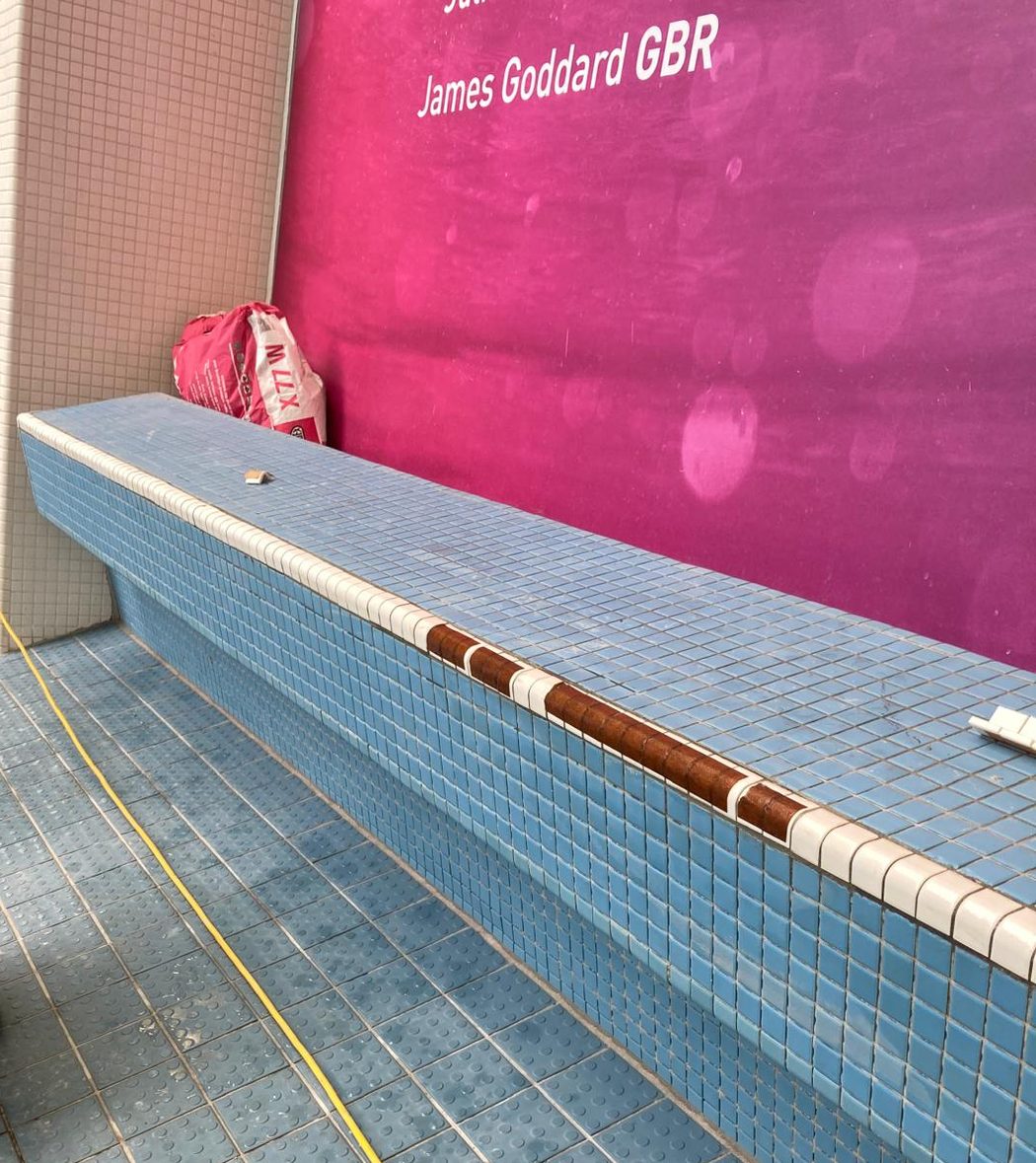
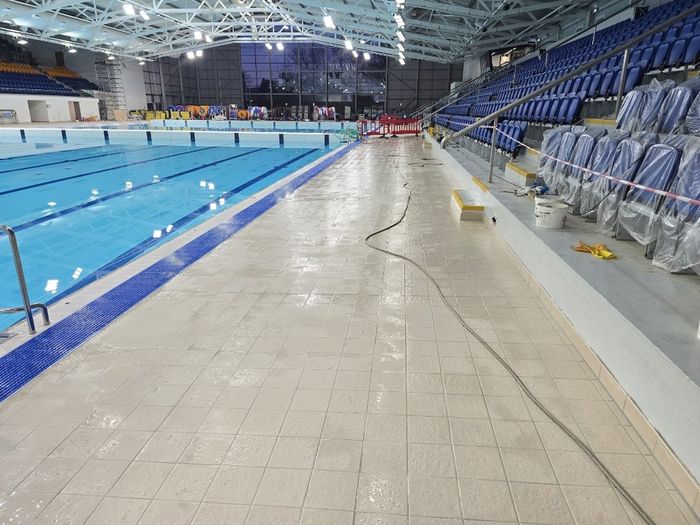
Before PoolRevive was formed, our team worked on university pools as self-employed subcontractors. At Loughborough University's 50m pool, home of one of the Aquatics GB Performance Centres, we returned three times for repair work: the poolside seating area, mosaic edge pieces, the pool surround floor, pool edge and backer tiles, patch screed repairs and grouting.
At The Edge, the University of Leeds pool, we carried out two visits of repair work: pool surround repairs, pool edge and backer tiles, the starting block plinths, screed repairs, patch tiling and grouting. Our team has also worked at the University of Stirling pool and at Ponds Forge International Sports Centre in Sheffield, and on pools at colleges and independent schools, including Wrekin College and Merchant Taylors' School in Northwood.

Closures planned around the calendar
University pools rarely have a quiet week. We plan works with the estates and sport teams around term dates, training blocks and competitions, and agree the scope, sequence and curing times before the pool is drained.
Short closures for local repairs can often fit into a holiday period. Larger work, such as a full regrout or edge rebuild, is easier to schedule when it is planned a season ahead.
We regularly work away from home, and we work late and at weekends when needed to keep a job moving. Where a university can offer it, we can stay on site in student accommodation, as our team did at Loughborough University, so we are close to the job for early starts and late finishes.
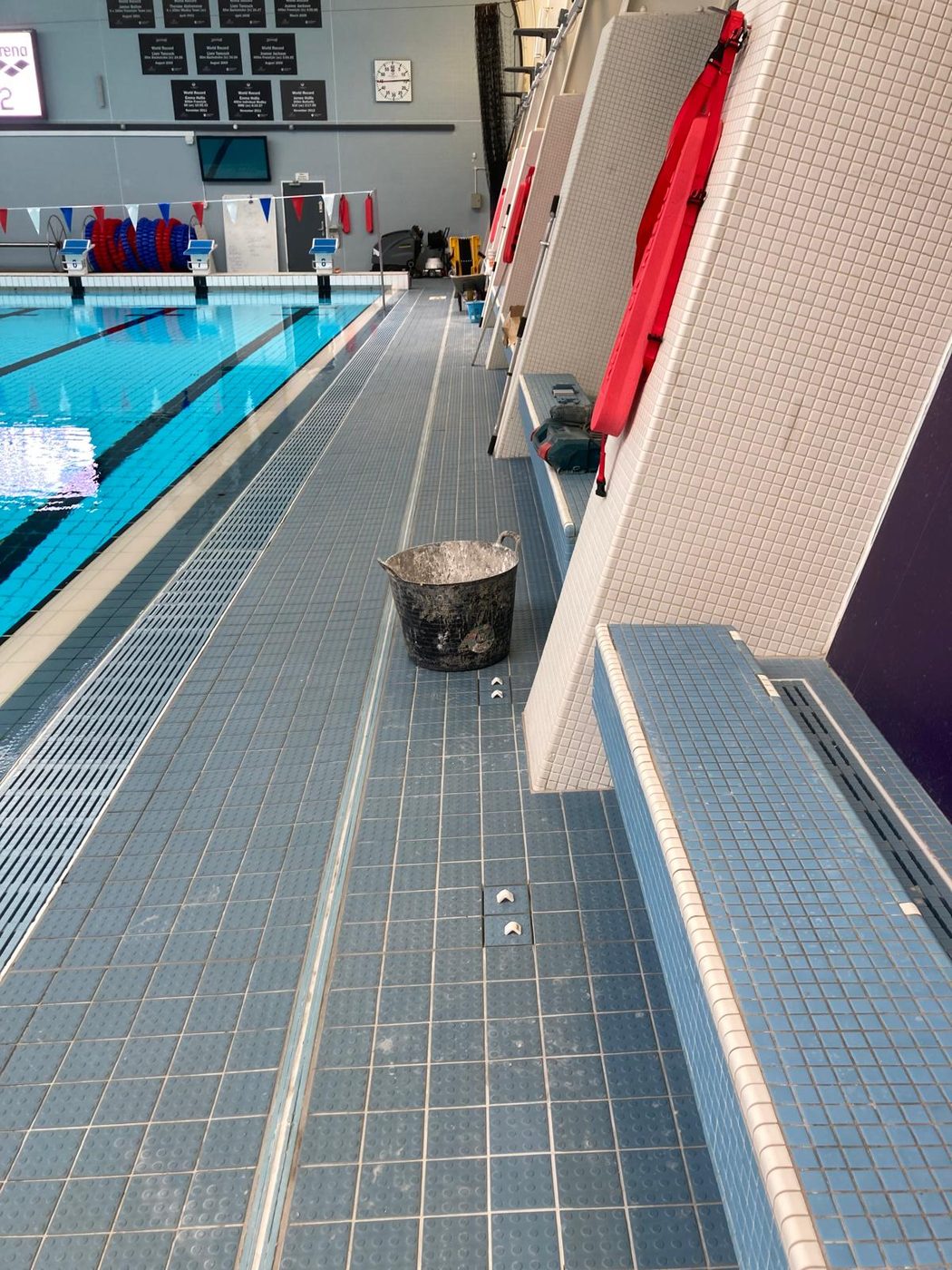
University, college and competition pools
Previous projects: carried out by Dan and his Dad as self-employed subcontractors, before PoolRevive was formed. About our experience
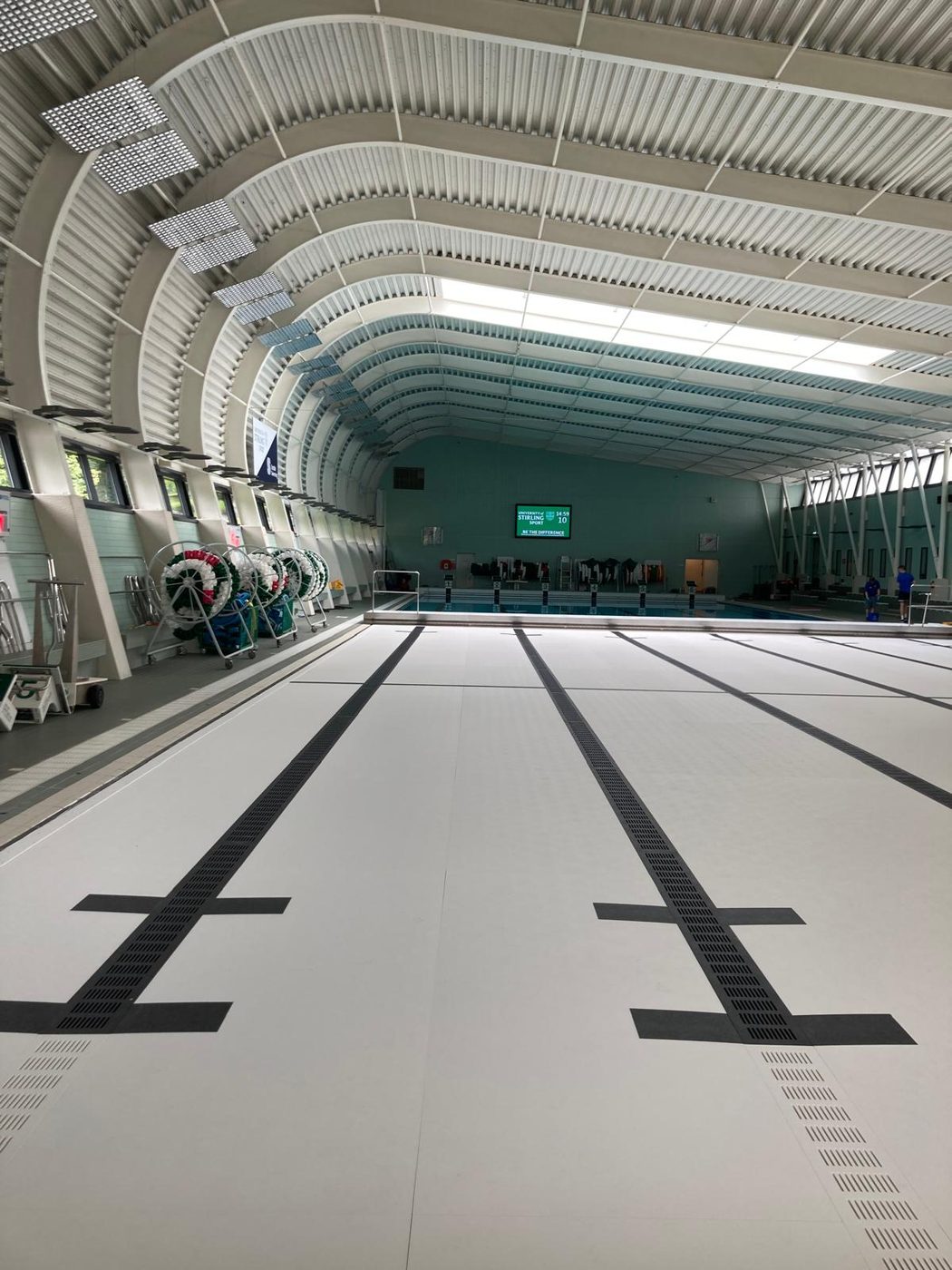

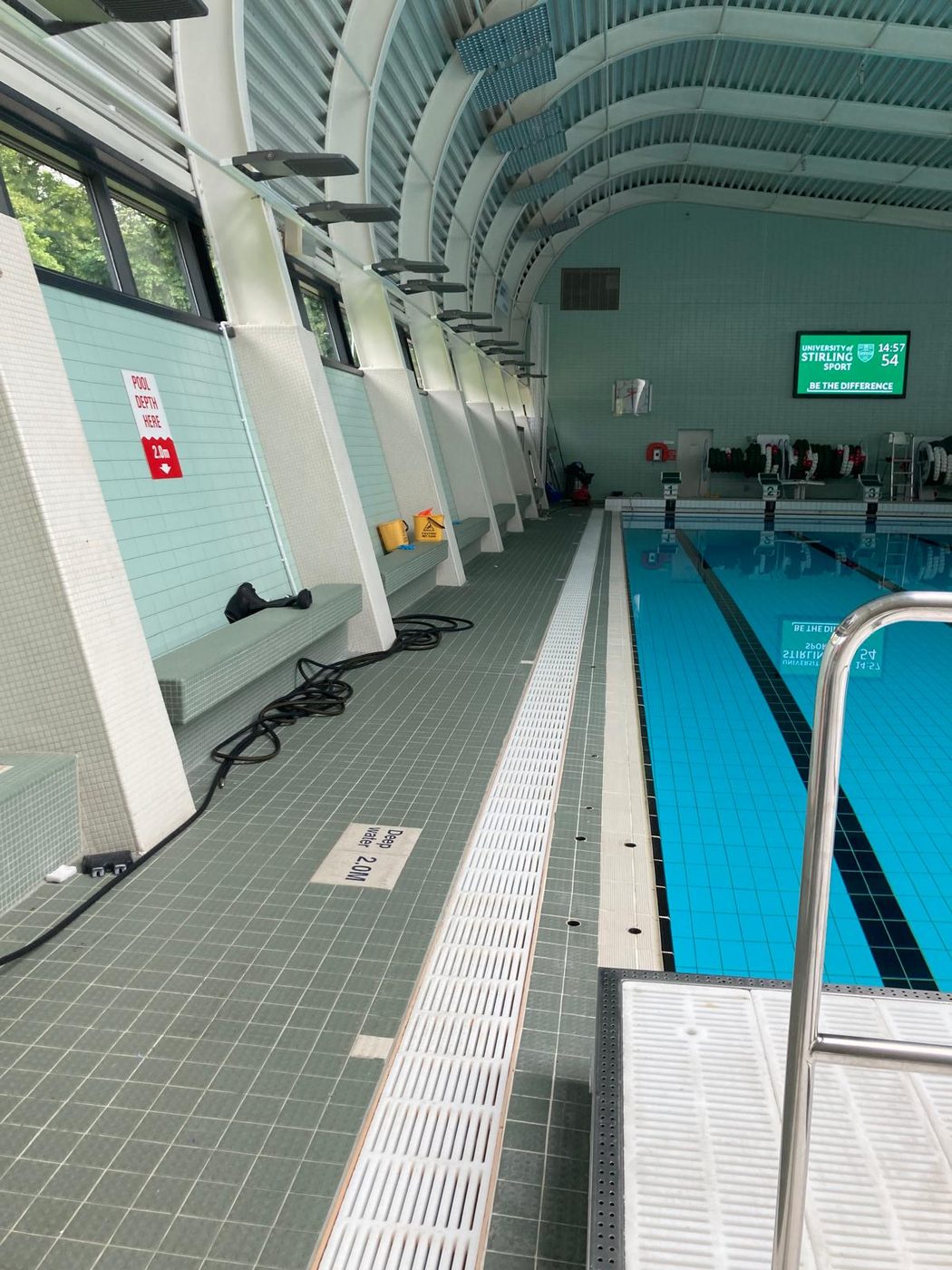
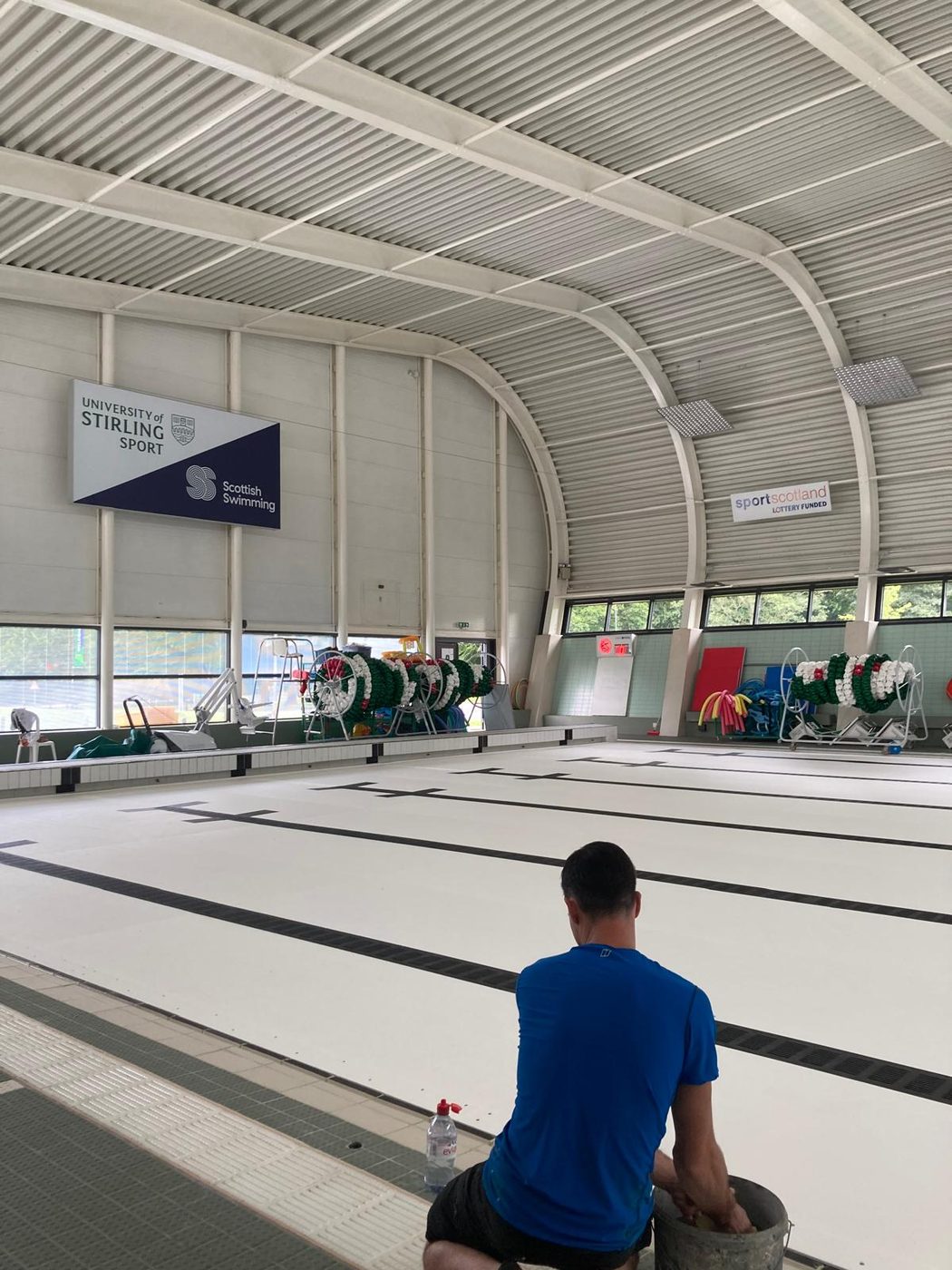


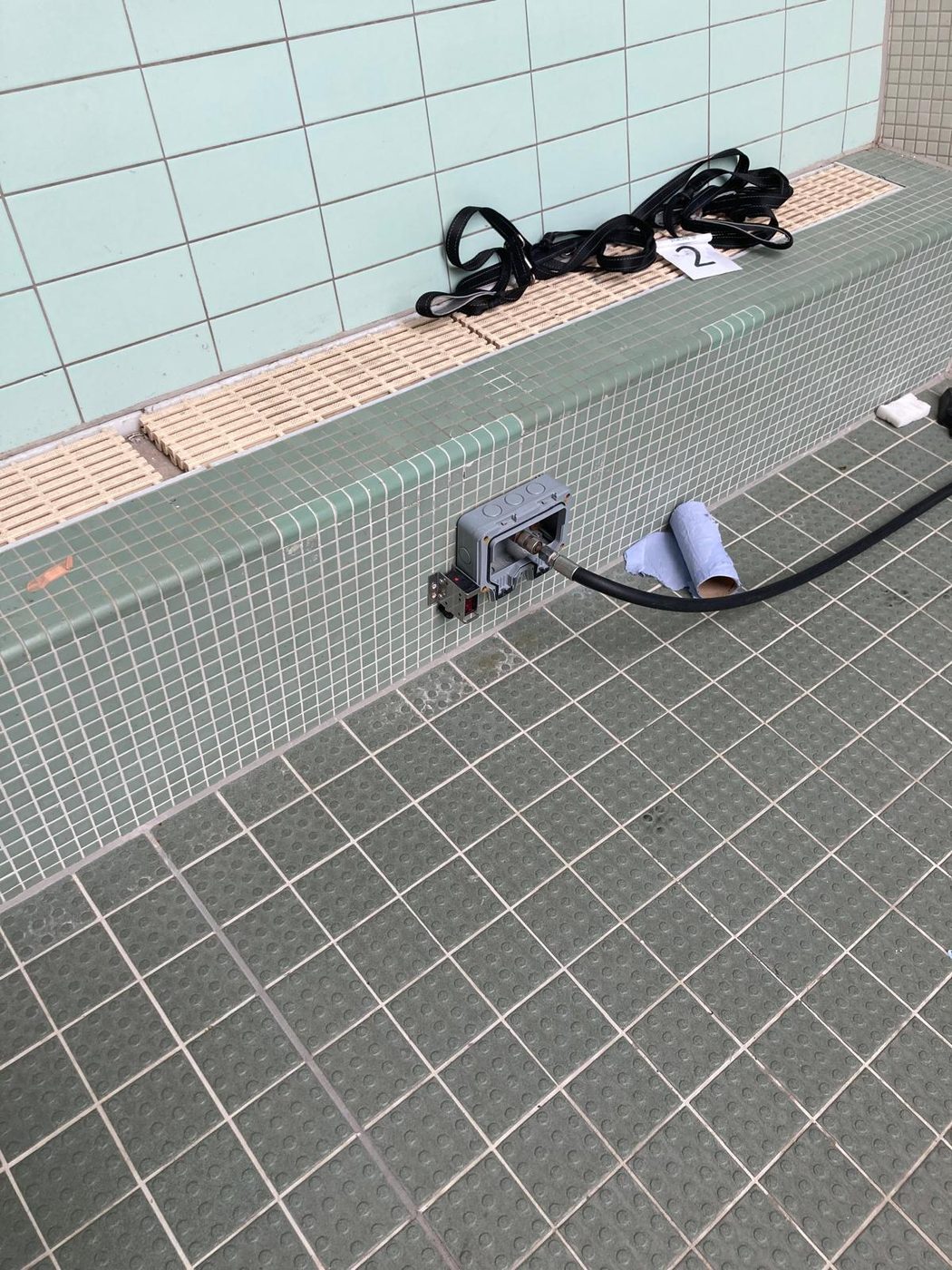


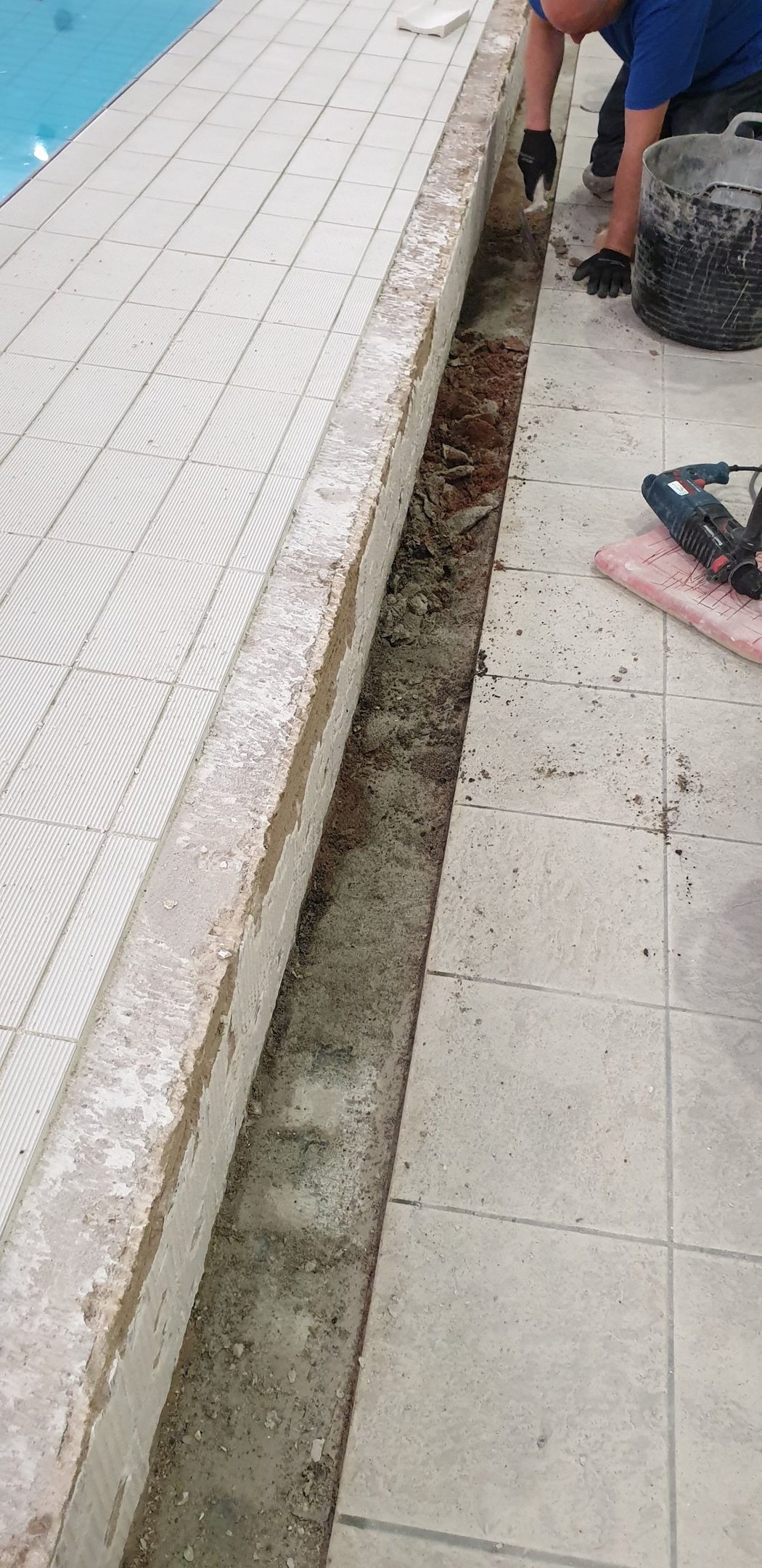


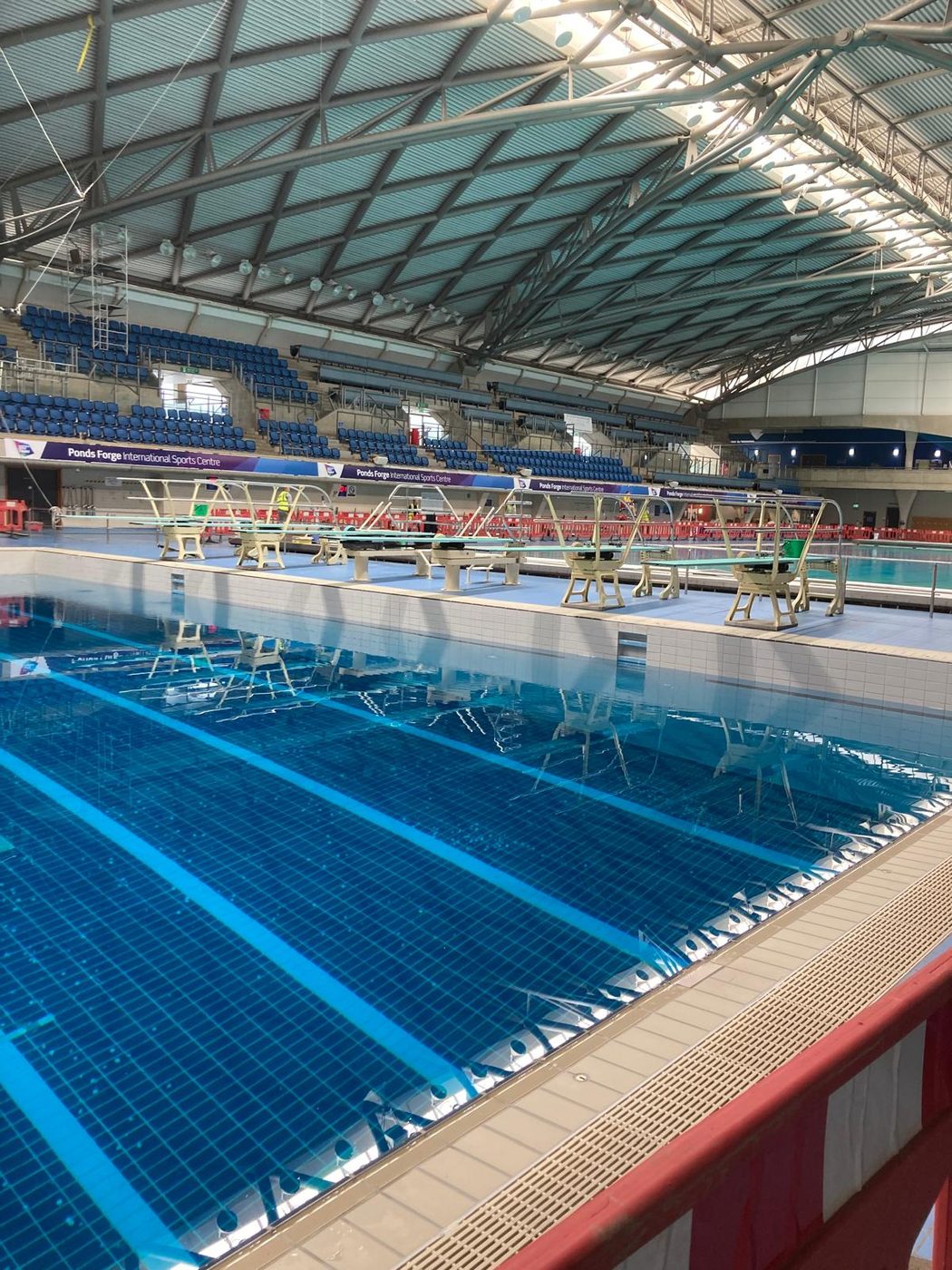
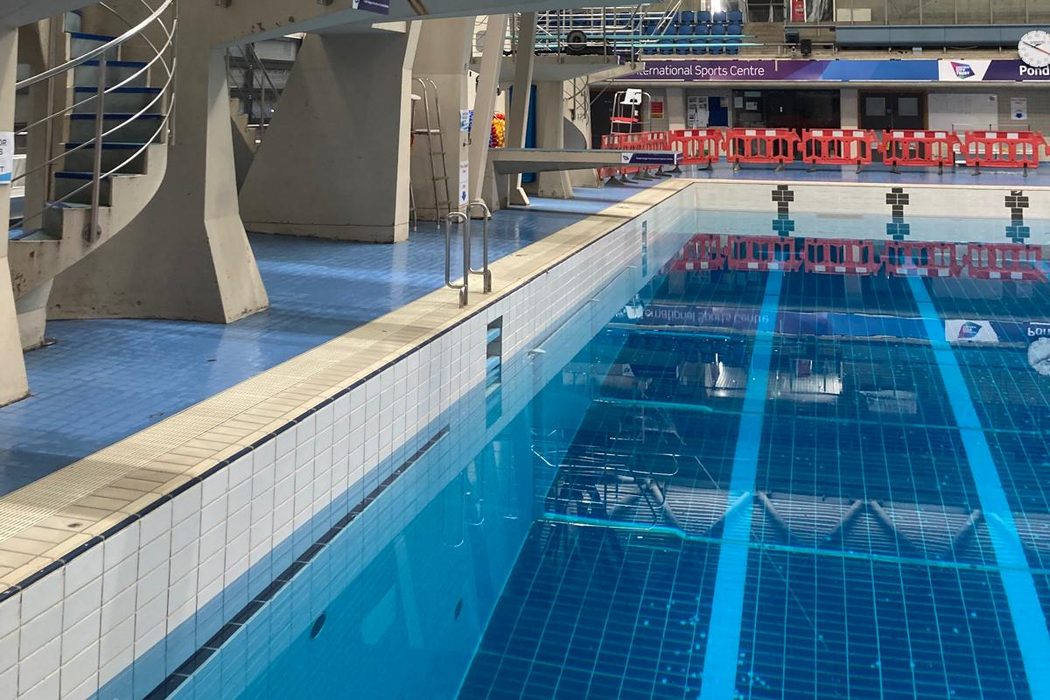


Our team’s previous pool experience
Previous projects: carried out by Dan and his Dad as self-employed subcontractors, before PoolRevive was formed. About our experience

Can you work around our performance squad's training?
We plan the scope, sequence and dates with your sport and estates teams before work starts. Local repairs can often fit into a short closure, and larger work is best booked a season ahead.
Can you work at night so the pool stays open?
Sometimes. Where the pool and the type of repair allow it, we can work after the pool closes for the day so it stays in use. We agree what is possible with your team at the planning stage.
Can you stay on campus during the works?
Yes, where the university can offer accommodation. Our team has stayed on site in student accommodation before, at Loughborough University, which keeps us close to the job for early starts and late finishes.
Why fix small tile defects quickly?
A loose, cracked or missing tile is a cut and trip hazard for people in bare feet, and small defects tend to spread. Repairing them early usually needs a shorter closure than leaving them.
Will tiling work affect our pool length certificate?
It can if end walls are retiled or rebuilt. We raise this before any end-wall work so you can decide with your governing body contact whether the pool needs re-measuring afterwards.
Do you work on the starting block plinths and edges?
Yes. Tiled plinths, pool edge and backer tiles and mosaic edge pieces are among the most common repairs we carry out in competition pools.
Do you advise on water treatment or plant?
No. Water treatment and plant sit with the operator and their specialists. We focus on the tiles, grout, screed and surfaces.
Tell us about your pool.
Send a few details and we’ll get back to you to understand the job. Photos of the tiles, grout and problem areas help us a lot, and you can add them below.
What affects the estimate?
- The pool area and which surfaces need work
- Joint size and the grout or tiles involved
- The condition of the tiles, joints and background
- Access to the pool and the working areas
- Preparation, cleaning and any repairs needed first
- The programme and when the pool can close
- Call Dan07434 005958
- Call Jay07966 002106
- WhatsApp DanMessage on WhatsApp
- Emailinfo@poolrevive.co.uk
- Where we workBased in Warrington, Cheshire.
Pool projects across the UK.