Outdoor tiles have to get through winter.
External tiling around outdoor pools and on terraces has to cope with frost, rain, sun and temperature swings that indoor tiling never sees. We tile and repair outdoor pool surrounds and terraces with frost-resistant materials, proper drainage falls and movement joints suited to exposed conditions.
Why frost damages outdoor tiles
Water that gets into or behind a tile can freeze, expand and push the tile off or crack it. Repeated freeze and thaw through a British winter can turn small weaknesses into failures.
Two things help most: tiles with very low water absorption that the maker states are suitable for external frost exposure, and full adhesive coverage so there are no voids behind the tile for water to collect in.
The adhesive and grout matter as much as the tile. They should be suitable for external use and frost exposure, and the base beneath should be sound, cured and able to shed water rather than hold it.
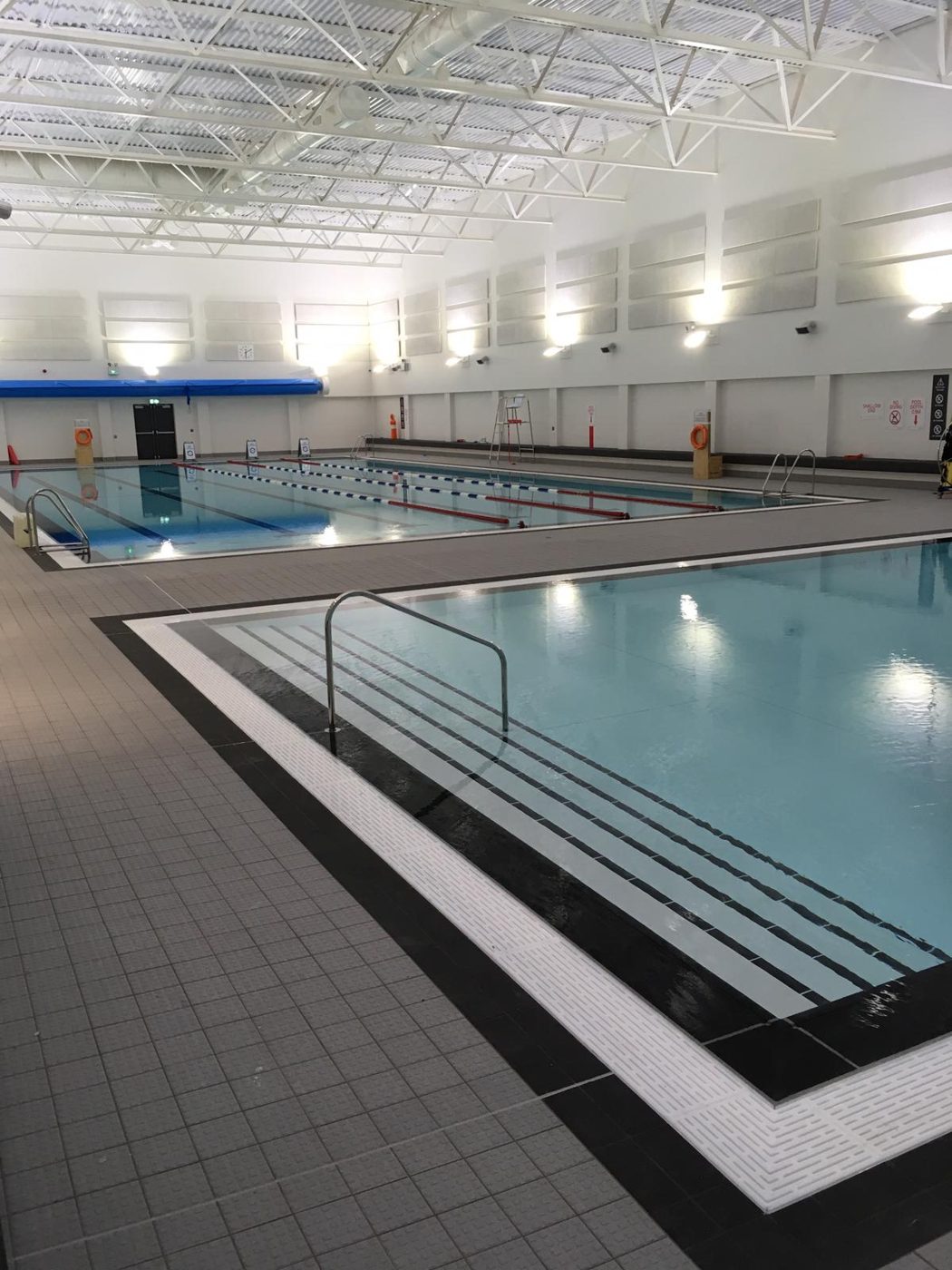
Falls that shed rain and splash
An outdoor surround needs to clear rainwater as well as splash. Falls are usually designed to carry surface water to channels or drains, and often away from the pool so that dirt and leaves are not washed into the water.
The falls must be built into the base beneath the tiles. We check levels and drainage outlets before tiling and raise any concerns, because tiling over a base that holds water leaves the finish exposed to frost damage.
- Levels checked before fixing starts
- Drainage channels and outlets detailed cleanly
- Water kept from ponding against walls and thresholds
- Junctions with the pool edge planned to suit the drainage design
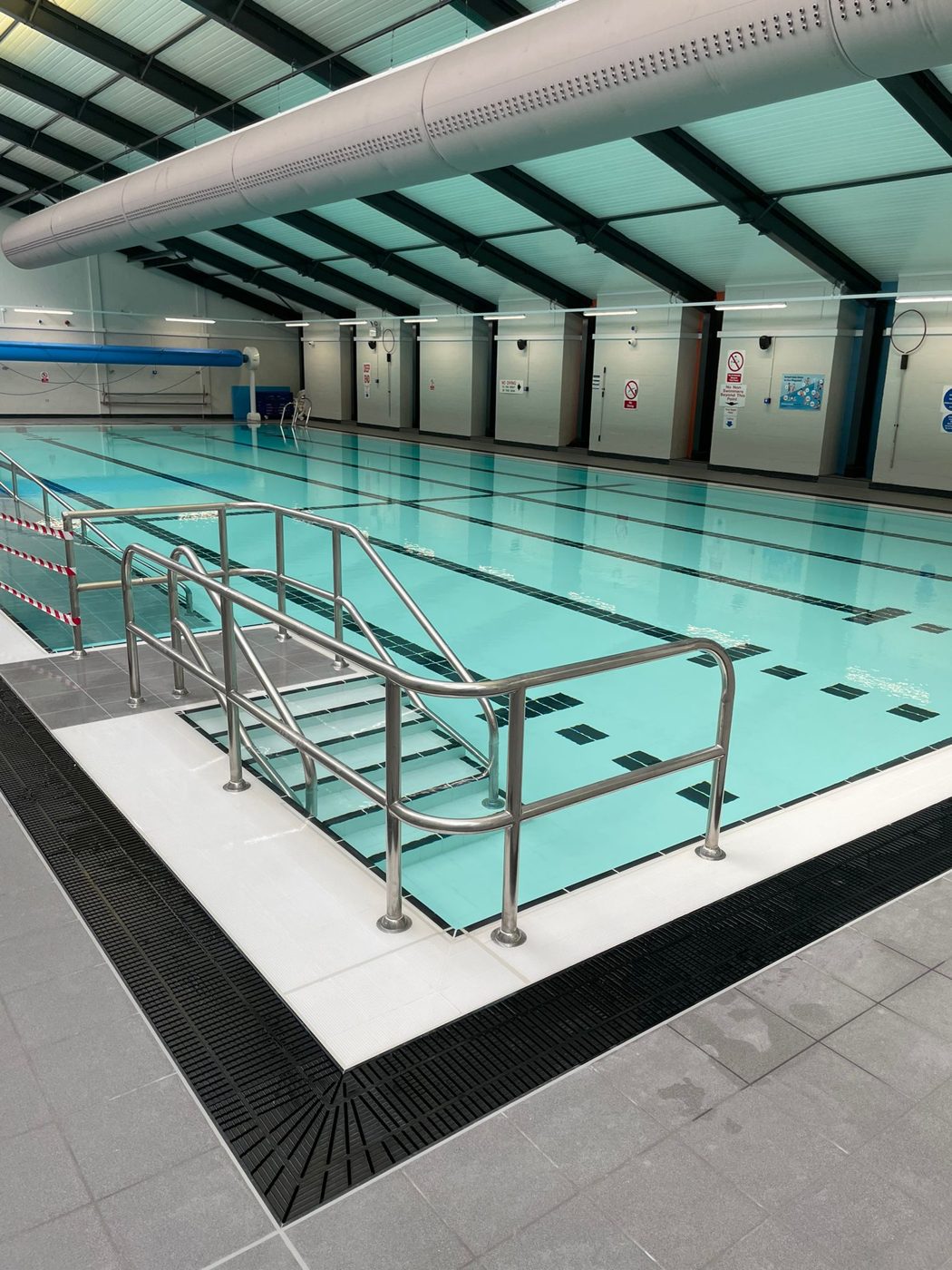
More movement outdoors
Outdoor tiling heats in the sun and cools overnight, so it moves more than an indoor floor. Movement joints at perimeters, against walls and the pool edge, and across larger areas help absorb that movement.
These joints are formed in a flexible sealant suitable for external use and should be inspected and renewed when they deteriorate, rather than grouted over.
Outdoor movement joints also need to suit the base. Where a structural joint runs through the slab or base beneath, the tiling should carry a joint directly above it, or the tiles are likely to crack along that line.
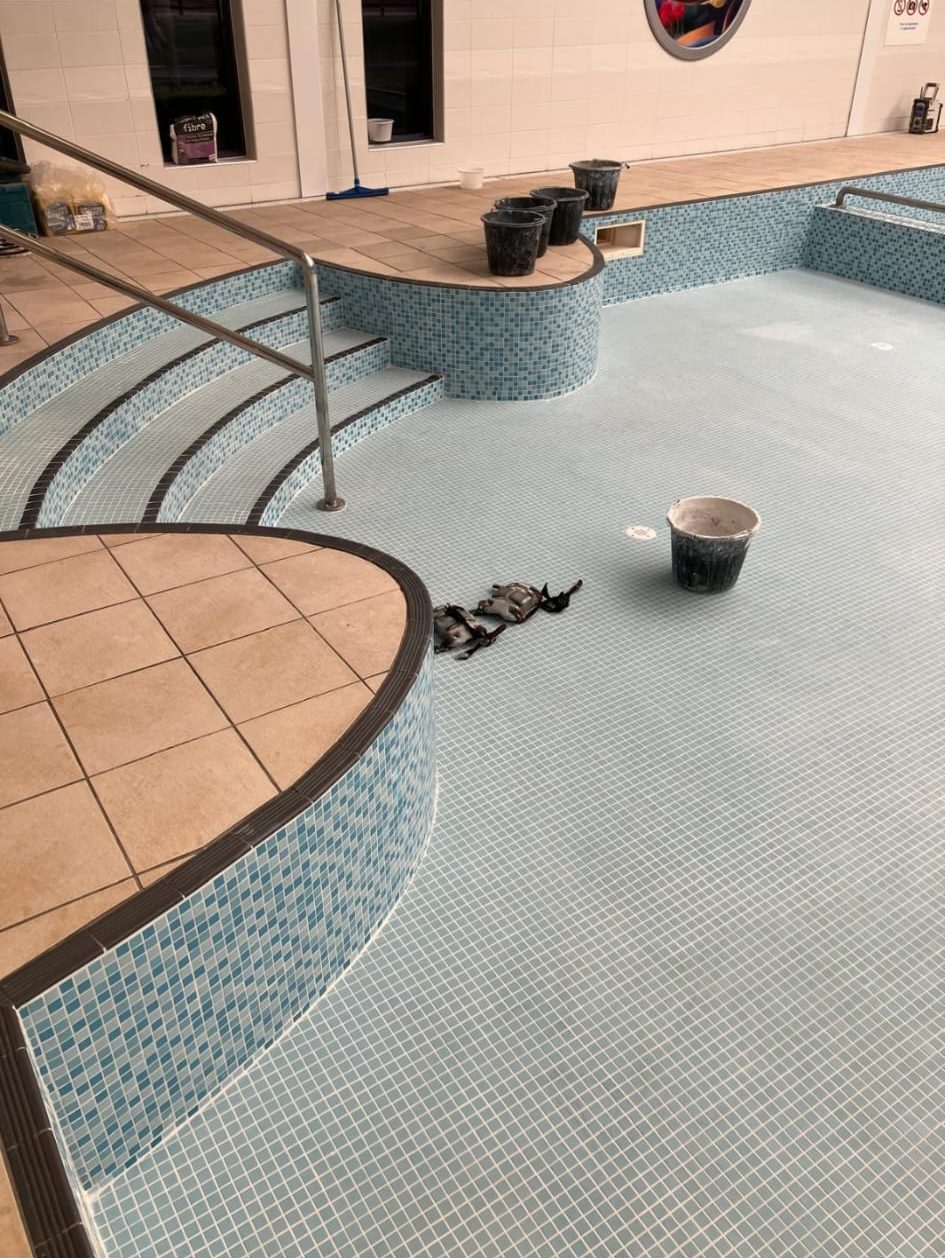
Comfort, grip and appearance outside
Outdoor pool surrounds are walked on barefoot and wet, often with leaves, algae or sunscreen on the surface. Tiles need suitable slip resistance for those conditions, and a finish that can be cleaned without damage.
Colour matters too. Darker tiles can become noticeably hot underfoot in strong sun, while very pale tiles can show staining. We talk these trade-offs through before you choose.
- Slip resistance suited to wet, barefoot use
- Low water absorption and frost suitability stated by the maker
- Colour chosen with heat and staining in mind
- A surface that can be cleaned of algae and leaves without damage
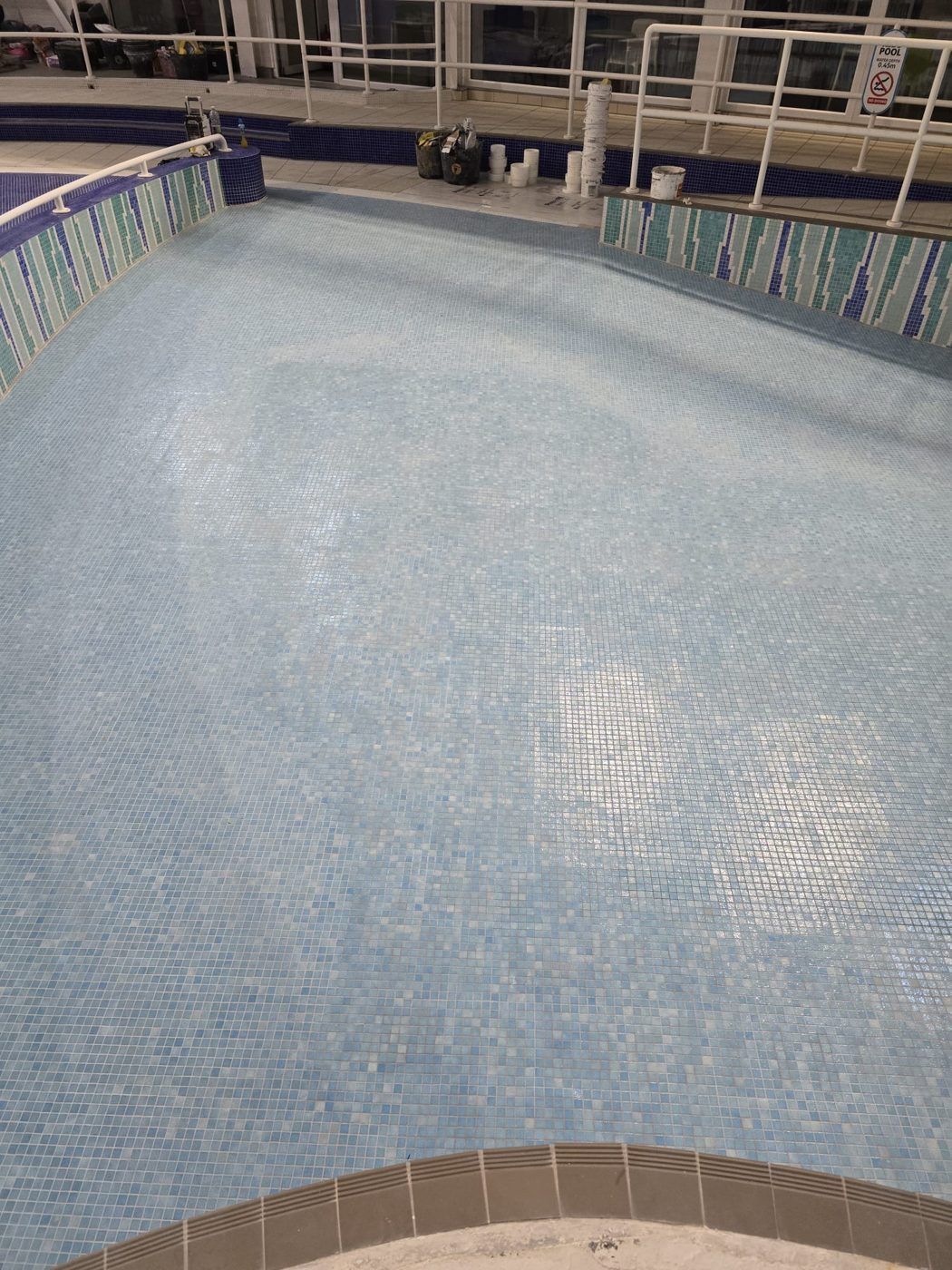
Repairing outdoor tiling that has failed
Outdoor failures tend to follow a pattern. Tiles lift in areas where water sits, crack along lines where movement has nowhere to go, or come away cleanly where the adhesive never made full contact. Reading that pattern helps decide whether a local repair will last.
Where the base is sound and failures are local, tiles can often be lifted, the bed cleaned out and the tiles relaid or replaced. Where the base itself is holding water or breaking up, repairing the tiles alone will not last, and we will explain what needs to be put right beneath them.
Working with the weather, not against it
Adhesives and grouts have temperature limits for application and curing, and rain on fresh work can spoil it. External tiling is therefore planned around suitable weather, with protection for new work where needed.
We aim to keep to the agreed dates, but we will not tile in conditions outside the product instructions just to stay on programme. Outdoors, that is asking for early failure.
What tiles are suitable for an outdoor pool surround?
Look for tiles with very low water absorption that the manufacturer states are suitable for external use and frost exposure, with suitable slip resistance for wet, barefoot use. Colour and texture affect heat underfoot and cleaning, so it is worth weighing those too.
Why have tiles lifted on my outdoor terrace after winter?
Lifting after winter is often linked to water trapped behind or under tiles freezing and expanding, which can be made worse by voids in the adhesive, poor drainage falls or missing movement joints. We look at the cause before recommending repair or replacement.
Can you tile outside in winter?
Only when conditions are within the temperature and weather limits of the adhesive and grout. External work is planned around suitable weather, and we would rather move a start date than tile in conditions that risk early failure.
Should an outdoor pool surround drain away from the pool?
It depends on the design, but surface water is commonly directed to channels or drains rather than into the pool, so dirt and debris are not washed in. The falls are formed in the base before tiling, so they should be confirmed early.
Can you match replacement tiles on an outdoor terrace?
We look for the closest available match, but outdoor tiles weather and fade, and ranges change, so new tiles can look slightly different at first. Spare tiles kept from the original job are often the closest match. We show you options before replacing anything.
Tell us about your pool.
Send a few details and we’ll get back to you to understand the job. Photos of the tiles, grout and problem areas help us a lot, and you can add them below.
What affects the estimate?
- The pool area and which surfaces need work
- Joint size and the grout or tiles involved
- The condition of the tiles, joints and background
- Access to the pool and the working areas
- Preparation, cleaning and any repairs needed first
- The programme and when the pool can close
- Call Dan07800 826895
- Call Jay07966 002106
- Emailtiletrustuk@outlook.com
- Where we workBased in Warrington, Cheshire.
Pool projects across the UK.