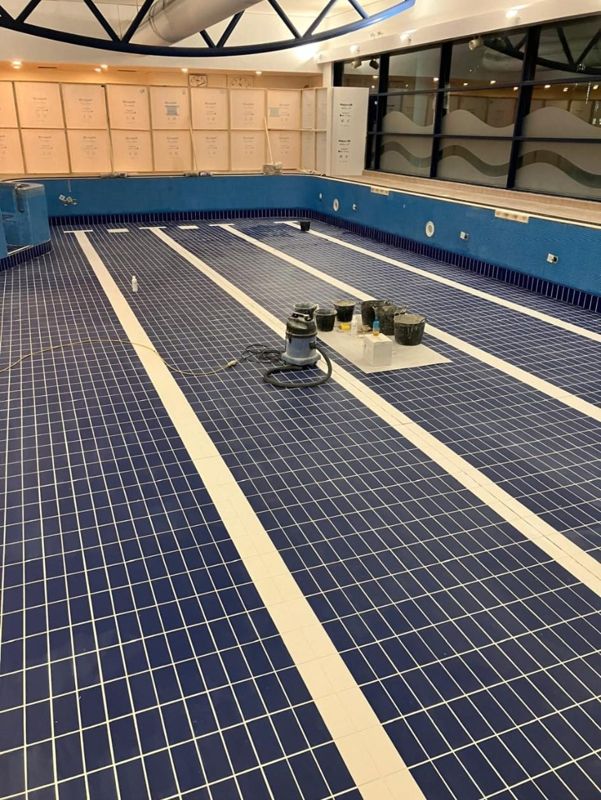
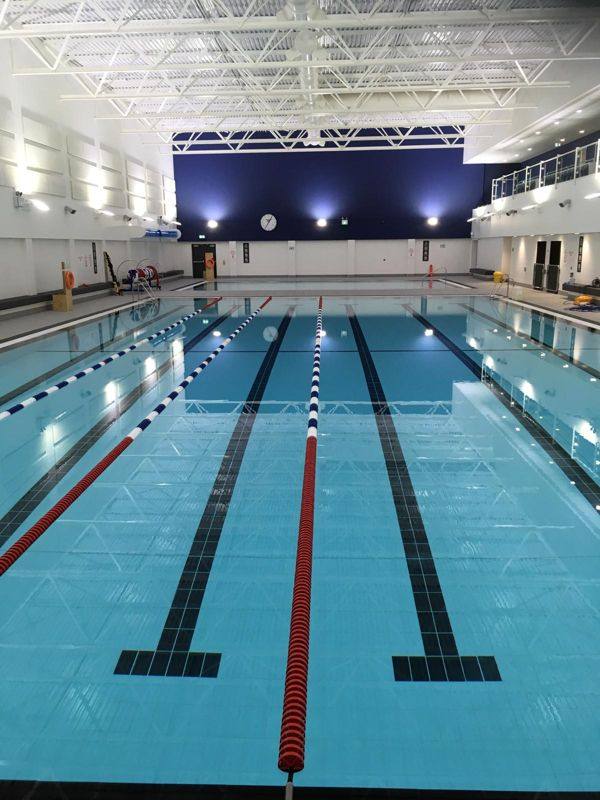
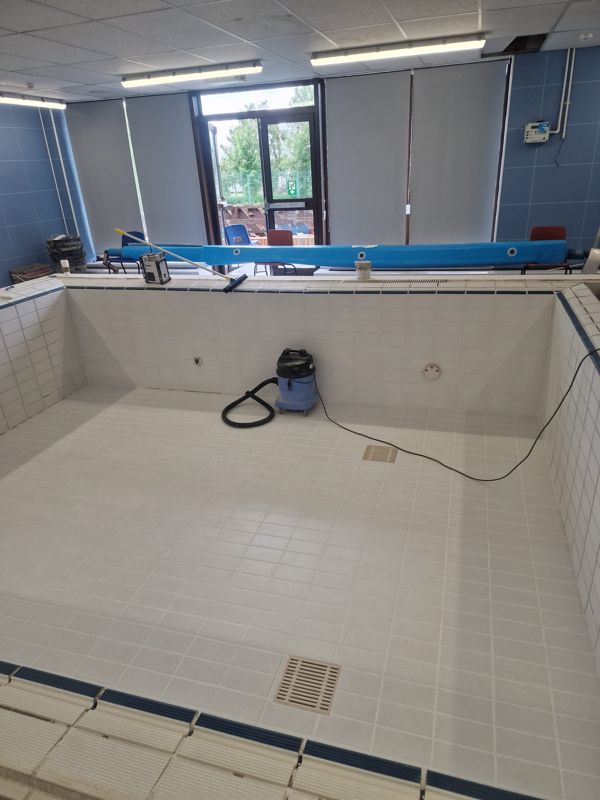
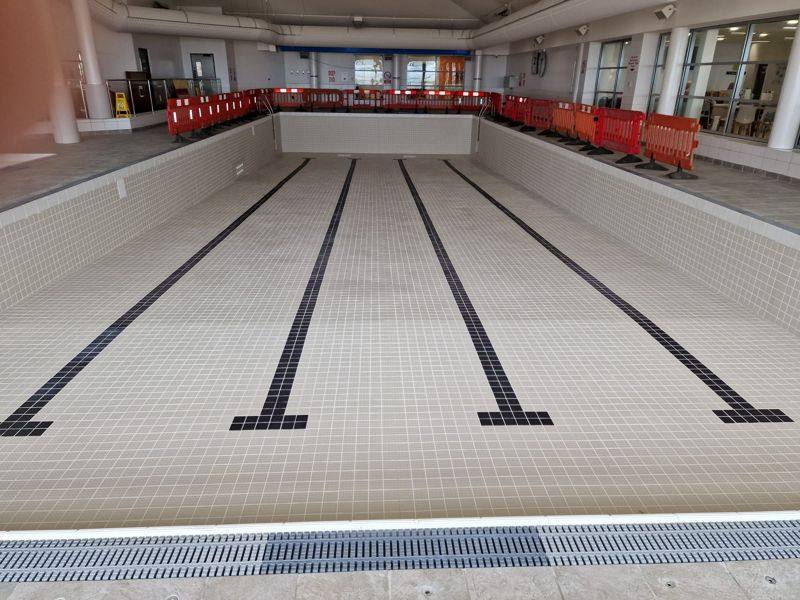
How long swimming pool refurbishment takes depends on the scope and on what is found once the pool is drained. Drain-down, inspection, strip-out, repairs, product cure times, cleaning, a controlled refill, heating and water balancing all have to fit in. We agree the programme after inspecting the pool, and cure times are never cut short to hit a date.
Why we do not give a standard timescale
A clean and regrout of a small private pool and a full retile of a busy lane pool are both refurbishments, and they take very different amounts of time. Even two similar pools can differ once they are drained, because the real condition of the tiles and render only shows then.
So we do not publish timescales. Once we have seen the pool, we set out the stages, the cure periods and the decision points, and agree a programme you can plan a closure around.
The stages that set the programme
Every refurbishment runs through some or all of these, roughly in this order.
- Drain-down: at a rate that suits the pool and the discharge route. In-ground pools in areas of high groundwater may need advice before they are emptied.
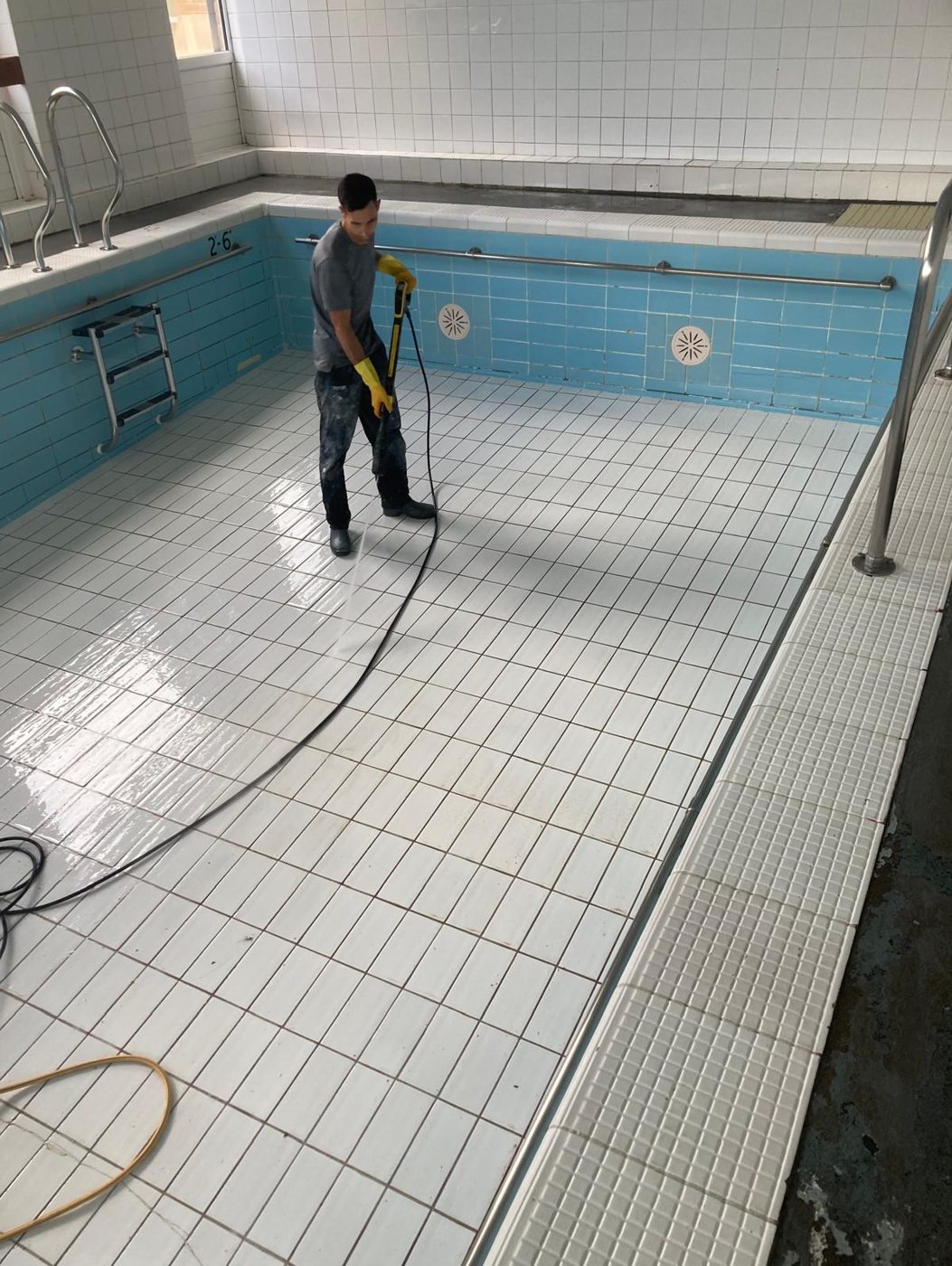
- Cleaning and inspection: a chemical clean so the surface can be seen properly, then tap testing and, where needed, lifting tiles to look at the bed.
- Strip-out: raking out grout, or removing tiles and adhesive for a retile.
- Repairs: render, background and tile repairs, each with its own drying or curing time before the next layer goes on.
- Tiling and grouting: tiles fixed, the adhesive left to cure before grouting, then the grout and movement joint sealants cured before immersion.
- Final clean and handover: a walk-round of the finished work before any water goes in.
- Refill and recommissioning: a controlled refill, gradual heating and water balancing by the operator's team before the pool reopens.
Cure times are never skipped
Every render, adhesive, grout and sealant has a data sheet that says how long it needs before the next stage and before immersion, under stated temperature and humidity. A cold or damp pool hall slows curing, which is why heating, ventilation or dehumidification sometimes has to be agreed with the operator.
Filling early, or dosing chemicals before the products are ready, can undo the whole job. We will not shorten cure times to meet a reopening date. We plan for them from the first conversation instead.
What can extend the programme
When something turns up, we tell you straight away with photographs and what it means for the dates, so you can decide early rather than at the end.
- Hidden defects: hollow render, a failed bed or a cracked background found once tiles come up.
- Extra repairs that bring their own cure periods before tiling can continue.
- Weather for outdoor pools: rain, cold and frost stop work and slow curing, and strong sun can shorten working times.
- Access: long carries, restricted hours or a single route in for materials and waste.
- Tile supply: matching or special pieces with long lead times.
- Other trades working in the pool at the same time, such as plant, lighting or fittings.
- Changes to the scope agreed part way through.
How scope changes the length
A clean and regrout is the shortest kind of refurbishment because the tiles stay where they are, though raking out and curing still take real time. Our guide on how long regrouting takes covers that in detail.
Targeted tile repairs add lifting, bed and background repairs, and their cure times. A part retile or full retile adds strip-out, render work and a longer sequence of fixing, grouting and curing. The more layers that are renewed, the more cure periods sit end to end.
Planning around the closure
Work back from the date the pool has to reopen and leave room for the refill, heating and balancing at the end. If you can, have the pool inspected at an earlier drain-down so the scope is known before the main closure is booked.
Order tiles early, agree who drains, refills and balances the water, and tell users and staff in good time. Our guides on planning a pool closure and refilling a pool after tiling works go through each step.
Common questions
How long does swimming pool refurbishment take?
It depends on the scope, the products, the conditions in the pool hall and what is found once the pool is drained. We inspect first, then agree a programme with every stage and cure period in it, rather than quoting a standard figure.
Can you give a programme before seeing the pool?
Photographs and a description let us give an initial view of the stages involved. A programme you can plan a closure around comes after we have seen the pool, ideally drained.
Can longer working hours shorten the closure?
Sometimes, for labour stages such as strip-out and fixing. They make no difference to cure times, which are set by the products and the conditions, so the gain is usually smaller than people expect.
Why does refilling and reopening take so long?
The pool should be filled steadily and the water brought up to temperature gradually, in line with the pool's specification and the product guidance, then balanced and tested before bathers go in. Rushing it puts stress on new work.
What happens if you find problems once the pool is drained?
We tell you promptly, show you what we have found and explain the options and their effect on the dates. Nothing extra goes ahead until you have agreed it.