Pool tiles spend their life under water.
Swimming pool tiling means new pool finishes and full retiles of existing shells. The finish has to stay bonded under water, in treated water and through changes of temperature, so it is a job for pool tilers rather than general tilers. PoolRevive is run by TileTrust Ltd, a Warrington tiling business with more than 25 years of tiling experience behind it.
New pool finishes and complete retiles
On a new pool, the tiles are the last visible layer of a system that starts with the shell, render and any waterproofing. We tile once those earlier stages are ready, working with the pool builder or main contractor so the background is right before the first tile is fixed.
On an existing pool, a full retile means stripping the old finish, inspecting what lies beneath and preparing the background before setting out the new tiles. The discipline is the same either way: a sound, flat, fully cured background and tiles bedded without voids.
- Pool floors and walls, including deep ends and sloping floors
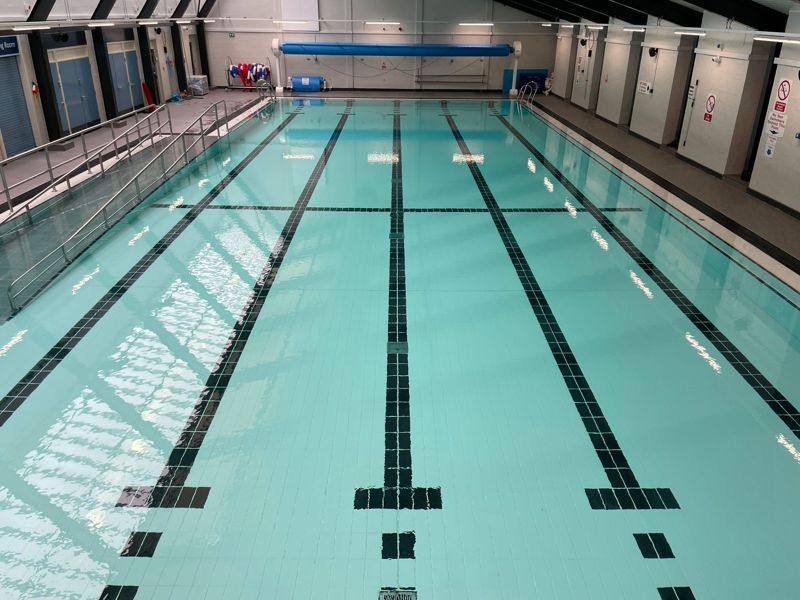
- Lane lines, target crosses and depth markings
- Steps, benches, ledges and entry areas
- Edge tiles, channels, grating surrounds and copings
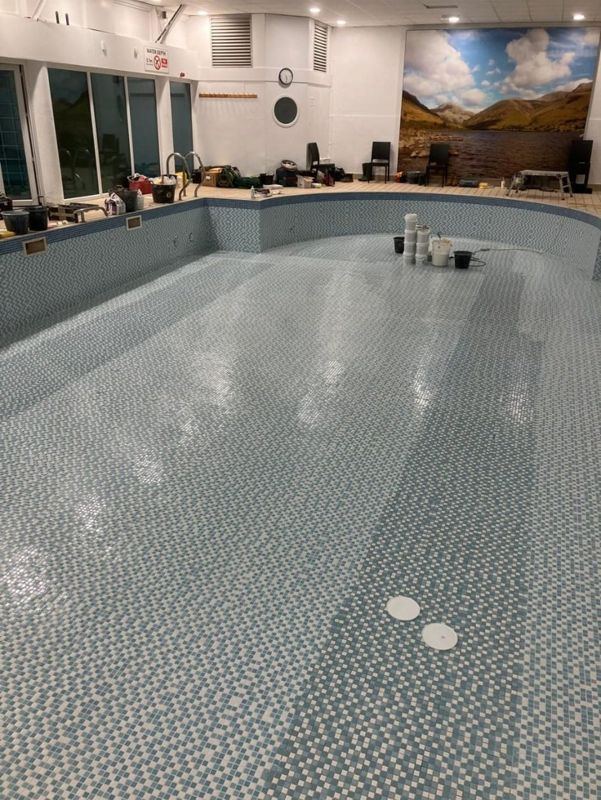
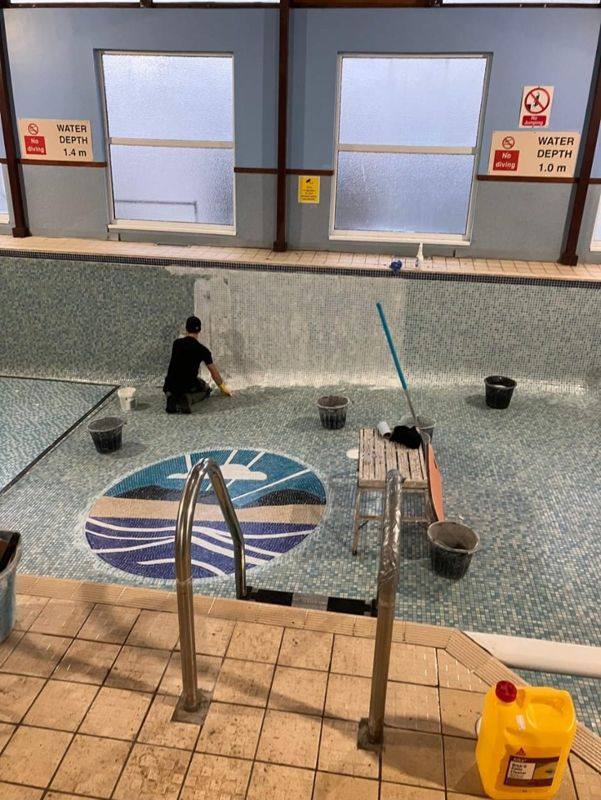
- Mosaic features, curved walls and borders
- Pool surrounds and adjoining wet areas
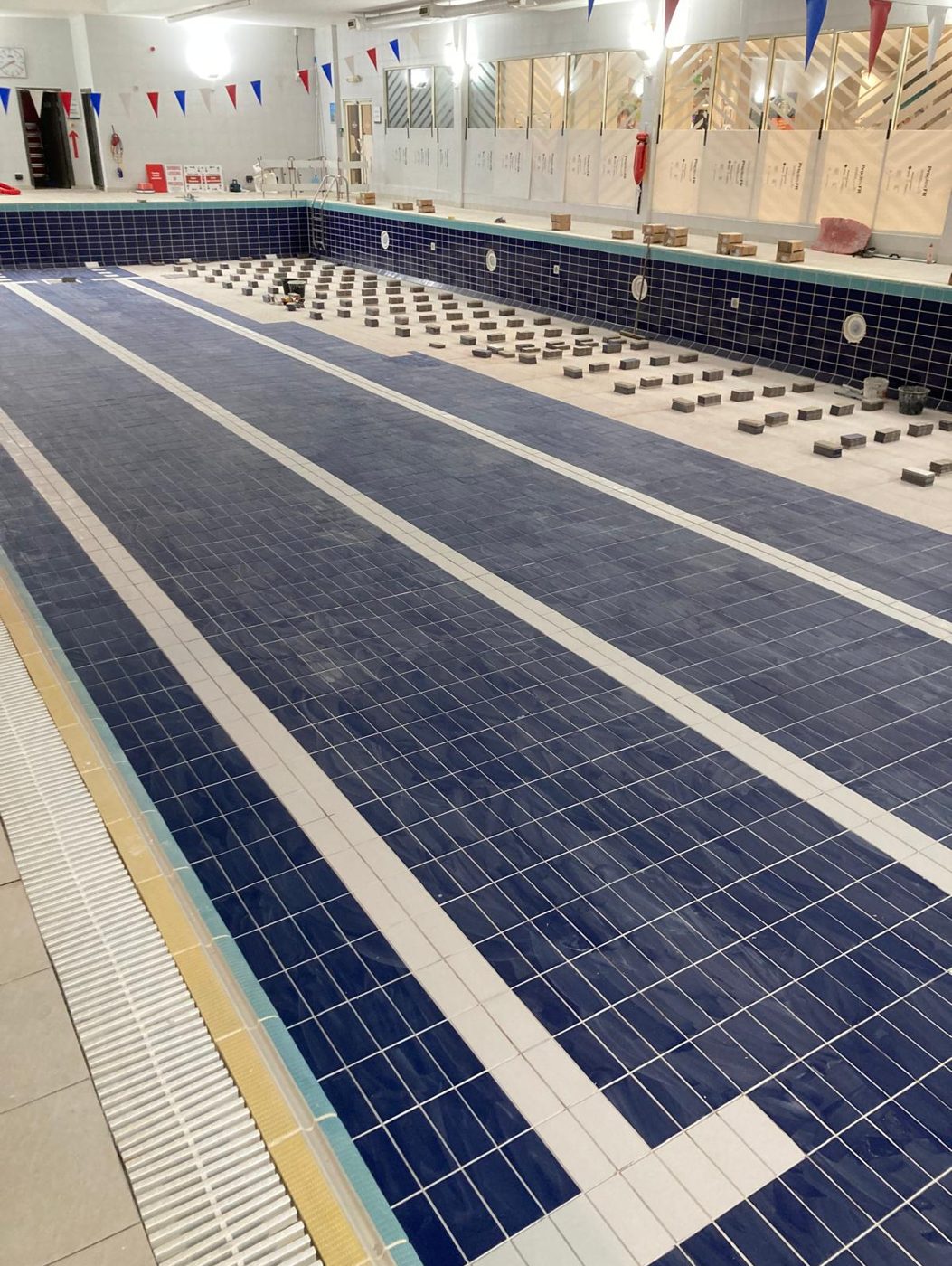
How a pool is tiled, stage by stage
Good pool tiling is mostly decided before the adhesive is opened. Each stage depends on the one before it, so we agree the sequence and the hold points with you at the start rather than discovering them on site.
- Survey the pool and agree the scope, materials and access
- Check the background is sound, in plane, clean and cured enough to tile
- Set out the grid from fixed features such as lane lines, steps and outlets, so cuts land where they look intended
- Fix with an adhesive suitable for immersion, back-buttering where needed so the tiles are fully bedded with no hidden voids
- Grout with a pool-suitable product and form movement joints in a flexible sealant where the design calls for them
- Allow the full cure set by the manufacturers before a controlled refill
Cure and refill times are built into the programme from day one. They are never shortened to meet a reopening date.
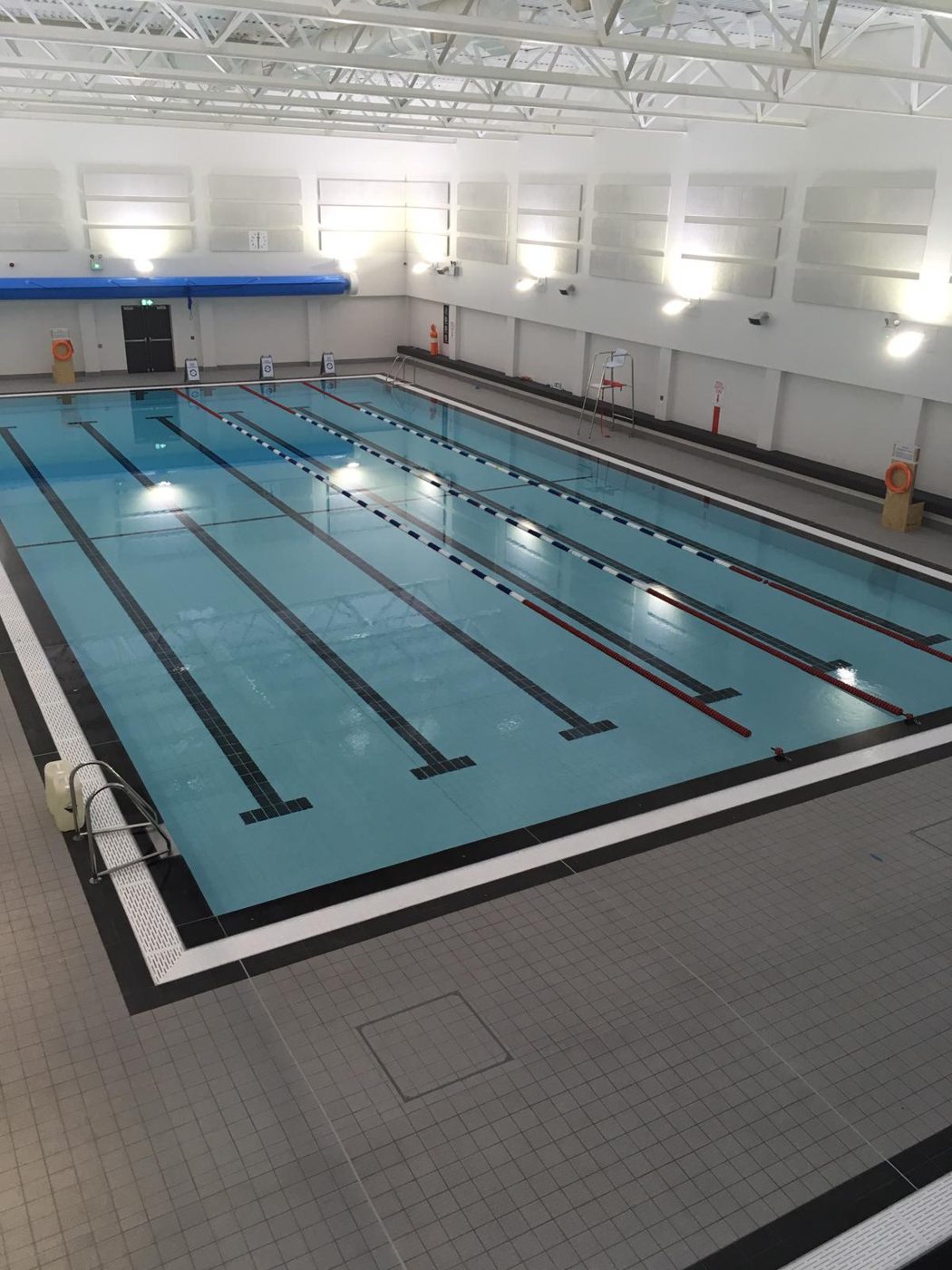
Tiles, adhesives and grout chosen for immersion
Pools are commonly finished in vitrified ceramic or porcelain tiles, or in glass or porcelain mosaic. The right choice depends on the look you want, the shape of the pool, slip resistance where people walk and how easily the surface can be kept clean.
Adhesives, primers, grouts and sealants should be used as one compatible system and to the manufacturers' instructions for immersed use. We explain why we propose each product, and we do not mix components from different systems on a guess.
BS 5385-4 is the part of the British Standard that covers ceramic tiling in specific conditions, including swimming pools. It is a useful reference for anyone writing or checking a pool tiling specification.
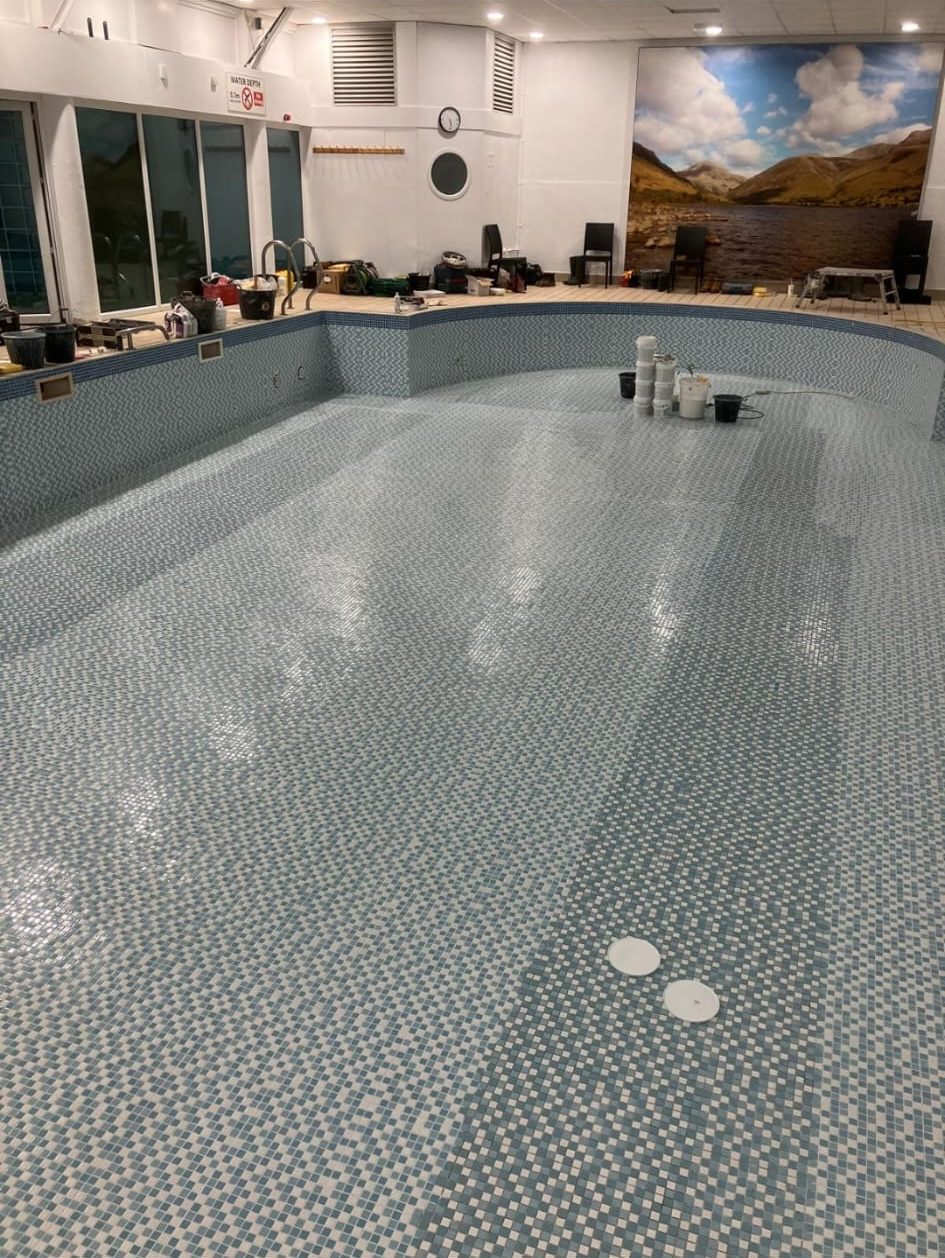
Why pool tiling needs pool tilers
On a bathroom wall, a small void behind a tile may never cause trouble. In a pool, the same void can fill with water, let the bond deteriorate and eventually release the tile, and you often only find out once the pool is drained.
Pool tiling also asks for skills that ordinary tiling rarely does: setting out lane markings accurately over a long floor, running a grid round curved walls and steps, detailing channels and outlets, and leaving movement joints where the structure needs them rather than where they are convenient.
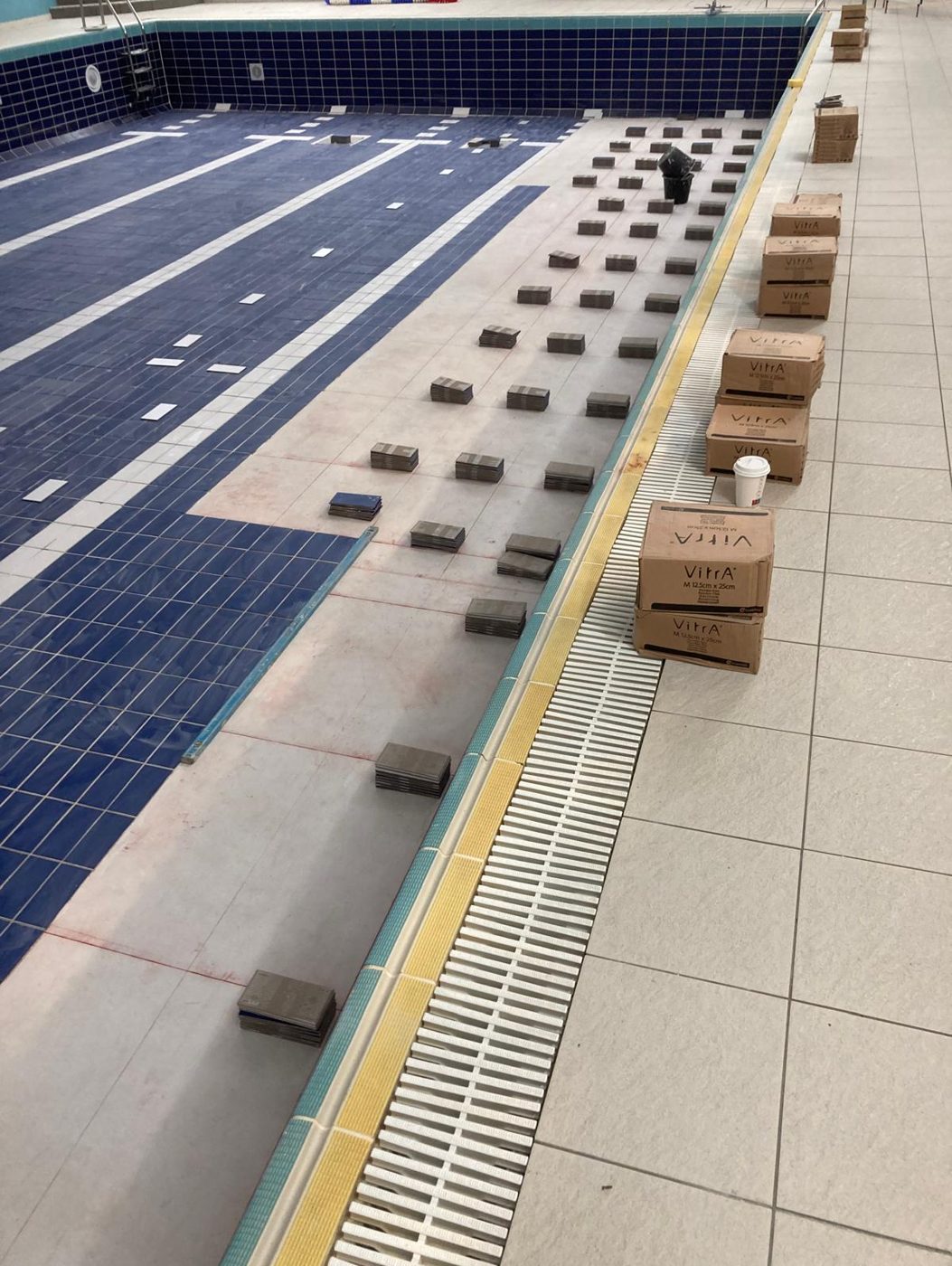
Is a full retile the right answer?
Not every tired pool needs a new finish. Where most tiles are still well bonded, a clean, some targeted repairs and a regrout can bring a pool back with far less disruption than a retile.
We look at the pool and the finish first, tap test where it helps, and talk you through the options before anything is priced. If a full retile is the sensible route we will explain why. If it is not, we will tell you.
What is the difference between a pool tiler and a general tiler?
A pool tiler works to the demands of a finish that sits permanently under water and pool chemicals. That means full adhesive bedding without voids, accurate setting out of lane lines and markings, correct movement joints and products chosen for immersion. A general tiler may be very skilled, but pool work brings risks that only show once the pool is filled.
Do you tile new pools as well as retiling old ones?
Yes. On a new pool we tile once the shell, render and any waterproofing stages are ready, coordinating with the pool builder or main contractor. On an existing pool we strip, inspect and prepare the background before the new finish goes on.
What tiles are suitable for a swimming pool?
Vitrified ceramic, porcelain and glass or porcelain mosaic are all commonly used in pools. The choice depends on the design, the shape of the pool, slip resistance on steps and surrounds, and the tile maker's guidance on immersed use. We can talk through the options before you choose.
How soon can a newly tiled pool be filled?
Only once the adhesive and grout have cured for the time their manufacturers set, which depends on the products and on site temperature and humidity. We plan this into the programme from the start and do not shorten it to meet a date.
Do you take on pool tiling across the UK?
Yes. We are based in Warrington and take on pool projects throughout the UK. Tell us where the pool is and what you have in mind on the estimate form, and we will plan the visit from there.
Tell us about your pool.
Send a few details and we’ll get back to you to understand the job. Photos of the tiles, grout and problem areas help us a lot, and you can add them below.
What affects the estimate?
- The pool area and which surfaces need work
- Joint size and the grout or tiles involved
- The condition of the tiles, joints and background
- Access to the pool and the working areas
- Preparation, cleaning and any repairs needed first
- The programme and when the pool can close
- Call Dan07800 826895
- Call Jay07966 002106
- Emailtiletrustuk@outlook.com
- Where we workBased in Warrington, Cheshire.
Pool projects across the UK.