Warm water, careful work.
Hydrotherapy and warm-water therapy pools put particular demands on tiles and joints, and the people who use them rely on steps, edges and floors being right. We provide pool tiling and repairs for hydrotherapy pools, with the scope agreed in advance and products chosen for warm, regularly treated water.
Pool tiling and repairs for hydrotherapy pools
Hydrotherapy pools are usually smaller than public pools, but they are often used for long sessions, kept warmer and managed closely. Worn or open grout, loose tiles and damaged edges all need attention before they become harder to keep clean or start to affect the surface underfoot.
Our role is the tiled finish: cleaning, local repairs, regrouting and retiling where needed. We do not advise on therapy or clinical matters, and decisions about water treatment and how the pool is used remain with the operator and their advisers.
If you are unsure whether the pool needs a clean, a repair or something larger, we start with an assessment of the tiles and joints. That gives you a clear picture to take back to whoever manages the pool and the service around it.
- Cleaning of tiles, joints, steps and channels
- Loose, cracked or missing tiles repaired
- Worn or open joints regrouted
- Steps, edge tiles and handrail surrounds detailed
- Surrounds and changing areas tiled
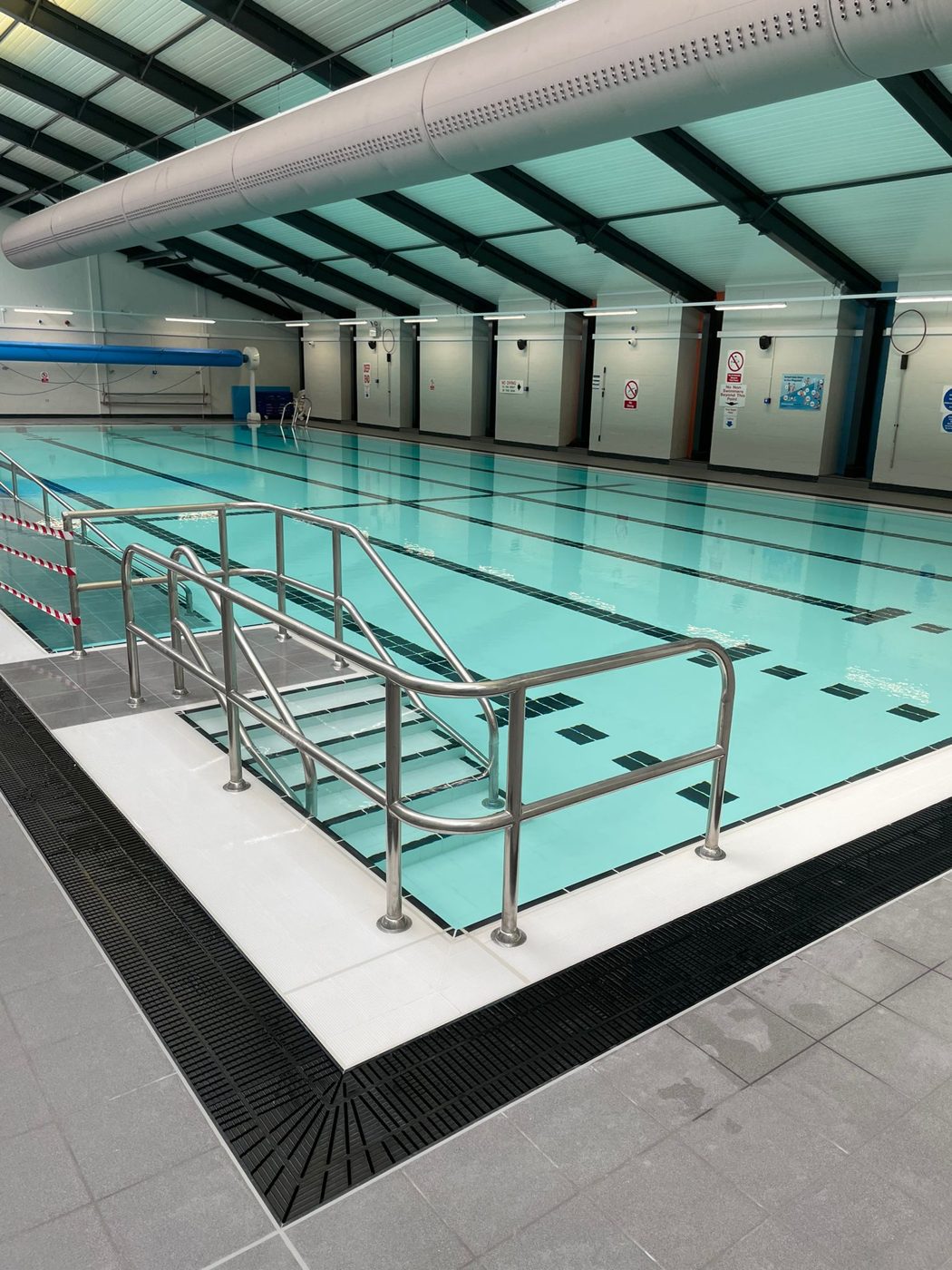
How warm water affects grout
Warmer water and the treatment needed to keep it in balance can be more demanding on joints than a cooler pool. Over time cementitious grout may soften, erode or discolour, particularly where water chemistry has drifted out of balance or cleaning has been aggressive.
A pool-suitable epoxy grout may offer a more durable joint in these conditions, chosen to suit the tile, joint size and site. It is not automatically the right choice, and it cannot fix loose tiles or a failing background. No grout has a guaranteed lifespan, and water balance and cleaning have a big say in how long joints last.
Discolouration is not always failure. Dark or stained joints can sometimes be cleaned back, while soft, crumbling or missing grout needs replacing. We check which is which before recommending regrouting, so you are not paying for work the pool does not need.
Guidance on pool water treatment is published by the Pool Water Treatment Advisory Group (PWTAG). We work alongside your water treatment arrangements rather than advising on them.
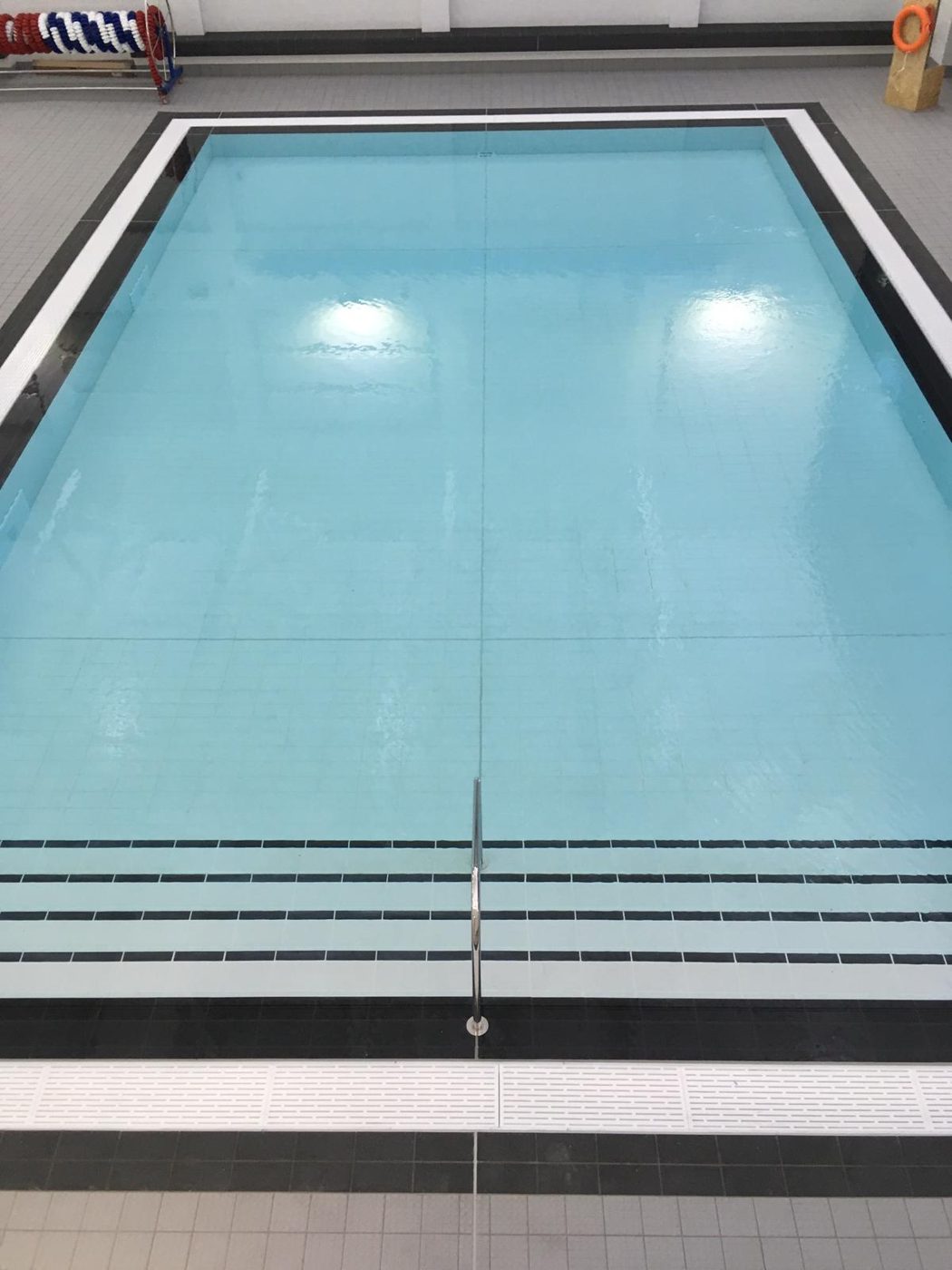
Steps, edges and handrails
Entry steps, ramps, edge tiles and the areas around handrails and hoists are where users put their trust in the surface. A cracked nosing tile, a raised edge or an open joint at a step matters more here than in many pools.
We pay particular attention to these details: level, secure tiles, consistent joints and edges finished cleanly. Where replacement tiles are needed on steps and walkways, we select them for the location, and we can discuss slip resistance and contrast with you when choosing materials.
Changes in level and edge finishes are also discussed before work starts, particularly where a step or edge has been rebuilt at some point and no longer lines up.
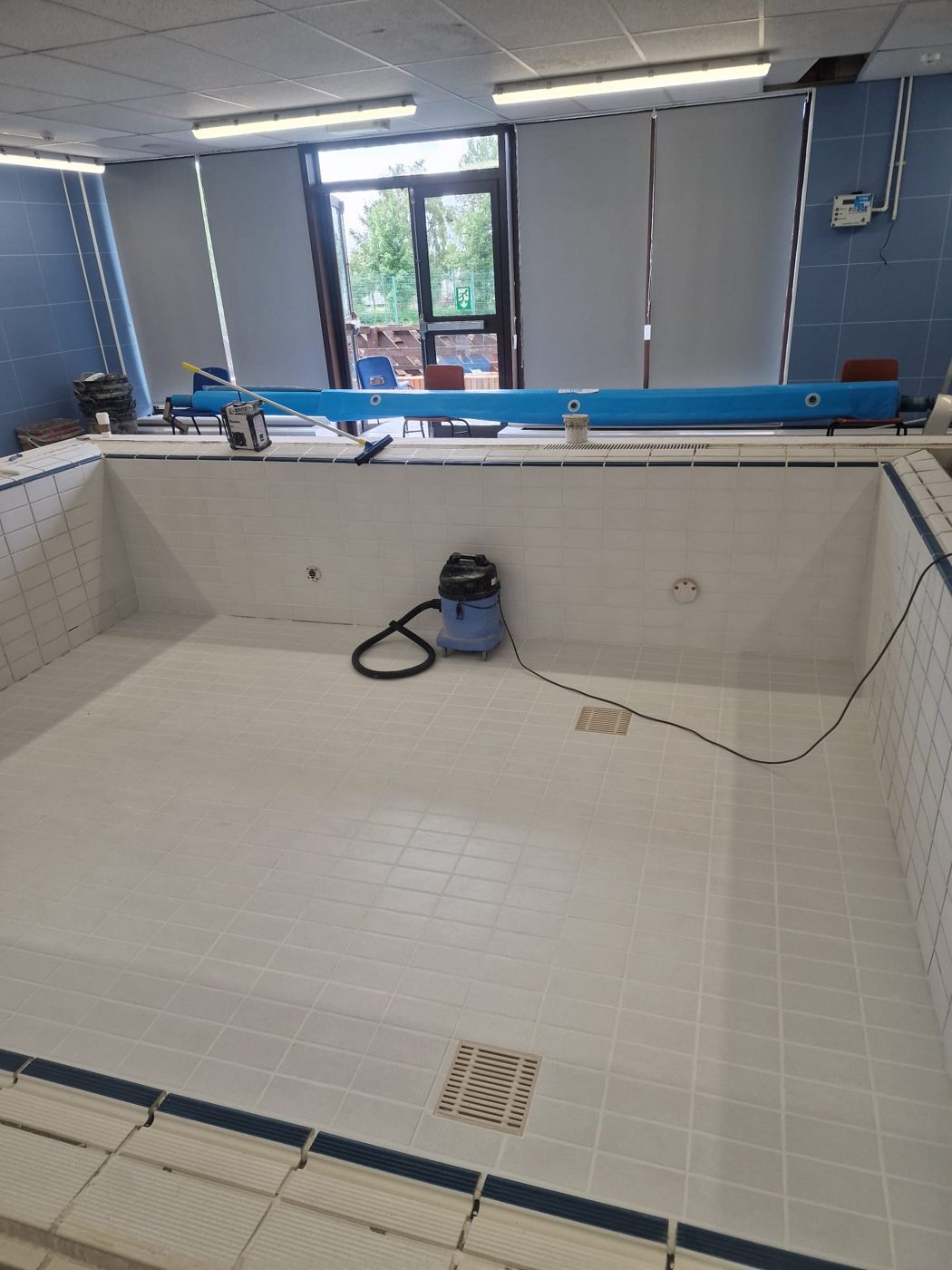
Sound joints are easier to keep clean
Open, eroded or cracked joints collect dirt and are harder to clean thoroughly. Restoring sound, well-filled joints and replacing damaged tiles gives cleaning teams a surface they can maintain properly.
When we clean a hydrotherapy pool, we use the correct chemical clean for what is on the tiles, test a small area first and rinse residues away thoroughly. The right product for the job cleans without harming the existing grout or the tile finish.
After the work, we explain how the finished joints and tiles should be cared for, including which cleaning products to avoid on them.
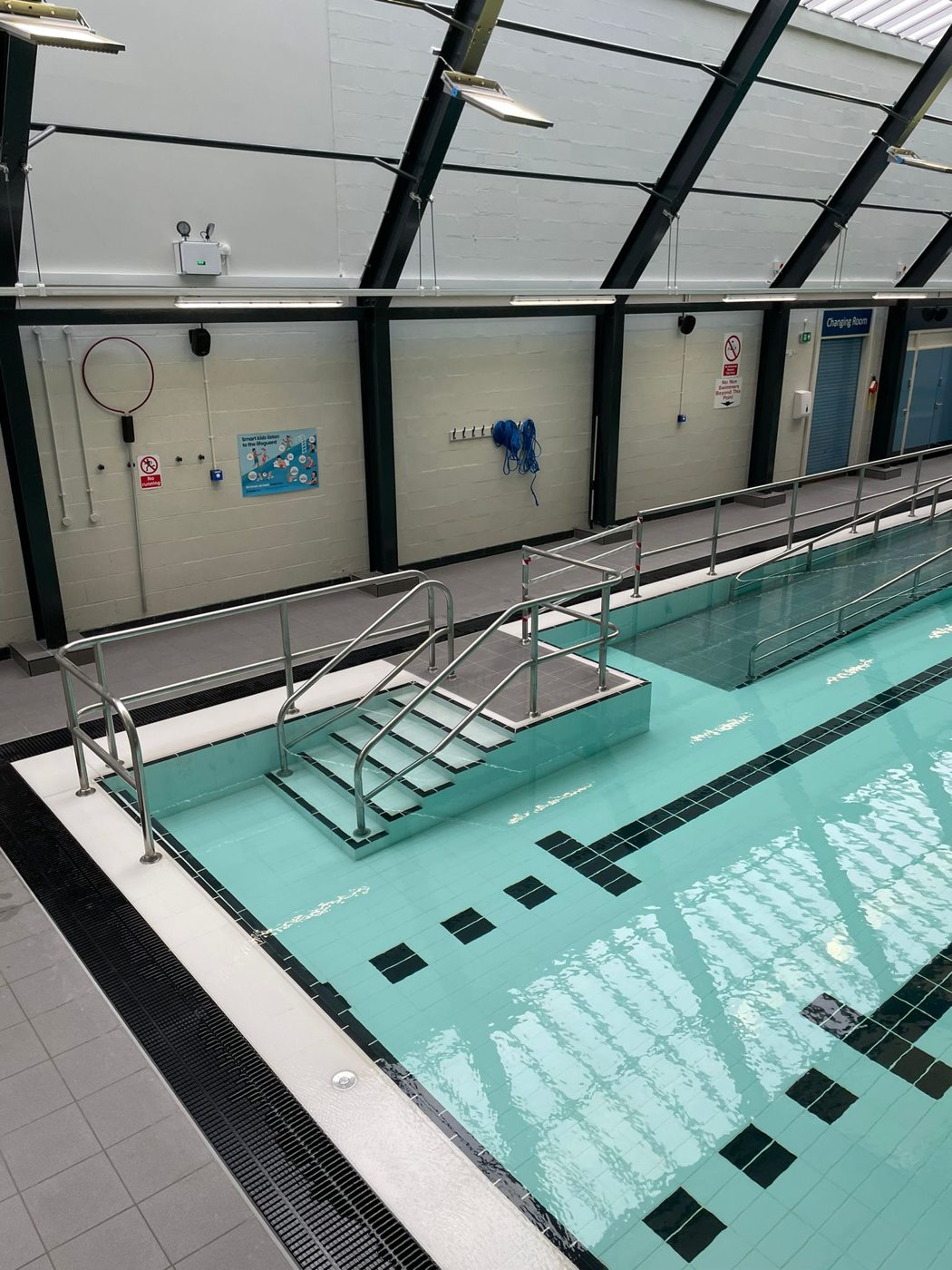
Closures agreed with your service in mind
Closing a hydrotherapy pool affects the people who rely on it, so the scope, materials and access are agreed before draining. We explain the sequence, and curing and refilling get the time the products need.
Many hydrotherapy pools sit within larger buildings with their own access and site rules. We work to those requirements, keep working areas contained and tell you early about anything found once the pool is empty, so you can plan around it. Where the pool shares plant or changing areas with other services, we agree working times with your team in advance.
Why does grout seem to wear faster in our hydrotherapy pool?
It depends on the pool, but warmer water, the chemistry needed to treat it and frequent cleaning can all be demanding on joints, especially cementitious grout. We look at the joints and the tiles before recommending regrouting or another approach.
Should we switch to epoxy grout?
Epoxy may give a more durable joint in demanding conditions, but it is not always better and it will not fix loose tiles or a failing background. We explain both options and the care each needs before you decide.
Can you repair just the steps and edges?
Often, yes. Where the rest of the pool is sound, steps, edge tiles and handrail surrounds can usually be repaired locally. The extent is confirmed once the pool is drained and we can see what lies beneath the damaged tiles.
Do you advise on water treatment?
No. Water treatment sits with the operator and their specialists. We focus on the tiles, grout and surfaces, and we choose products suitable for the conditions the pool will face.
Tell us about your pool.
Send a few details and we’ll get back to you to understand the job. Photos of the tiles, grout and problem areas help us a lot, and you can add them below.
What affects the estimate?
- The pool area and which surfaces need work
- Joint size and the grout or tiles involved
- The condition of the tiles, joints and background
- Access to the pool and the working areas
- Preparation, cleaning and any repairs needed first
- The programme and when the pool can close
- Call Dan07800 826895
- Call Jay07966 002106
- Emailtiletrustuk@outlook.com
- Where we workBased in Warrington, Cheshire.
Pool projects across the UK.