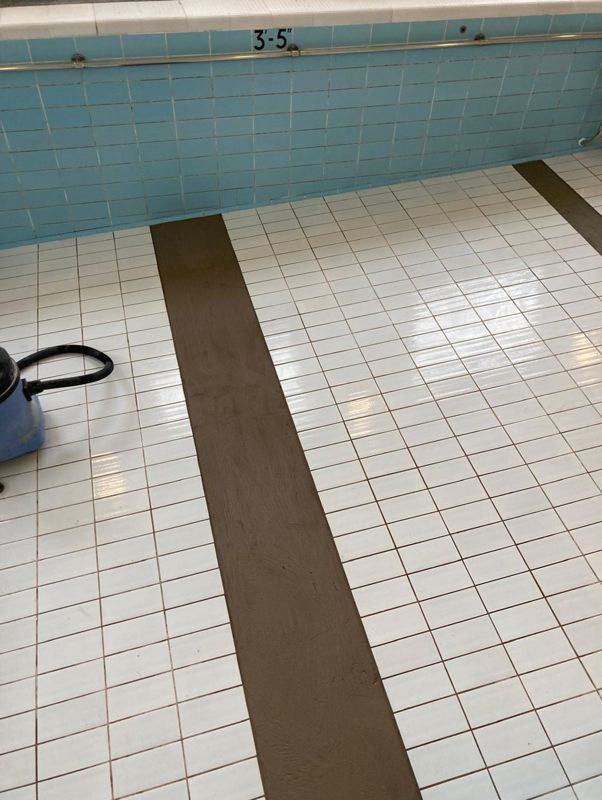
Repair is often the sensible choice when most tiles remain securely bonded, the background is sound and problems are local. A retile is more likely to make sense when loss of bond, background failure or damage is widespread, or the existing tiles can no longer be matched. The decision should follow an inspection of the drained pool, not a default answer.
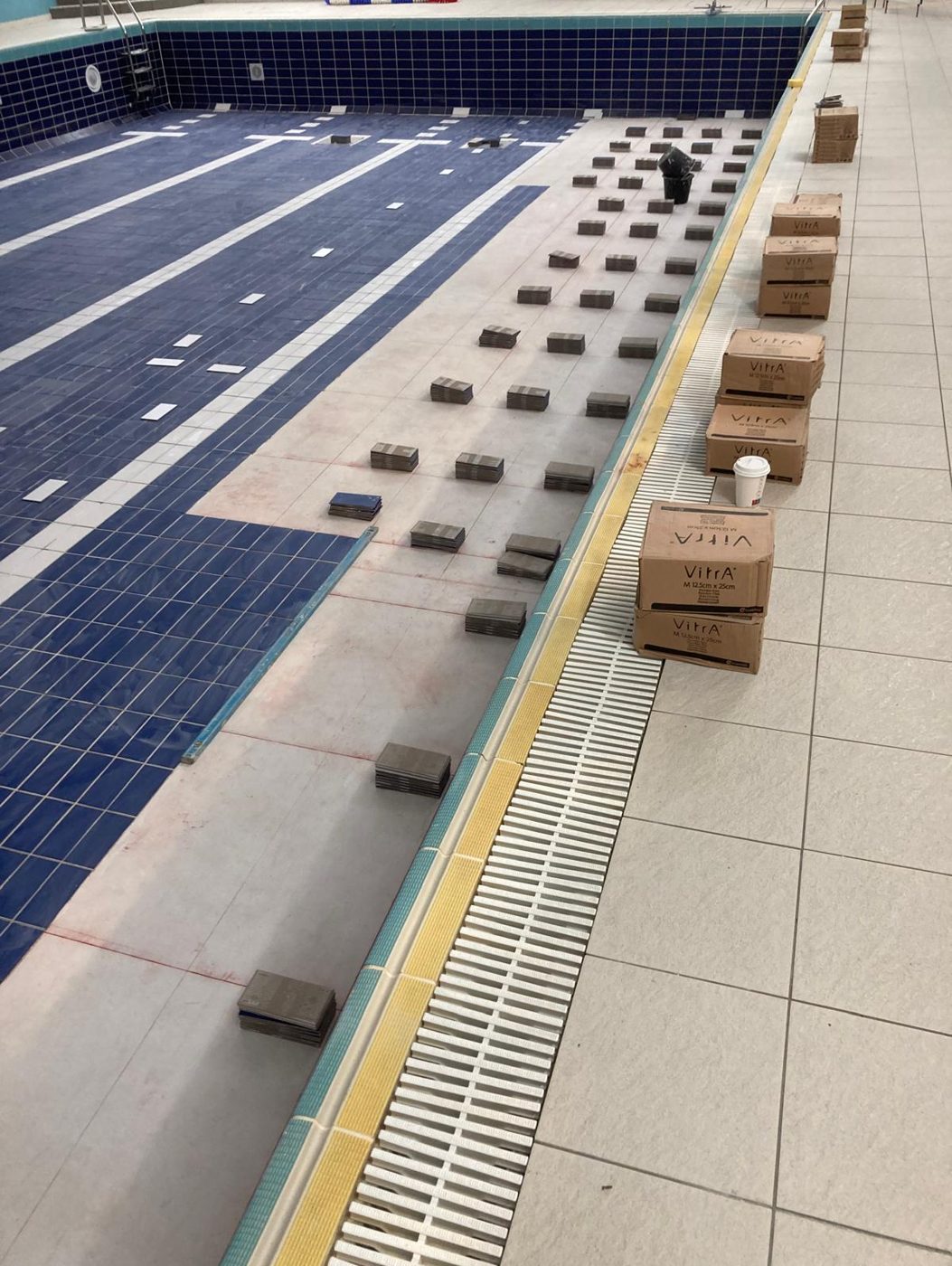
It depends on what is under the tiles
Two pools that look similar from the poolside can need very different work. What matters is whether the tiles are still well bonded, whether the bedding and background are sound, and whether problems are local or spread across the pool.
So the decision is usually made after the pool has been drained and inspected. Photos help with planning, but they rarely settle the final scope.
When repair is often the right choice
Targeted repair keeps sound work in place and replaces only what has failed. Disruption is usually lower and you avoid stripping a whole pool.
- Loose or cracked tiles are in defined areas such as steps, corners or around fittings.
- Most tiles sound solid and look well bonded when checked methodically.
- Grout is worn but tiles remain secure, making regrouting a possible option.
- Movement joints have failed but the tiling either side is sound.
- Matching replacement tiles are available or acceptable alternatives can be found.
When a retile is more likely to be worth considering
A retile becomes more likely once the problems are no longer local. If every opening reveals more failed bedding or background, repeated repairs start to eat closure time without solving much.
- Loss of bond is widespread across floors or walls.
- The background or render has failed over large areas.
- Tiles are no longer available and patch repairs would be very visible.
- The pool is being redesigned, for example new markings, steps or a different finish.
- Repeated repairs in the same areas suggest a wider underlying issue.
Part retiles: a middle ground
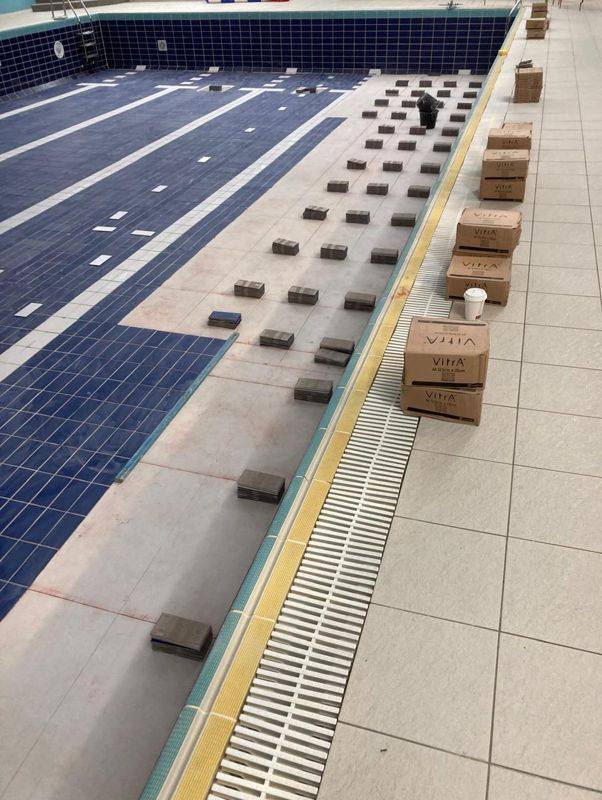
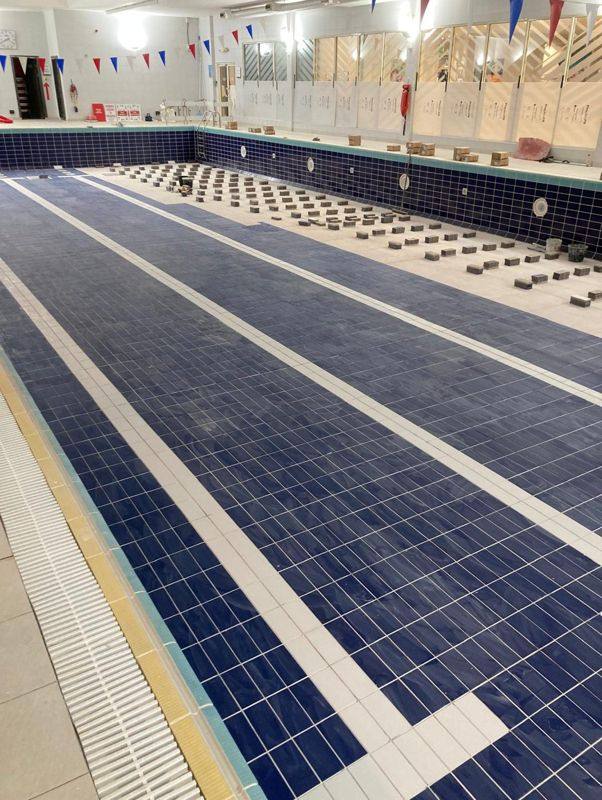
Sometimes one area of a pool has failed while the rest is in good order. Retiling only that area, such as a floor section, a set of steps or a wall band, can be a practical middle ground.
The boundary needs thought. Set it at a sound edge and, ideally, at a natural break such as a change of colour, a band or a movement joint, so the new work meets the old neatly.
A part retile also gives a chance to correct details that caused trouble, such as a movement joint that had been filled with rigid grout, while leaving the rest of the pool untouched.
How inspection informs the choice
Tapping across the drained pool maps areas that sound different. It points to where to look; it does not prove failure. Where the cause or extent is uncertain, lifting a tile or opening a small test area shows the adhesive bed and background directly.
Dan and Jay then set those findings against visible cracks, loose edges, grout condition, movement joints and the pool's history before recommending anything.
Questions that help you decide
When the findings are presented, these questions help turn them into a decision. The answers should come from your pool, not a general rule.
- How much of the pool showed signs of loss of bond, and where?
- What was found when tiles were lifted or test openings made?
- Is the background sound, and if not, how far does the damage extend?
- Can replacement tiles be matched, and how visible would repairs be?
- How does each option affect the closure period and future maintenance?
Regrouting as part of the decision
Where tiles are well bonded but the grout has eroded, regrouting sits between a local repair and a retile. The old grout is raked out to an adequate depth and the joints refilled, with the existing tiles left in place.
It only makes sense where the tiles are sound. New grout will not re-bond a loose tile or deal with movement, waterproofing or structural problems, so it usually goes alongside targeted tile repairs and new movement joints where the inspection calls for them. Epoxy or cement grout depends on the tile, joint width, pool use and site conditions.
Looking past the immediate cost
The option that costs least now does not always cost least over the life of the pool. A repair that keeps a sound pool in service is good value. A repair on a pool where failure is widespread may simply bring the next closure forward.
Ask what each option is likely to mean for the next closure, not only this one.
Common questions
Can I retile over existing pool tiles?
Tiling over existing pool tiles is generally not a straightforward option. It depends on the bond and condition of the existing tiles, levels at fittings, edges and channels, and whether the chosen system is suitable for immersion. In most cases failed tiles are removed and the background prepared.
Will repairs look different from the original tiles?
They may. Even the same tile can vary between production batches, and older tiles fade or wear. Where matching is difficult, repairs can sometimes be planned around bands or features so they look intentional.
Is regrouting a lower-cost alternative to retiling?
It can be, where the tiles are still securely bonded. It does nothing for loose tiles, failed render, structural movement or a leaking shell, so whether it suits your pool depends on what the inspection finds.
How do I know whether repairs will last?
No repair or grout has a guaranteed lifespan. Repairs are more likely to perform well when the cause of the failure has been understood, the background beneath has been checked, compatible products are used to the manufacturers' instructions and cure times are respected before refill.