The whole wet side, not just the pool.
Leisure tiling covers everything the swimmer touches between reception and the water: pool hall floors, poolside, wet-side corridors, changing areas, spa zones and the surrounds of flumes and splash areas. We tile and repair these spaces with the same care over bedding, joints and falls that we give the pool itself.
Every tiled surface on the wet side
A leisure building has a chain of tiled spaces, each with different traffic and water. Problems in one often show up as complaints about another, so it helps to look at them together when planning works.
Each space has different needs. Poolside floors are walked on barefoot and wet, wet-side corridors carry both shod and bare feet, and changing areas see constant water and strong cleaning. The tile, grout and detailing should reflect how each area is actually used.
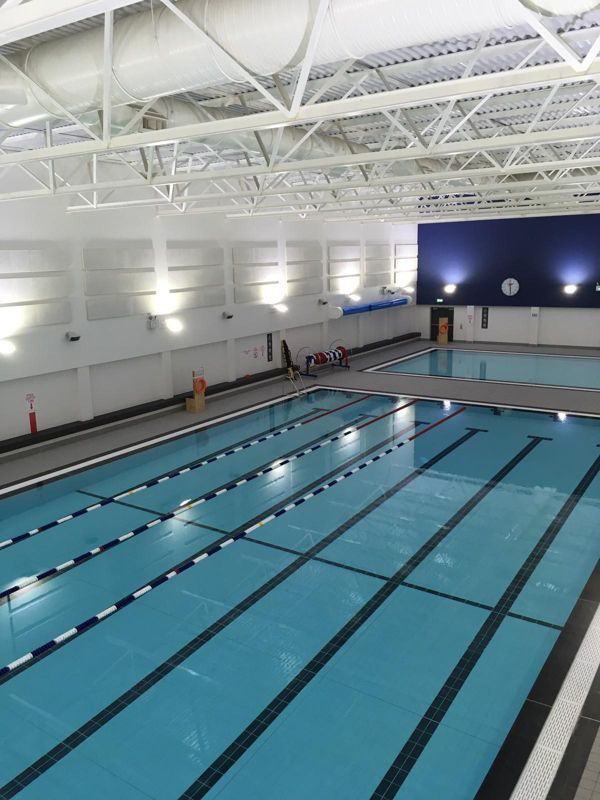
- Pool hall floors and poolside surrounds
- Learner, teaching and leisure pool areas
- Wet-side corridors, stairs and pool entrances
- Changing villages, showers and toilets
- Flume tower bases, run-outs and splash areas
- Spa, steam and sauna zones
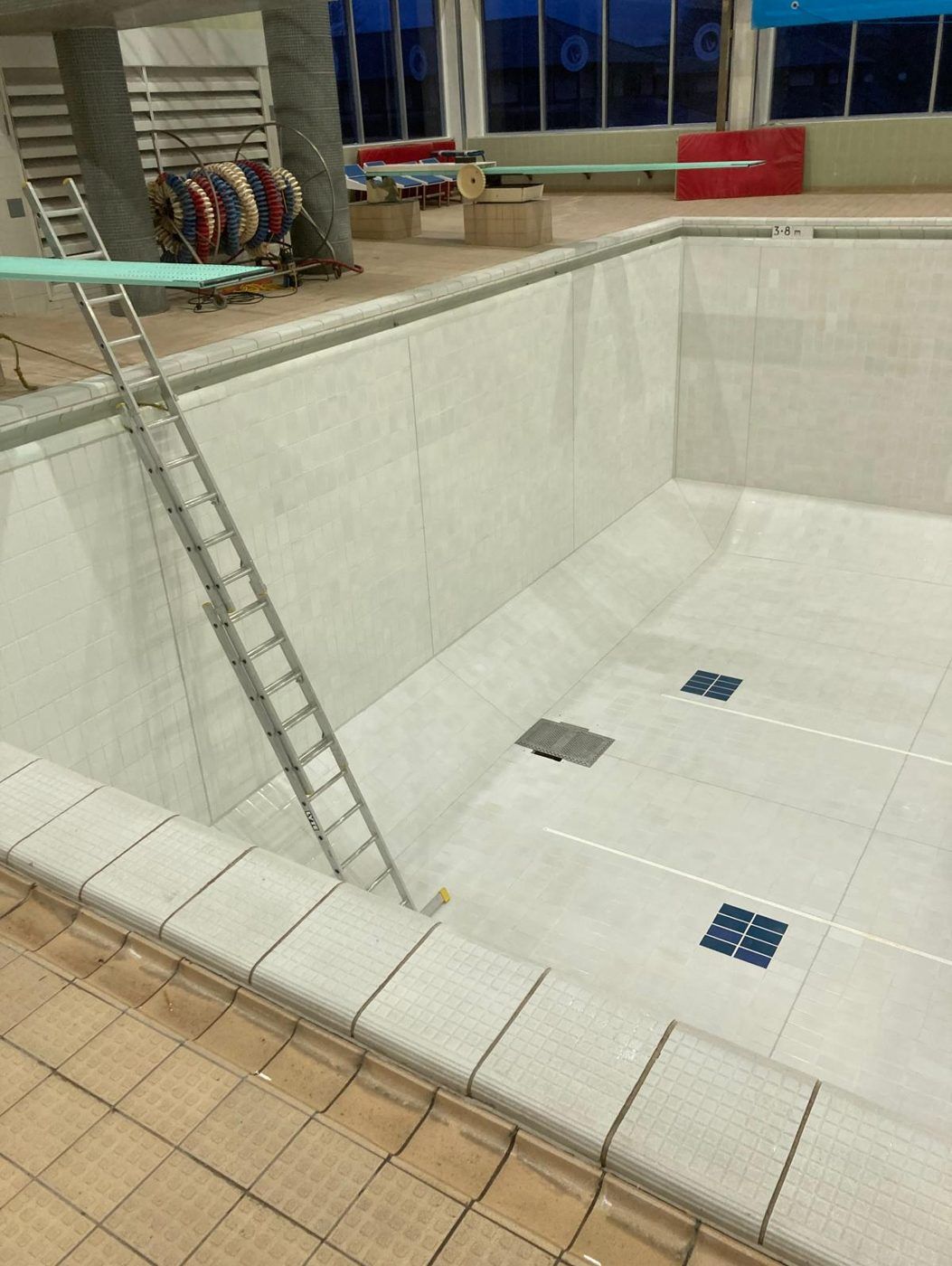
Surrounds that take a battering
Flume landings, run-out areas and splash features see concentrated water, fast-moving bathers and constant cleaning. Tiles here need suitable slip resistance, a sound bond and well-detailed joints around structures and fixings.
Where flume supports, play features or plant penetrate tiled floors, movement and sealant joints around them help avoid the cracking that often radiates out from these points.
Splash zones and run-outs often stay wet throughout opening hours, so grout condition matters. Worn or washed-out joints let water behind the tiles and can lead to wider failure, which makes regrouting these areas a sensible early repair.
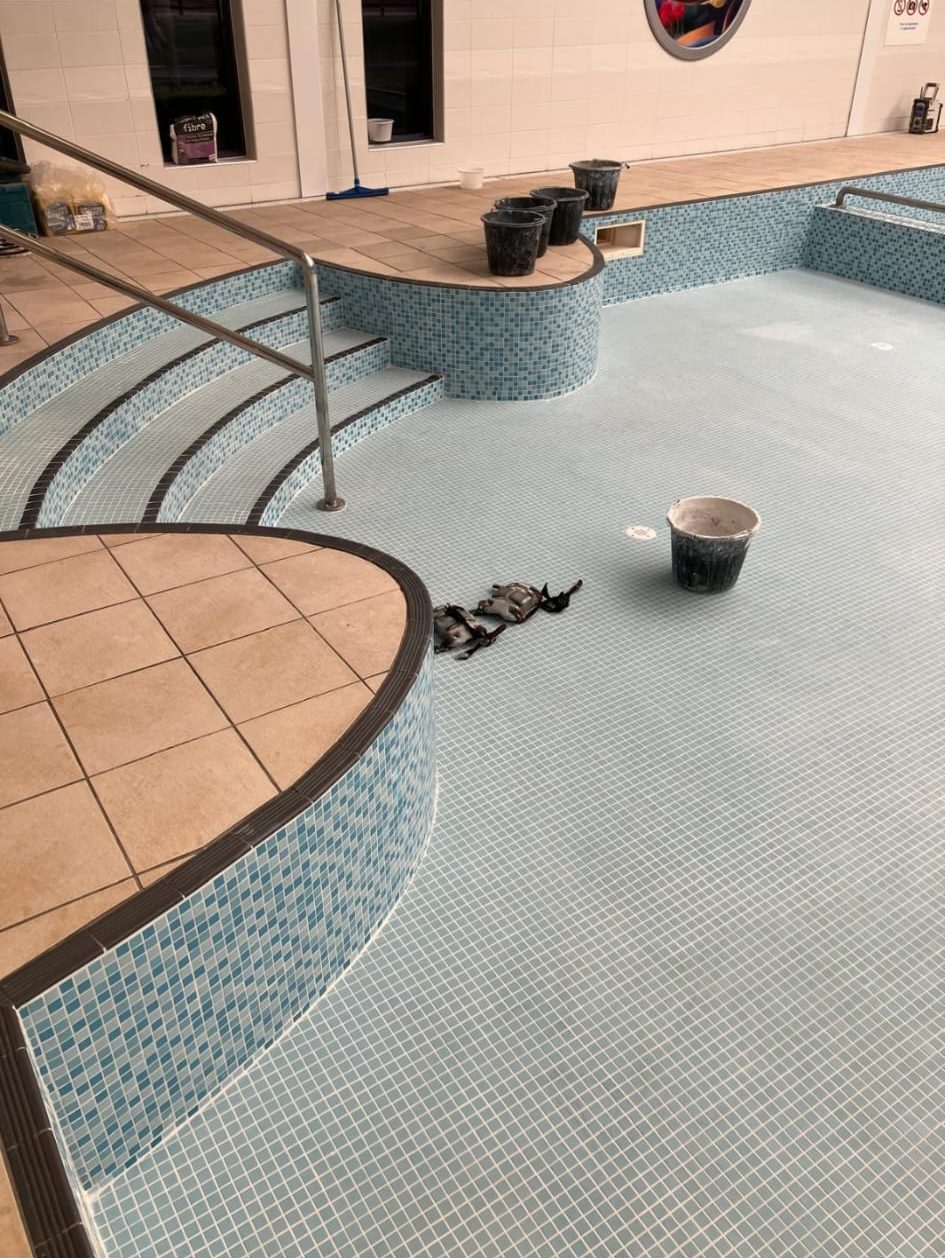
Large floors, real movement
Pool hall floors cover big areas in a warm, humid space. They need movement joints at the intervals the design sets and at perimeters, columns and changes of material, and they need falls that carry water to drains rather than towards doors and corridors.
When a pool hall floor is failing, the pattern of cracked or hollow tiles often points to the cause, whether that is missing movement joints, a background issue or simple wear. We look at that pattern before recommending repairs.
Grout lines on large pool hall floors also wear unevenly, especially along walking routes and near doors. Targeted regrouting of the worst-affected areas can extend the life of an otherwise sound floor.
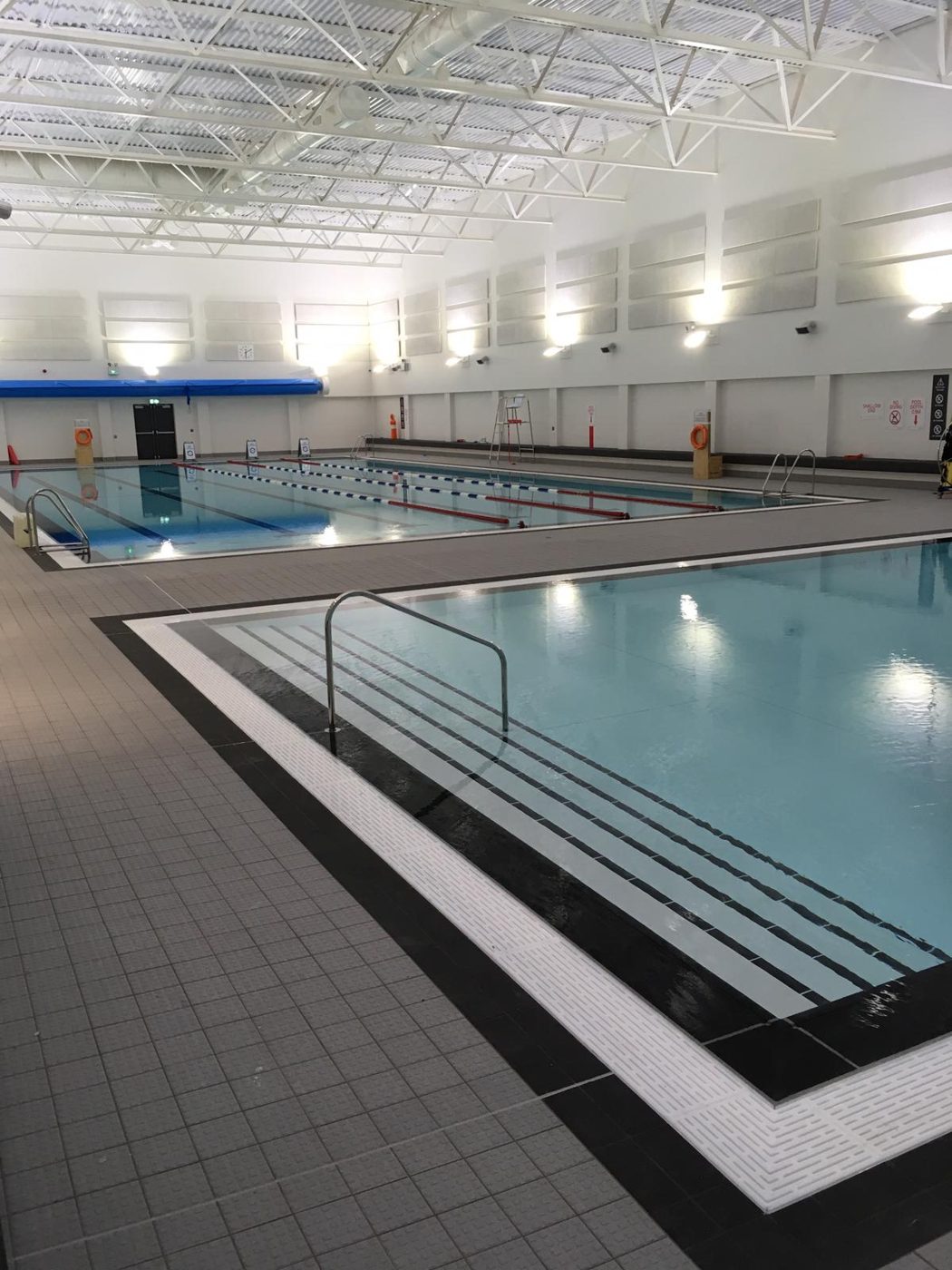
Starting with a walk round
The most useful first step is usually a walk round the wet side with the person who knows the building. Seeing where tiles have cracked, where water ponds, where grout has washed out and where complaints come from tells us a great deal about what needs attention and in what order.
From there we can explain options area by area, separate the urgent from the cosmetic and suggest what could be grouped into a single closure. You then decide the scope, and the estimate covers exactly what has been agreed.
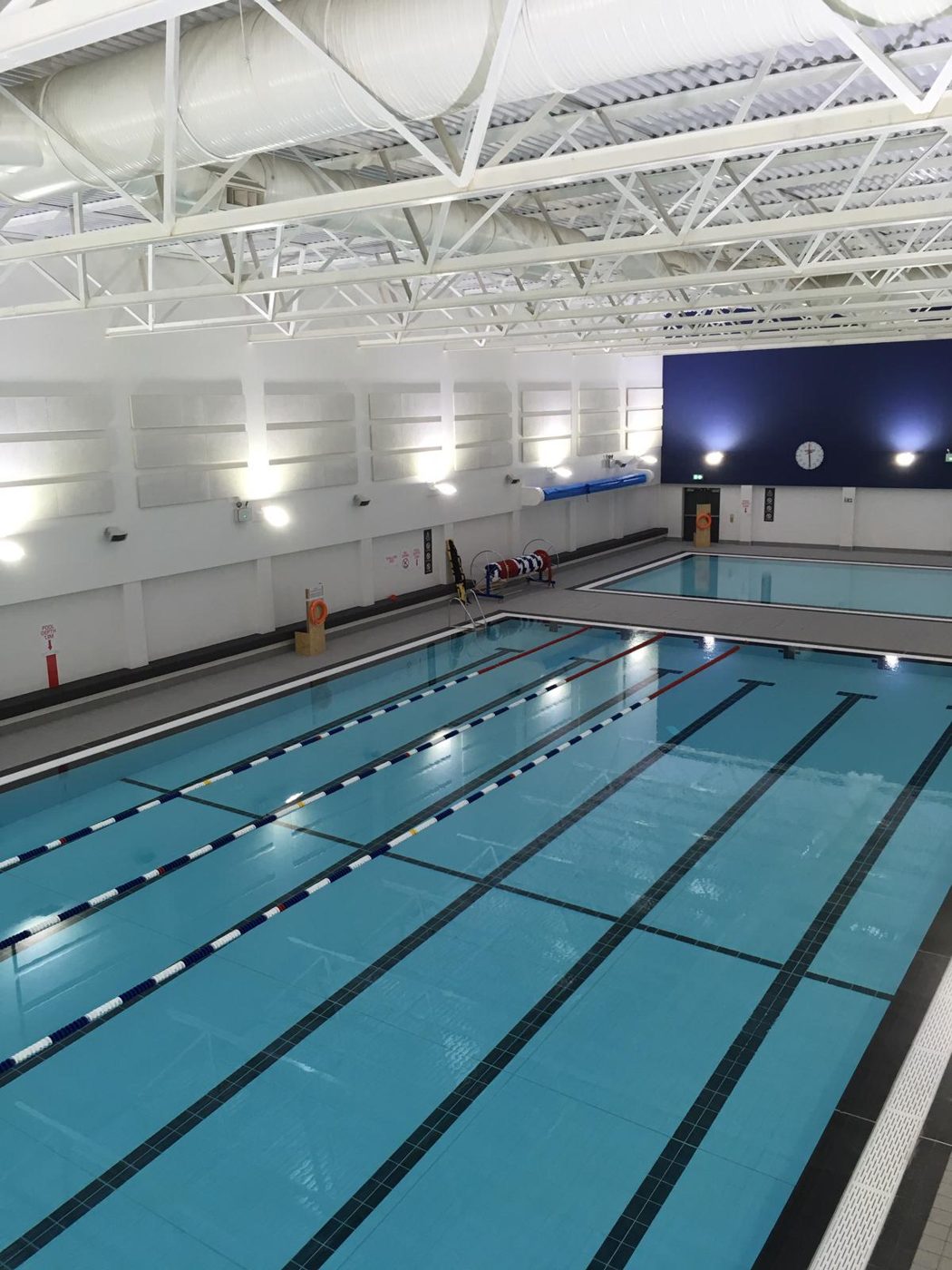
Working around opening hours
Leisure buildings run on timetables: lessons, clubs, sessions and events. We agree the working areas, access routes, phasing and hours with the operator before starting, and keep the programme under review as work progresses.
Some wet-side work can be carried out while parts of the building stay open, with screened areas and safe routes. Other work fits naturally into a planned pool closure, so combining tasks into one shutdown can reduce disruption.
Cure times for adhesives and grout are part of the programme, not something to skip. Areas reopen once the products allow it.
Why one tiler for the wet side helps
Junctions between areas are a common weak spot, particularly where each side was tiled by a different contractor. Having one tiler across the pool, poolside and changing areas means those details are thought through once.
- Junctions between pool, poolside and changing areas detailed once
- Materials chosen to work together across spaces
- One programme covering all tiled areas in a closure
- One point of contact for tiling questions
Do you tile areas of a leisure centre outside the pool?
Yes. Beyond the pool tank we tile and repair pool hall floors, poolside, wet-side corridors, changing rooms, showers, spa areas and flume surrounds. Looking at these together often makes for a better-planned programme.
Can leisure tiling be done without closing the building?
Often parts of it can. Where the layout allows, we work in screened areas with safe routes so the rest of the building stays open. Other work suits a planned pool closure, and we agree the approach with the operator beforehand.
Why do tiles crack around flume supports and fixings?
Cracks around structures that pass through a tiled floor are often linked to movement between the structure and the floor, especially where there is no flexible joint around it. We look at how the area is detailed before recommending a repair.
Can you combine wet-side tiling with pool works?
Yes, and it is often sensible. Combining poolside, changing room and pool repairs into one closure can reduce total downtime. We plan the sequence with you so each area has the cure time it needs.
How do you prioritise repairs across a leisure building?
We look at safety first, such as loose tiles, trip edges and slippery areas, then at defects that will spread if left, such as failed joints letting water behind tiles. Cosmetic work can then be planned around closures. We set this out clearly so the operator can make informed decisions.
Tell us about your pool.
Send a few details and we’ll get back to you to understand the job. Photos of the tiles, grout and problem areas help us a lot, and you can add them below.
What affects the estimate?
- The pool area and which surfaces need work
- Joint size and the grout or tiles involved
- The condition of the tiles, joints and background
- Access to the pool and the working areas
- Preparation, cleaning and any repairs needed first
- The programme and when the pool can close
- Call Dan07800 826895
- Call Jay07966 002106
- Emailtiletrustuk@outlook.com
- Where we workBased in Warrington, Cheshire.
Pool projects across the UK.