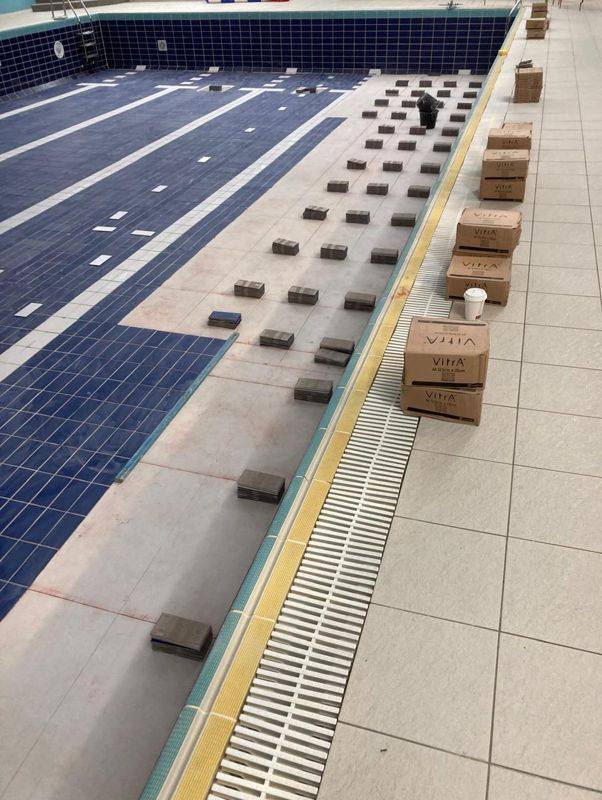
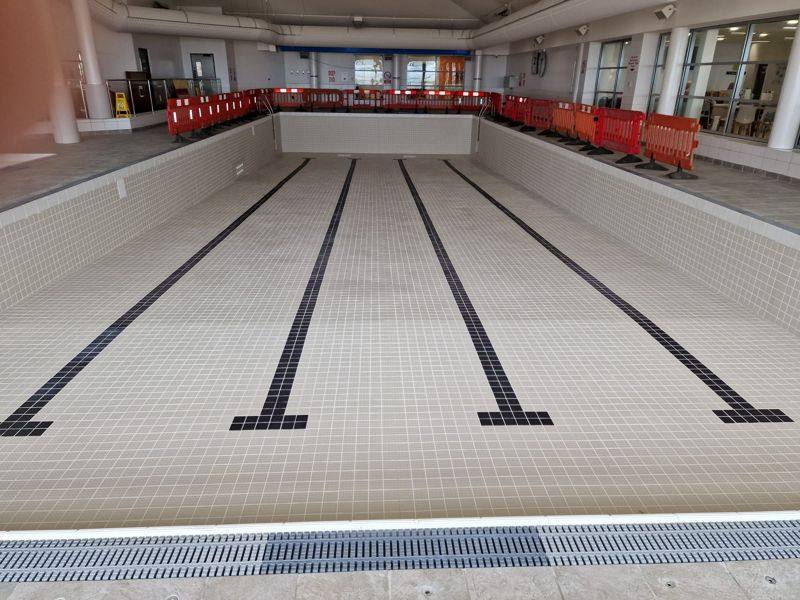
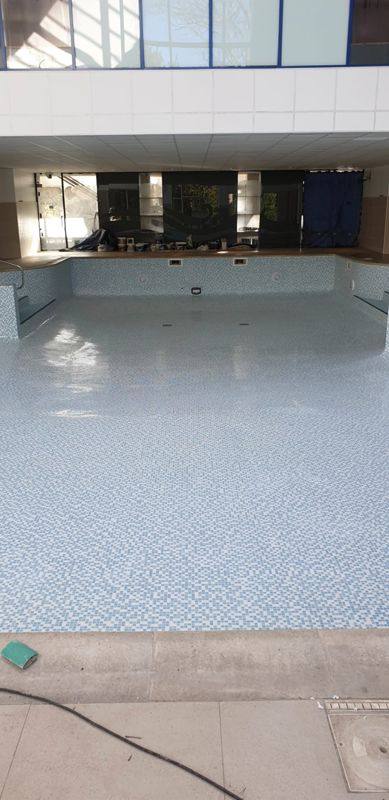
Typical signs are eroded or missing grout, tiles that are loose, cracked or sound hollow, chipped edges and step nosings, failed movement joints, staining that keeps coming back and unexplained water loss. No single sign tells you the scope. Together they say the pool should be drained and inspected so the cause and extent can be found.
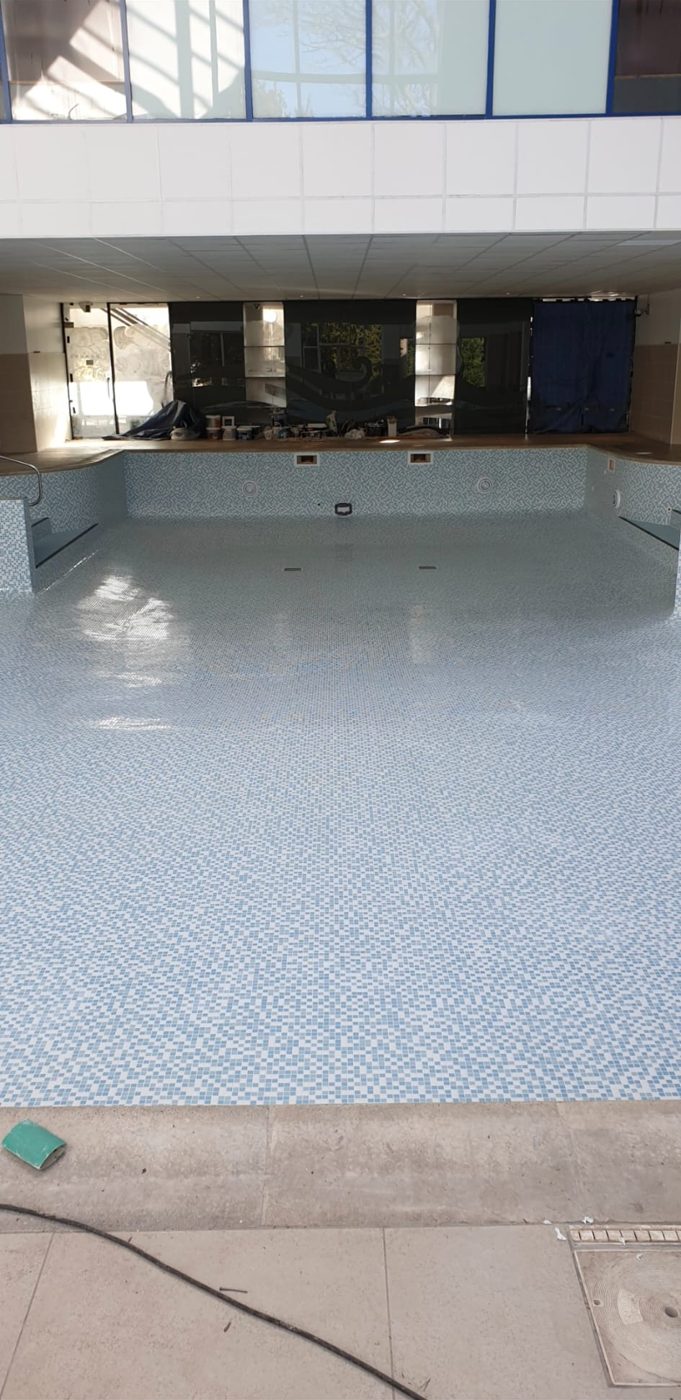
Catching problems early
Tiled pools rarely fail all at once. Open grout joints or a handful of loose tiles let water into places it should not be, and over time that can work at the bedding and background underneath.
Caught early, a targeted repair or regrout is often enough. Left alone, the same pool may need much more.
For commercial operators, early warning also means the closure can go in a quiet period instead of following an urgent failure.
Grout that is eroded, soft or missing
Recessed, rough, soft or open joints are among the most common signs. Cement-based grout can erode in pool water, particularly where the water is aggressive (poorly balanced, or low in calcium hardness) or where cleaning is harsh.
Missing grout leaves tile edges exposed and lets debris collect in the joint. Find out why it failed before regrouting. If the cause is movement or loose tiles, new grout will not fix it.
Loose, cracked or hollow-sounding tiles
Tiles that move underfoot, have lifted edges or have cracked are a clear sign. A hollow sound when tapped can mean lost bond or voids under the tile, though on its own it proves nothing.
Causes include movement in the structure, poor adhesive coverage when the tiles were fixed, failed render and repeated thermal and moisture cycling. The cause decides whether a local repair is likely to last.
Sharp edges and safety concerns
Chipped tiles, damaged nosings on steps and broken edges around channels or fittings can create sharp edges. These are a safety concern for bathers and should be dealt with promptly, even if the rest of the pool is in reasonable condition.
Handle them through your own risk assessment. HSE's HSG179, Health and safety in swimming pools, is the reference for wider pool safety management.
Other warning signs to look for
A few other changes are minor on their own, but they mark areas to look at closely at the next drain down.
- Movement or perimeter joints with cracked, hardened or missing sealant, or filled with rigid grout.
- Staining or discolouration that returns quickly after cleaning.
- Scale build-up around the waterline or on floor tiles.
- Tiles that feel rough or uneven underfoot where they used to be smooth.
- Unexplained water loss, which may have many causes and should be investigated.
- Repeated small repairs in the same area.
What to do when you notice these signs
Record what you see, with photos and a note of where and when. If the pool is in use, consider whether any area needs to be closed off or protected until it can be assessed.
Once the pool is drained, a methodical inspection separates cosmetic issues from those that need repair: tapping, checking joints and looking closely at the problem areas.
Signs specific to steps, edges and channels
Some parts of a pool take more wear than others and tend to show problems first. Steps and entry points carry the most foot traffic, step nosings take knocks from equipment and heels, and channel edges are exposed to constant water movement and cleaning.
Look for nosings that are chipped, loose or have lost their contrast, edge tiles with open joints behind them, and grating surrounds where tiles have cracked or lifted. Defects here can become a safety problem sooner than on an open floor, so check them every time the pool is drained.
Signs do not always mean a full retile
Many of these signs can be dealt with by cleaning, targeted tile repairs, regrouting or new movement joints, keeping the sound tiles in place.
A full retile comes into the picture where problems are widespread, the tiles can no longer be obtained, or the bedding and background have failed over large areas. The inspection findings should drive that call.
Common questions
Is missing grout in a pool dangerous?
It can leave tile edges exposed and more likely to chip, and it lets water and debris into the joint, which can lead to further deterioration. Have it looked at, particularly if nearby tiles are also loose or cracked.
Can I see the signs without draining the pool?
Some signs, such as missing grout, cracked tiles or staining, are often visible through clear water. Others, such as hollow-sounding tiles or failed joints, usually need the pool to be drained and dry enough to inspect properly.
Does unexplained water loss mean the tiles have failed?
Not necessarily. Water loss can come from pipework, fittings, the plant or the shell itself. Tiling and grout are not usually the waterproofing layer, so a leak should be investigated by a suitable specialist rather than assumed to be a tiling problem.
How often should a tiled pool be inspected?
Most operators check the visible finish routinely and do a closer inspection whenever the pool is drained. How often a full inspection is needed depends on the pool's age, use, history and water conditions, so agree a routine with your maintenance team.