Protecting the people who use your pool starts with sound tiling.
A swimming pool’s tiles, grout, render and joints are exposed to constant water, cleaning and chemical treatment. When part of the system starts to fail, it is important to find out why and repair the underlying problem, not simply cover it up.
PoolRevive carries out pool tile repairs and refurbishment, from isolated defects to larger retiling and regrouting projects. We assess the affected area, explain the work we recommend and prepare the surface properly before installing the repair.
Broken or loose pool tiles
Cracked, sharp-edged or loose tiles can present a risk to swimmers and staff, especially around steps, seating, pool edges and walkways. A cracked tile may also be a sign of movement or a problem beneath the tile.
The affected area should be made safe and assessed promptly. We remove defective tiles, check the condition of the backing and repair the substrate where required before fixing replacements. The aim is to address the cause of the failure as well as renew the visible finish.
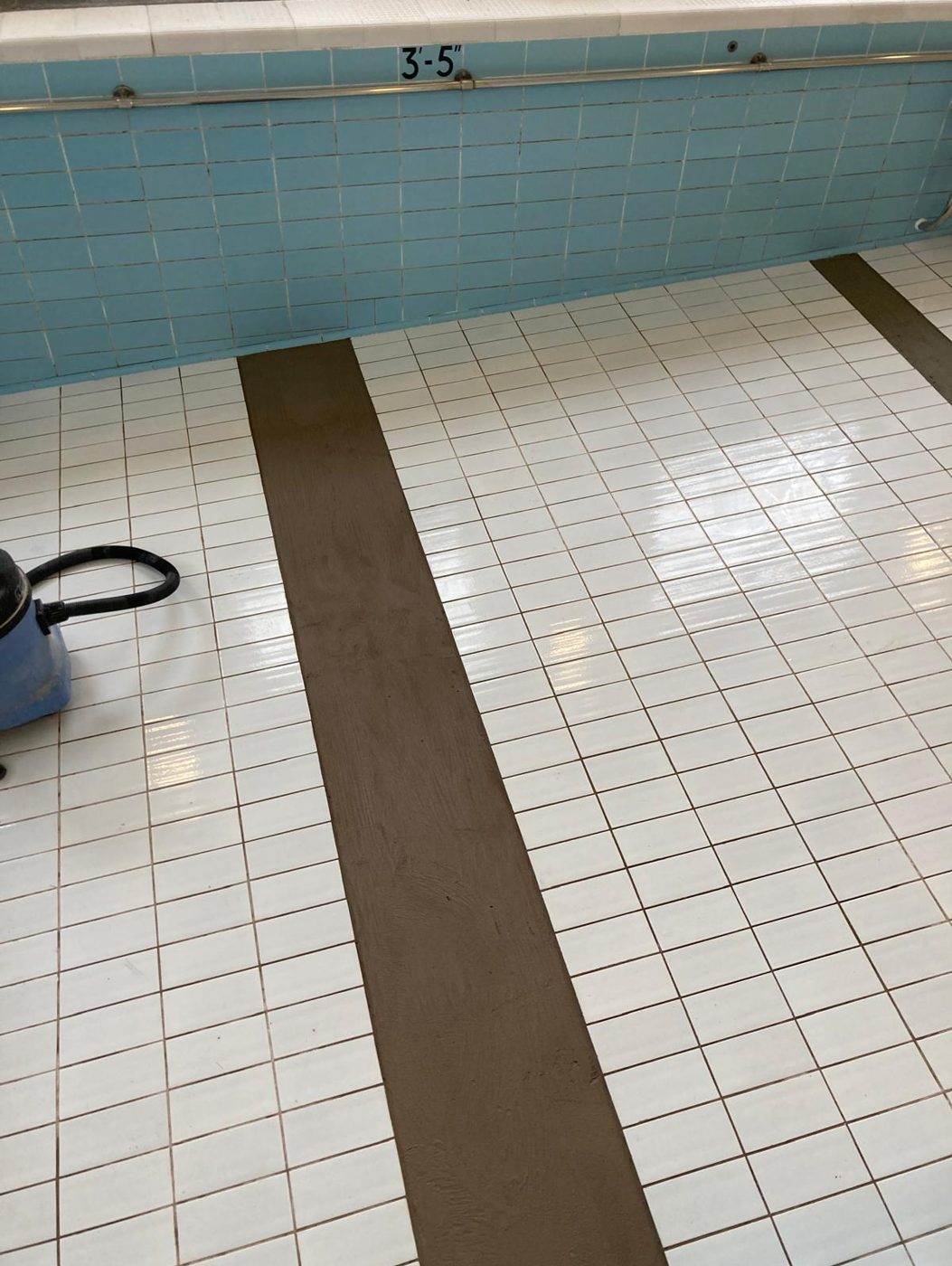
Cracks in tiles, grout or render
Cracks can develop for different reasons, including movement, a weak background, failed joints or a local defect. Filling the crack or replacing a tile without checking what is behind it may only hide the issue temporarily.
We inspect the area and identify whether the repair needs to include tile removal, render or screed repairs, or renewal of a movement joint. Where a crack may involve movement in the pool structure, further assessment may be needed before tiling work proceeds.
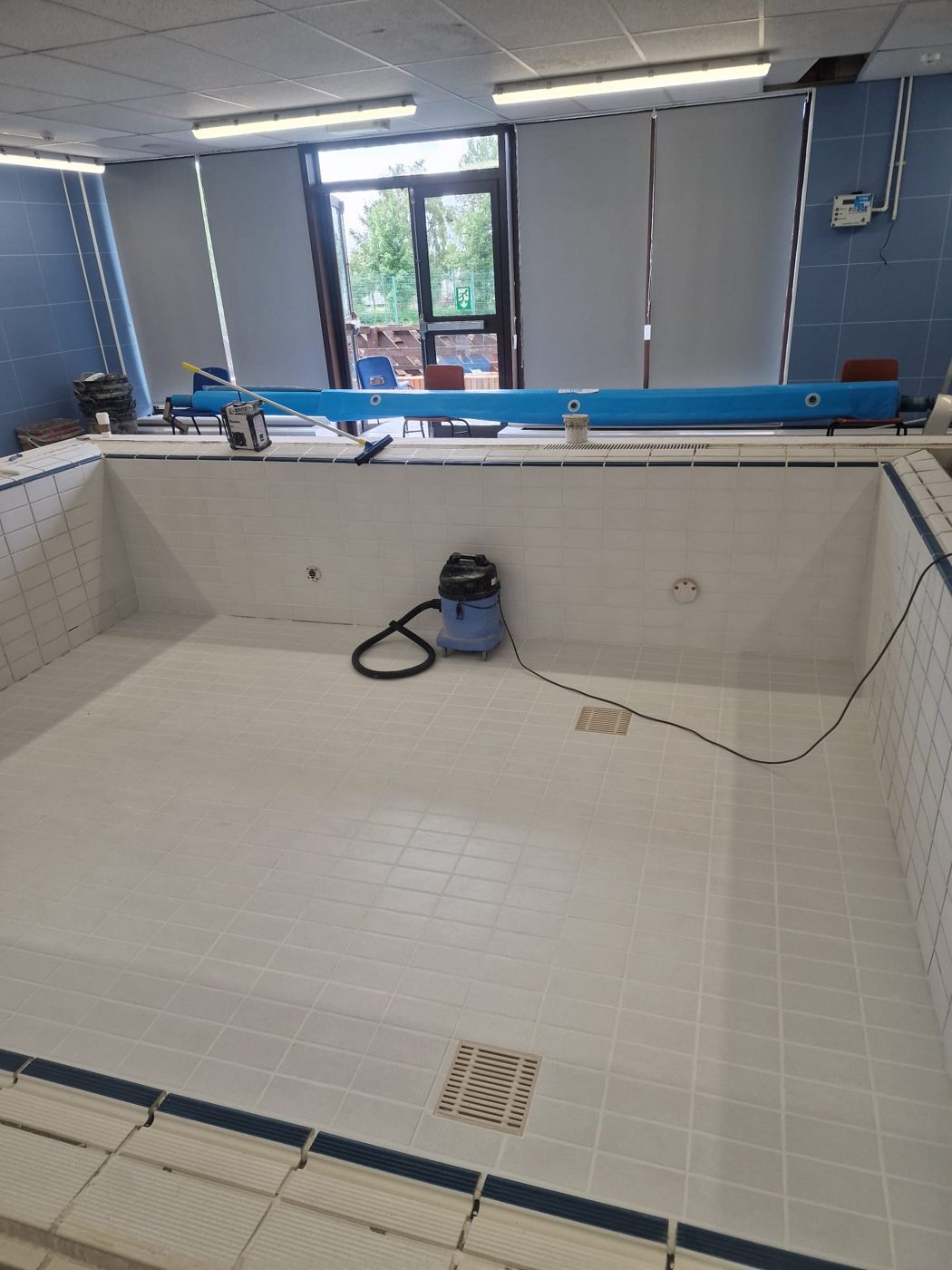
Debonded render and loose backgrounds
Render that sounds hollow, has separated from the background or is breaking away cannot provide a dependable base for new tiles. Tiling over a debonded layer leaves the original problem in place.
Where the render is unsound, we remove it back to a firm, suitable surface and rebuild the area using materials selected for the location and conditions. For suitable pool-wall repairs, this may include ARDEX AM 100 tiling render, installed in line with the manufacturer’s instructions.
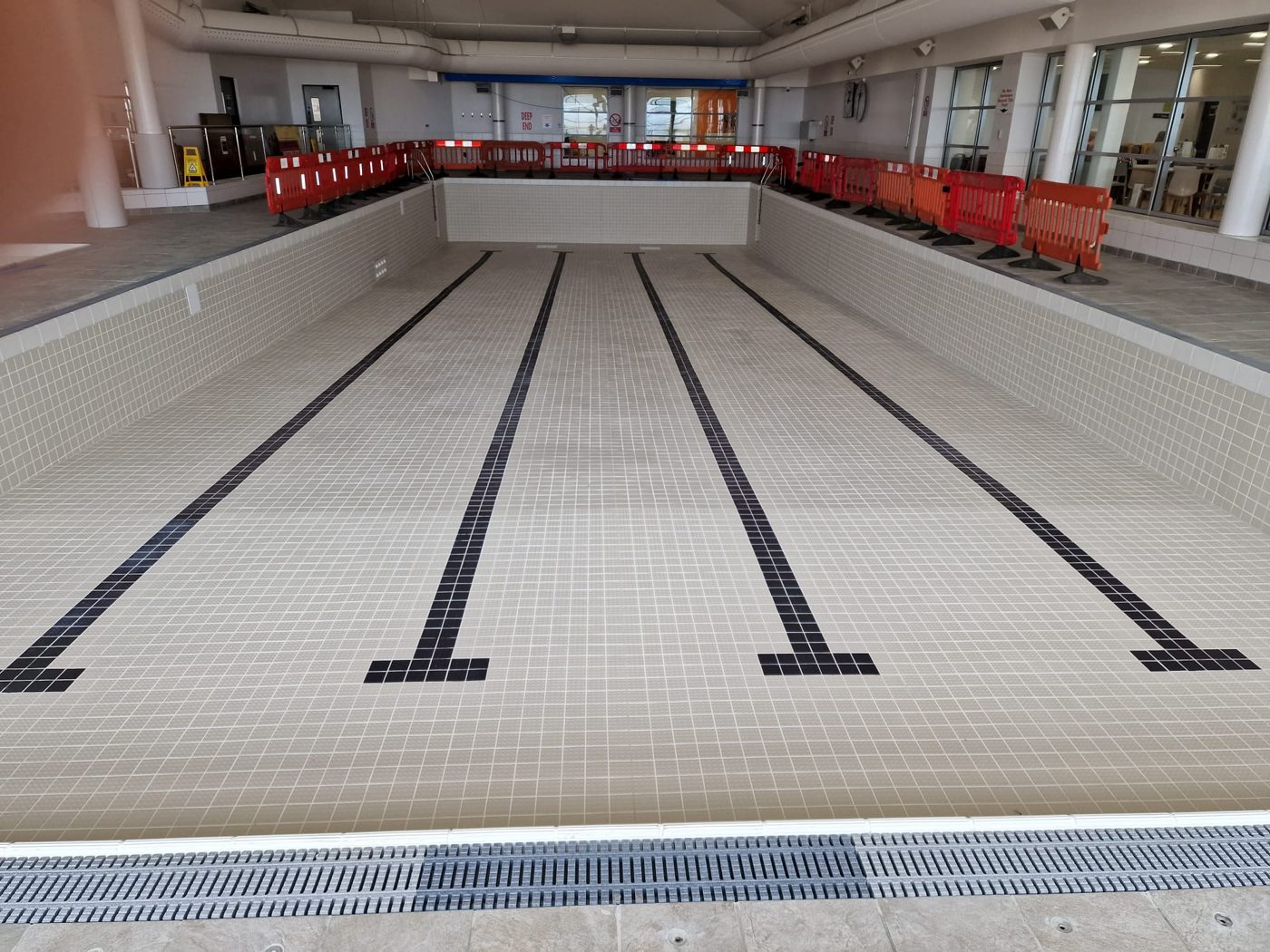
Soft, sandy or chemically weakened screed
A screed that powders, crumbles or feels sandy may no longer be strong enough to hold the tile system securely. Water exposure, chemical conditions, contamination or poor original installation can all contribute to deterioration.
We check the condition of the affected screed and remove material that is loose or unsound. If a replacement screed is needed, we select a system suitable for the pool environment and the required build-up. Where appropriate, this may include ARDEX A 38.
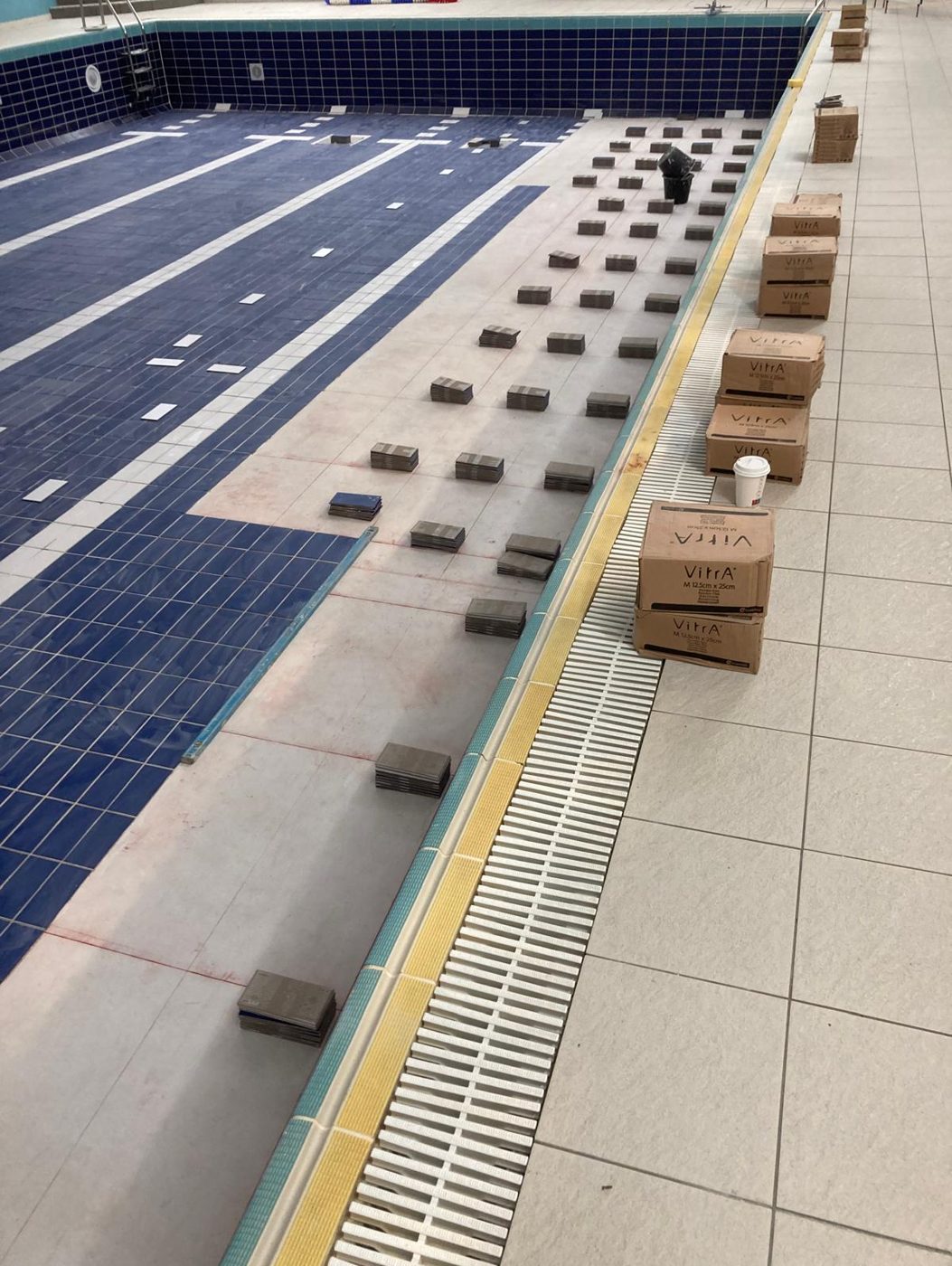
Missing or deteriorated grout
Missing grout leaves tile joints exposed and can allow water and debris to reach the layers behind the finish. Regrouting starts with preparing the joints properly: failed grout and residue must be removed to the required depth, and the tiled surface cleaned before new grout is installed.
For pool projects, we select grout to suit the tile, joint size, water exposure and chemical conditions. The surface is then cleaned and finished carefully as the grout system requires.
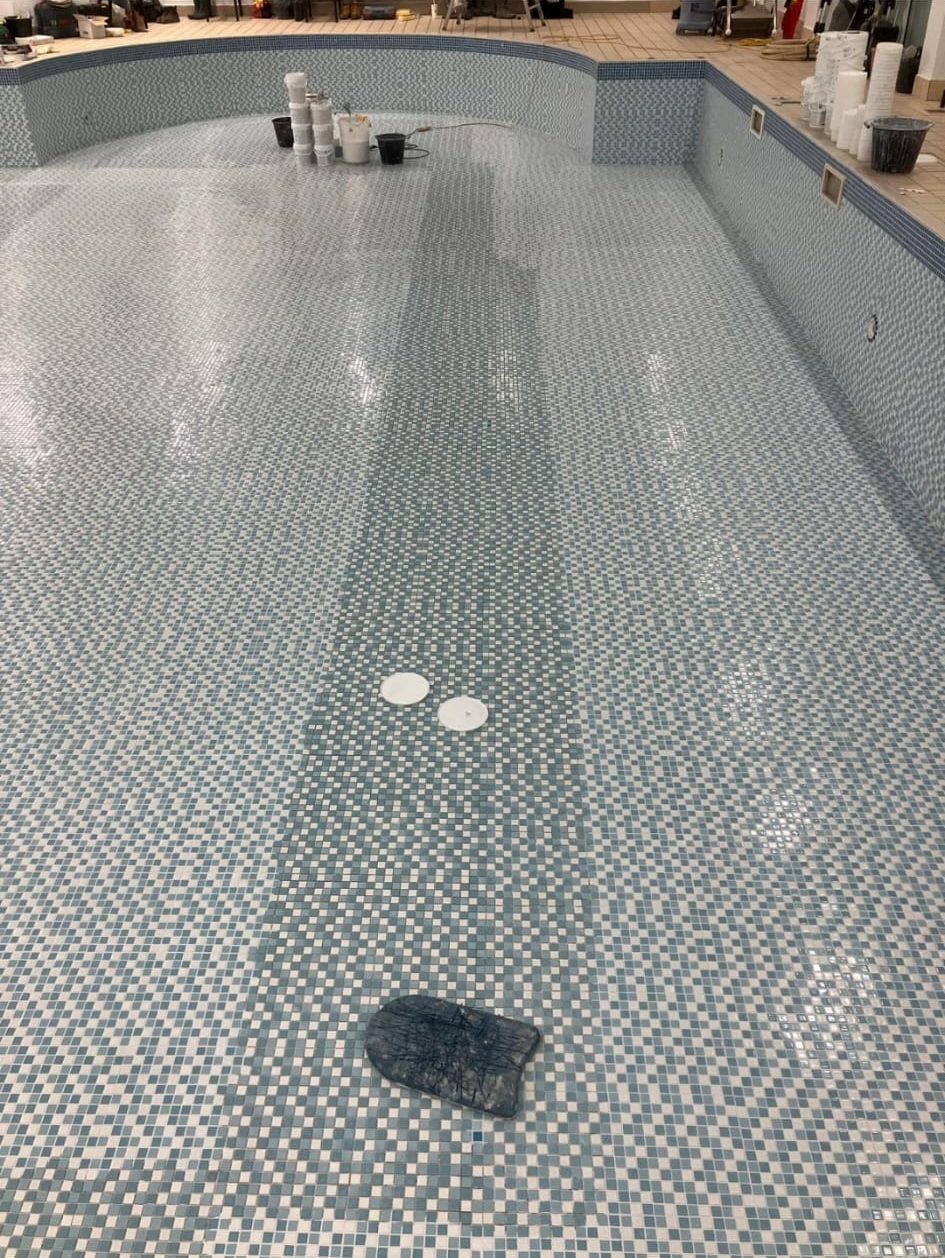
Failed movement and expansion joints
Movement joints have a different job from grout: they allow sections of the pool finish to accommodate movement. They should not simply be filled with rigid grout.
Joint sealant can fail through age, movement, chemical exposure, poor joint preparation, incorrect joint dimensions or loss of adhesion. We remove failed material, clean and prepare the joint, then install a pool-suitable sealant where appropriate. We use products such as Arbokol 1025 SP for suitable pool joints, following the product guidance and the requirements of the joint.
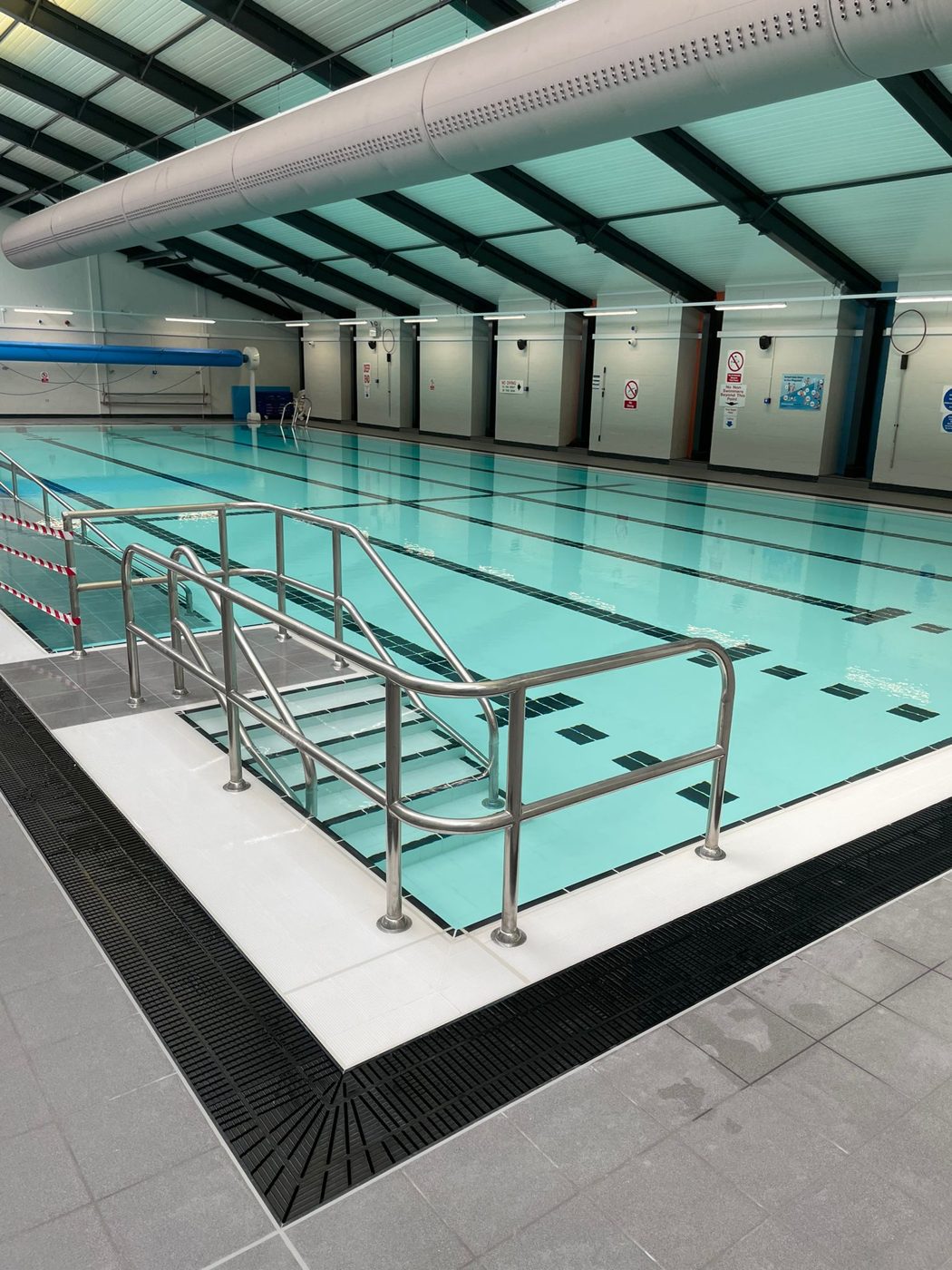
Preparation is key to a lasting repair.
Tiles and adhesive need a clean, sound and suitable surface to bond to. Calcium scale, old adhesive, loose material, contamination and dust can interfere with adhesion, so we deal with them before fixing tiles.
Our preparation may include:
- Removing calcium deposits, failed grout, loose render or screed, and old adhesive as required
- Checking that the remaining background is firm and suitable
- Jet washing and vacuuming the work area where appropriate
- Allowing the prepared surface to dry as required
- Making sure the surface is clean and free from dust before tiling
- Using the correct preparation products, tools and adhesive for the job
- Back-buttering tiles where required to achieve a secure, well-bedded installation
We do not tile over existing tiles in swimming pools. We remove the existing finish where required so the condition of the background can be checked and the new tile system fixed to a suitable base.
Products chosen for the pool environment.
Pool work needs materials selected for the specific application, including immersion, tile type, substrate, joint size and water-treatment conditions. We use professional products and the appropriate tools for the work, following the relevant product instructions and agreed specification.
The right materials cannot compensate for a weak or poorly prepared background. That is why we deal with preparation and substrate repairs before fixing the new tiles.
Our five-year workmanship warranty.
We provide a five-year workmanship warranty on our work where the recommended preparation and repairs are included in the agreed scope and carried out by us. The warranty terms are confirmed with the quotation.
If a customer chooses not to pay for recommended repairs to damaged render or screed and instructs us to tile over a loose, debonded or otherwise unsuitable surface, we cannot warrant the performance of that surface or the tile installation affected by it. We explain this before work begins so the decision and any warranty limitation are clear.
Unsure what your pool needs?
Send us photos and a description of the problem. We can discuss the likely repair, the preparation involved and whether a site visit is needed before providing an estimate.
Tell us about your pool.
Send a few details and we’ll get back to you to understand the job. Photos of the tiles, grout and problem areas help us a lot, and you can add them below.
What affects the estimate?
- The pool area and which surfaces need work
- Joint size and the grout or tiles involved
- The condition of the tiles, joints and background
- Access to the pool and the working areas
- Preparation, cleaning and any repairs needed first
- The programme and when the pool can close
- Call Dan07800 826895
- Call Jay07966 002106
- Emailtiletrustuk@outlook.com
- Where we workBased in Warrington, Cheshire.
Pool projects across the UK.