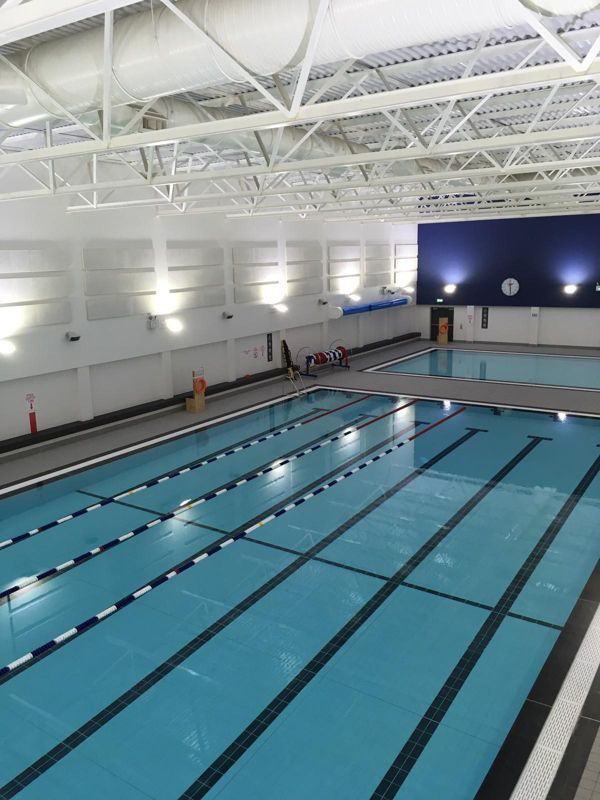
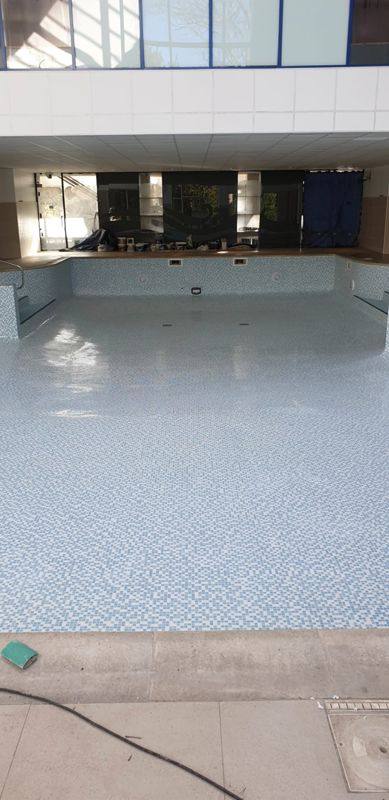
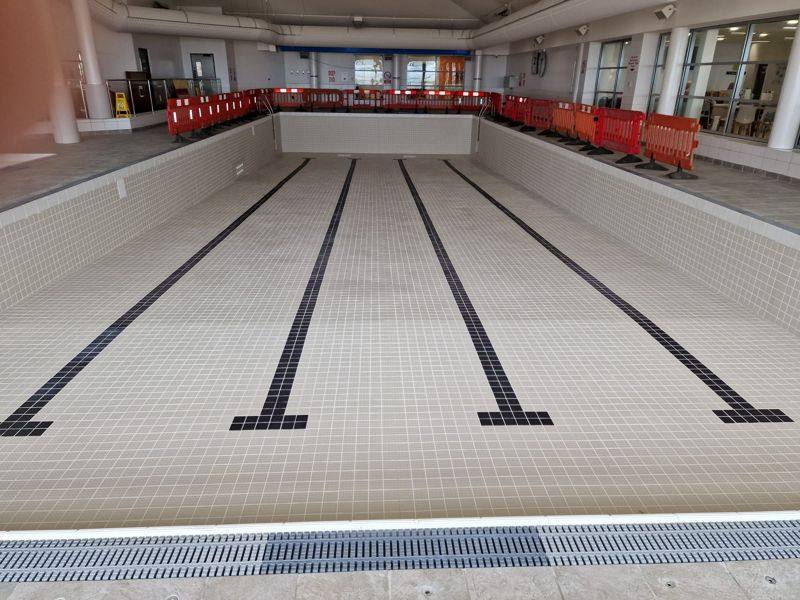
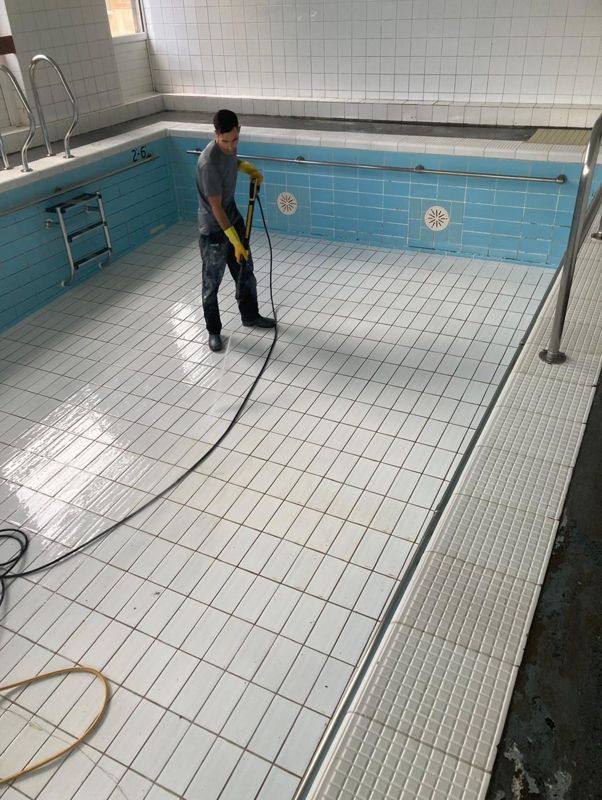
Swimming pool refurbishment means restoring an existing pool rather than building a new one. For a tiled pool it usually covers draining, inspection, a chemical clean, tile and background repairs, regrouting or retiling, then a controlled refill. The scope depends on what the inspection finds, so the right starting point is an assessment of the tiles, joints and background.
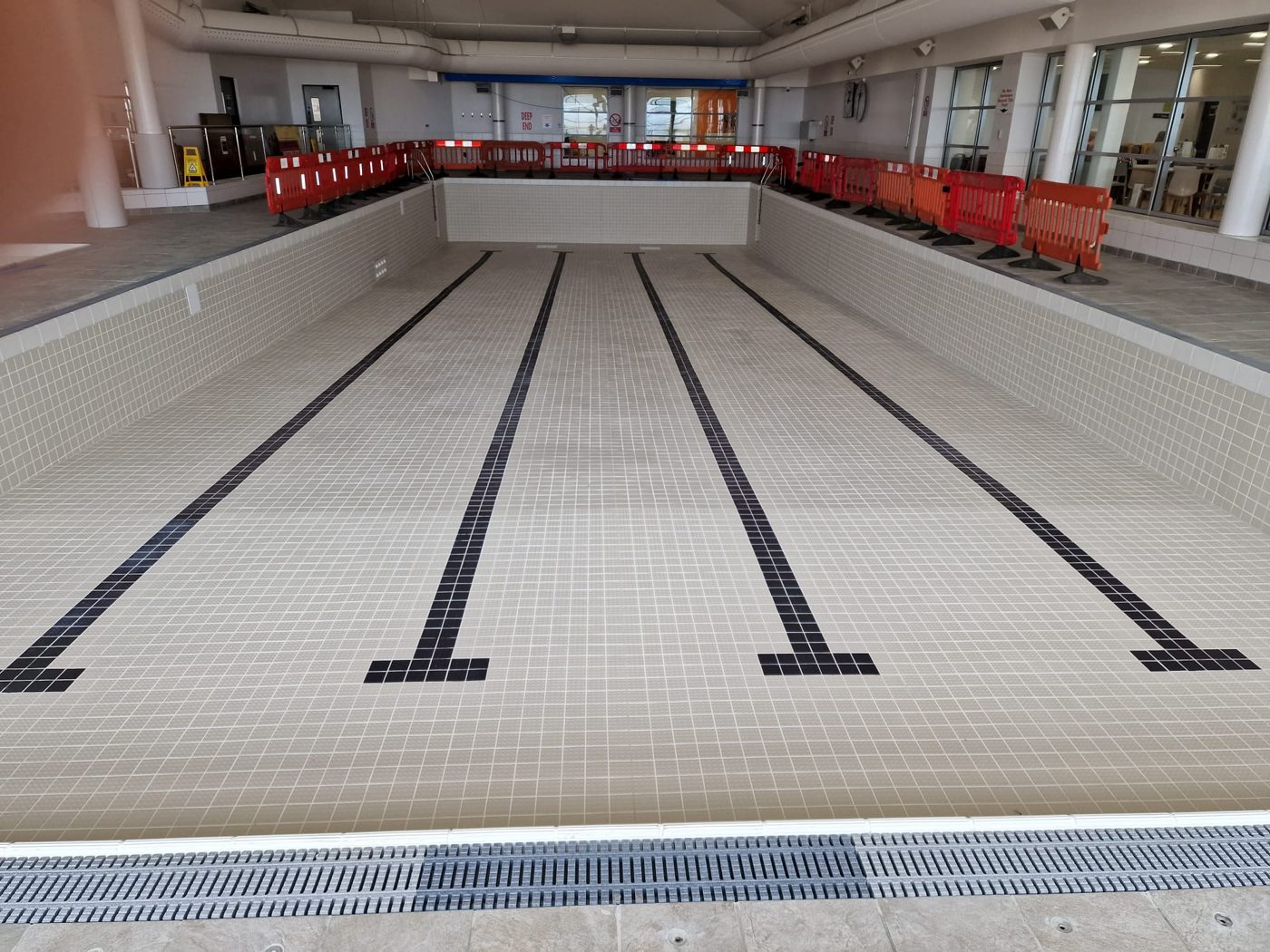
What refurbishment means for a swimming pool
Refurbishment means improving what is already there instead of starting again. The aim is to bring the pool back into a safe, sound and usable condition, and to make it look and feel right for the people who swim in it.
For a tiled pool, that usually means work on the tiled finish and what sits behind it: tile repairs, regrouting or epoxy regrouting where joints have failed, renewing movement joints, and retiling areas that cannot be saved. It can also take in the pool surround, steps and edges, where wear often shows first.
Refurbishment is not only cosmetic. A proper assessment looks at whether the tiles are still bonded, whether the render or screed behind them is sound and whether there are signs of movement, so the work deals with causes as well as symptoms.
Why owners and operators refurbish
Pools wear in predictable ways. Constant immersion, treated water, cleaning, bather traffic and, for outdoor pools, the British weather all take their toll on grout and tiles over the years. Even well-maintained pools reach a point where routine care is no longer enough.
- Grout that is low, eroded or missing, so joints are hard to keep clean
- Hollow, loose or cracked tiles, which can become a safety issue
- Stained or tired finishes that make a pool look neglected
- Earlier patch repairs that keep failing in the same places
- A planned closure, such as a school holiday or hotel off-season, that gives a chance to put everything right at once
Signs your swimming pool needs refurbishment
Most pools show warning signs well before a major failure. Look for joints that are open or crumbling, tiles that sound hollow or have lifted, cracks running across several tiles, staining that will not clear with normal cleaning and rough or sharp areas underfoot.
Some signs are less obvious. Algae or black spots that keep returning to the same joints, or areas that never come up clean, can point to failing grout. Unexplained water loss needs investigating by a leak detection specialist, because the cause may be in pipework or fittings rather than the tiled finish.
A single crack or one hollow tile does not automatically mean a full refurbishment. Size, position and spread all matter, which is why the pool should be assessed before a scope is agreed.
Planning the project and setting a budget
Your budget should follow the condition of the pool, not the other way round. The cost depends on what is found once the pool is drained and inspected, and some defects only show when grout is raked out or tiles are lifted. A good quote explains how hidden problems will be handled.
These are the main things that move the scope and the price:
- Surface condition: whether work is limited to joints and a clean or needs deeper repair
- Tile bond and background: whether tiles are still bonded and the render or screed behind them is sound
- Tile and joint damage: whether the pool needs targeted tile repairs, regrouting, epoxy regrouting or retiling
- Size and detail: steps, channels, curves, mosaic and lane markings all add work
- Site type and access: home pools, hotel and spa pools and commercial pools differ in programme, access and paperwork
Refurbish or rebuild?
If the pool shell is sound, refurbishment can restore the existing pool and its finish without the cost and disruption of a rebuild. Most tiled pools that are tired rather than failing fall into this category.
A rebuild may make more sense where the structure itself is failing, or where you want to change the shape, size or depth of the pool. That is work for a pool construction contractor and a structural engineer rather than a tiler. If our inspection suggests the problem goes beyond the tiled finish, we will tell you.
- Refurbish when damage is mainly in the tiles, grout and background
- Get structural advice if there are signs the shell itself is moving or failing
- Consider a rebuild if you want major changes to shape or size
- Compare long-term value, not just the starting price
The swimming pool refurbishment process, step by step
Every pool is different, but the work on a tiled pool usually follows the same order.
- Drain the pool safely, in line with the operator's procedures
- Inspect the tiles, joints, movement joints and background, including tap testing and selective lifting where needed
- Chemical clean, using the correct product for the job so existing grout and tiles are not harmed
- Repair: lift and refix loose tiles, repair render or screed and replace cracked or missing tiles
- Regrout: rake out failed joints to a proper depth and regrout with a suitable pool system, or retile areas that cannot be saved
- Renew movement joints with a flexible sealant rather than grout
- Allow full cure times as set out in the product instructions
- Refill slowly and balance the water in line with the operator's water treatment plan
Choosing materials that last
In a tiled pool, the materials that matter most are the tiles, the adhesive and render system, the grout and the movement joint sealant. They need to be suitable for permanent immersion and for the pool's water chemistry, and they need to work together as a system.
Tile choice affects appearance, slip resistance and how easy the pool is to keep clean. Mosaic suits curves and features, while larger formats mean fewer joints. Grout choice matters too: epoxy is often chosen for pools because it is dense and resists staining, but it is not automatically better than a suitable cement grout, and it is harder to install well.
If your pool plant, heating, lighting or covers also need attention, a refurbishment closure is a sensible time to have specialists in those trades carry out the work alongside the tiling, so the pool only closes once.
Safety and water quality
Refurbishment is a good time to deal with anything that affects safety, such as damaged edges, steps and slip resistance on the surround. HSE's guidance on health and safety in swimming pools (HSG179) sets out operators' duties to assess and control risks, and the PWTAG Code of Practice covers pool water treatment, including what to check after works.
Sound, well-filled joints are also easier to keep clean, which helps with day-to-day hygiene and the look of the pool.
Common questions
How much does swimming pool refurbishment cost in the UK?
It varies widely with the pool's size, the condition of the tiles and background, hidden defects and the site. A clean and regrout costs far less than tile and background repairs or a retile. A reliable price follows an inspection and an agreed scope.
Can I change the look of my pool during refurbishment?
Yes. Retiling or new mosaic details, edge bands and lane markings can change the look considerably. Changing the shape or size of the pool is a structural job and usually means a rebuild.
Is refurbishment better than building a new pool?
Where the shell is sound, refurbishment usually gives better value and less disruption. A rebuild is worth considering only if the structure is failing or you want major changes to shape, size or depth.
What should I ask a pool refurbishment contractor?
Ask what is included, how hidden defects will be handled and priced, which materials they will use and why, how cure times are built into the programme and whether they work on commercial pools as well as private ones.
Do you refurbish pools that are not tiled?
PoolRevive specialises in tiled pools: cleaning, tile repairs, regrouting and retiling. For liner, fibreglass or painted pools, a specialist in that finish is the better choice.
Sources and further guidance
This guide is general information, not legal, health or safety advice for a specific site. Pool operators should follow current official guidance and take advice from competent specialists.