Heat, steam and fine detail.
Spa pools, steam rooms and sauna surrounds put tiles through more heat and moisture than most pools, and guests sit close enough to notice every joint. We tile and repair spa pools, tubs set into tiled surrounds, steam rooms and tiled seating with products suited to the conditions and joints neat enough to sit next to.
Warm water, seating and jets
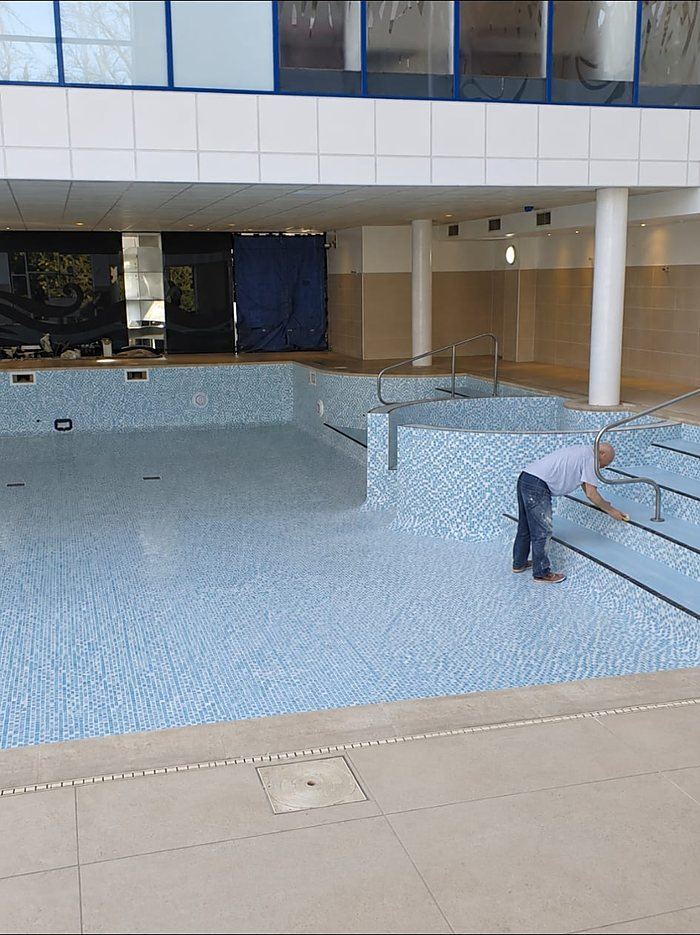
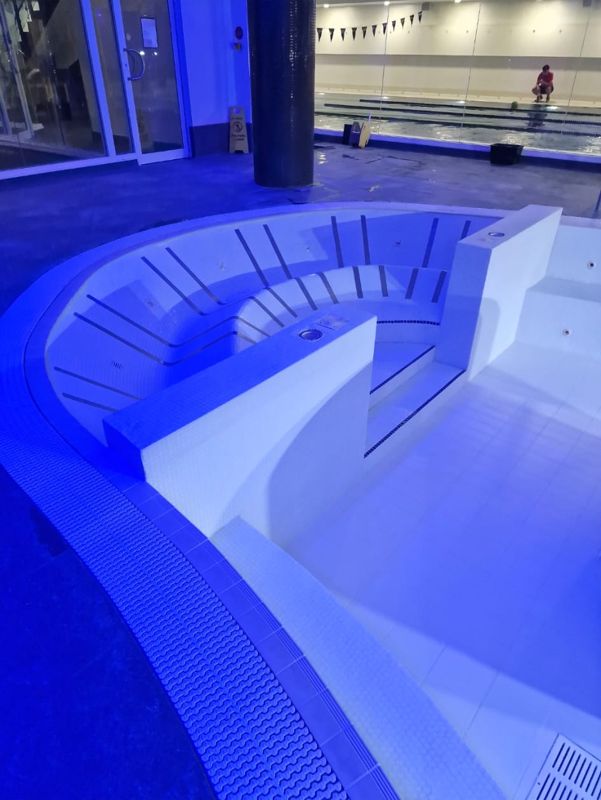
Spa pools usually run warmer than a swimming pool and are heavily used for their size. Tiled seating, curved benches, jet housings and lighting all create joints and cuts that need careful detailing, often in mosaic.
We take care around fittings so tiles meet them cleanly and any sealant joints are formed where the fitting maker or the design calls for them. Where repair is needed, we work around existing fittings rather than disturbing them unnecessarily.
Warmer water and heavy use can be harder on grout and sealant than a cooler pool, so joint materials should be chosen for those conditions and the pool's water treatment. We explain why we propose each product.
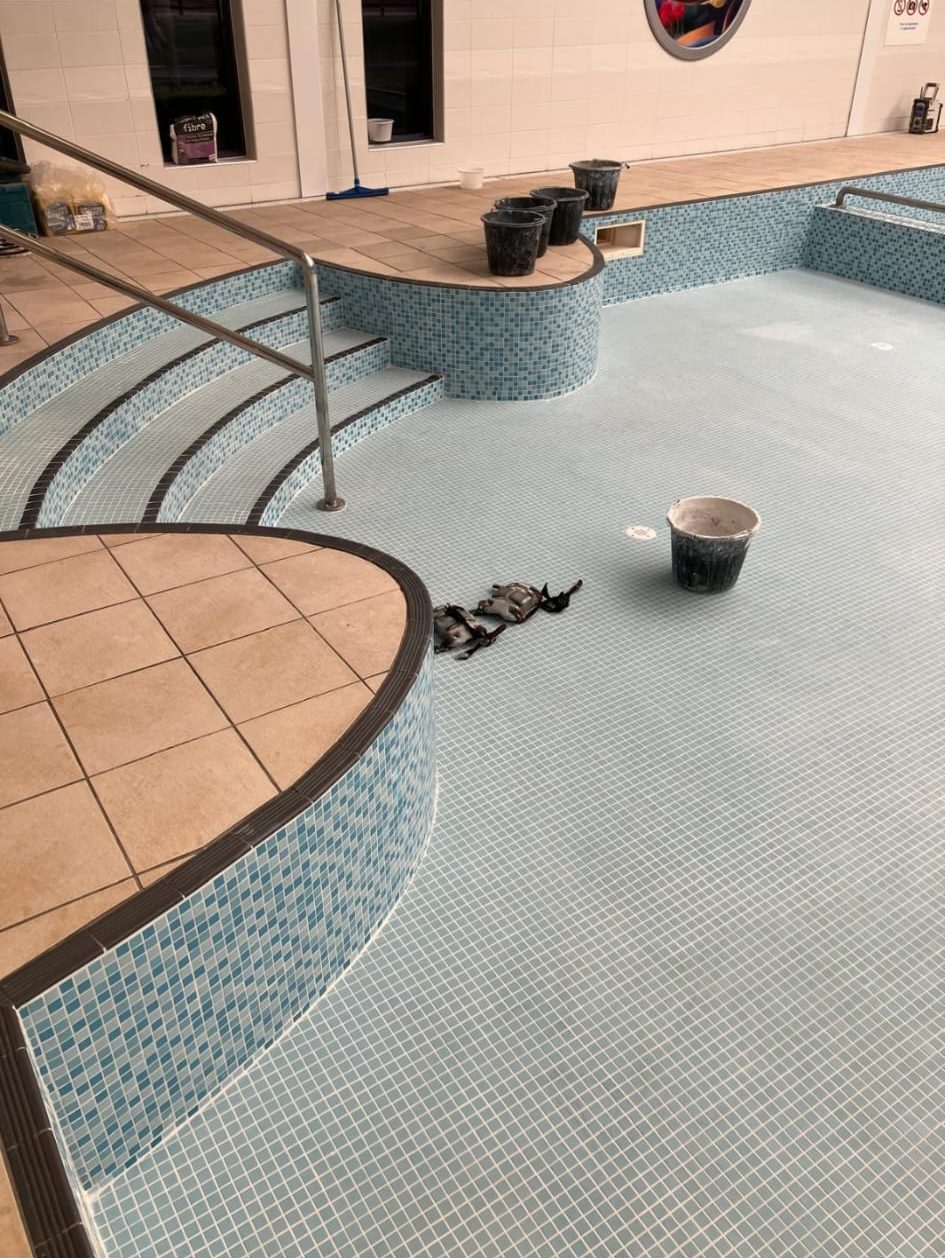
Tubs set into a tiled surround
A hot tub set into a tiled deck or plinth looks built in, but it still needs maintenance access. We plan the tiling around access panels, the tub's rim and any drainage so the surround looks built in and the equipment can still be reached.
The junction between tub and tiles is a movement joint, not a grout line. Leaving it flexible avoids the cracked edge that often appears when a tub and its surround move independently.
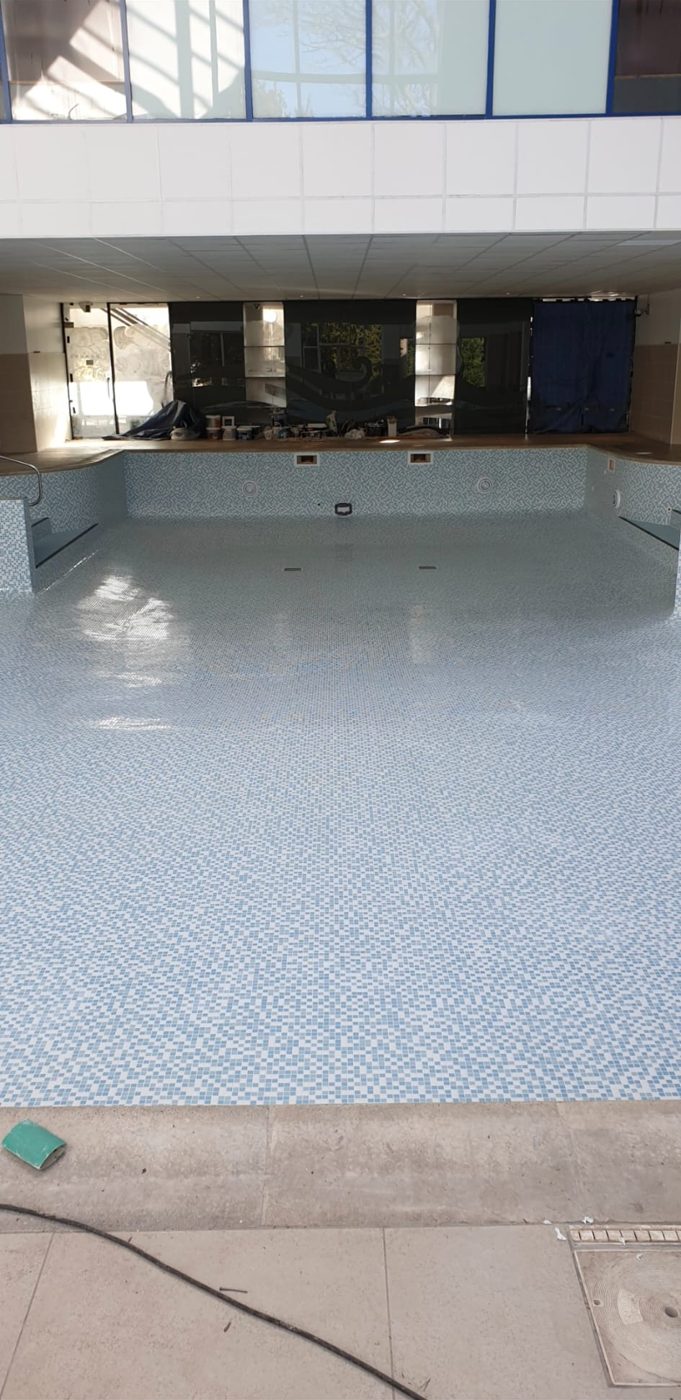
Built for constant heat and vapour
A steam room is saturated with hot vapour whenever it runs, so every layer behind the tiles matters. Steam rooms are normally built on a system designed for that use, with suitable boards, waterproofing and vapour control, and we coordinate with whoever is supplying the room and the steam generator.
- Tiled benches and seats formed to a comfortable profile
- Ceilings shaped so condensation runs off rather than dripping on bathers
- Floors laid to falls to the drain
- Adhesives, grouts and sealants suitable for heat and steam
- Clean detailing around the steam outlet, lighting and door
Tiling is only part of a steam room. We confirm that the substrate and waterproofing are suitable and ready before we start fixing.
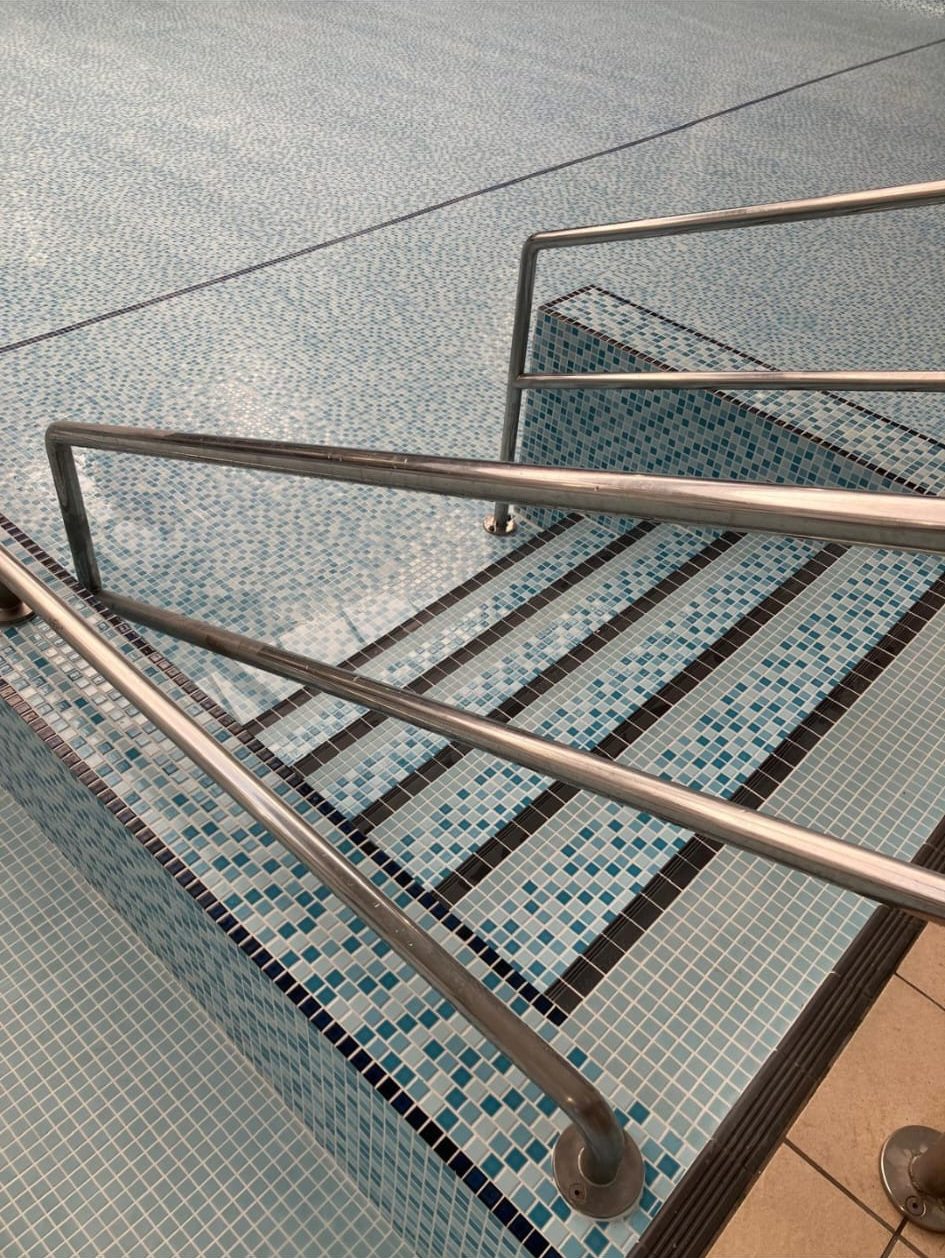
Floors and walls around the sauna
Sauna interiors are usually timber, but the floors, walls and shower areas around them are often tiled and see wet feet and cleaning water all day. We tile these zones to suit barefoot use, with falls to drains and a clean junction where tiling meets the sauna cabin.
Heat from the cabin can affect nearby surfaces, so tiles and sealants close to the sauna should be suitable for the temperatures they will see. We check the cabin maker's guidance on clearances and finishes around it before tiling.
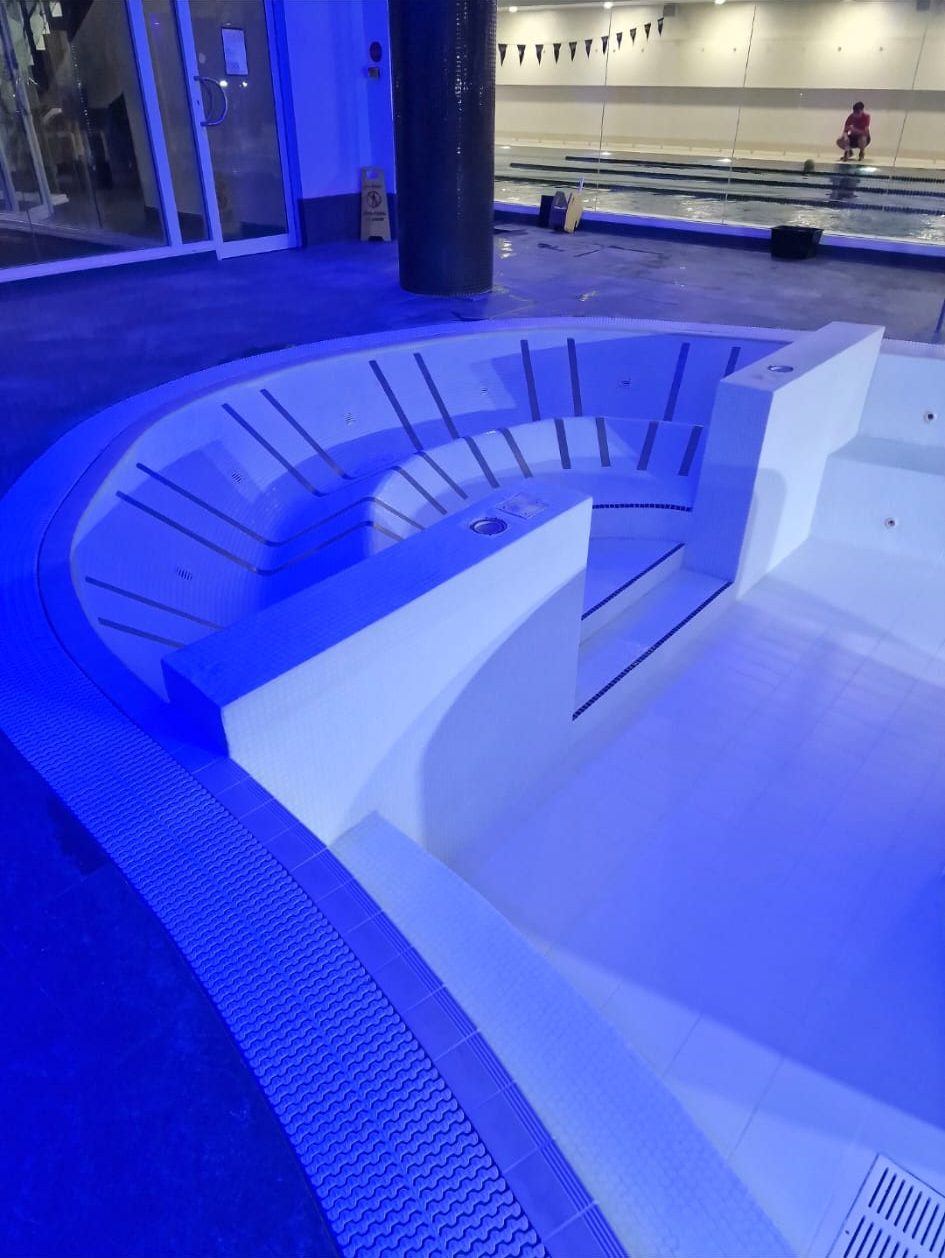
Easy to clean, slow to stain
Warm, humid spa spaces are cleaned often and judged closely on cleanliness. Tight, well-filled joints, sealant renewed where it has broken down and surfaces chosen to suit the cleaning products in use all make the daily routine easier.
We explain how the grout and sealant we propose should be cleaned and what to check during routine maintenance. Sealant joints in particular are maintenance items in hot, wet rooms and will need renewing over time, which is normal rather than a sign of failure.
- Joints filled fully so dirt has nowhere to settle
- Sealant renewed where it has split or discoloured
- Cleaning products checked against the grout maker's guidance
- Seating edges and corners detailed for easy wiping
Keeping a spa looking right
Spas are judged on appearance. Stained joints, a cracked bench tile or a failed sealant line can undermine an otherwise high-end space. Targeted repairs, regrouting and renewing sealant joints are often enough to restore the finish without closing the whole facility for long.
We look first and agree the scope with you, so you know what will be done and what the space will look like afterwards.
Related work
What tiles and grout work in a steam room?
Steam rooms need tiles, adhesives, grouts and sealants that the manufacturers state are suitable for constant heat and steam, used as part of a compatible system. Mosaic is popular because it follows benches and curved ceilings well. We confirm the substrate and waterproofing are designed for steam before tiling.
Can you repair tiled seating in a spa pool?
Yes. Seating takes concentrated wear and is close to the eye, so we cut out failed tiles, check the bedding beneath and rebuild to match the existing profile and joint lines. Matching older mosaic may need discussion before work starts.
Can you tile around a built-in hot tub?
Yes. We plan the surround around the tub rim, access panels and drainage, and leave the junction between the tub and the tiles as a flexible movement joint so it does not crack as the two move.
Do you build the steam room itself?
Our part is the tiling. Steam rooms are normally built on a specialist system with suitable boards, waterproofing and vapour control, and the steam equipment is supplied by its own installer. We coordinate with them so the tiling suits the system.
How long does a spa need to close for tiling repairs?
It depends on the extent of the work and on the cure times of the adhesive, grout and sealant, which vary with the products and conditions. We agree the scope and plan the programme around those cure times, rather than promising a date that would mean returning the space to use too early.
Tell us about your pool.
Send a few details and we’ll get back to you to understand the job. Photos of the tiles, grout and problem areas help us a lot, and you can add them below.
What affects the estimate?
- The pool area and which surfaces need work
- Joint size and the grout or tiles involved
- The condition of the tiles, joints and background
- Access to the pool and the working areas
- Preparation, cleaning and any repairs needed first
- The programme and when the pool can close
- Call Dan07800 826895
- Call Jay07966 002106
- Emailtiletrustuk@outlook.com
- Where we workBased in Warrington, Cheshire.
Pool projects across the UK.