Swimming pool refurbishment cost in the UK depends mostly on scope. A clean and regrout sits at one end and a full retile with a new surround at the other, with targeted repairs and part retiles in between. Hidden defects, access, the length of closure and whether the pool is commercial or private then move the price. A reliable figure follows inspection.
Scope sets the price more than anything
Refurbishment means very different things on different pools. For one pool it means a deep clean and new joints. For another it means stripping every tile back to the shell. The two can be the same size and still sit at opposite ends of any budget.
So the first job is to work out what the pool actually needs. That comes from looking at it drained, not from a rate per square metre. We do not publish prices for that reason, but we can explain what moves them.
The main levels of refurbishment
Most projects fall into one of these, and many combine two or more.
- Clean and regrout: a chemical clean, using the right product for each job so scale and rust marks come off without harming sound grout, then the old grout raked out, the pool regrouted and movement joints renewed.
- Targeted tile repairs: hollow, cracked or loose tiles lifted, the bed and background repaired locally, and tiles refixed or replaced to match.
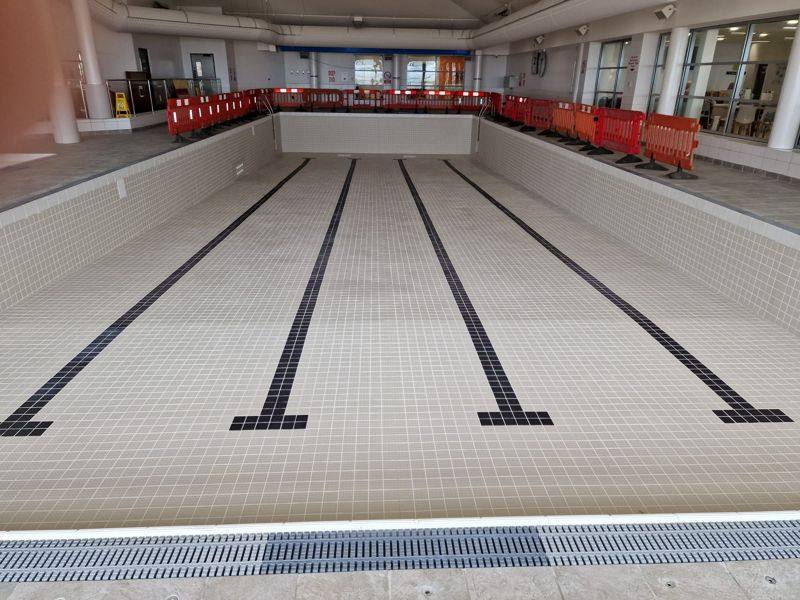
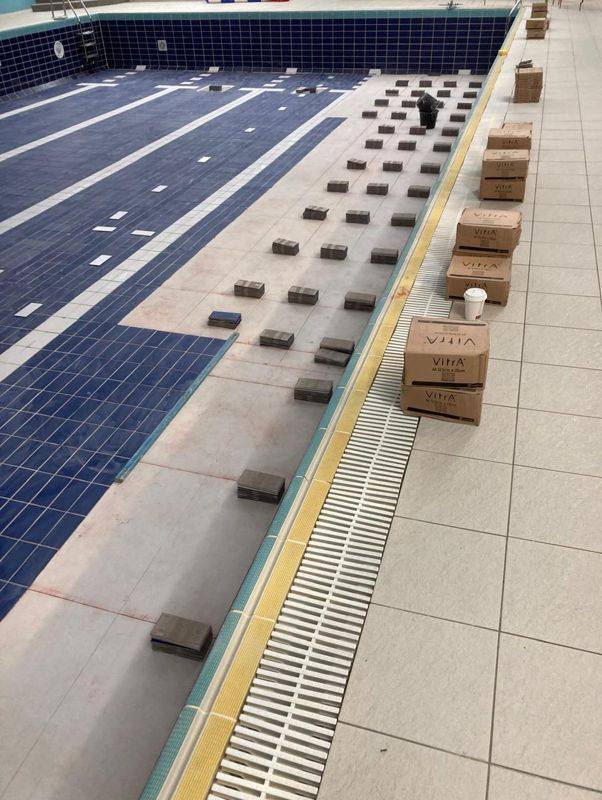
- Partial retile: one area renewed, such as the floor, the steps, a wall, the lane markings or an edge band, while the rest stays.
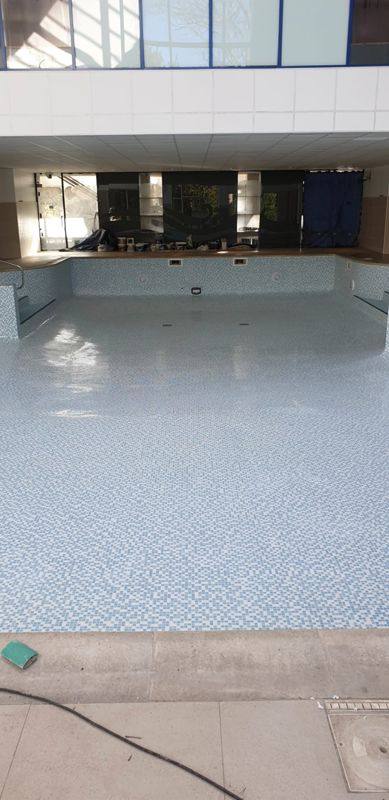
- Full retile and surround: the pool stripped to its background, render repaired or renewed, waterproofing where the specification calls for it, new tiles throughout, and often the surround and channels done in the same closure.
Commercial and private pools
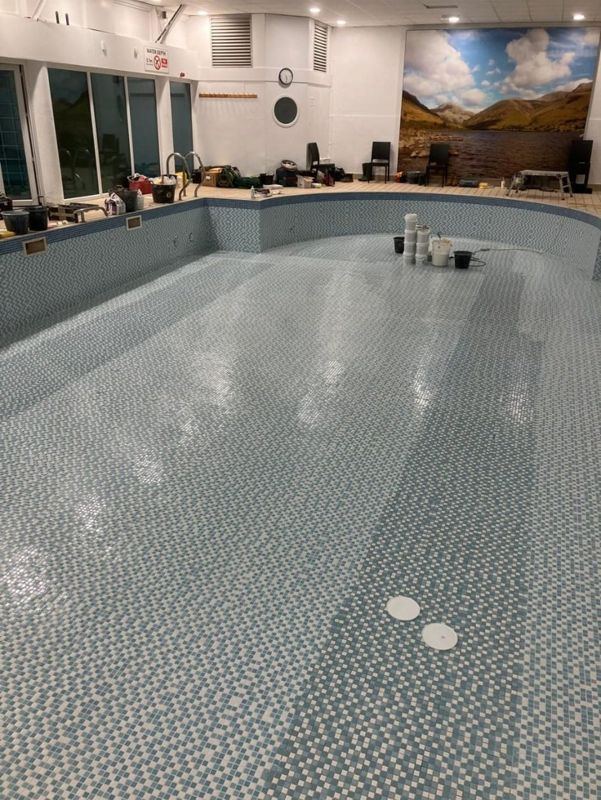
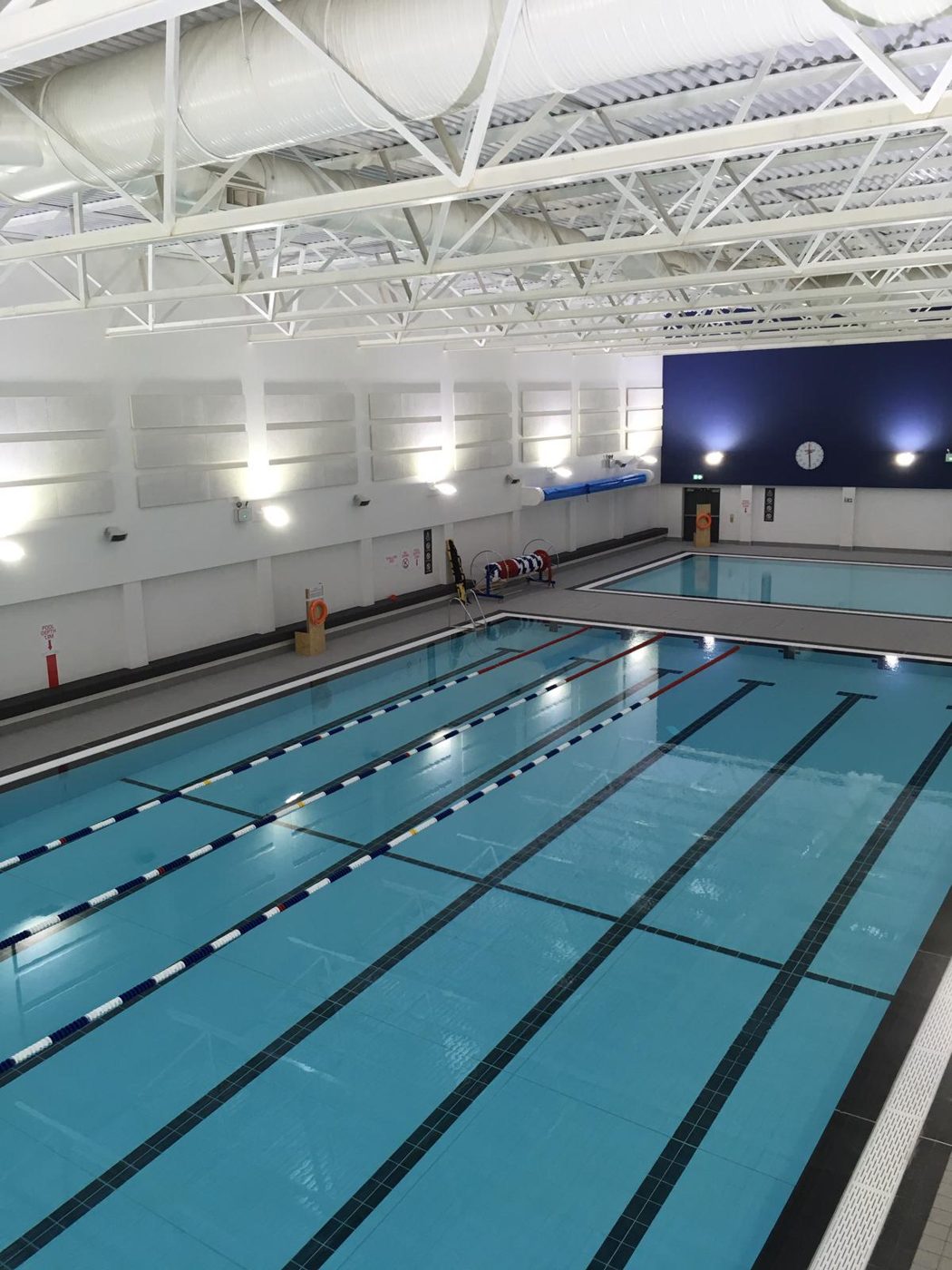
Commercial pools in leisure centres, schools, hotels and health clubs tend to be larger, often in mosaic with lane markings and overflow channels. Closures have to fit around swimming programmes, bookings or school holidays, and some work may need to happen out of hours. Sites usually ask for risk assessments and method statements, inductions and coordination with their own staff and other trades.
Private pools are usually smaller, but they bring their own costs: access through a house or garden, protecting finishes along the route, and for outdoor pools, working around the weather. The owner may also be handling the water, heating and plant themselves.
Hidden defects and how they are handled
Some of the most expensive problems cannot be seen with water in the pool, or even with it drained. Hollow render, a failed adhesive bed, cracks in the background, damaged fittings and missing movement joints often only show once tiles are lifted or grout is raked out.
A sound quote says how these will be handled before work starts. When we find something, we stop and show you with photographs, explain the options and what each does to the programme, and agree the next step with you.
Costs outside the tiling
A refurbishment budget should cover more than the tiling contract. Depending on the pool, these can add up.
- Draining, the water for refilling, and the heating and chemicals to bring it back into use.
- Replacement fittings such as lights, inlets, handrails or channel gratings.
- Work by other trades while the pool is empty, such as plant, lighting or the pool hall itself.
- For commercial pools, the income and programme lost while the pool is closed.
Budgeting sensibly
Start with an inspection, ideally at a planned drain-down well ahead of the main works, so the scope and any long lead items are known early. Keep a contingency for what turns up behind the tiles rather than spending the whole budget on paper.
Spend money on the causes, not only the symptoms. Regrouting over hollow tiles, or filling movement joints with grout, can make a pool look finished while setting up the next failure. And do not buy a shorter closure by cutting cure times. That saving rarely survives the first season.
On some pools it makes sense to phase the work over more than one shutdown. On others one larger job costs less overall than repeated patching. The inspection usually makes clear which applies.
Getting a reliable quote
Send the location of the pool, its approximate size, the tile type, photographs of the problem areas and any history you have, such as previous repairs or reports. Tell us when the pool could close and when it must reopen.
From that we can give an initial view. A firm price follows once we have seen the pool, or have enough detail to define the scope. We work across the whole of the UK from our Warrington base, and for distant pools travel and accommodation are planned around the job.
Common questions
How much does a swimming pool refurbishment cost in the UK?
It depends on the scope, the pool and what is found once it is drained. A clean and regrout costs far less than a full retile with a new surround. We do not quote figures without seeing the pool. We inspect, agree a scope and price it before work begins.
Is a commercial pool refurbishment priced differently from a private one?
The cost drivers are the same, but commercial pools are usually larger, often mosaic, and come with programme, out-of-hours and site safety requirements. Private pools are smaller but can involve harder access and, outdoors, the weather.
Why do quotes for the same pool vary so much?
Usually because they cover different things. One may include render repairs, movement joints and cure time in the programme, another may leave them out or treat them as extras. Compare each quote against the same scope.
Can a refurbishment be split over more than one closure?
Often, yes. Some operators deal with the worst areas at one shutdown and the rest at the next. It spreads the cost, but each closure brings its own drain-down, refill and cure time, so the overall cost can be higher.
Does it matter where in the UK the pool is?
We work nationwide from Warrington. For pools further afield, travel and accommodation form part of the logistics and are planned around the job. The pool itself has a much bigger effect on the price than its location.