Wet every day, built for it.
Commercial changing rooms, showers and wet rooms around pools are wet, busy and cleaned hard every day. We tile them with floors laid to drain, tiling coordinated with the waterproofing, and finishes chosen for barefoot use and heavy cleaning.
The wet side of the building
Changing villages, group changing rooms, shower areas, accessible changing and the corridors that link them to the pool all share the same demands: constant water, bare feet, cleaning chemicals and high footfall.
We tile new installations and refurbish existing ones. Some jobs are full replacement of floors and walls; others are cracked tiles, failed grout and tired sealant joints.
Where an existing room is failing, we look at the whole build-up rather than just the tiles. Lifting a few tiles to see the bedding, waterproofing and screed beneath often explains why grout keeps washing out or tiles keep cracking.
- Group and village changing rooms
- Communal and cubicle showers
- Accessible changing and level-access shower areas
- Wet rooms and toilet areas next to pools
- Wet-side corridors and pool hall entrances
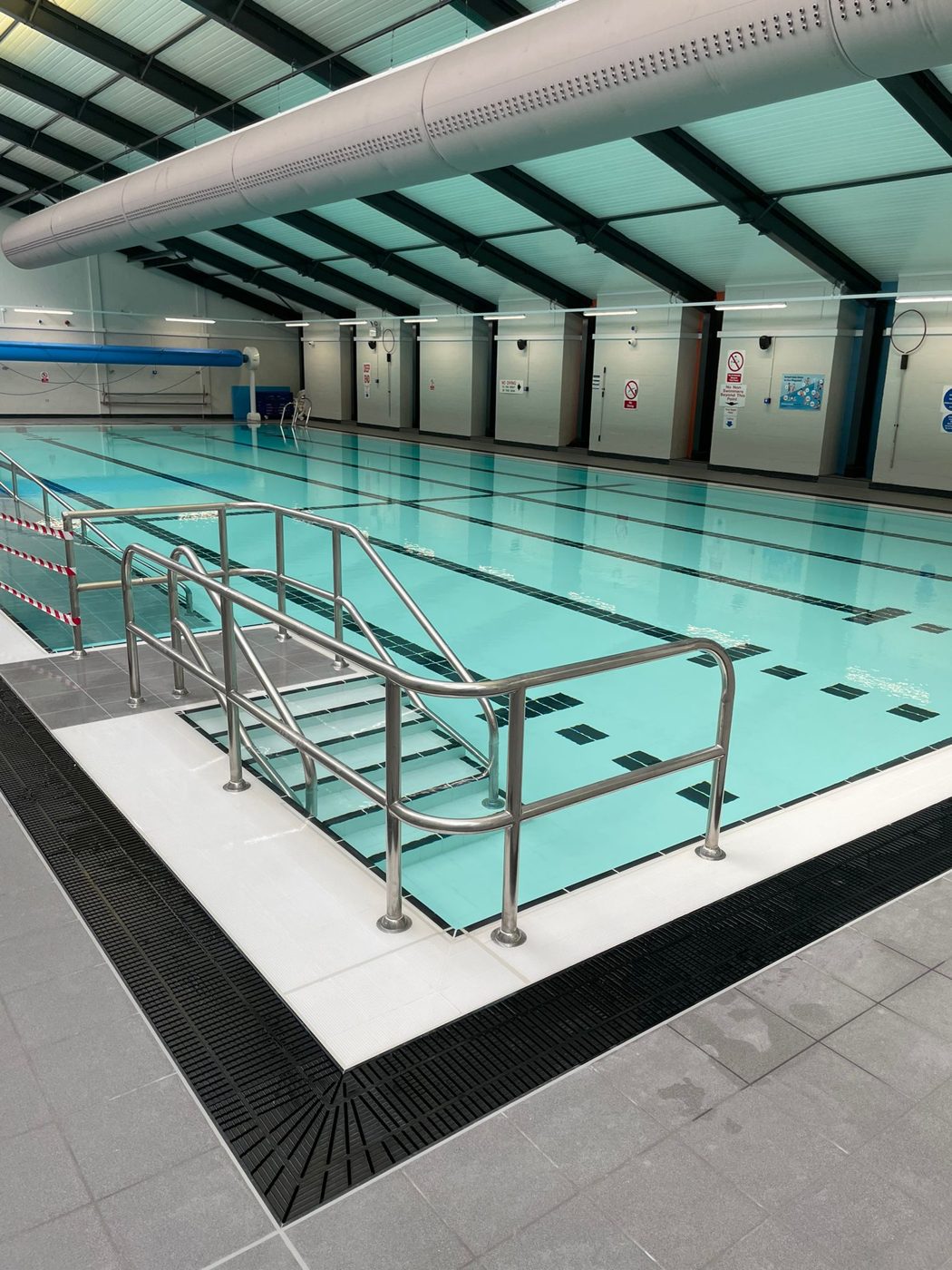
Water that runs away, not across
A wet room floor works only if water runs to the drain from everywhere it lands. The falls are formed in the screed or a sloped board system before tiling, and the tiles follow them, so we check levels and drain positions before we fix anything.
Linear drains allow a floor to fall in one direction and suit larger-format tiles, while point drains need the floor to slope from several directions and often suit smaller tiles that can follow those planes. The choice affects the setting out, so it should be settled early.
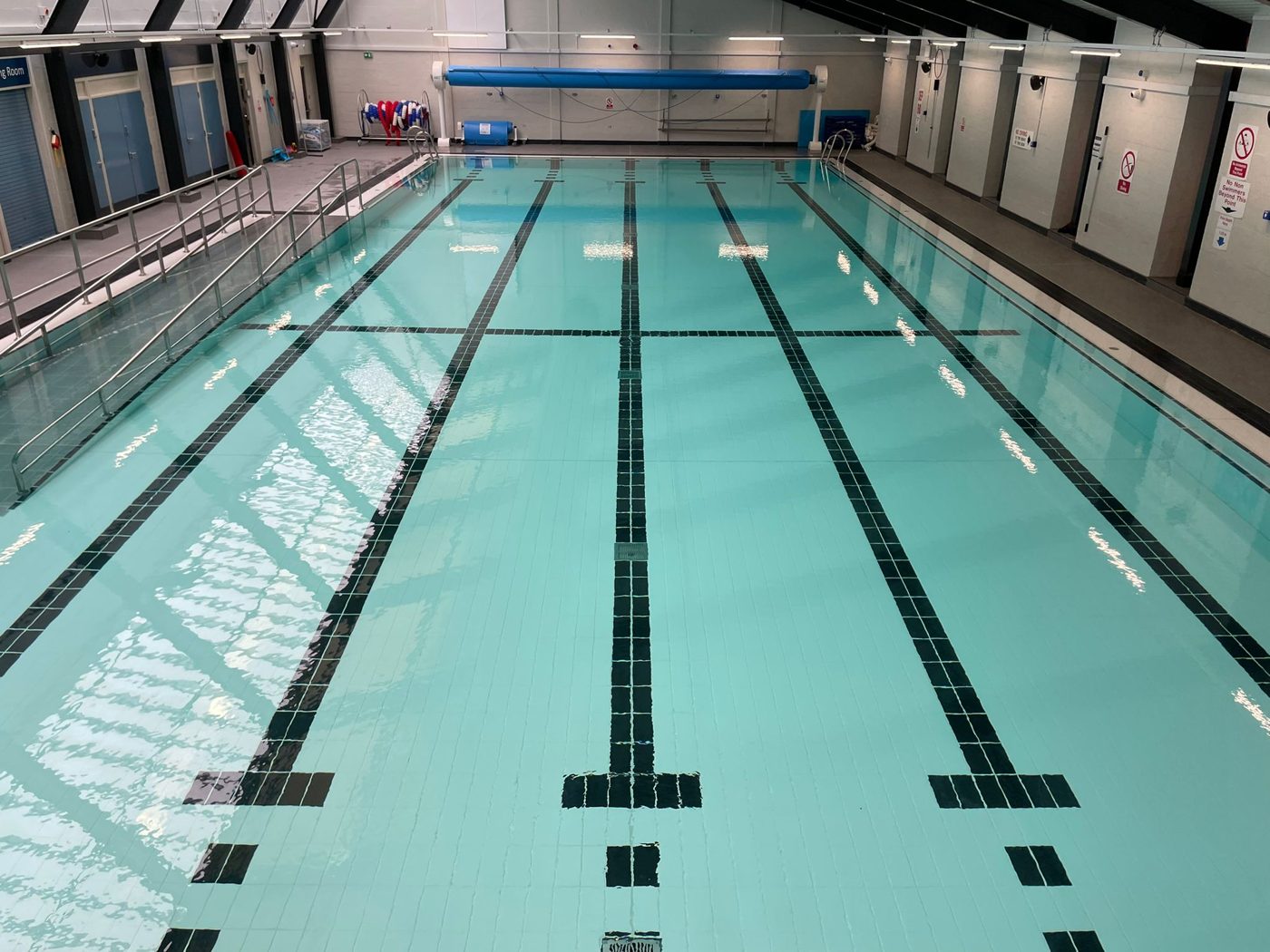
Tiles are not the waterproof layer
Tiles and grout shed most water, but they are not what keeps it out of the building. That job belongs to the waterproofing or tanking beneath, which must be continuous across floors, up walls and into drains and pipe penetrations.
Whether the waterproofing is installed by us as part of a compatible system or by another trade, we confirm what has been used, check that it is complete and cured, and make sure our adhesive is compatible with it before tiling.
If we find gaps or damage in the waterproofing, we raise it before tiling over it. Tiling cannot fix a waterproofing defect.
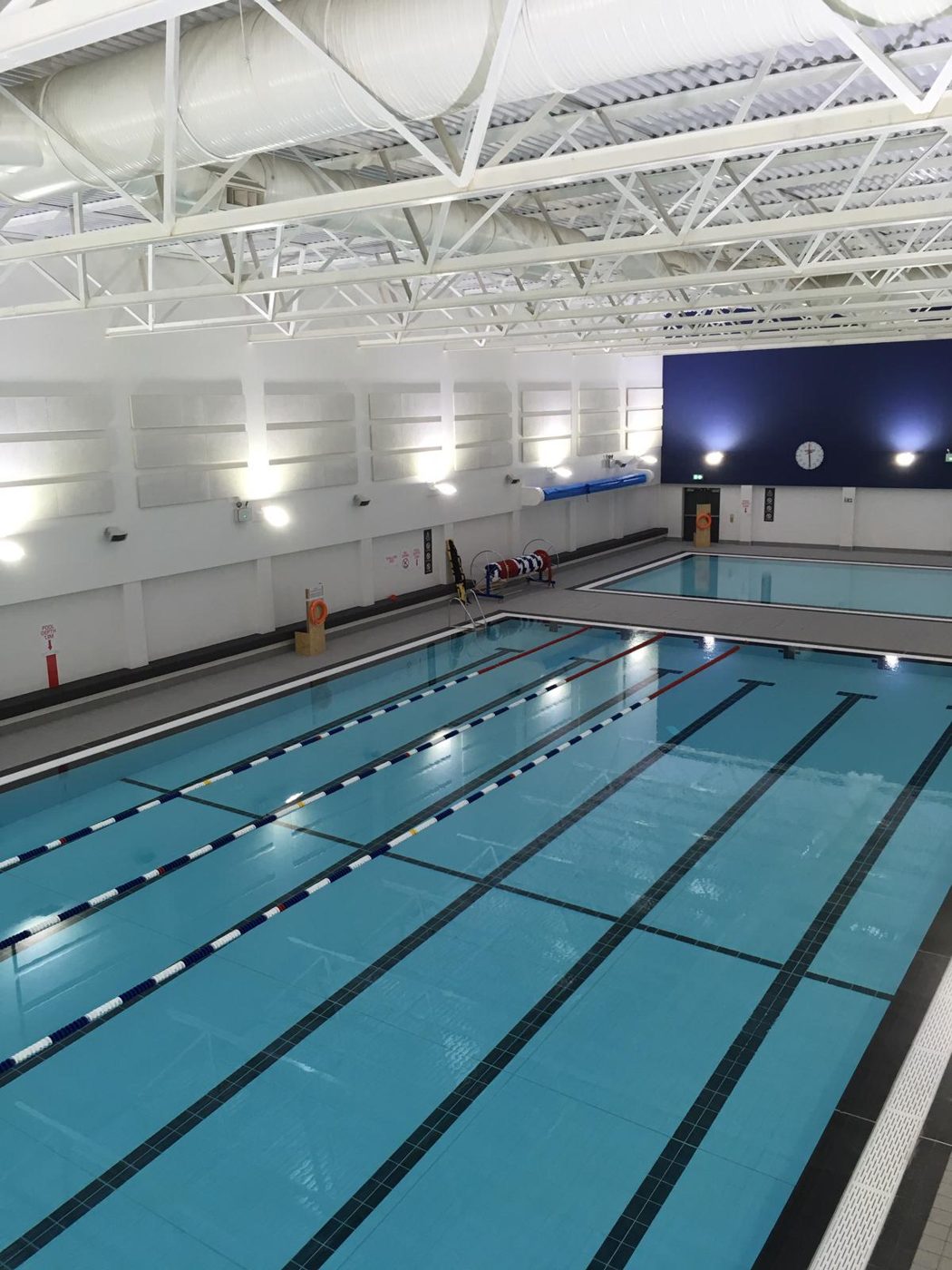
Hard-wearing and easy to keep clean
Floors need suitable slip resistance for wet, barefoot use and a surface that stands up to the cleaning regime. Walls need tiles and grout that cope with frequent wash-down. Coves at the floor and wall junction, where specified, make cleaning easier.
Grout choice matters as much as tile choice in these rooms. We explain the trade-offs between cementitious and epoxy grouts for your use, including how each should be cleaned and maintained.
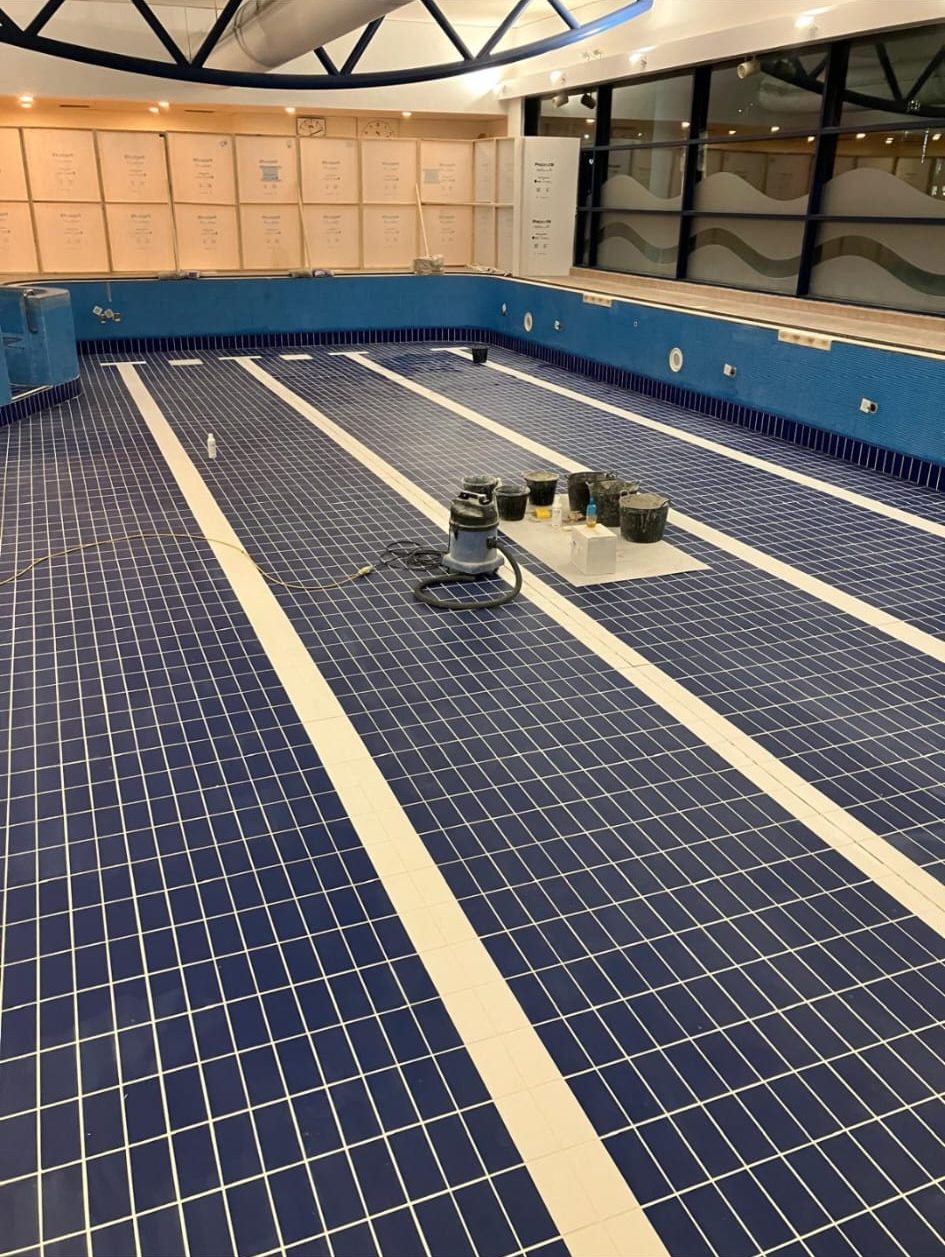
Where wet rooms usually fail
Most changing room and shower failures start at a detail rather than in the middle of a floor. Drains that sit proud or low, pipe penetrations without proper sealing, cracked tiles at doorways and grout washed out of shower floors are the patterns we see most often.
Getting these right during tiling saves trouble later. We set drains at the correct level to the finished tile, seal around penetrations as the waterproofing system requires, and form flexible joints at internal corners, perimeters and changes of material.
- Drain gratings set flush with the finished floor
- Pipe and fitting penetrations sealed to the waterproofing system
- Flexible joints at floor and wall junctions and doorways
- Thresholds detailed so water stays in the wet zone
Working while the facility stays open
Changing rooms rarely close all at once. Where the layout allows, work can be phased so one area stays in use while another is tiled, with screening, safe routes and cure times agreed with the operator in advance.
Changing rooms near pools are often used by schools, clubs and members on fixed timetables. Knowing those timetables early lets us sequence noisy or dusty tasks for quieter periods and keep routes to the pool open and safe.
Do you install the waterproofing in wet rooms?
It depends on the project. We can work with a compatible waterproofing system as part of the tiling package, or tile over waterproofing installed by another trade once we have confirmed it is complete, cured and compatible with our adhesive.
Why does water pool on our shower room floor?
Ponding usually means the falls to the drain are too shallow, missing or interrupted, which is a screed or substrate issue rather than a tile issue. Retiling alone will not correct it, so we check the levels and explain what would be needed.
Can you replace changing room tiles in phases?
Often, yes. Where the building layout allows, we can work area by area so part of the changing provision stays open. Phasing, screening and cure times are agreed with the operator before work starts.
What grout is suitable for commercial showers?
Both cementitious and epoxy grouts can be suitable, depending on the tiles, joint size, use and cleaning regime. Epoxy is often chosen for demanding wet areas, but it is not automatically the better option. We explain the care each needs before you decide.
Can you tile a level-access shower in an accessible changing room?
Yes, where the floor build-up allows the falls and drain to be formed. Level-access showers rely on accurate falls and a well-placed drain so water stays in the shower zone, so we check levels and drain positions with you before tiling begins.
Tell us about your pool.
Send a few details and we’ll get back to you to understand the job. Photos of the tiles, grout and problem areas help us a lot, and you can add them below.
What affects the estimate?
- The pool area and which surfaces need work
- Joint size and the grout or tiles involved
- The condition of the tiles, joints and background
- Access to the pool and the working areas
- Preparation, cleaning and any repairs needed first
- The programme and when the pool can close
- Call Dan07800 826895
- Call Jay07966 002106
- Emailtiletrustuk@outlook.com
- Where we workBased in Warrington, Cheshire.
Pool projects across the UK.