Retile where it earns its keep.
Retiling a swimming pool is the right call when failure is widespread, the background is breaking down or the design has to change. Where the problem is local, a partial retile or targeted repairs often achieve the same result with far less stripped out. We help you work out which one your pool actually needs before anything is stripped out.
Full retile, partial retile or targeted repair
A full retile replaces the whole immersed finish. A partial retile replaces a defined zone, such as the floor, one wall, the steps or a waterline band, and keeps the rest. Targeted repair deals with individual tiles or small groups and leaves the sound finish undisturbed.
The deciding factor is rarely the age of the tiles. It is how much of the finish has lost its bond, why it happened and whether the background beneath can still be trusted.
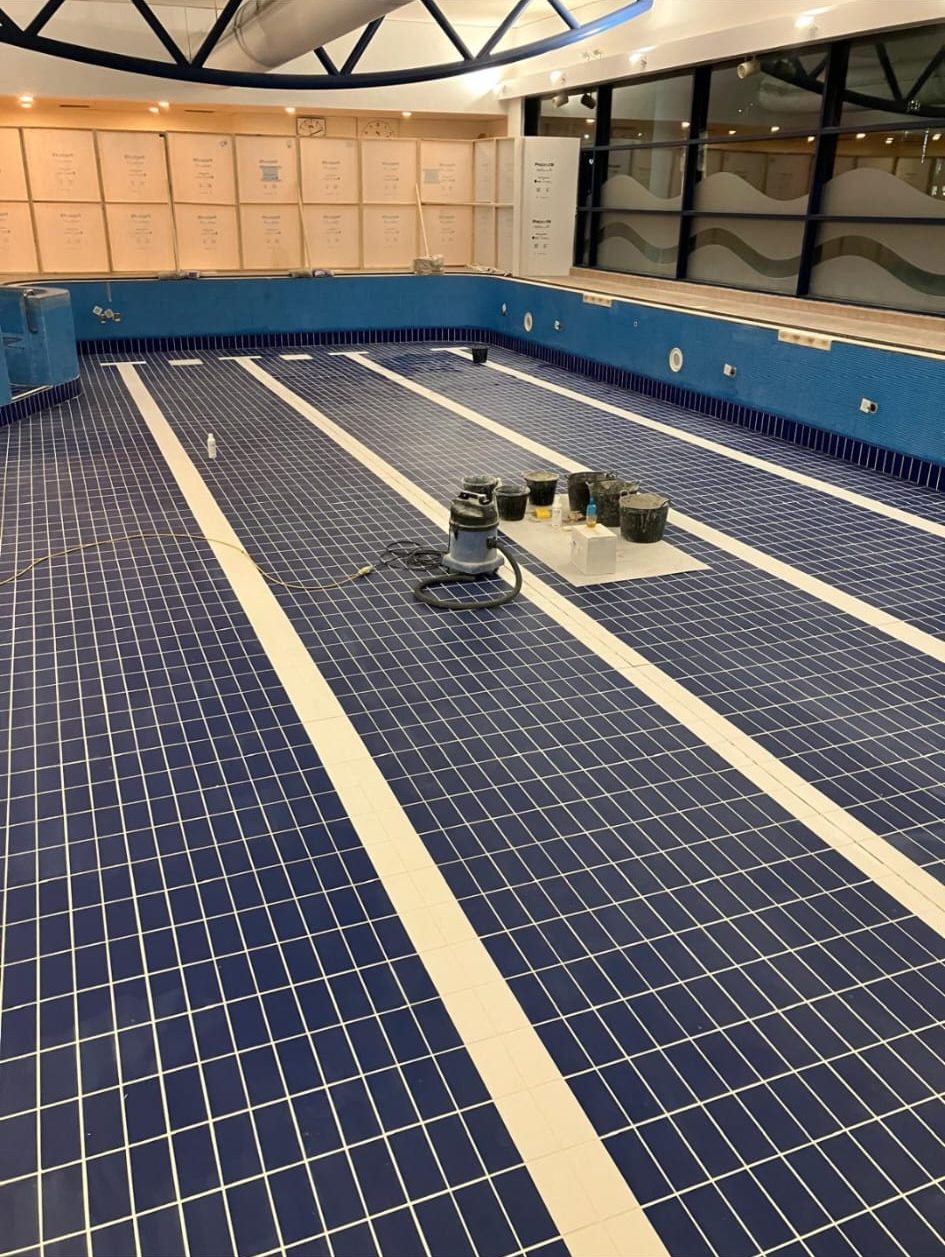
When a full retile is usually right
Some patterns point towards replacing the finish rather than chasing individual failures. None of them is conclusive alone, which is why we look at the evidence together.
- Hollow areas found across large parts of the floor or walls, not just in pockets
- Tiles continuing to detach in new places after previous repairs
- Render or bedding that is weak, crumbling or contaminated over wide areas
- Tiles crazed, worn or discontinued so that matching repairs is no longer realistic
- A planned change of layout, colour, markings or step design
A tap test is a screening check, not proof. Where the extent is unclear, opening up a few test areas gives a far better basis for a retiling decision.
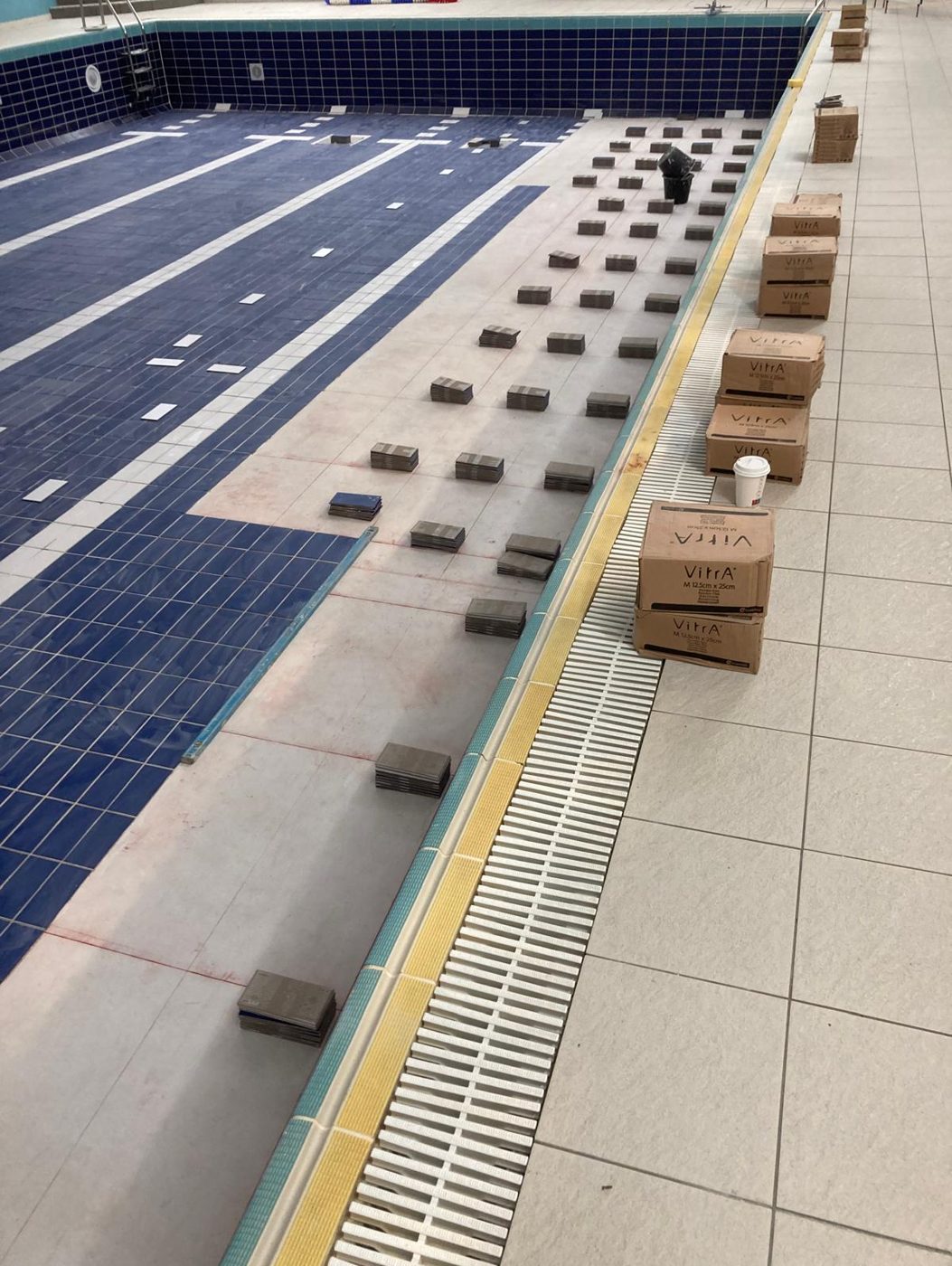
Find the cause before choosing the cure
A retile that repeats the original mistake will fail the same way. Before recommending one, we look for the reason tiles came loose: incomplete adhesive bedding, a weak or contaminated background, missing movement joints, pool chemistry, or a pool that has been drained or refilled too quickly and stressed the finish.
Knowing the cause changes the specification. It might mean more background preparation, a different adhesive, extra movement joints or changes to how the pool is drained and refilled in future, and it helps you judge whether a partial retile will hold up next to the original work.
- Incomplete bedding leaving voids behind tiles
- Render or screed that has lost strength or bond
- Movement joints missing or filled with rigid grout
- Stresses from draining, refilling or temperature change
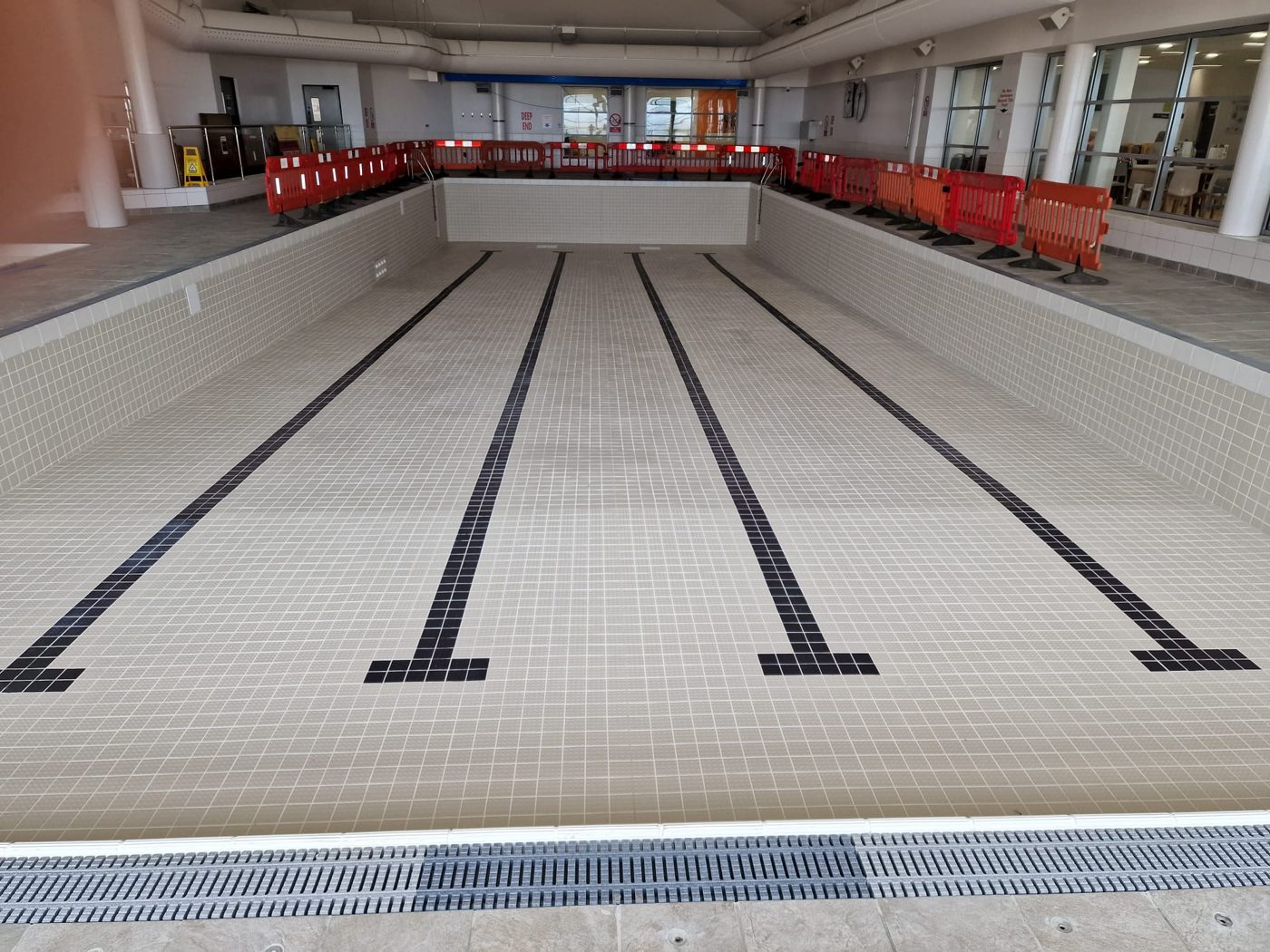
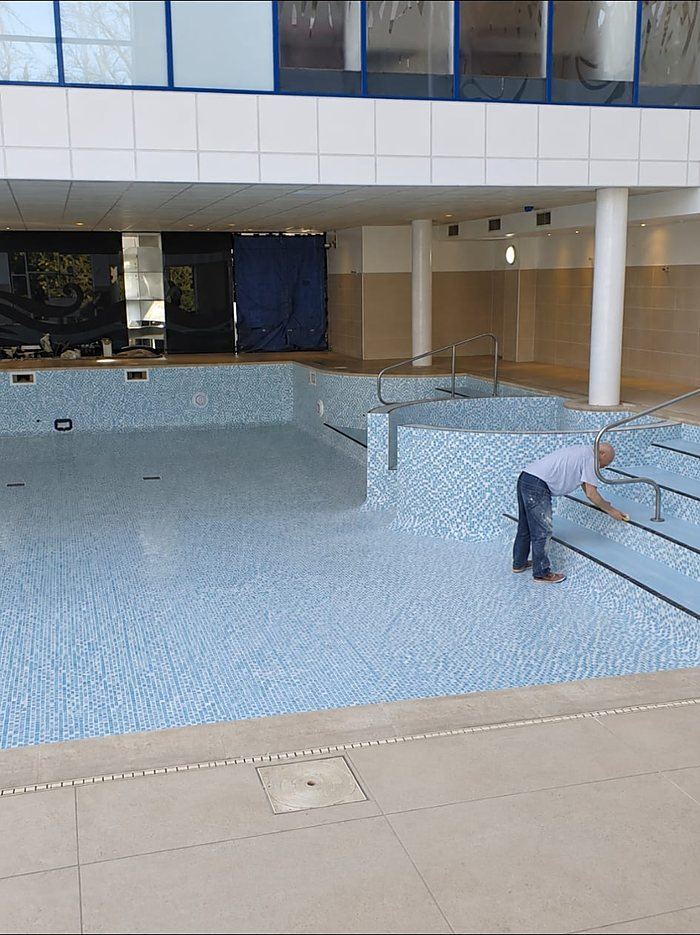
Replacing one zone, keeping the rest
Failures often cluster. Heavily used floors, shallow-end steps and the waterline band tend to take more punishment than a deep-end wall, so replacing one zone can be money well spent.
The boundary needs thought. We try to finish a partial retile on a natural line, such as the floor and wall junction, a step nosing or a lane marking, so any difference between old and new tiles reads as intended rather than as a patch.
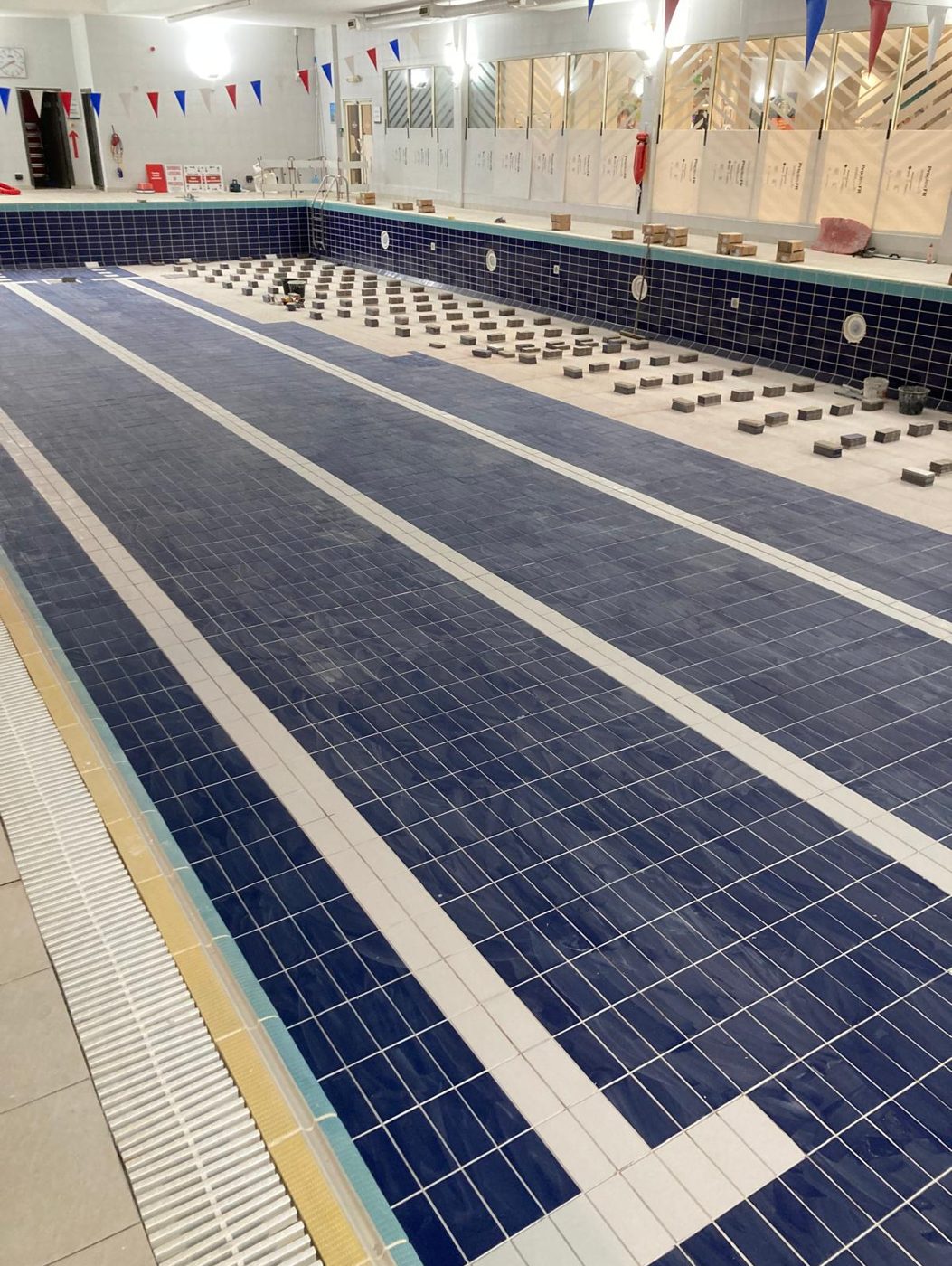
What a strip-out tells us
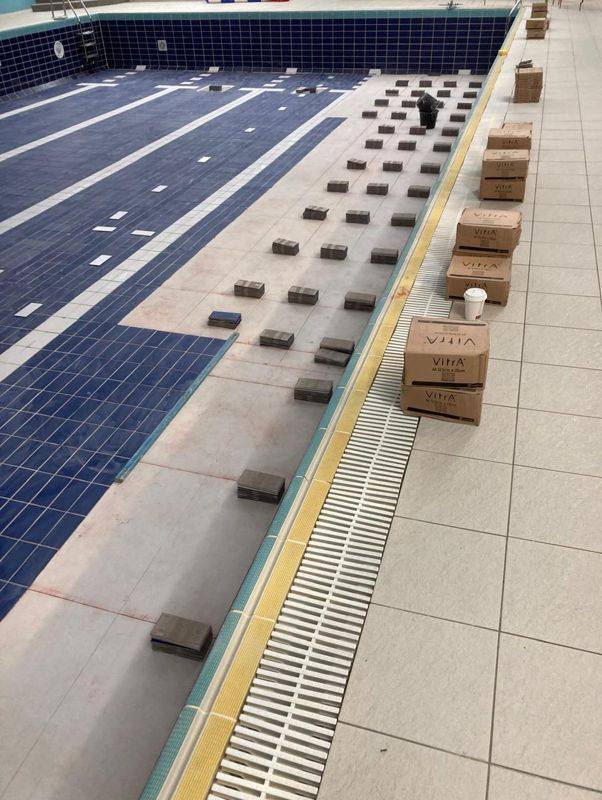
Once tiles come off, the background is visible for the first time in years. Sound render can be cleaned and prepared, while loose, hollow or contaminated areas are cut back and rebuilt with a system suited to the thickness and to immersion.
If the strip-out reveals something beyond tiling, such as cracking that suggests movement in the shell or signs of a leak, we stop and flag it promptly. Those issues need the right specialist, and tiling over them would only hide the problem.
A retile programme you can rely on
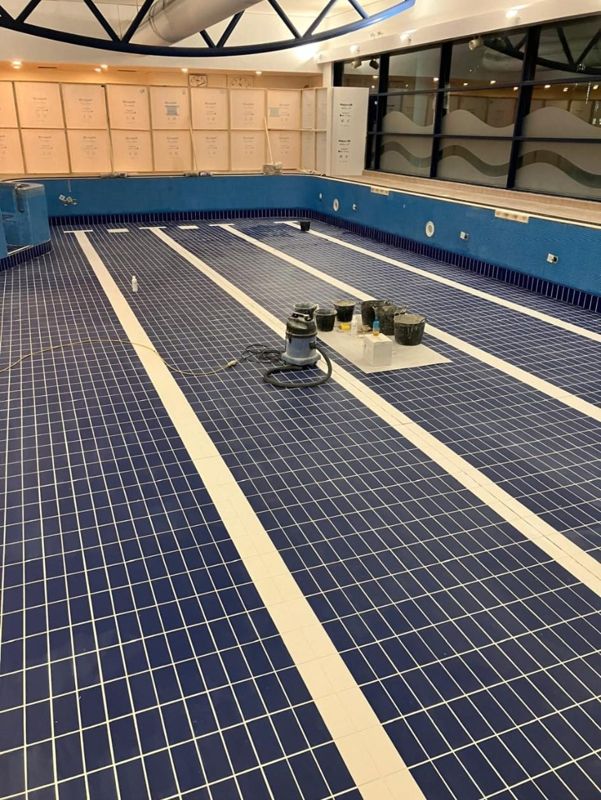
Retiling involves draining, stripping, preparation, tiling, grouting, curing and refilling, and each stage has its own constraints. We agree the scope and sequence before the pool is drained and keep progress under review with you.
We will push to hit the dates we agree, but curing and refilling follow the product instructions, not the calendar. Allowing for them from the outset is what keeps a reopening date realistic.
How do I know if my pool needs retiling or just repairs?
Look at how widespread the failure is and why it is happening. Isolated loose or cracked tiles on a sound background usually suit targeted repair, while hollowness across large areas, repeated new failures or a weak background point towards retiling. A drained inspection with tap testing, and test openings where needed, gives a clearer answer.
Can you retile just the pool floor or the steps?
Often, yes. A partial retile of the floor, steps, one wall or the waterline band can make sense where failure is concentrated there and the rest of the finish is sound. We plan the boundary along a natural line so the new section looks deliberate.
Will new tiles match the old ones in a partial retile?
Not always exactly. Even when the same range is still made, colour and finish can vary between batches and older tiles may have faded or worn. We discuss this before work starts and use natural breaks in the pool to make any difference look intended.
What happens if you find problems under the old tiles?
We flag them promptly and explain the options. Render and bedding defects can usually be put right as part of the tiling work, while signs of structural movement or leaks need assessment by the appropriate specialist before tiling continues.
Is a full retile always better value than repeated repairs?
Not always. If failures are isolated and the background is sound, targeted repairs and regrouting can keep a pool in good order for a long time. When repairs keep chasing new failures across the pool, a planned retile often becomes the more sensible use of a closure. We set out both options so you can compare them.
Tell us about your pool.
Send a few details and we’ll get back to you to understand the job. Photos of the tiles, grout and problem areas help us a lot, and you can add them below.
What affects the estimate?
- The pool area and which surfaces need work
- Joint size and the grout or tiles involved
- The condition of the tiles, joints and background
- Access to the pool and the working areas
- Preparation, cleaning and any repairs needed first
- The programme and when the pool can close
- Call Dan07800 826895
- Call Jay07966 002106
- Emailtiletrustuk@outlook.com
- Where we workBased in Warrington, Cheshire.
Pool projects across the UK.