The poolside is walked on barefoot.
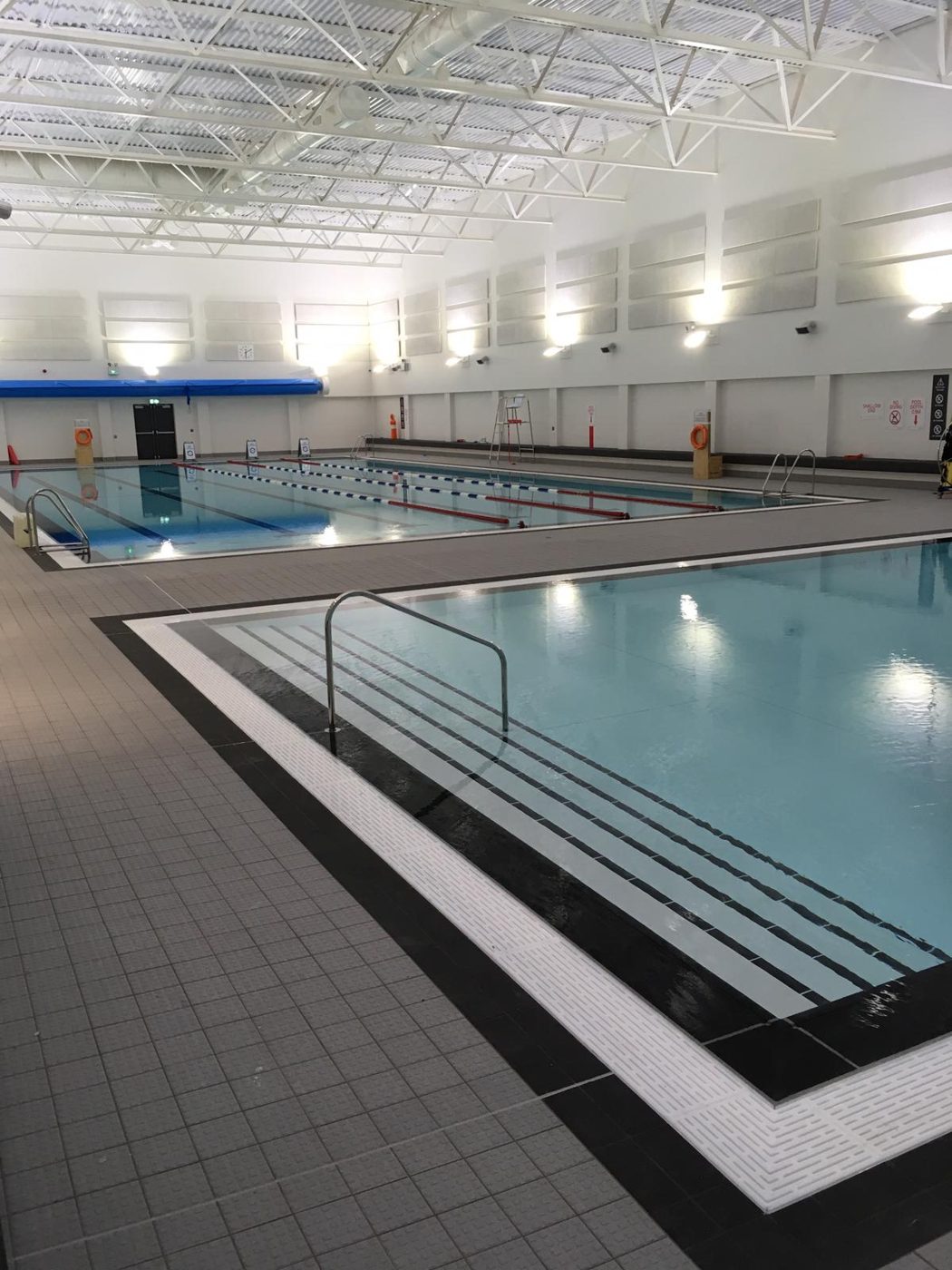
Pool surround tiling has to be comfortable and safe for wet, bare feet, shed water to the drainage and frame the pool edge cleanly. We tile and repair poolside floors, edge tiles and channel surrounds with slip resistance, falls and movement joints planned in from the start.
Edges, channels and the poolside floor
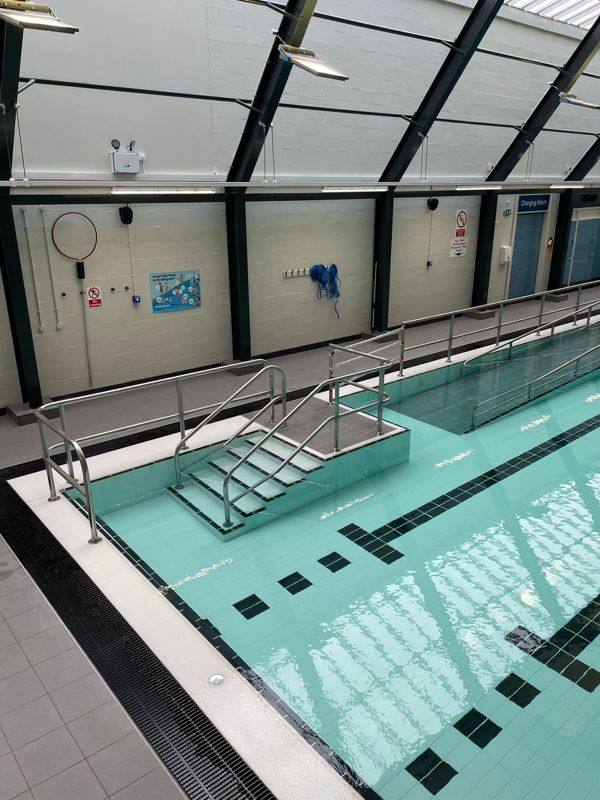
The surround is everything between the water and the walls: edge tiles and copings, overflow channels or gratings, the poolside floor and its junctions with steps, ladders, columns and doorways.
Each part has its own job. The edge marks where the pool begins, the channel takes water away, and the floor has to be walked on wet all day without becoming a hazard or a cleaning problem.
- Edge and coping tiles, including contrasting edge bands
- Tiles around overflow channels and grating supports
- Poolside floors and falls to drains
- Upstands, skirtings and coves where floor meets wall
- Areas around steps, ladders, handrails and lifeguard positions
Grip that still lets you clean
A poolside floor needs a tile with suitable slip resistance for barefoot, wet use. Many tile makers publish slip test results for their products, and what is suitable depends on how the area is used, so we go through the data with you rather than guessing.
More texture usually means more grip but more effort to clean, and a dirty textured tile can lose some of its benefit. Choosing the surface, the grout and the cleaning routine together gives a floor that stays safer in daily use.
HSE guidance HSG179, Health and safety in swimming pools, is a sensible reference for operators reviewing poolside safety more widely.
Water has to go somewhere
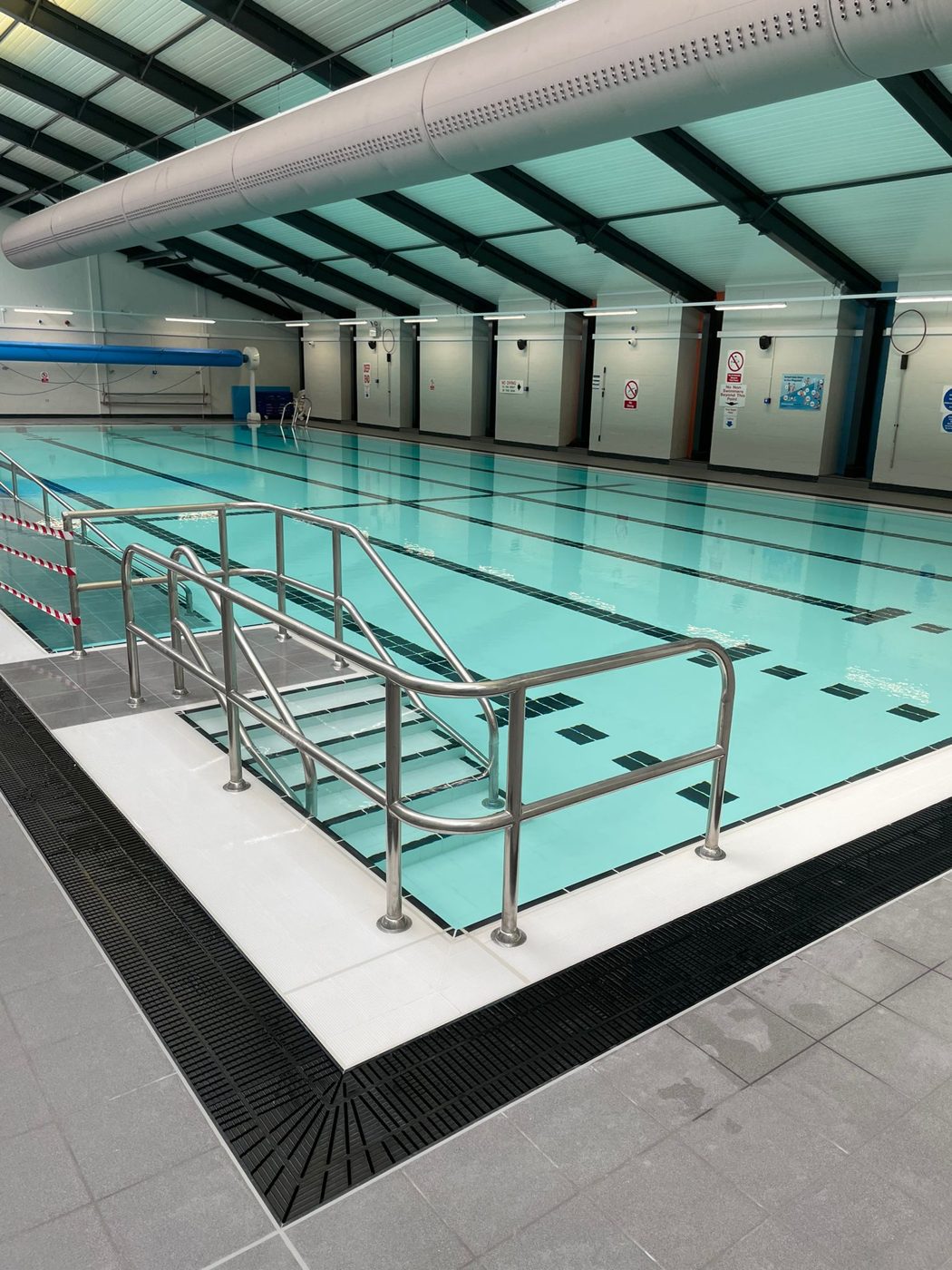
Poolside floors are usually laid to falls so that splash and cleaning water run to channels or drains rather than ponding. Tiling cannot create falls that are missing in the screed, so we check levels before fixing and raise any concerns before work starts.
Around channels the detail matters: tiles cut cleanly, gratings seated properly and joints sealed where the design calls for flexibility. These areas are often where poolside defects first appear.
Where the pool meets the poolside
The edge is the most looked-at line in the pool hall. Edge tiles and copings need to run straight and level along the whole perimeter, meet corners and steps cleanly and give swimmers a clear visual cue to where the water starts, which is why a contrasting edge band is so common.
On deck-level pools the edge, channel and grating work as one drainage system, so tiles must sit at the right height for water to flow over and away. On pools with a raised edge or skimmers, the coping and its joint with the surround take most of the knocks and need a firm bed and sound joints.
- Edge tiles set straight and level around the whole perimeter
- Contrasting bands aligned at corners and steps
- Heights matched to the overflow or channel design
- Flexible joint between pool edge and surround
Joints that let the surround move
Large tiled floors next to a body of water move with temperature, moisture and the structure itself. Movement joints at the pool edge, around the perimeter, at columns and across large areas let that movement happen without cracking tiles or pushing them loose.
Their positions should follow the design, and they are formed in a flexible sealant. Grout in a movement joint just cracks. Where an existing surround has had its joints grouted over, cutting them out and resealing can be part of a repair.
Refreshing a tired poolside
Many surrounds can be brought back with local repairs to cracked or loose tiles, regrouting and renewal of movement joints. If the existing tiles have become unsafe underfoot or the falls are wrong, replacement may be the better long-term answer, and we will explain why.
We also look at how the surround is cleaned. A change of cleaning product or method can sometimes restore grip and appearance on its own, and a cleaning regime that suits the tile and grout helps any new work last.
Related work
Useful reading
What tiles are suitable for a pool surround?
Surround tiles need suitable slip resistance for wet, barefoot use, low water absorption and a surface that can be cleaned effectively. The right tile depends on how the area is used, so we look at the manufacturer's slip test data alongside the cleaning regime before recommending one.
Can you improve a slippery poolside without replacing it?
Sometimes cleaning alone makes a noticeable difference, because contamination reduces grip. Where the tile itself is unsuitable for the area, replacement with a more suitable tile is usually the reliable answer. We can look at the surround and explain the options.
Why are the tiles cracking along my pool edge?
Cracking along an edge often relates to movement, such as missing or grouted-over movement joints, or to a background defect beneath the tiles. We look at the pattern of cracking and the joints before recommending a repair, so the cause is dealt with rather than just the tiles.
Can you replace tiles around an overflow channel?
Yes. Channel surrounds are detailed work: tiles must be cut cleanly, gratings must sit properly and joints must allow for movement. We repair or replace these areas as part of surround or refurbishment work.
Can surround tiles be replaced without draining the pool?
Often, yes, where the work is confined to the poolside floor away from the waterline. Work on edge tiles, copings and some channel details may need the water level lowered or the pool drained. We confirm what is needed once we have seen the surround and agreed the scope.
Tell us about your pool.
Send a few details and we’ll get back to you to understand the job. Photos of the tiles, grout and problem areas help us a lot, and you can add them below.
What affects the estimate?
- The pool area and which surfaces need work
- Joint size and the grout or tiles involved
- The condition of the tiles, joints and background
- Access to the pool and the working areas
- Preparation, cleaning and any repairs needed first
- The programme and when the pool can close
- Call Dan07800 826895
- Call Jay07966 002106
- Emailtiletrustuk@outlook.com
- Where we workBased in Warrington, Cheshire.
Pool projects across the UK.