Loose or hollow tiles in a Widnes pool.
If you are responsible for a pool in Widnes and are worried about loose, hollow or cracked tiles, start with an inspection. We carry out pool tile repairs, regrouting and swimming pool tiling in Widnes, and every job begins with a careful look at the pool's condition.
What we check
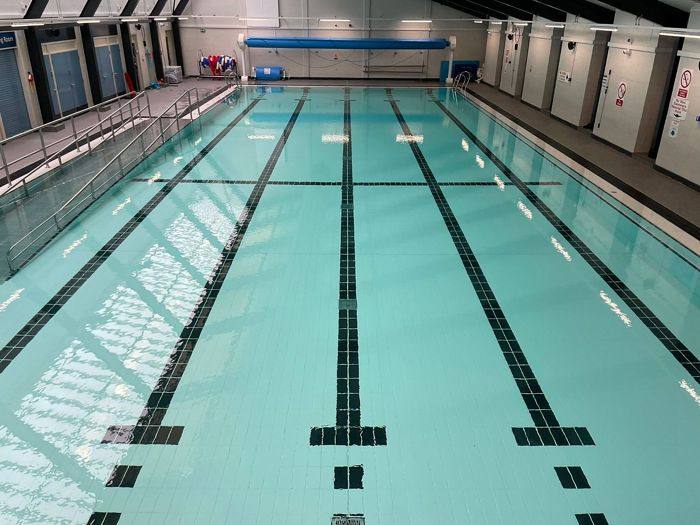
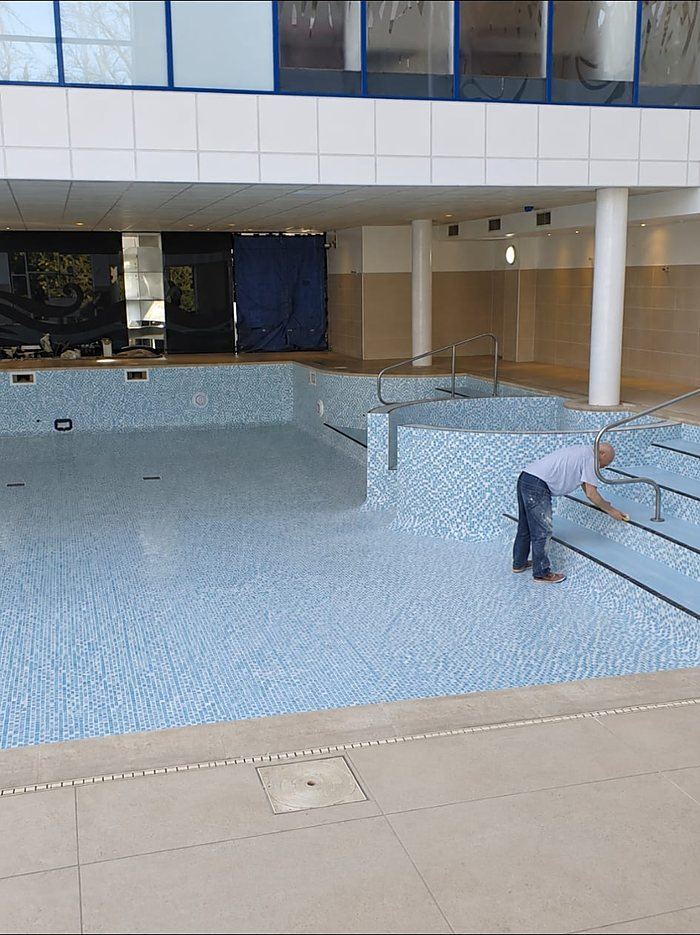
With the pool drained, we look at tile faces, grout, edges, steps, lane markings, channels and movement joints, and tap across areas to find tiles that sound hollow. A hollow sound can mean the tile has lost its bond to the bed.
Where tapping picks up hollow areas, we may suggest lifting a small section to see what is actually going on underneath.
- Hollow or loose tiles
- Cracked or chipped tiles and sharp edges
- Missing, soft or eroded grout
- Filled or failed movement joints
- Damage at steps, edges and outlets
Why early attention pays
A cracked or lifted tile can leave a sharp edge in a pool used by children and lesson groups. Small defects also tend to spread as grout loss lets water in behind more tiles.
Dealing with problems early usually keeps repairs small. For operators thinking about maintenance and inspection more widely, HSE's guidance HSG179, Managing health and safety in swimming pools, is a useful reference.
Grout loss is often the first thing anyone notices. Once joints open, water reaches the back of the tiles more easily, and over time the bond in that area can weaken.
Widnes and Halton
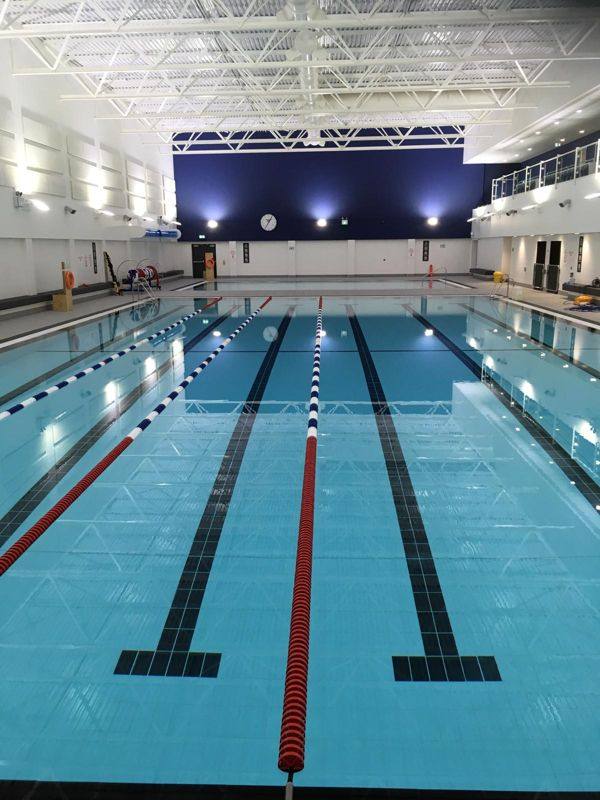
We take on public leisure and school pools, health club pools and private pools in and around Widnes, from a single repair to a full refurbishment.
Widnes is close to our Warrington base, with Runcorn, St Helens and Liverpool nearby. We take on pools anywhere else in the UK too.
If a site has more than one pool, or a mix of pool, spa and changing areas, we can look at everything on one visit and help set priorities across it.
Turning findings into a plan
After the inspection we explain what we found in plain English: what is sound, what needs attention now and what should be watched. We note where the hollow areas are and photograph defects so you have a clear record.
From there we suggest a plan. That might be a targeted repair, a regrout, a deep clean, or a refurbishment staged over more than one closure, so decisions are made on evidence rather than in reaction to the next failure.
- Plain English explanation of findings
- Defects photographed and located
- Priorities set out clearly
- Options for staging works
Can a tap test tell us for certain if tiles are failing?
No. It is good for finding hollow areas, but it is a screening check, not proof of what is behind the tile. We use it with a visual inspection and, where needed, by opening up a small area.
Should hollow tiles in a Widnes pool be replaced straight away?
It depends on where they are, how many there are and whether they are cracked or moving. We assess the area and explain the risk and the repair options.
Do we have to commit to works before you inspect?
No. We look at the pool first and explain what we find and the options. Any works are agreed after that.
Tell us about your pool.
Send a few details and we’ll get back to you to understand the job. Photos of the tiles, grout and problem areas help us a lot, and you can add them below.
What affects the estimate?
- The pool area and which surfaces need work
- Joint size and the grout or tiles involved
- The condition of the tiles, joints and background
- Access to the pool and the working areas
- Preparation, cleaning and any repairs needed first
- The programme and when the pool can close
- Call Dan07800 826895
- Call Jay07966 002106
- Emailtiletrustuk@outlook.com
- Where we workBased in Warrington, Cheshire.
Pool projects across the UK.