Mikveh tiling and refurbishment, carried out with care and discretion.
If your community's mikveh needs retiling, regrouting, tile repairs or a fuller refurbishment, we can look at it, explain the options and agree a scope with your committee before any work starts. We have carried out many mikveh tiling projects, always working to the design and supervision set by the community's rabbinic authority.
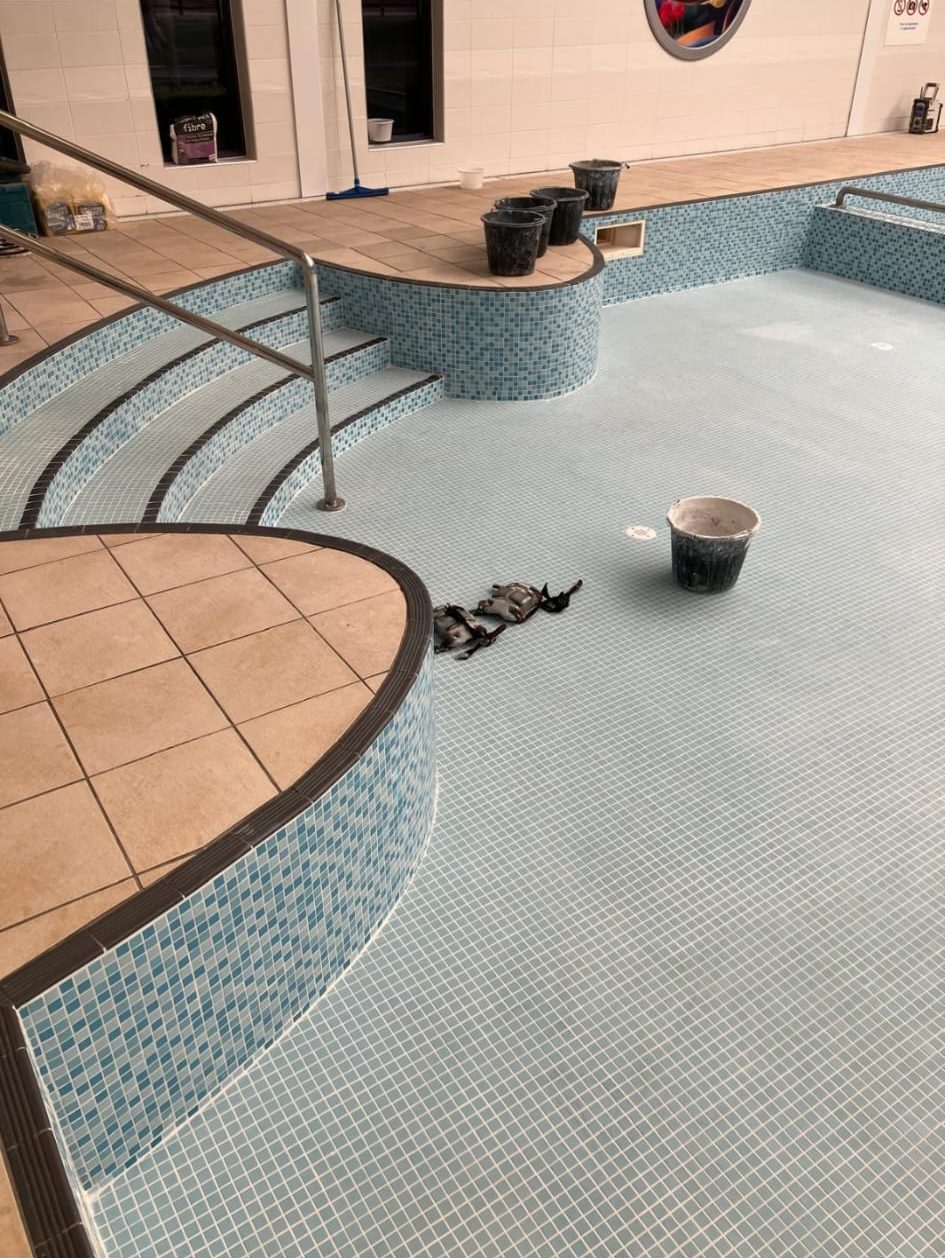
Mikveh tiling for immersion pools, steps and preparation rooms
From a tiling point of view, a mikveh has a lot in common with a small spa or hydrotherapy pool. The tiles and grout sit in warm, treated water, every visitor uses the steps, and the preparation rooms are wet rooms in daily use. That is the kind of tiling we do all the time.
Committees usually come to us when grout is wearing or discoloured, tiles have cracked or come loose, the steps feel tired or slippery, or the building is due a wider refurbishment. We look at the mikveh first, explain what we think is happening, and then agree what is worth repairing and what is worth replacing.
- Immersion pool tiling, retiling and local tile repairs
- Regrouting in epoxy or cement-based grout where the tiles are still well bonded
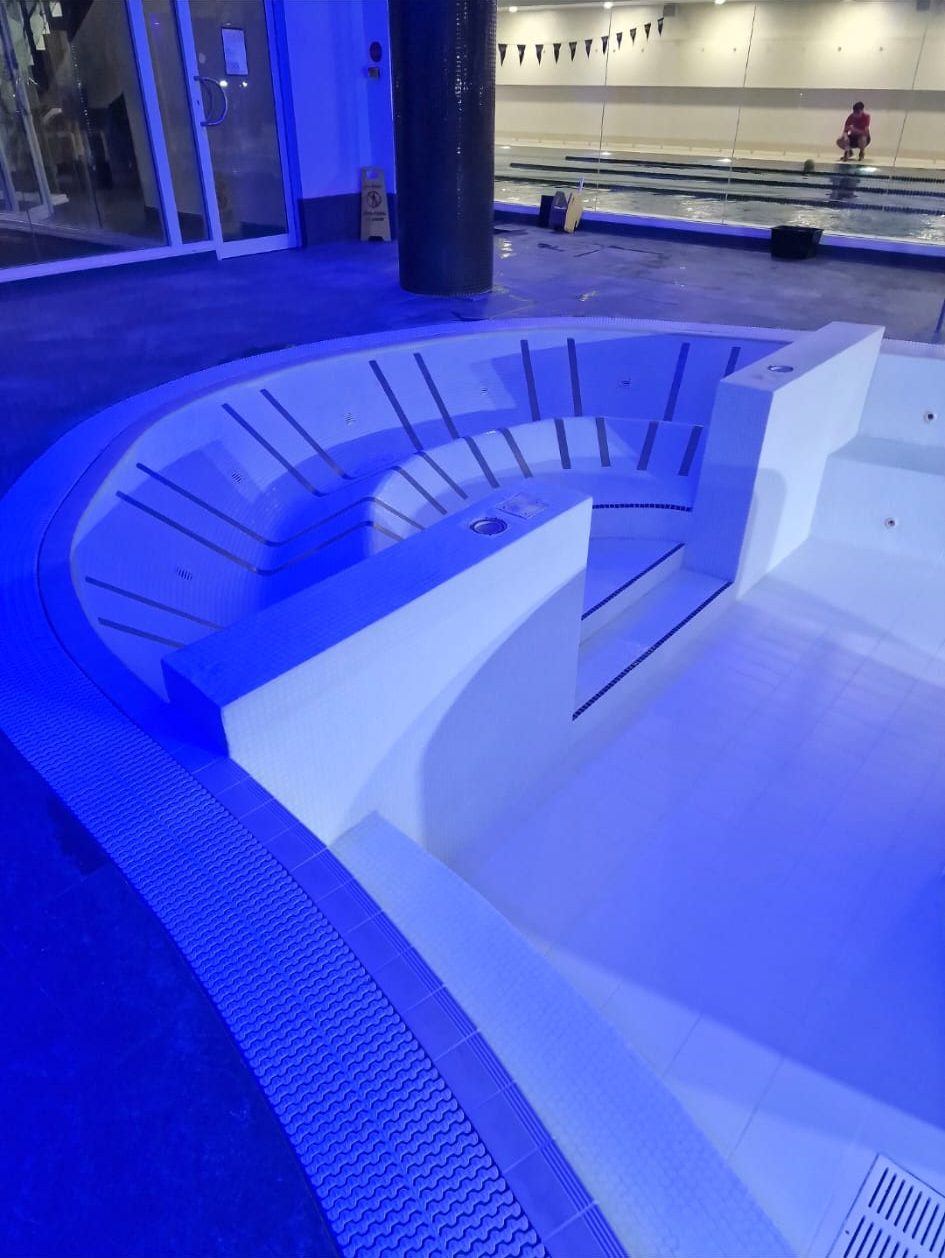
- Steps, nosings and the tiling around handrails
- Preparation room, bathroom and shower tiling
- Deep cleaning of tile faces and joints
- Matching replacement tiles to existing work where possible
The design is set by your rabbinic authority. We work to it.
A mikveh is not simply a pool. Its design, including any reservoirs and the connections between them and the immersion pool, and anything else that bears on its kashrut, is set and supervised by the community's rabbinic authority and the designers it works with. We do not make those decisions and we do not offer views on them.
Our role is to carry out the tiling to that design and under that supervision. In practice that means we identify reservoir connections, openings, pipes and channels before work starts, and we do not alter, cover, narrow or block any of them without the approval of the person supervising. If something we find on site raises a question, we stop and ask rather than assume.
Where a question touches on the kashrut of the mikveh, the answer comes from your rabbinic authority, not from us. We are glad to meet them on site and to work through the plan together.
Warm water, hygiene and the grout that has to cope with it
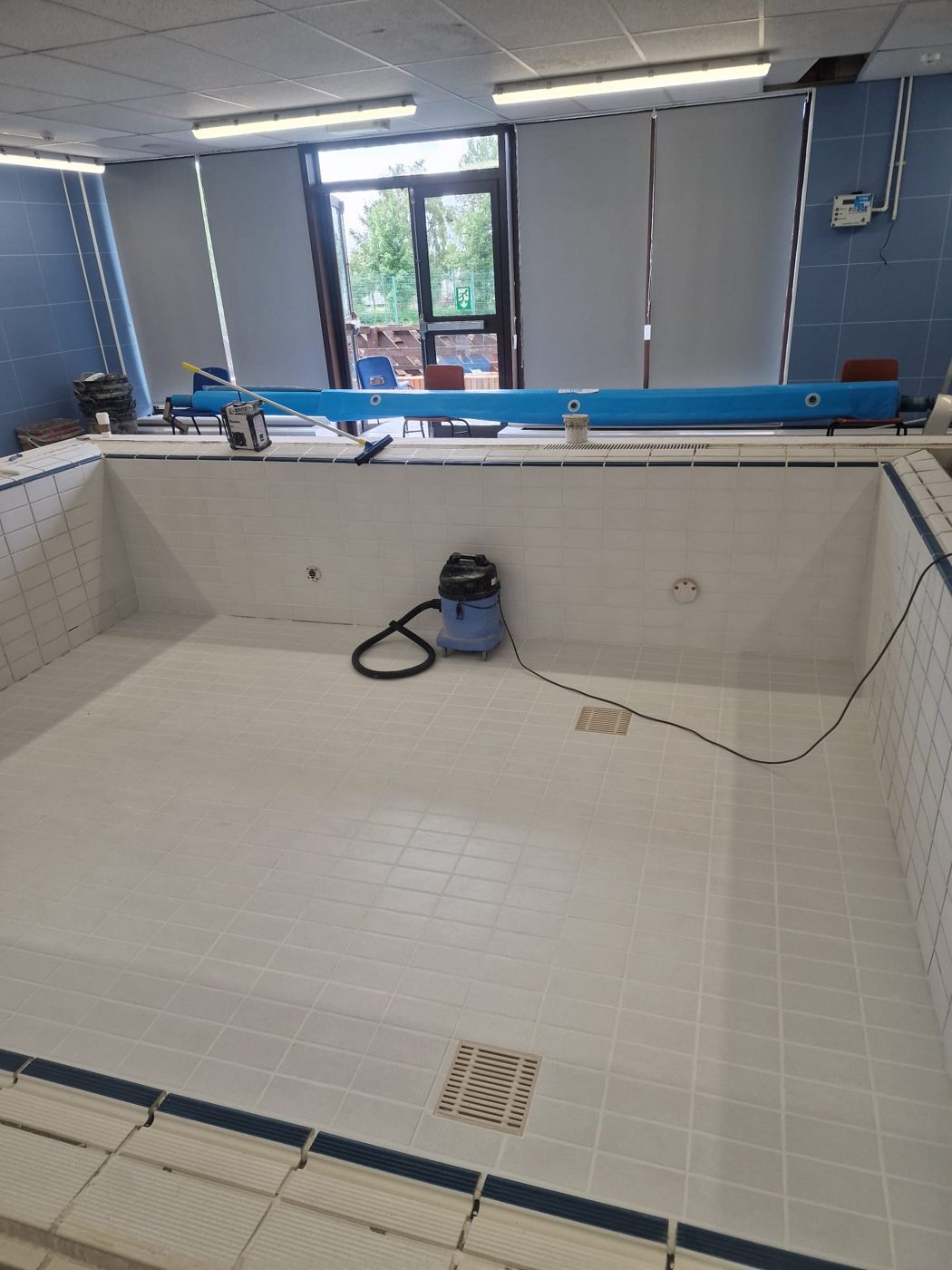
Mikveh water is usually kept warm and treated for hygiene, and over time that combination can be hard on cement-based grout. Joints can become sandy, recessed or stained, and once grout is lost, water and dirt sit in the joint where they are hard to clean. Epoxy grout is often a good choice in these conditions, but not always, and no grout will hold down a loose tile or stop a background that is moving.
Hygiene matters to every mikveh committee, so we pay particular attention to tight, fully filled joints, clean junctions at corners and steps, and finishes that can be cleaned properly by the people who look after the building day to day.
Steps, handrails and slip considerations
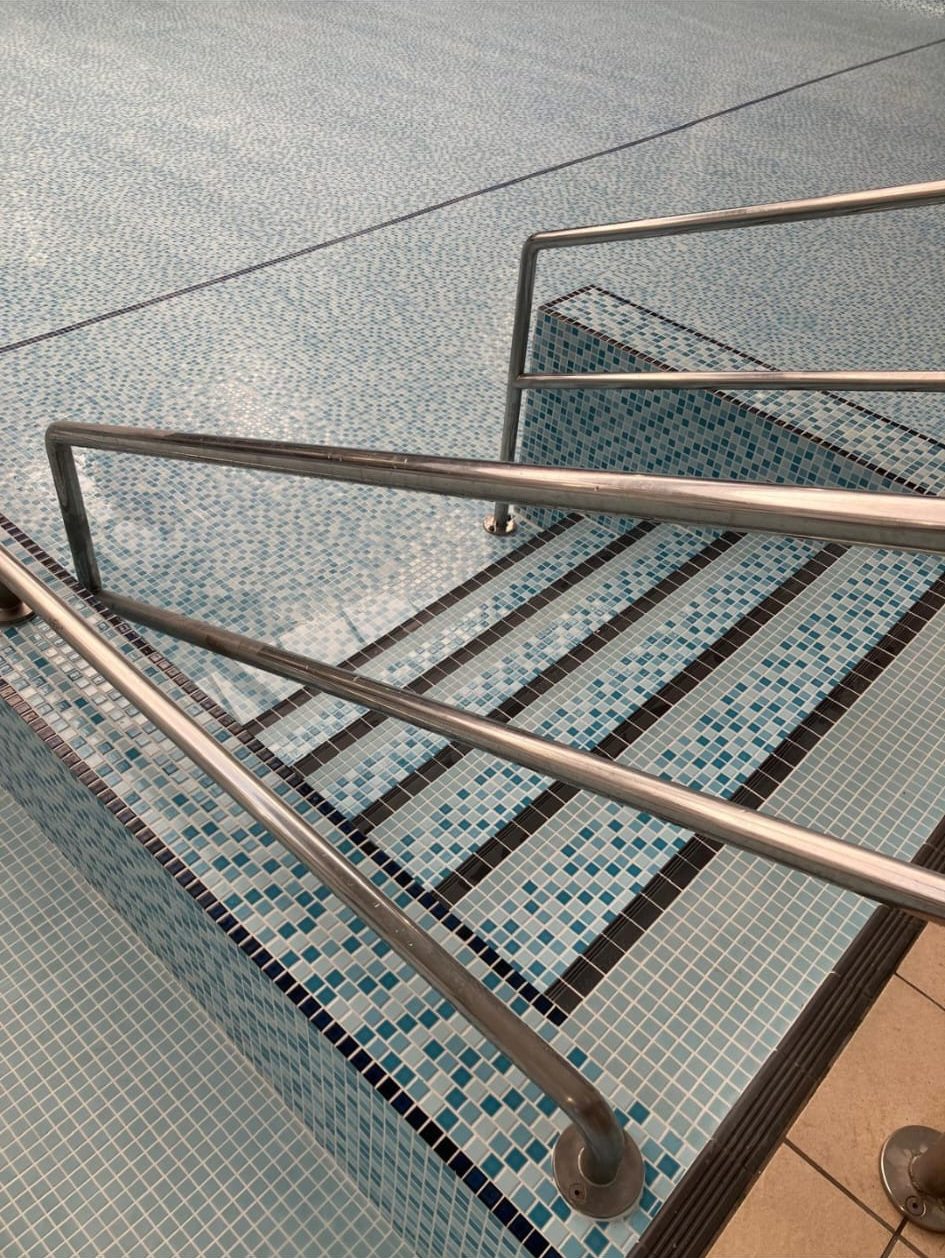
People go in and out of the immersion pool on wet steps, often without their glasses. Step tiles, nosings and the area around handrails deserve as much attention as the pool itself. Where tiles are being replaced, we discuss tile choices with suitable slip characteristics for wet barefoot areas and clearly visible step edges.
Preparation room floors are wet barefoot areas too. Falls to drains, sound grout and suitable floor tiles all help, and we will point out anything we notice that the committee may want to consider, such as handrail fixings that need attention from the appropriate trade.
Working quietly around the community's calendar
We understand that a mikveh is a private and sensitive place. We keep our team small and discreet, agree access arrangements and working hours with the committee, and plan works around opening hours, Shabbat, festivals and the community's calendar. Where a women's mikveh, a men's mikveh or a keilim mikveh for utensils share a building, we plan the sequence so that disruption to the facilities still in use is kept to a minimum.
Closures are planned with the committee well in advance. Draining, preparation, tiling, curing and refilling all take time, and we do not cut curing short to make a date. If something unexpected turns up once the water is out, the committee hears about it from us straight away.
Mikveh contractors who explain before they start
We tile. Where we find signs of a leak, a waterproofing failure or a structural problem, we say so and recommend that it is assessed by the community's own specialists before tiling continues. Retiling over a leak only hides it for a while.
You will deal directly with Dan and Jay, who do the tiling themselves. We take on mikveh tiling and refurbishment across the whole of the UK, planning travel and accommodation around the job where needed. We do not publish prices, because the right scope depends on what is in your mikveh.
Do you work with our rabbinic authority on a mikveh refurbishment?
Yes. The design of the mikveh and anything affecting its kashrut is set and supervised by your rabbinic authority and its designers. We carry out the tiling to that design, and we do not alter or block reservoir connections, openings or pipes without their approval.
Can the mikveh be regrouted without fully retiling it?
Often, yes, where the tiles are well bonded and the background is sound. We tap test and inspect first. Tapping picks up most hollow tiles but not every one, so the scope can change if failed bedding turns up once grout or tiles come out.
Can you work around Shabbat, festivals and opening hours?
Yes. We agree working hours, access and closure dates with the committee in advance and plan the programme around the community's calendar and the hours the mikveh is open.
Our mikveh is losing water. Can retiling fix it?
Not on its own. Water loss can have several causes, including pipework, waterproofing or the structure. We recommend it is investigated by the community's specialists, and we will tile once the cause has been dealt with.
Where in the UK do you take on mikveh work?
Anywhere in the UK. We are based in Warrington and plan travel and accommodation around the job when the mikveh is further away. A short description and a few photos on the estimate form is the best start.
Tell us about your pool.
Send a few details and we’ll get back to understand the job. Photos of the tiles, grout and problem areas are useful when you have them.
- Call Dan07800 826895
- Call Jay07966 002106
- Emailtiletrustuk@outlook.com
- Where we workBased in Warrington, Cheshire.
Pool projects across the UK.