Swimming pool repairs: fix what has failed, keep what is sound.
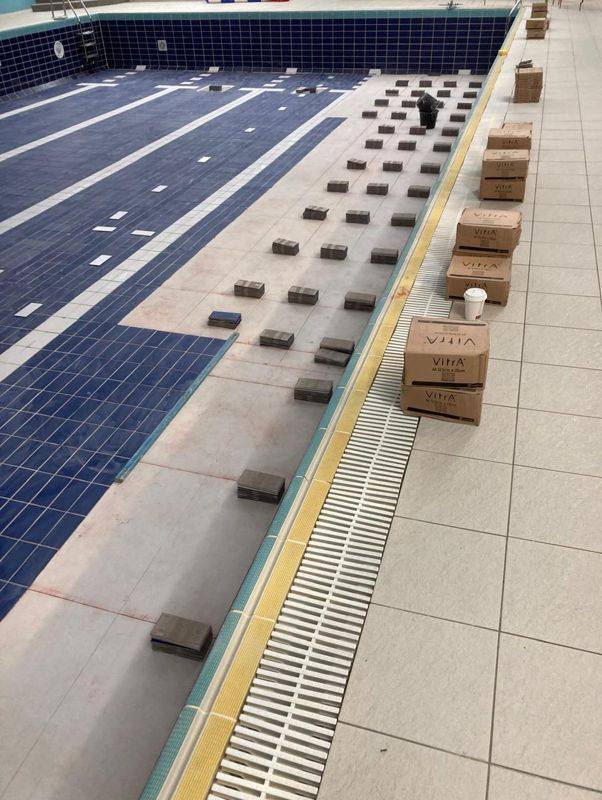
A pool does not always need every tile removed. Loose, cracked or missing tiles around floors, walls, steps, corners, channels and outlets can often be repaired locally when the surrounding work and substrate are sound.
Find the true extent with tap testing
When the pool is safely drained and accessible, we check tiled areas methodically with a light tap, comparing the sound of neighbouring tiles. A dull or drummy sound can be a warning sign of a void or a possible loss of bond.
We map those areas so the findings can be discussed against visible cracks, loose edges, grout condition and the pool’s history.
A tap test is a screening check, not proof on its own that a tile has failed. Where the cause or boundary is uncertain, a selective lift or test opening may be needed.
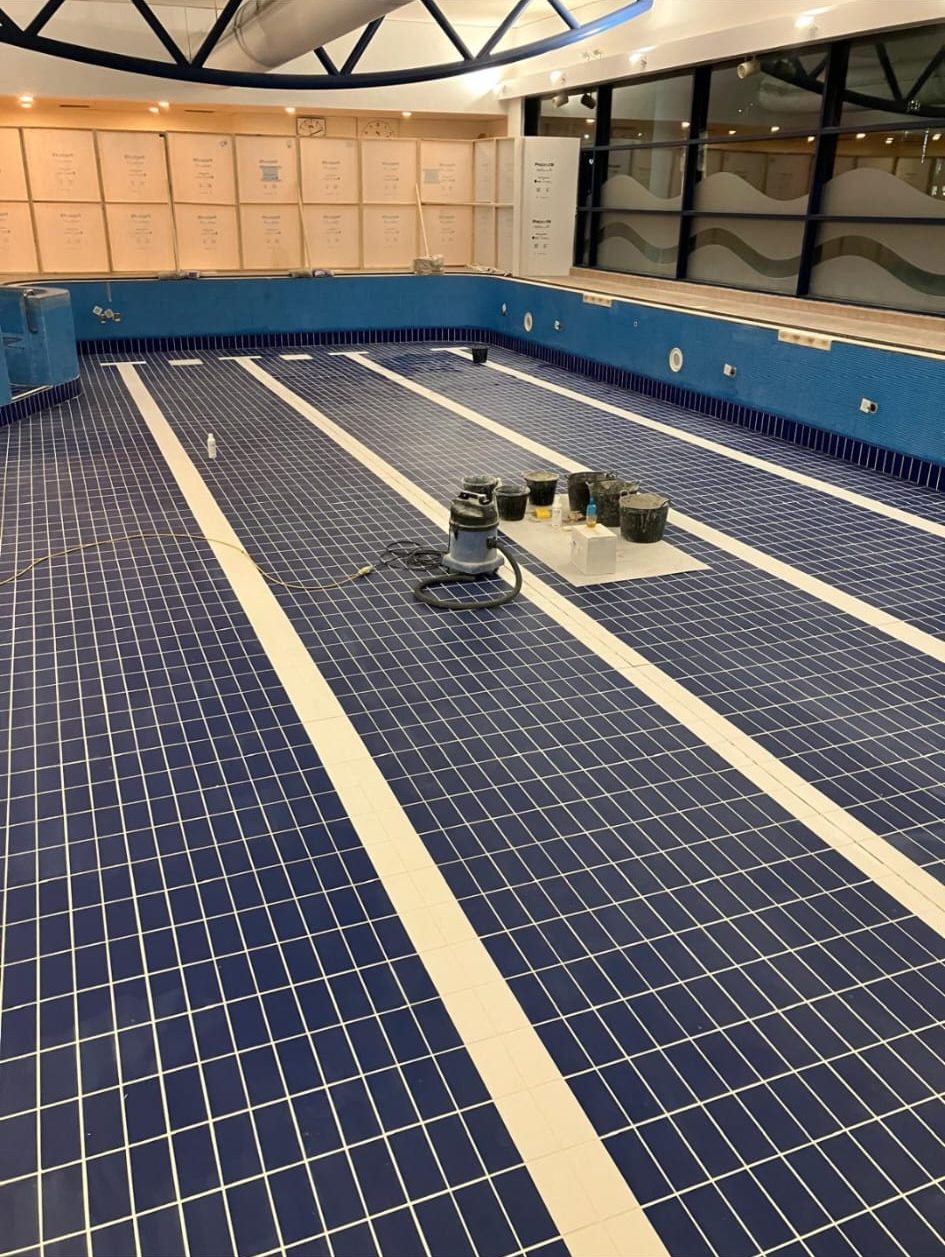
Cut out, inspect, rebuild
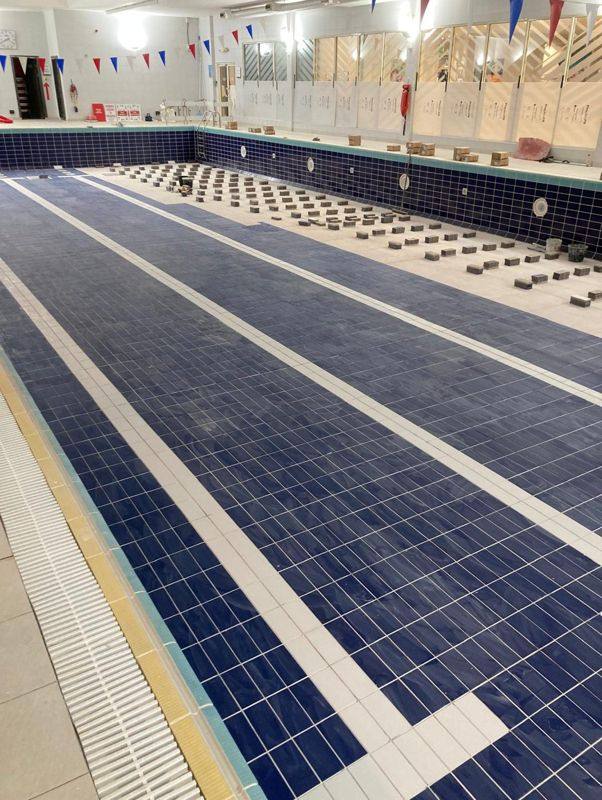
We carefully remove the failed tile and grout, protect adjoining tiles, take out weak or contaminated bedding and inspect the area before rebuilding it.
- Repair boundaries are set by what is found beneath the tile
- Replacement tile, bedding and joint materials are selected for the location and pool conditions
- Movement and perimeter joints stay flexible; they are never simply filled with rigid grout
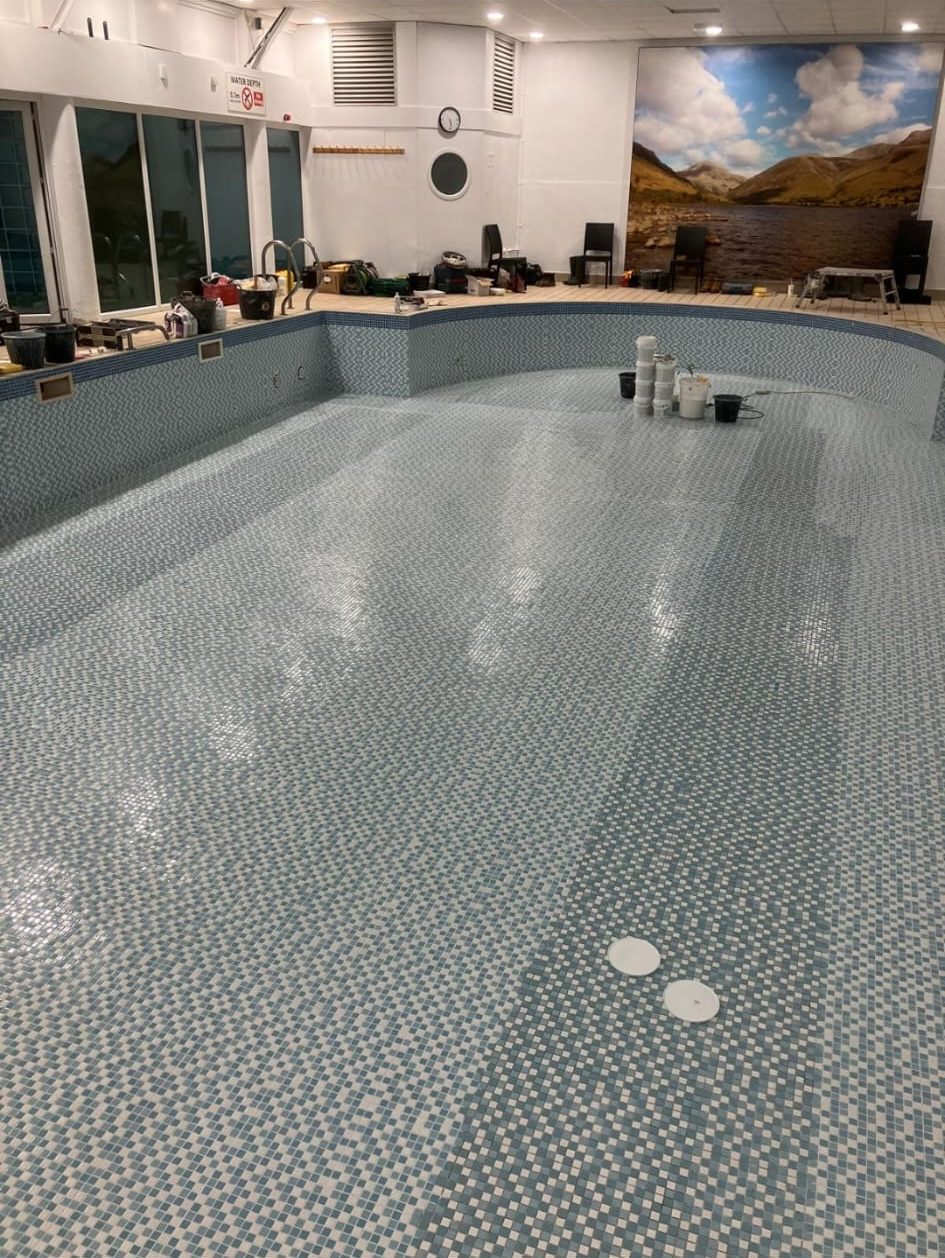
Render and uneven areas put right first
If the background is damaged, loose or out of plane, it needs suitable preparation before new tiles go back. We remove unsound material and rebuild to a stable, tile-ready finish using a system chosen for the substrate, the thickness and whether the area will be immersed.
Useful reading
Can you repair individual loose or cracked tiles?
Yes. Loose, cracked or missing tiles around pool floors, walls, steps, corners, channels and outlets can often be repaired locally when the surrounding work and substrate are sound.
Does a hollow sound mean a tile definitely needs replacing?
No. A tap test is a screening check, not proof on its own that a tile has failed. Tile size, substrate, membranes and the original fixing method can all affect the sound. Where the cause is uncertain, a selective lift or test opening may be needed.
Can you replace only the tiles that are damaged?
Often, yes. A pool does not always need every tile removed. Repair boundaries are set by what is found beneath the tile, so we can keep sound work and repair the affected areas.
Tell us about your pool.
Send a few details and we’ll get back to you to understand the job. Photos of the tiles, grout and problem areas help us a lot, and you can add them below.
What affects the estimate?
- The pool area and which surfaces need work
- Joint size and the grout or tiles involved
- The condition of the tiles, joints and background
- Access to the pool and the working areas
- Preparation, cleaning and any repairs needed first
- The programme and when the pool can close
- Call Dan07800 826895
- Call Jay07966 002106
- Emailtiletrustuk@outlook.com
- Where we workBased in Warrington, Cheshire.
Pool projects across the UK.