Swimming pool regrouting: sound joints, without a full retile.
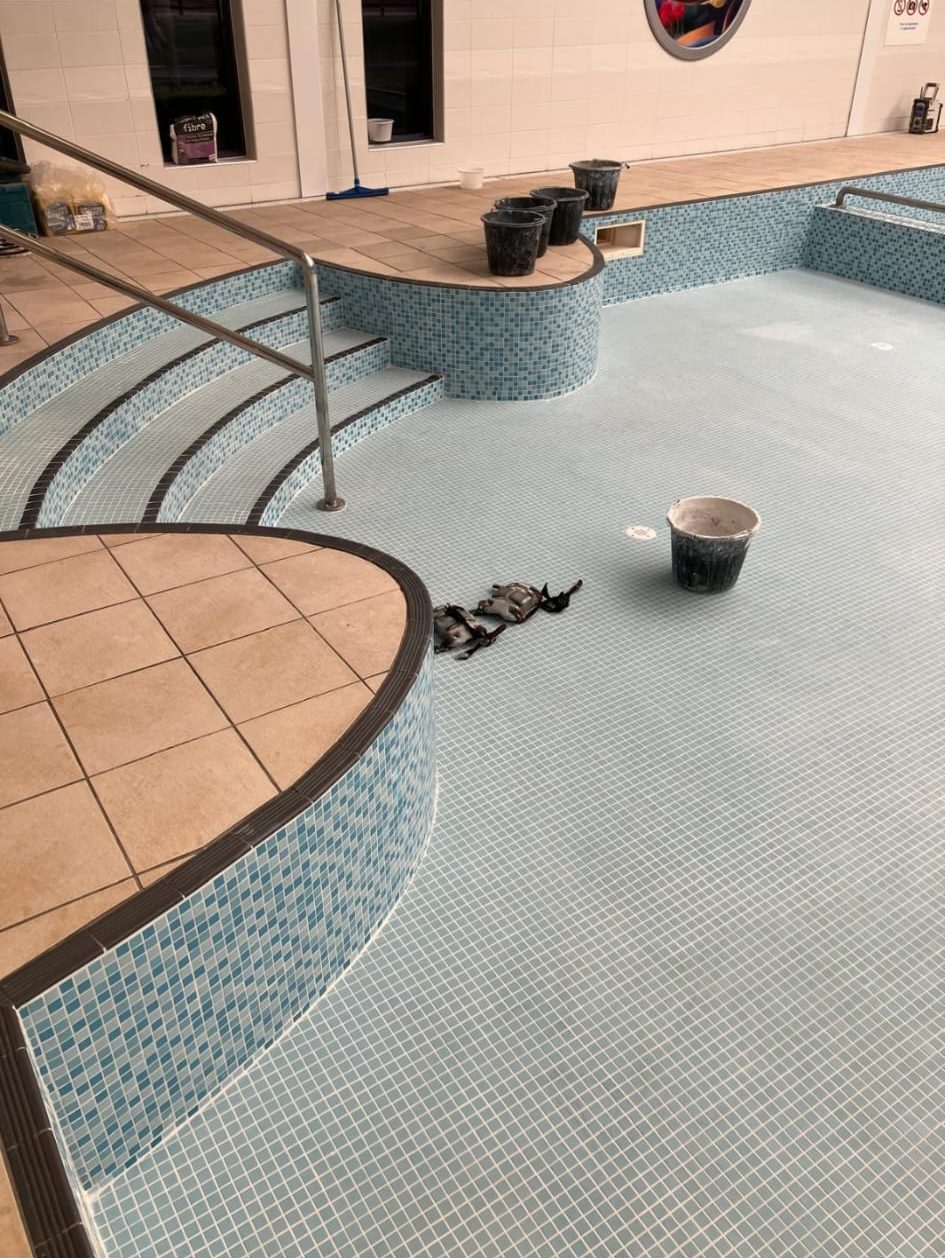
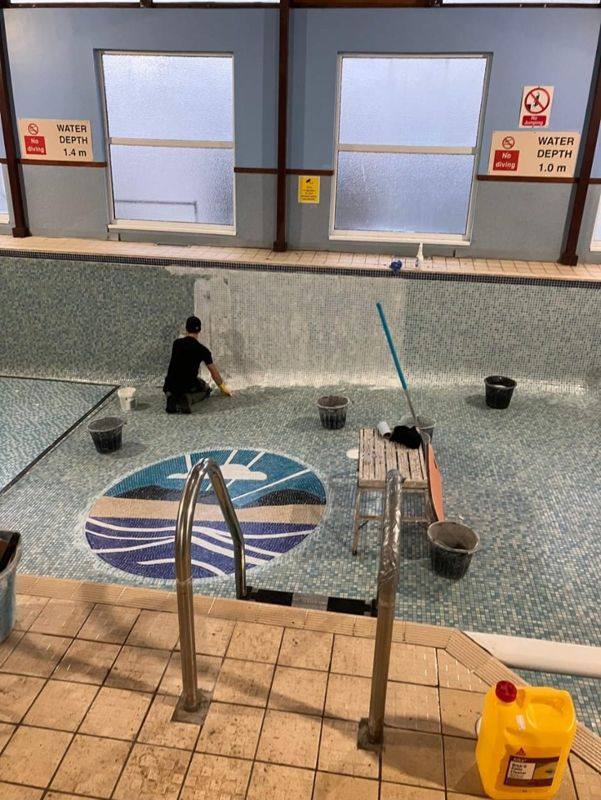
Where tiles remain securely bonded and the underlying system is suitable, worn grout can be removed to the required depth and replaced. The joint is cleaned and prepared, filled fully and finished neatly to the tile face.
An epoxy chosen for your pool, not a default
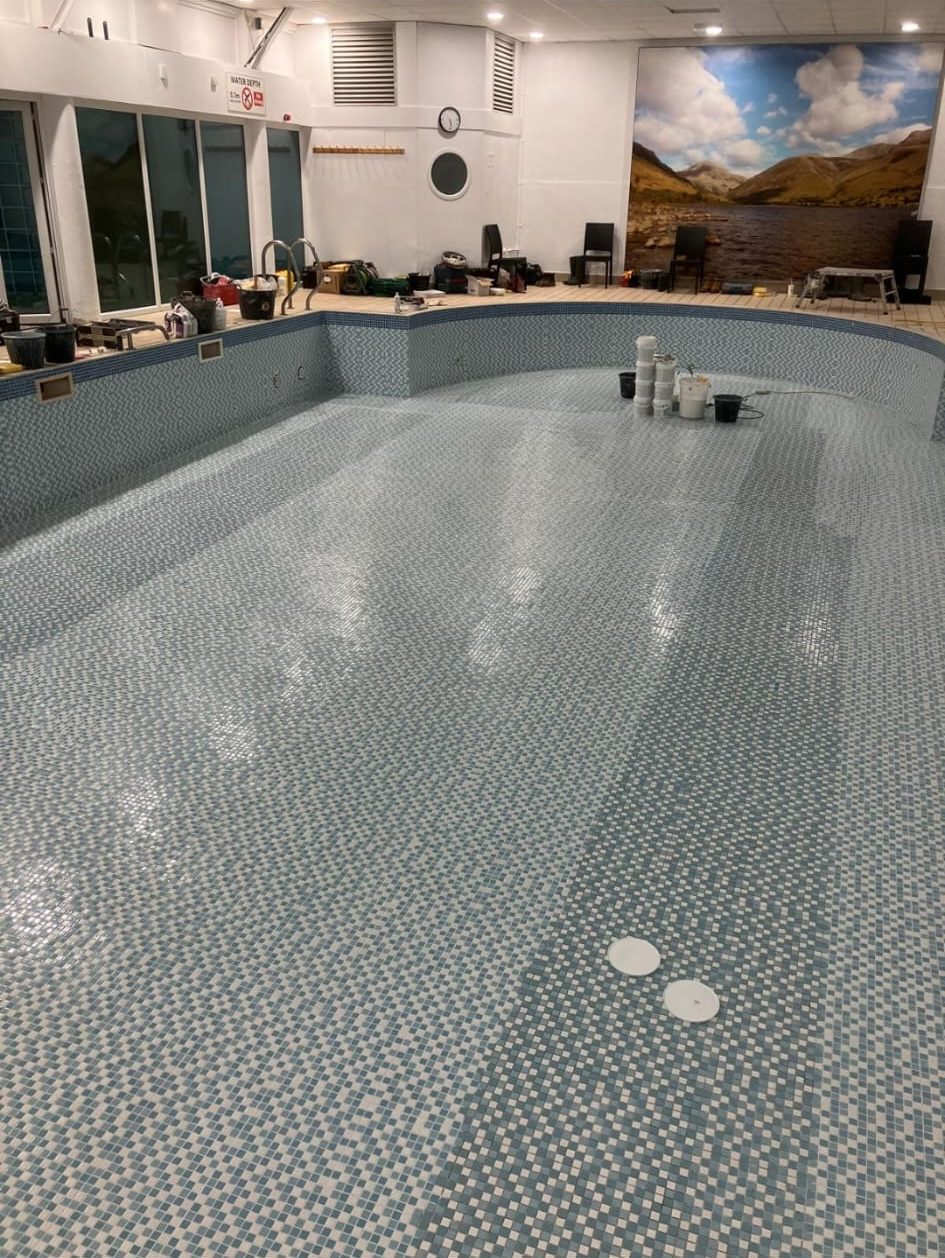
We use pool-suitable epoxy grouts, but not necessarily the same epoxy on every project. Tile type and surface, joint width and depth, the pool’s use and the installation conditions all affect which product will perform and finish well.
We choose a pool-suitable epoxy grout to suit the tiles, joint size and pool conditions, so we don’t always use the same product on every job.
Honest advice on both
Epoxy may offer a longer-lasting, easier-to-maintain joint in demanding pool conditions. We also install cementitious grout on pool surrounds and, if a client prefers it, within the pool where the product and specification are suitable.
We explain the expected care and maintenance of either option before work starts.
No grout has a guaranteed lifespan; preparation, installation, pool chemistry and maintenance all matter.
What regrouting will not fix
Regrouting is not a fix for loose tiles, failed render, structural movement or a leaking pool shell. Those issues need to be assessed separately, which is why we look at the whole surface before recommending it.
- Correct preparation, full compaction and careful wash-down
- Flexible movement joints renewed with a suitable sealant, never rigid grout
- Refill and return to service only once the grout has cured to the product instructions
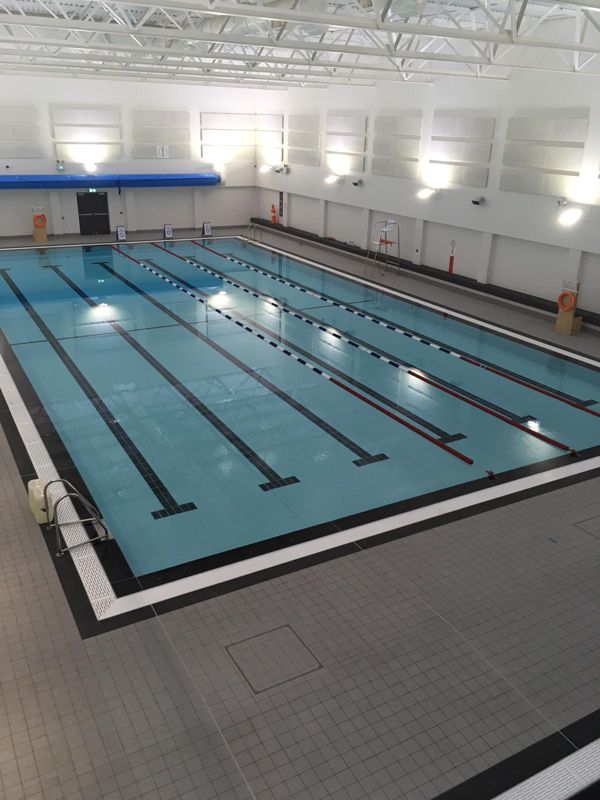
Can you regrout a pool without replacing the tiles?
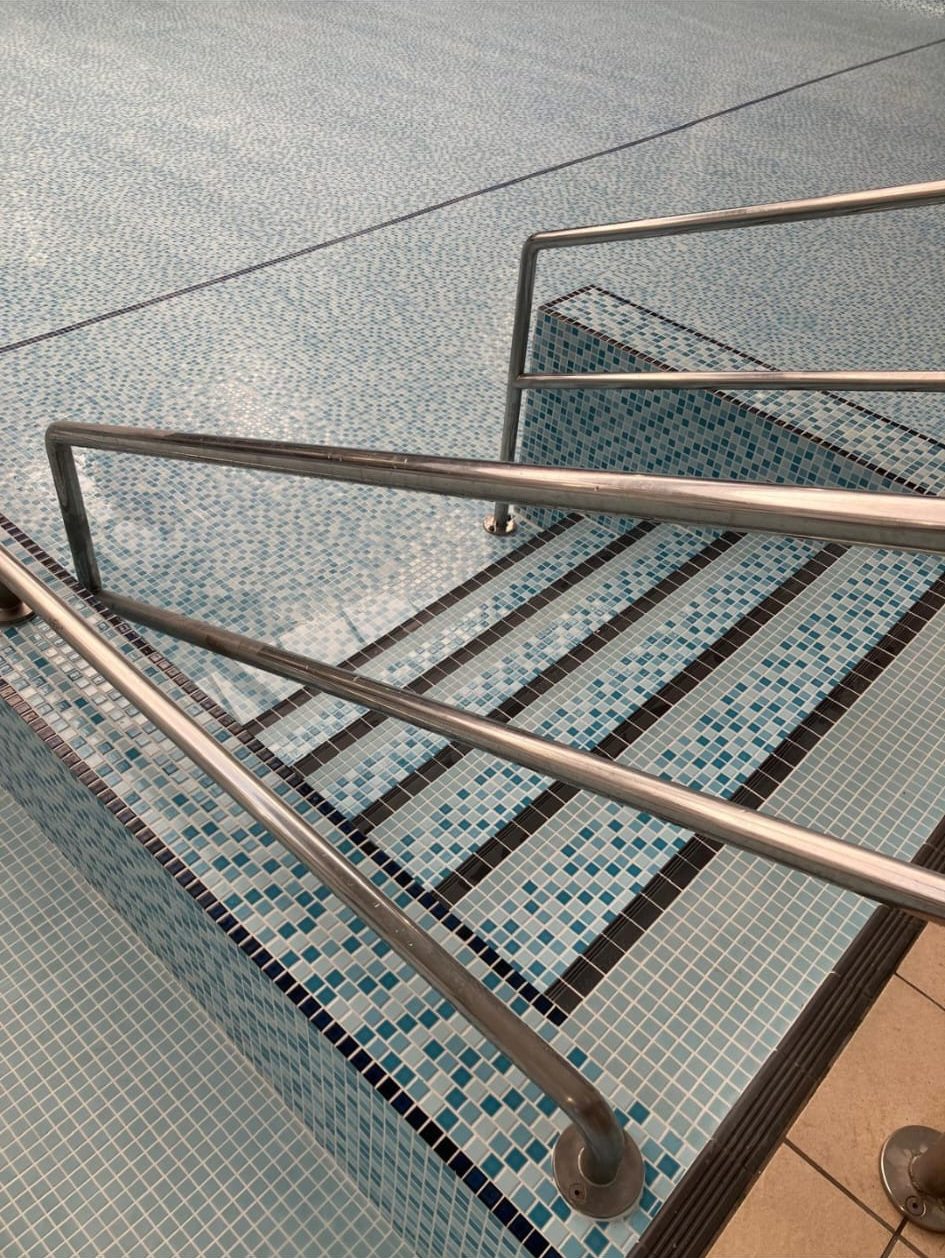
Often, yes. Where tiles remain securely bonded and the underlying system is suitable, worn grout can be removed to the required depth and replaced. Regrouting is not a fix for loose tiles, failed render, structural movement or a leaking pool shell; those issues need to be assessed separately.
Is epoxy grout always better than cement grout?
Not always. Epoxy may offer a longer-lasting, easier-to-maintain joint in demanding pool conditions, but it cannot strengthen a loose tile or repair movement, waterproofing or structural problems. Cement grout may need a different maintenance routine, and no grout has a guaranteed lifespan.
Can a refurbishment save the cost of a full new pool finish?
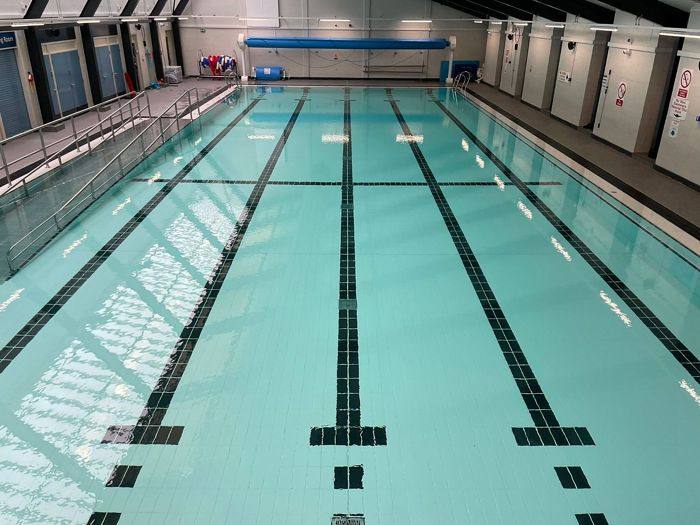
It can. Keeping sound tiles and repairing the affected areas can avoid the cost and disruption of stripping and replacing everything. The right option depends on the shell, waterproofing, tile bond, background, movement joints and water conditions.
Tell us about your pool.
Send a few details and we’ll get back to you to understand the job. Photos of the tiles, grout and problem areas help us a lot, and you can add them below.
What affects the estimate?
- The pool area and which surfaces need work
- Joint size and the grout or tiles involved
- The condition of the tiles, joints and background
- Access to the pool and the working areas
- Preparation, cleaning and any repairs needed first
- The programme and when the pool can close
- Call Dan07800 826895
- Call Jay07966 002106
- Emailtiletrustuk@outlook.com
- Where we workBased in Warrington, Cheshire.
Pool projects across the UK.