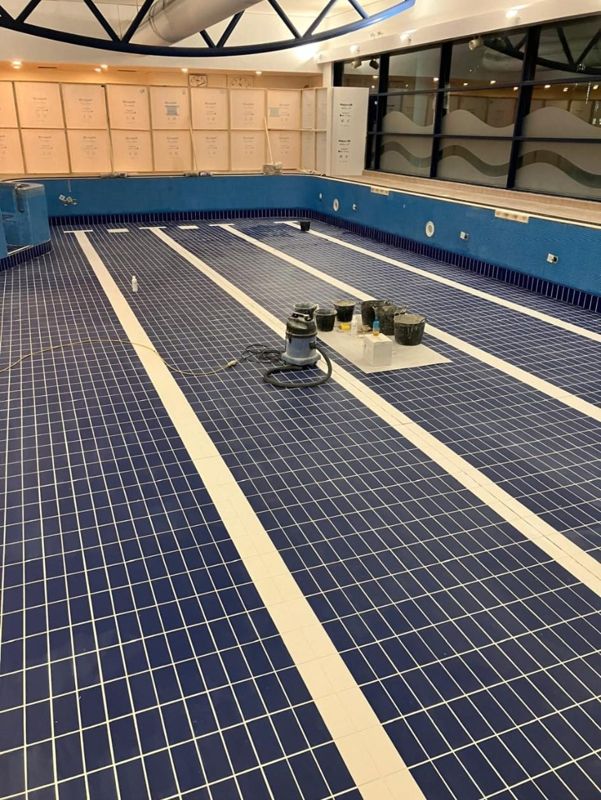
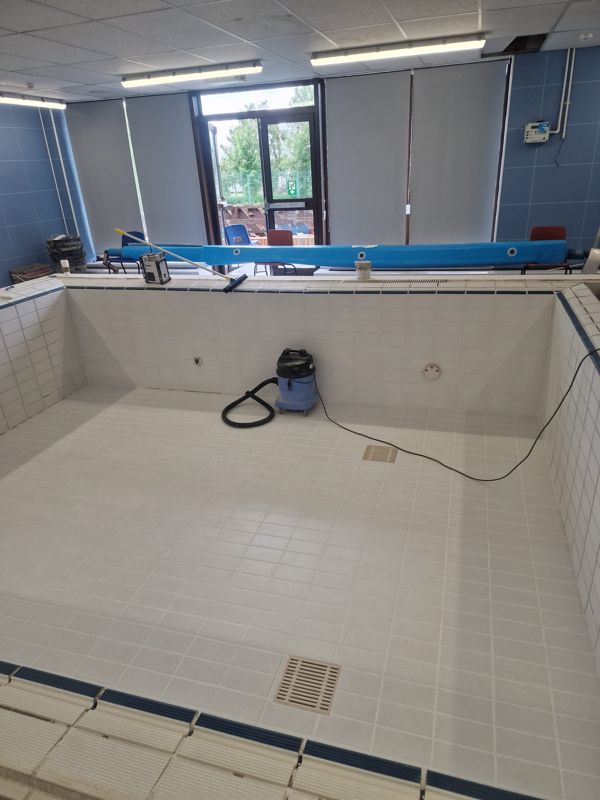
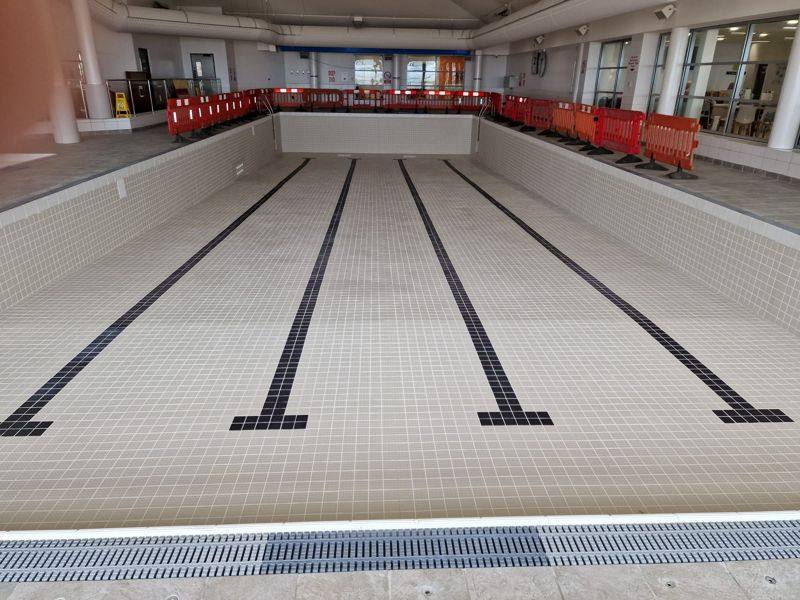
Refill only once adhesives, grouts and sealants have cured to the point their manufacturers specify for immersion, under the conditions on site. Fill steadily, bring the water up to temperature gradually and balance it in line with your normal procedures and PWTAG guidance. Timing depends on the products, temperature and humidity, so follow the contractor's and manufacturers' advice.
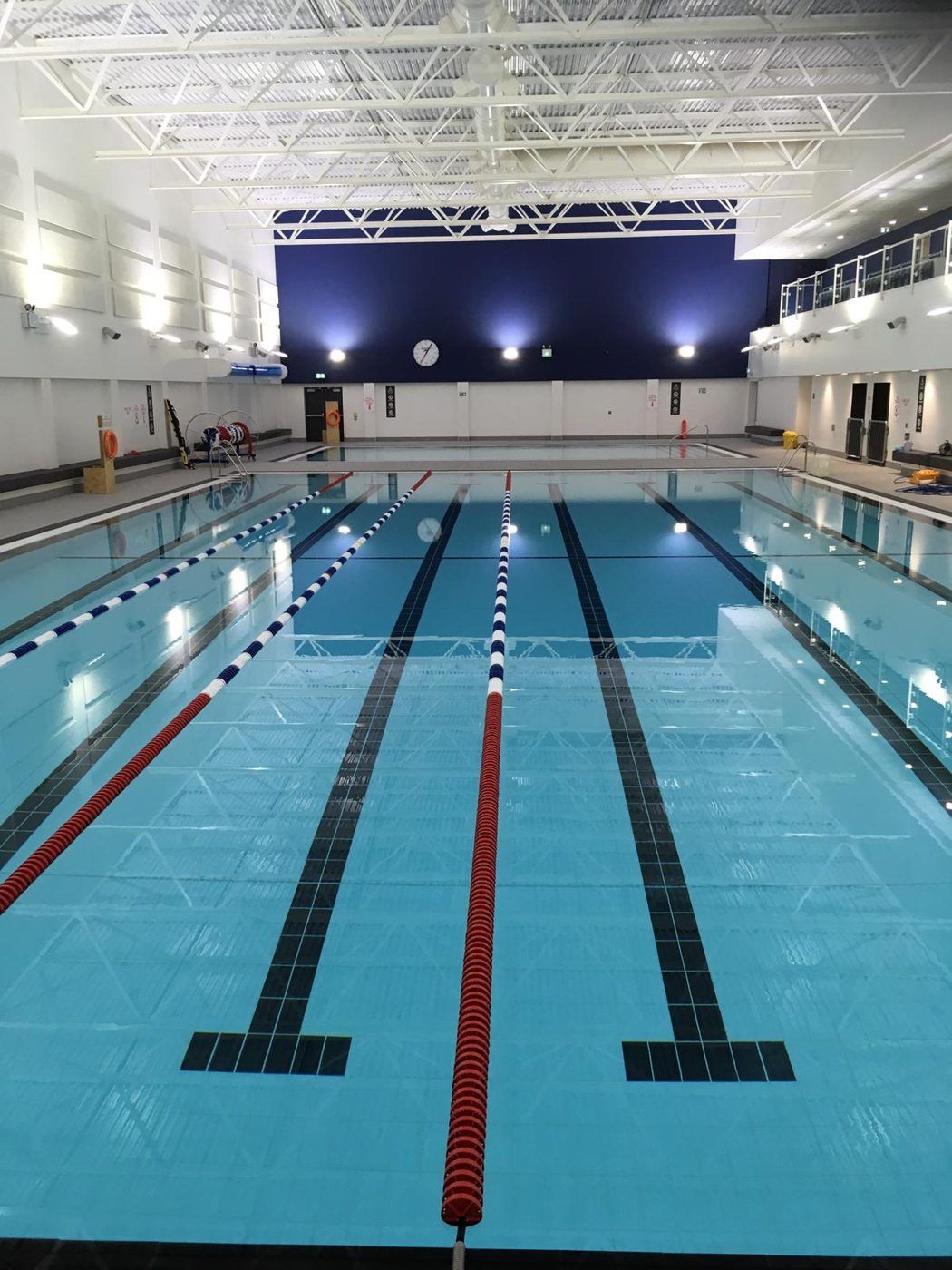
Why refill timing matters
Refill is when the new work first goes under water and takes the load of it. Adhesives, grouts and sealants need to reach the stage of cure their manufacturers specify before immersion. Fill too early and their performance can suffer, sometimes in ways that only show later.
This is also when the pressure is greatest, because the reopening date is close. Cure and refill time belongs in the programme from day one, not in whatever days are left over.
What affects when refill can start
There is no single waiting period that suits every pool. A careful contractor checks these factors instead of working to a fixed number of days.
- The specific adhesive, grout and sealant products used.
- Temperature in the pool hall and of the pool shell.
- Humidity and ventilation during the cure period.
- The depth and width of joints and the thickness of bedding.
- Any background repairs that need their own cure or drying time.
- The manufacturers' current technical data for immersion and chemical exposure.
Before refilling: final checks
Walk the pool with the contractor before any water goes in. Anything is easier to put right now than after refill.
- Grout joints are full, even and finished to the tile face.
- Movement and perimeter joints are complete, flexible and fully cured.
- Repaired tiles sit flush and are firmly bedded.
- Tile faces are clean of residue, haze or adhesive.
- Outlets, fittings and channels are clean and free of debris.
- Any protection, tape and tools have been removed.
Refilling steadily
Fill at a controlled, steady rate rather than as fast as the supply allows. Some product manufacturers give a refill rate or first-fill precautions, so ask your contractor what applies to the products used.
Watch the pool as it fills, particularly the repaired areas, joints at the waterline and the movement joints. If anything looks wrong, stop and call the contractor.
The fill water matters too. Mains water in some areas is soft and may need its calcium hardness and alkalinity adjusting before it is well balanced, so bring the water treatment provider in from the first fill, not once the pool is full.
Heating the water gradually
Sudden temperature changes stress tiles, joints and the shell. Bringing the water up to temperature gradually, rather than heating hard from cold, is a sensible precaution, and it matters more in warm pools such as spa, hydrotherapy and teaching pools.
Your plant operator knows how the heating behaves. Agree an approach with them and the tiling contractor before the fill starts.
Water balance and chemical treatment
Water treatment after refill should follow your normal procedures and recognised guidance such as PWTAG's. Poorly balanced water can be aggressive to cement-based grouts and other materials, or can deposit scale, so get the balance right early.
Check whether the products used have specific requirements for chemical exposure after refill, and follow the manufacturers' instructions on when the pool can be dosed and returned to normal operation.
Who does what at refill
Several people are involved, so agree who does what in advance. The tiling contractor confirms when the installed products are ready for immersion and passes on any precautions. The operator or plant contractor usually manages the fill, heating and dosing. Whoever runs water treatment sets the balancing and testing routine.
Write the sequence down, with who signs off each step, so nobody starts the fill or switches on heating or dosing early. On a busy site with several contractors this one sheet of paper prevents a lot of confusion at the end of a closure.
The first few weeks after reopening
Watch the pool closely once it is back in use. Look at repaired areas, joints and movement joints when the water is clear and when the pool is cleaned, and report changes promptly.
Use cleaning products and methods that suit the new grout and tiles. Ask the contractor for care guidance, as some products and harsh methods can damage new joints.
If something does need attention, photograph it and note the date. Good records make it easier to decide whether it needs action now or can wait for the next planned closure.
Common questions
How long after regrouting can a pool be refilled?
It depends on the grout system, temperature, humidity and joint depth. Manufacturers publish cure guidance for immersion, and a careful contractor applies it to the conditions on site rather than counting a fixed number of days.
Can we refill early if the grout feels hard?
No. Grout can feel hard on the surface well before it has cured enough for immersion and chemical exposure. Go by the manufacturer's guidance and the contractor's advice, not by touch.
Should we drain down again if we see a problem after refill?
Not automatically. Record the issue with photos, contact the contractor and discuss it. Some issues can be monitored until the next planned closure, while others may need earlier action depending on safety and severity.
Does the pool need a full clean before refill?
The tiles, joints and outlets should be clean of dust, residue and debris before water goes in, because anything left behind will end up in the water and filters. Cleaning should use methods compatible with the new grout and follow its manufacturer's guidance.