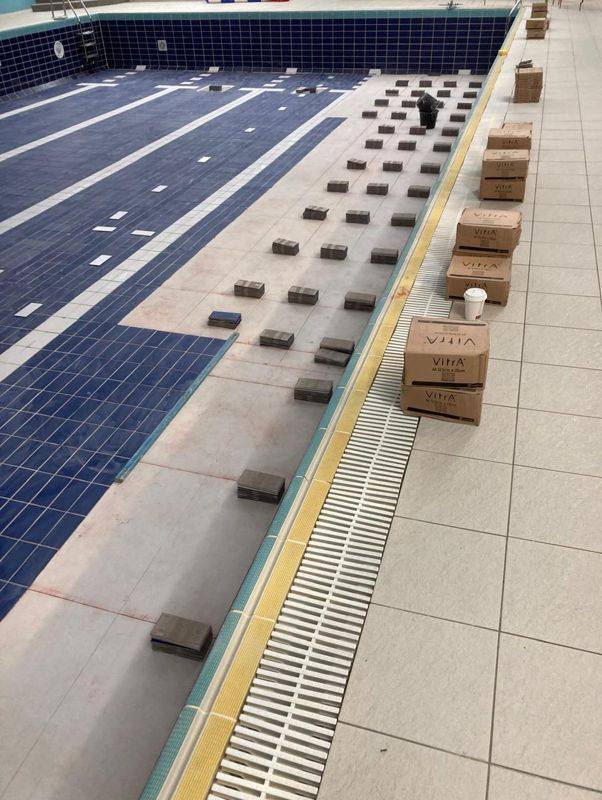
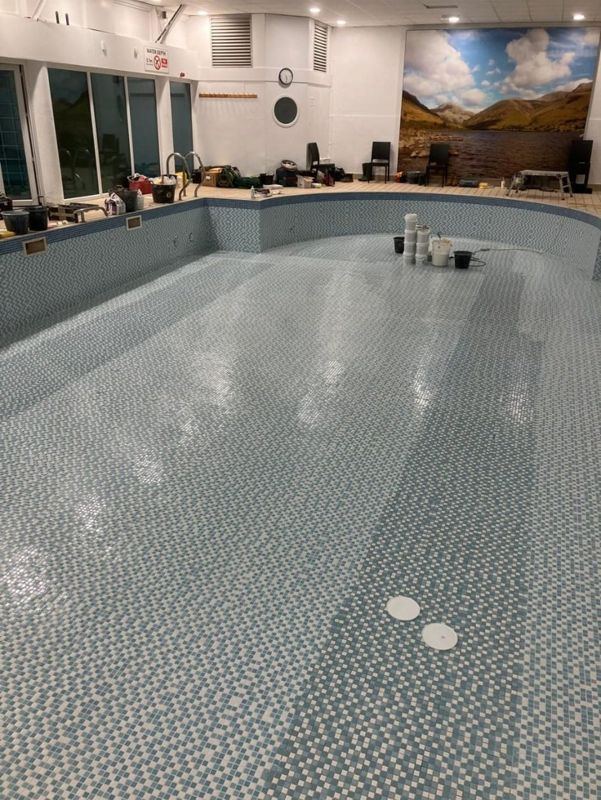
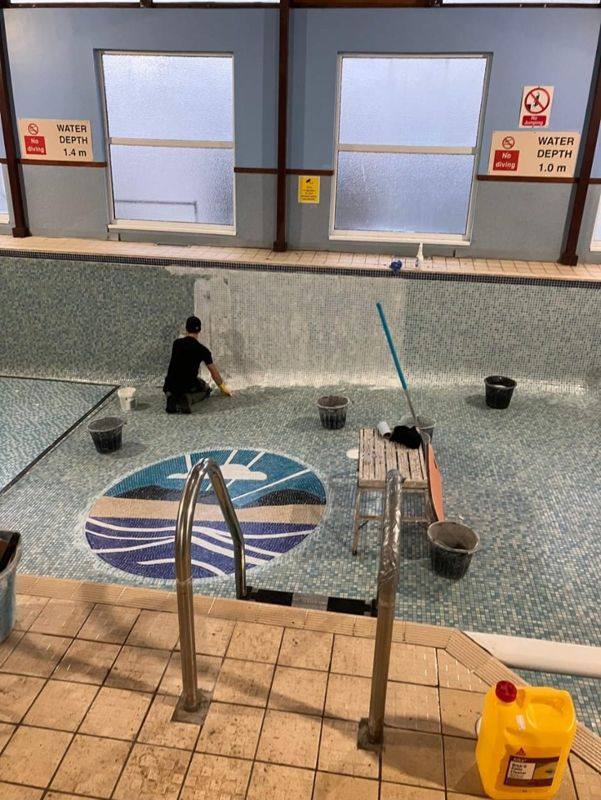
Swimming pool retiling cost is set mostly by what sits behind the old tiles. Strip-out, the state of the render, any waterproofing, the tile you choose, the area and number of features, access and the length of the closure all move the price. A dependable quote follows an inspection of the drained pool, not a rate per square metre.
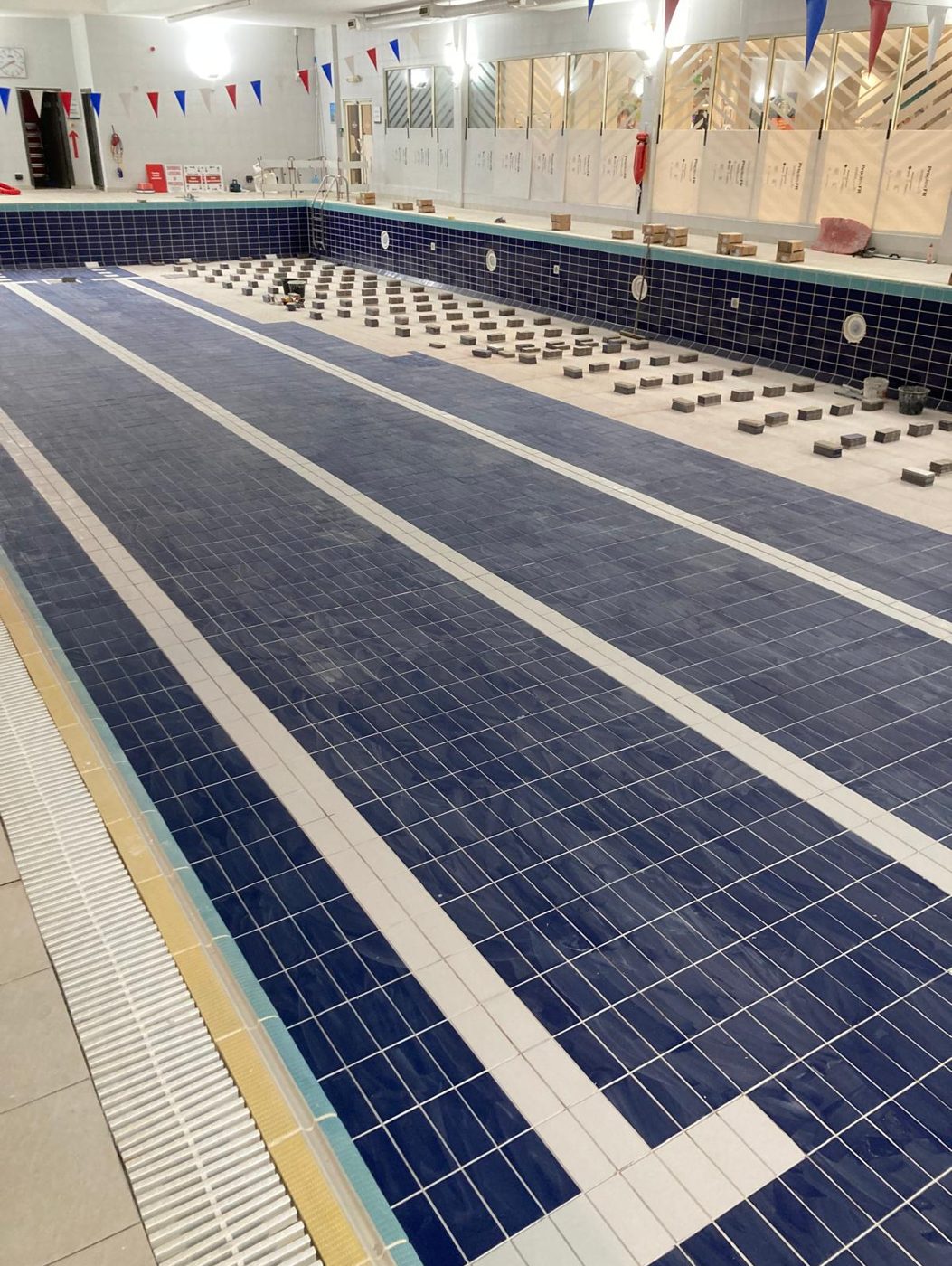
Why there is no honest figure online
A retile is the biggest tiling job a pool can have, and two pools of the same size can be priced very differently. In one, the render stays put when the old tiles come off and needs little more than cleaning down. In the other, the render comes away with the tiles and the walls have to be built back up before a single new tile goes on.
We do not publish prices, because a figure given without seeing the pool would be a guess. This guide sets out what actually drives the cost so you can read a quote properly.
What drives the cost of a retile
- Strip-out: breaking off the old tiles and adhesive, protecting fittings, and carrying out and disposing of the waste. Older pools sometimes have patches of earlier repairs in different materials, which slow things down.
- Background condition: once the tiles are off, the render or screed is checked. Hollow, cracked or weak render has to be cut back and renewed, and on some pools that is a large share of the work.
- Waterproofing: some specifications include a tanking membrane under the new tiles. Whether one is needed, and which system, depends on how the pool was built and on the design.
- Tile choice: mosaic has far more joint to fix and grout than larger tiles, and glass mosaic, special step and edge pieces and lane markings add cost. Larger formats need a flatter background, which can mean more levelling.
- Area and features: steps, benches, curved walls, channels, skimmers, lights and inlets all need cutting and detailing, and they take time out of proportion to their size.
- Access and logistics: how materials get in and waste gets out, working hours, and travel and accommodation for pools further from the Warrington base.
- Programme and drain-down: draining, cure times, a controlled refill, heating and water balancing. Who arranges and pays for water, heating and chemicals is worth settling early.
- Repairs found: defects behind the tiles that nobody could see until the strip-out started.
Why we inspect before pricing
With the pool drained, Dan and Jay tap over the tiles, look at the grout, joints, edges and fittings, and where it helps they lift a tile or two to see the adhesive and render. That gives a fair idea of how much background is likely to come away when the tiles do.
It still cannot show everything. A good retiling quote says how background repairs will be dealt with once the strip-out reveals them: included, priced at an agreed rate, or agreed with you as they are found.
How to compare retiling quotes
Quotes for the same pool can look far apart simply because they cover different things. Check each one against the same list.
- What is stripped, and to what depth: tiles only, or adhesive and render too.
- How render and background repairs are priced.
- Whether a waterproofing system is included, and which one.
- The tile, adhesive and grout specification, and who supplies the tiles.
- Movement and perimeter joints formed in a flexible sealant suited to immersion.
- Steps, edges, channels and lane markings.
- Cure time before refill written into the programme.
- Waste removal and making good to the surround.
When repair or regrouting costs less than a retile
If most of the tiles are well bonded and the problems are local, targeted tile repairs and a regrout usually cost less and close the pool for a shorter period. Nobody should talk you into a full retile the pool does not need.
A retile starts to make more sense when hollow areas are widespread, the render is failing over large areas, or replacement tiles can no longer be matched. Our guide to retiling or repairing a pool goes through that decision in more detail.
Keeping the cost under control
Get the inspection done early, ideally at a planned drain-down before the retile itself, so the scope is known before the main closure. Choose the tile early as well, because pool tiles and special pieces can have long lead times.
Keep a contingency for hidden defects. Then resist the temptation to save money by shortening cure times or skipping movement joints. Both are cheap to do properly and expensive to put right later.
Common questions
How much does it cost to retile a swimming pool?
It depends on the pool. Strip-out, render repairs, waterproofing, tile choice, features, access and the closure all change the price. We do not publish figures. We inspect the drained pool, agree a scope with you and price that scope before any work starts.
Is retiling a pool more expensive than regrouting?
Usually, because a retile adds strip-out, background preparation and new tiles to the work and the closure. Where large areas of tiles are hollow, though, money spent on a regrout can be wasted, because grout cannot hold a loose tile in place.
Can I retile only part of the pool to keep costs down?
Sometimes. A part retile of a floor, the steps or one wall can work where the rest of the pool is sound. Matching the new tiles to the old and detailing the join between them both need thought before you commit.
Why might a retile cost more than the quote?
Mostly because of what is behind the tiles. Render that comes away, cracks in the background or damaged fittings only show once the old tiles are off. We report them promptly with photographs, and nothing extra goes ahead until you have agreed it.
Does a retiling quote include draining and refilling?
It varies. On many commercial pools the operator's own team drains, refills, heats and balances the water. Check each quote says who does what, so nothing falls between the two.