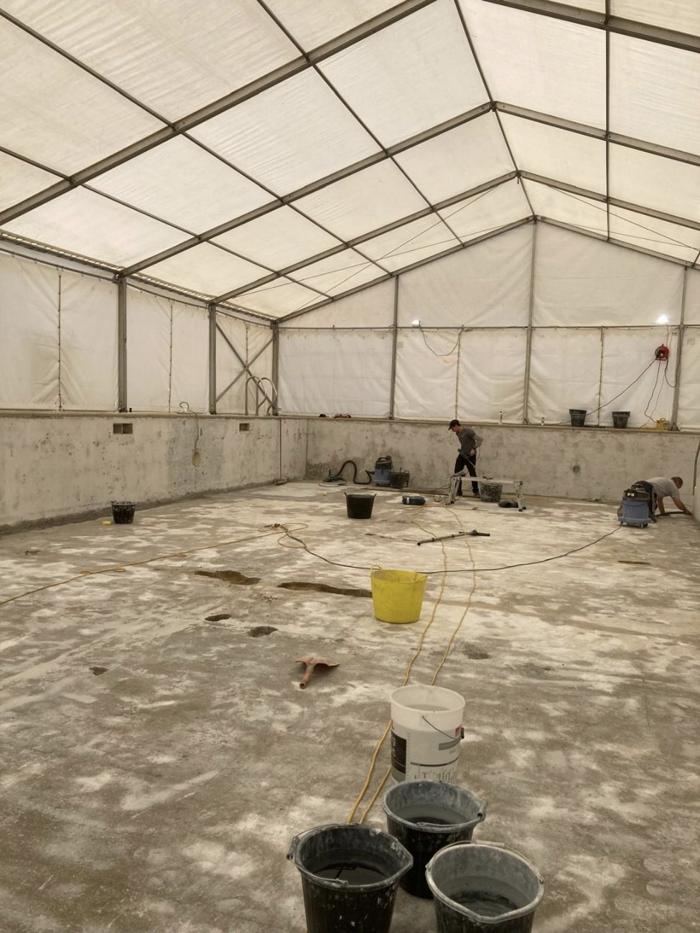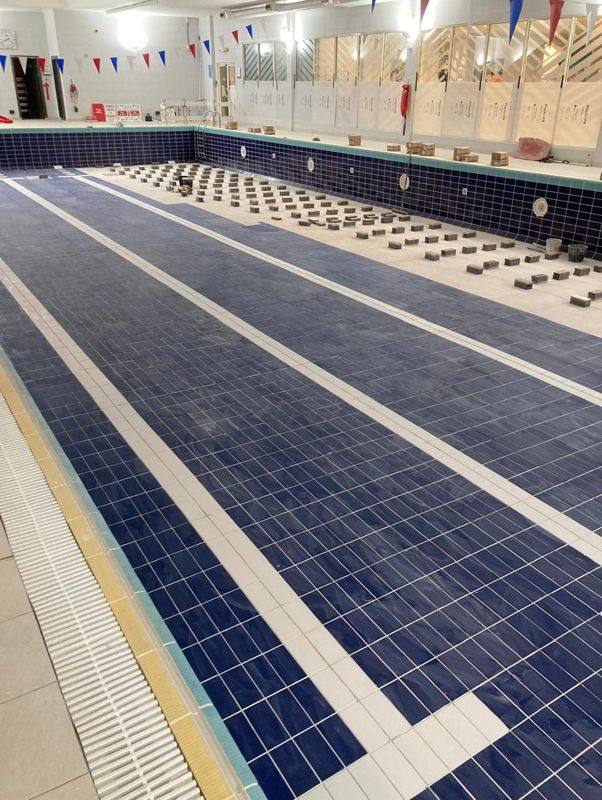
To retile a swimming pool, the pool is drained, the old tiles and adhesive are stripped, and the render underneath is inspected and repaired. Where specified, a waterproofing system goes on next. The new tiles are set out, fixed fully bedded in an adhesive suited to immersion, grouted and given movement joints. Every product is left to cure fully before a controlled refill.
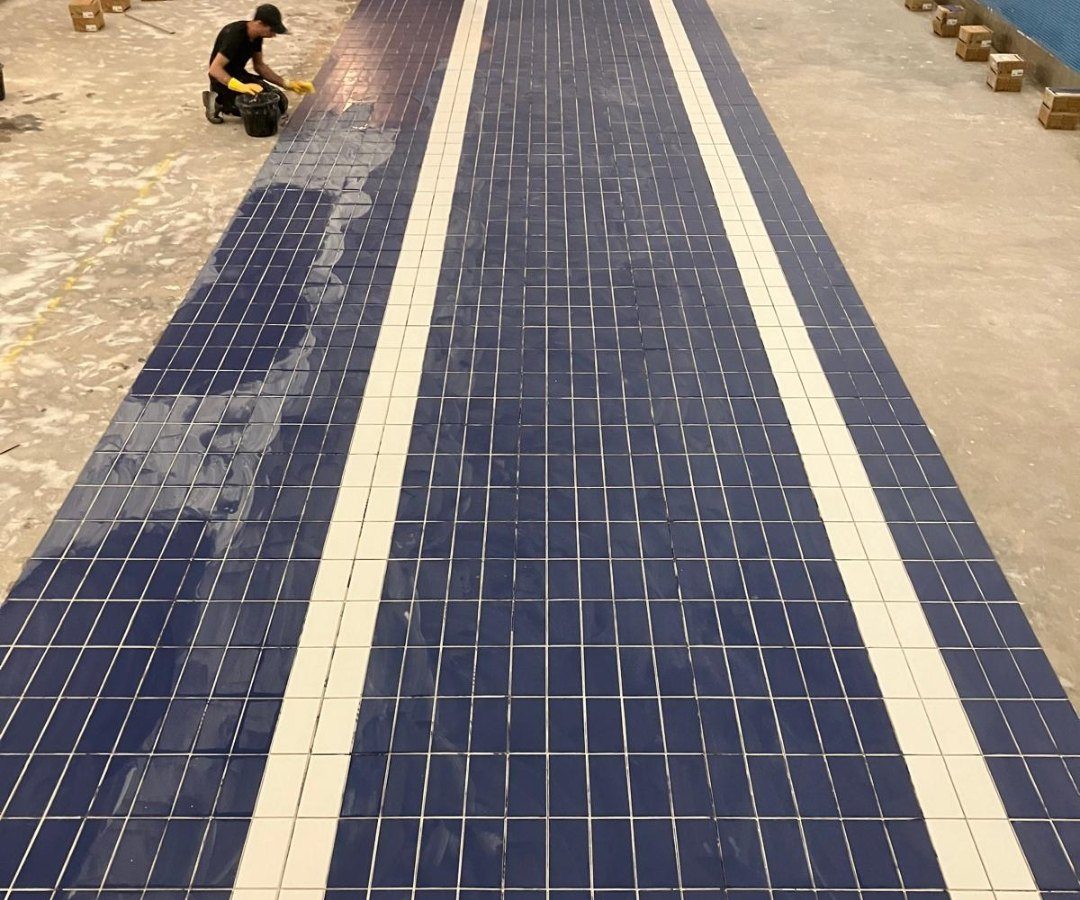
Before the pool is drained
A good retile starts well before the water goes. We inspect the pool, ideally at an earlier drain-down, so the likely scope is known before the main closure is booked. Tap testing, a look at the grout, edges and fittings, and sometimes lifting a tile or two show how well the existing finish is bonded and give an early view of the render behind it.
This is also the time to choose the tiles. Pool tiles, step nosings, edge pieces and lane marking tiles can have long lead times, and having them on site before the strip-out starts protects the programme. Agree early who will drain, refill, heat and balance the water, because on many commercial pools the operator's own team does this.
The stages of a retile
Each stage depends on the one before it, so the order matters as much as the workmanship.
- Drain-down: the pool is emptied at a rate that suits it and the discharge route. In-ground pools in areas of high groundwater may need advice before they are emptied.
- Protection: fittings, lights, channels, grilles and the surround are protected before any breaking out starts.
- Strip-out: the old tiles and adhesive are broken off and the waste is carried out and disposed of.
- Background inspection: with the tiles off, the render or screed is checked for hollow, cracked, weak or contaminated areas.
- Background repairs: defective areas are cut back and rebuilt with a system suited to the thickness and to immersion, then left to cure.
- Waterproofing: where the specification includes a tanking membrane, it is applied and cured to the manufacturer's instructions.
- Setting out: the tile grid is set out from fixed features such as lane lines, steps and outlets, so cuts land where they look intended.
- Fixing: tiles are fixed in an adhesive suitable for immersion, back-buttered where needed so they are fully bedded with no hidden voids.
- Grouting and joints: the tiles are grouted with a pool-suitable grout and movement joints are formed in a flexible sealant where the design calls for them.
- Curing and handover: every product is left for its full cure time, the pool is cleaned and walked round, and it is handed over for a controlled refill.
What the strip-out can reveal
The strip-out is the point where nobody is guessing any more. Sound render may only need cleaning and preparing. Render that comes away with the tiles has to be rebuilt before tiling can continue, and on some pools that is a large share of the work and the programme.
If the strip-out shows something beyond tiling, such as cracking that suggests movement in the shell or signs of a leak, we stop and flag it with photographs. Those issues need the right specialist, and tiling over them would only hide the problem.
Why setting out and bedding matter so much
Two things decide how a retiled pool looks and how long it lasts. Setting out decides the look: lane lines need to run true over the full length of the floor, and the grid has to work round steps, outlets and curved walls without awkward slivers of tile.
Bedding decides the life of the finish. A void behind a tile in a pool can fill with water, weaken the bond and eventually let the tile go, and it often only shows once the pool is drained again. Fully bedded tiles, a compatible adhesive and grout system, and movement joints where the structure needs them are what stop a new finish failing the way the old one did.
How long a retile takes
There is no standard timescale, because the size of the pool, the tile, the amount of render to rebuild and the cure time of each product all change it. A mosaic finish has far more joint to fix and grout than larger tiles, and render repairs each bring their own cure period before tiling can continue.
We agree a programme after inspecting the pool, with the cure periods and decision points written in. Cure times follow the product data sheets, not the reopening date, and a cold or damp pool hall can slow them, so heating and ventilation sometimes need agreeing with the operator.
Can you retile a swimming pool yourself?
Retiling a pool is very different from tiling a bathroom. The finish sits permanently under water and pool chemicals, so any voids, a weak background, the wrong products or missing movement joints can show up as loose tiles once the pool is refilled. Putting that right means draining the pool again.
For a commercial pool, the closure, the programme and the safety of users make it a job for specialist pool tilers. For a private pool, the same risks apply, and a failed retile costs far more to strip and redo than it does to get right the first time.
Retile, part retile or repair?
Not every tired pool needs a full retile. Where most tiles are still well bonded, targeted repairs and a regrout can bring a pool back with far less disruption, and a partial retile of a failed floor, wall or step area can be enough. Our guide to whether to retile or repair a swimming pool walks through that decision, and our retiling cost guide explains what sets the price of each option.
Common questions
How is a swimming pool retiled?
The pool is drained, the old tiles and adhesive are stripped and the render underneath is inspected and repaired. Any specified waterproofing goes on next, then the new tiles are set out, fixed fully bedded in an adhesive suited to immersion, grouted and given movement joints. Every product cures fully before a controlled refill.
Do you have to remove the old tiles to retile a pool?
For a proper retile, yes. Stripping the old tiles shows the condition of the render underneath and lets any weak areas be rebuilt. Tiling over an existing pool finish relies on every old tile staying bonded under permanent immersion, so we do not tile over existing tiles in swimming pools.
How long does it take to retile a swimming pool?
It depends on the size of the pool, the tile, how much render has to be rebuilt and the cure time of each product. We agree a programme after inspecting the drained pool and never shorten cure times to meet a reopening date.
Can I retile my swimming pool myself?
It is not a good DIY job. Voids behind tiles, a weak background, the wrong products or missing movement joints often only show once the pool is refilled, and fixing them means draining it again. Specialist pool tilers plan the bedding, setting out, joints and cure times for a finish that lives under water.
Sources and further guidance
This guide is general information, not legal, health or safety advice for a specific site. Pool operators should follow current official guidance and take advice from competent specialists.