Work backwards from the date the pool has to reopen. Allow for drain down, inspection, the works, product cure times, refill, heating and water balancing. How long each takes depends on the scope, the products, conditions in the pool hall and what turns up once tiles are opened, so plan decision points rather than relying on one fixed date.
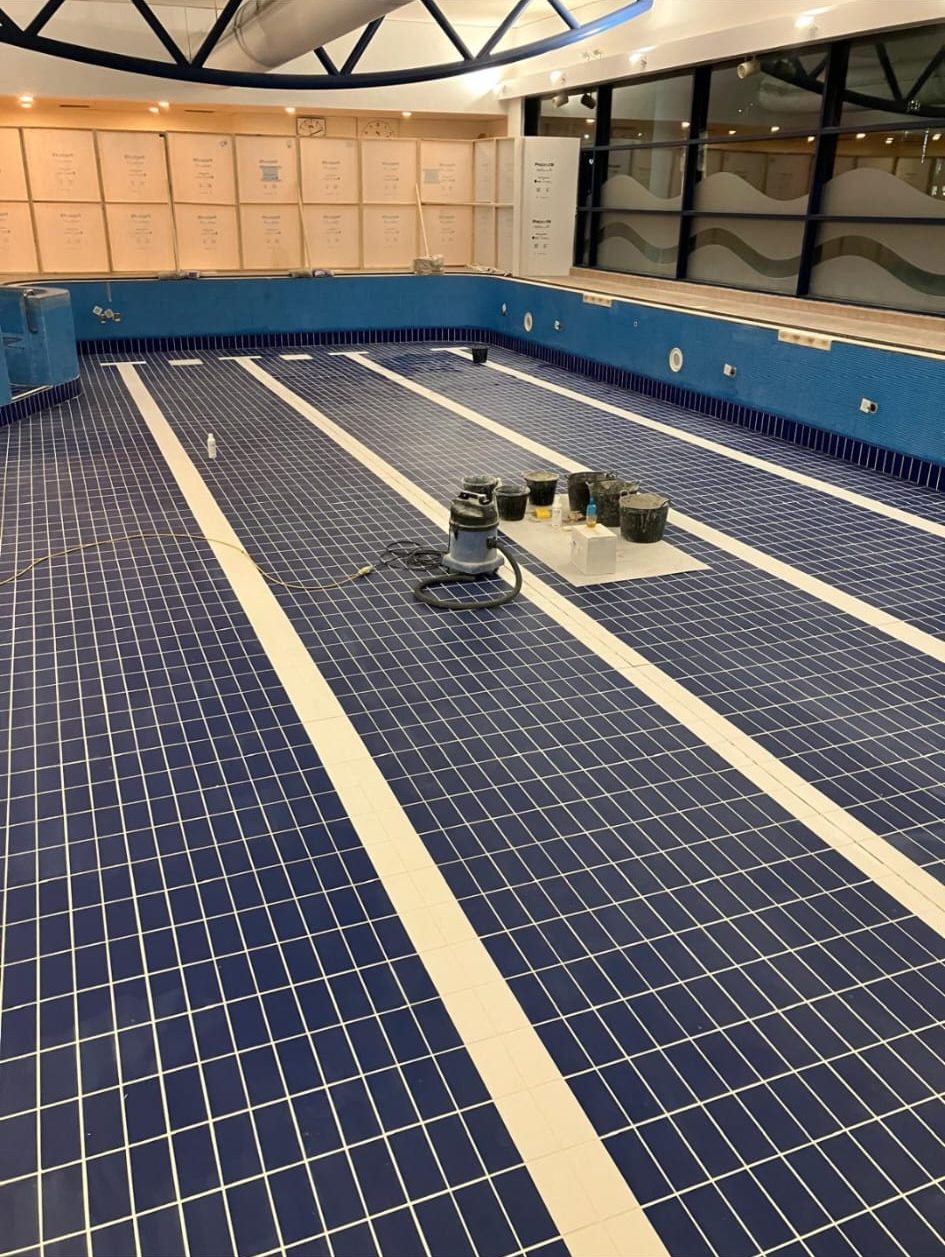
Start from the reopening date
Most operators know when the pool has to be back in use: the start of term, a busy season, a commitment to members. Count back from that date, take off drain down, refill and water treatment, and you can see how much time is really left for the works.
If the window looks tight, find out early. The scope can be prioritised, or the work split across two closures.
The stages of a typical closure
Pools differ, but most tiling closures run in roughly this order, and several stages cannot start until the one before has finished.
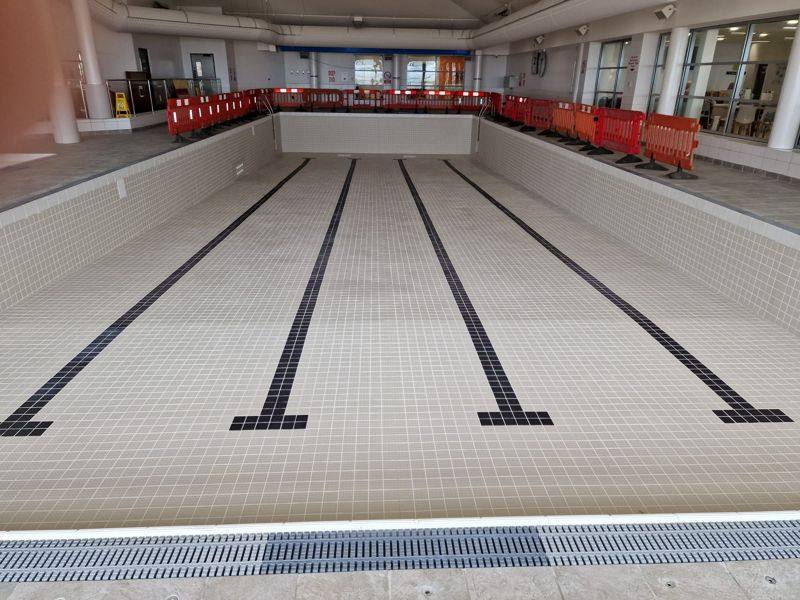
- Drain down, at a rate and by a route that suit the pool and the local discharge arrangements.
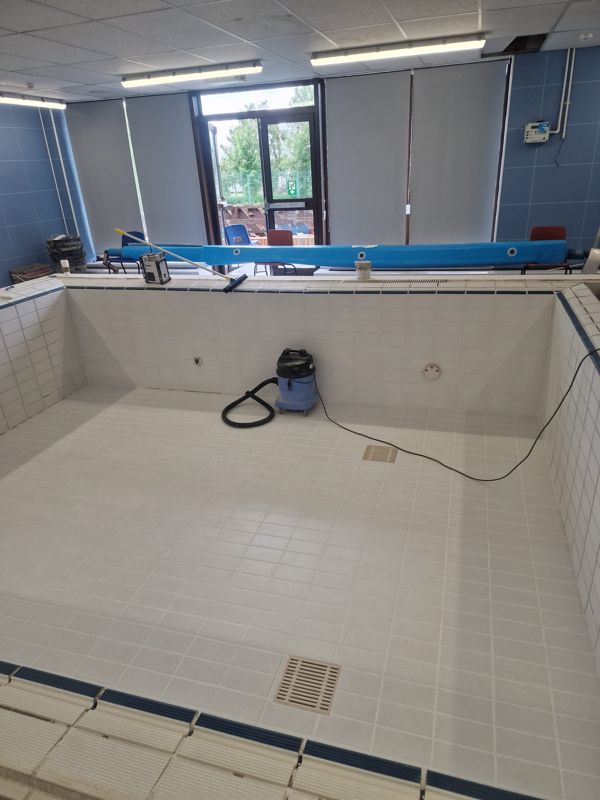
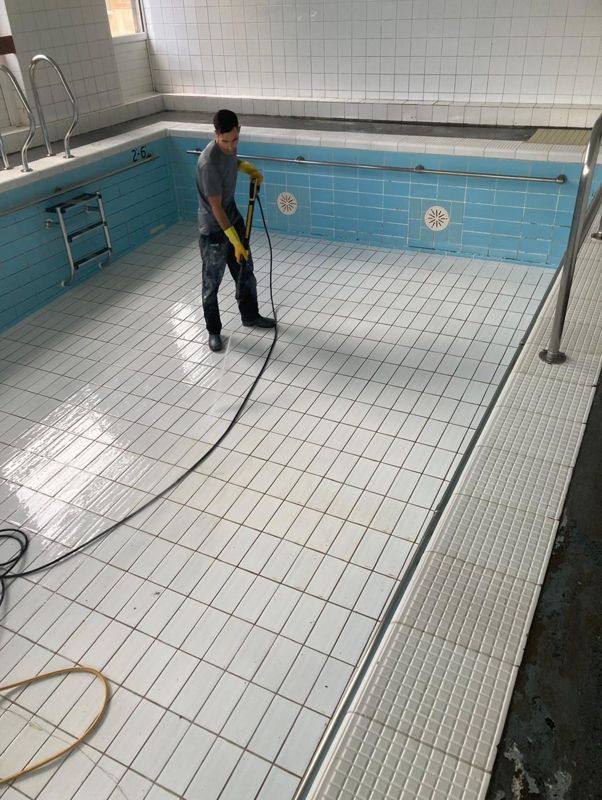
- Cleaning and drying enough to inspect the surfaces properly.
- Inspection and confirmation of the scope, including any test openings.
- Removal of failed tiles, grout or sealant, and background repairs where needed.
- Tiling, regrouting and renewal of movement joints.
- Cure time for adhesives, grouts and sealants in line with the manufacturers' instructions.
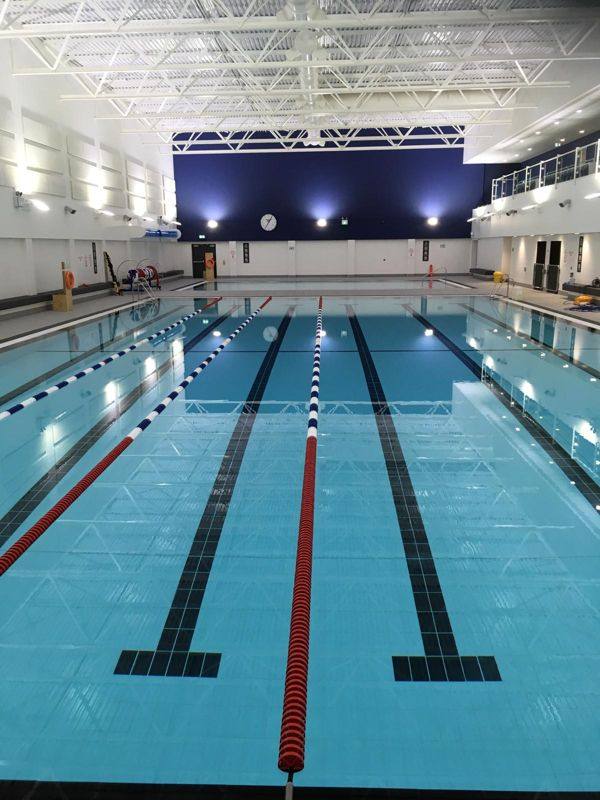
- Final clean, inspection, refill, heating and water balancing before reopening.
What affects how long the pool is closed
There is no standard duration. The size of the area, the type of work, the products and the conditions in the pool hall all move it.
A cold or damp pool hall slows most cement-based products, and epoxy grouts also cure more slowly in the cold. Background repairs may need their own curing or drying time before tiling can follow. Defects found once tiles are lifted can change the programme as well, so plan for decisions during the works.
- Scope: cleaning, local repairs, regrouting, part retile or full retile.
- Access for materials and equipment, and how far everything has to be carried.
- Product cure times and the conditions needed for them.
- Lead times for replacement tiles, nosings, markings or fittings.
- Other trades working at the same time, such as plant or lighting contractors.
- Refill rate and the time needed to heat and balance the water.
Leave the cure time alone
Pressure on a closure nearly always lands at the end, when the reopening date is close. Filling before grouts, adhesives or sealants have cured enough for immersion can affect how they perform, and the damage may not show for months.
If the date is fixed, move the scope or the start date. Do not move the cure time.
Coordinating with your own team
Your plant operator or water treatment provider usually manages drain down, refill and dosing. Agree who does each step and when. Water treatment after refill should follow your normal operating procedures and recognised guidance such as PWTAG's.
Think about the rest of the building too. Changing rooms, plant rooms and corridors may be used for access, and other users may still be on site.
Communicating with users
Members, guests, pupils and lesson providers all need notice. Give a closure period and explain that reopening depends on the works finishing and the pool being refilled and balanced. Hold back from naming an exact reopening day until the main risks are behind you.
A short buffer before galas, lesson programmes or events gives you room if something runs late.
Reducing the risk of overrun
Some risk cannot be removed, because nobody knows exactly what is under the tiles until they come up. It can be reduced, though.
- Share the pool's history and any previous repairs before the works are priced.
- Order tiles and materials early, especially if colours or sizes need matching.
- Agree how hidden defects will be reported, priced and approved.
- Keep a named decision maker available during the works.
- Allow some contingency before any fixed reopening commitments.
Common questions
How long does a pool need to be closed for regrouting?
It depends on the size of the pool, how much grout is coming out, the grout system, temperature and humidity, and how long the pool takes to drain, refill and balance. Be wary of a firm figure given before anyone has seen the pool.
Can tiling works be done while the pool is partly full?
Some surround and edge works can be done without draining, but most underwater tiling and regrouting needs the area to be dry and accessible so materials can be applied and cured properly. Where partial drain down is possible depends on the area and the work involved.
Who should manage the refill?
Usually the pool operator or their plant and water treatment provider, following guidance from the tiling contractor on when the installed products are ready for immersion and any recommended refill rate.
What happens if more damage is found during the works?
It should be raised straight away, with photos and the options. Nothing extra should go ahead until the scope and programme change has been agreed with you.