Pool scale is usually calcium carbonate dropped out of scale-forming water, heaviest at the waterline. It comes off with a suitable descaler and controlled scrubbing, tried first on a small test area so grout and glaze are not etched. Rinse and extract thoroughly afterwards, then get the water balance reviewed or the scale will come back.
What pool scale is
Scale is a hard, usually white or grey deposit, most often calcium carbonate, that forms when pool water is inclined to deposit minerals rather than hold them. Warm water, high pH, high calcium hardness and high alkalinity all push water towards scaling.
It is most obvious at the waterline, where evaporation concentrates minerals, but it can also coat floors, steps, spa seating and grout. Over time it traps dirt and turns grey or brown.
Scale is more than a cosmetic issue. It roughens surfaces, can make tiles feel gritty underfoot, gives algae and dirt somewhere to hold, and can hide the condition of grout and tiles beneath it.
Why removal needs care
Most descalers work by dissolving the mineral deposit, often with an acid. The problem is that cement-based grout and some tile glazes or surfaces are also vulnerable to acid. A product strong enough to shift heavy scale quickly can etch joints and dull finishes if used carelessly.
So the method is chosen for the deposit and the materials in the pool, not for how quickly it works.
How scale removal is approached
A typical sequence is below. The test area decides how the rest of the job goes.
- Assess the deposit, the tile, the grout and any sensitive fittings.
- Protect fittings, metalwork and adjacent finishes as needed.
- Clean a small test area with the chosen product at the manufacturer's dilution and contact time.
- Check the test area for residue, etching or dulling before going further.
- Treat the wider area with controlled agitation, working in manageable sections.
- Rinse and extract residue and slurry with wet-vacuum equipment, repeating as needed.
- Inspect tile faces and joints for remaining haze or damage.
Heavy or stubborn scale
Thick, long-standing scale may need several careful passes rather than one aggressive one. In some cases mechanical removal with suitable non-scratching tools is combined with chemical cleaning.
Glass mosaic, textured anti-slip tiles and older glazes each need their own approach. Abrasive pads or tools that are fine on one tile can scratch another, so they are tested first as well.
Where scale has built up over years, it sometimes hides damaged grout or chipped tiles. Once it is removed, the surface beneath should be inspected before deciding whether further repairs are needed.
Scale and the drained pool
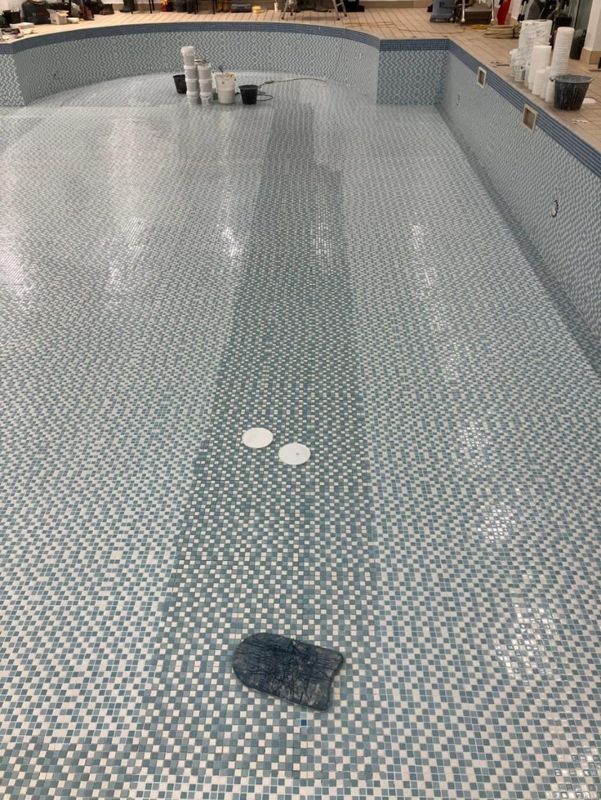
Many owners first see the full extent of scale when the pool is drained for other work. Cleaning before tile repairs or regrouting is often necessary, because new grout and adhesives need clean, sound surfaces to bond to.
If acid-based products have been used, rinsing and extraction must be thorough before any new grout or adhesive goes in. Residues left in joints can affect new materials.
Planning cleaning as the first stage of the programme, rather than an afterthought, also gives time to look closely at the tiles and grout once the scale is off.
Scale removal in a full pool
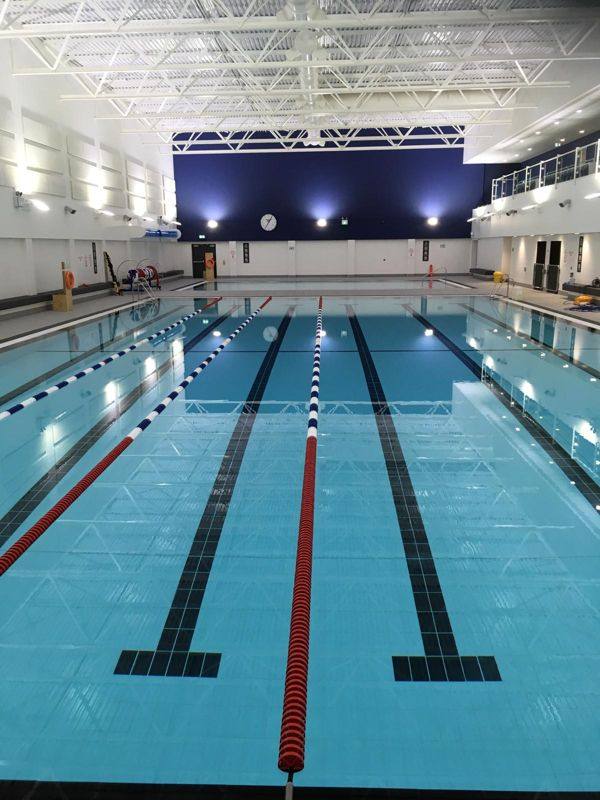
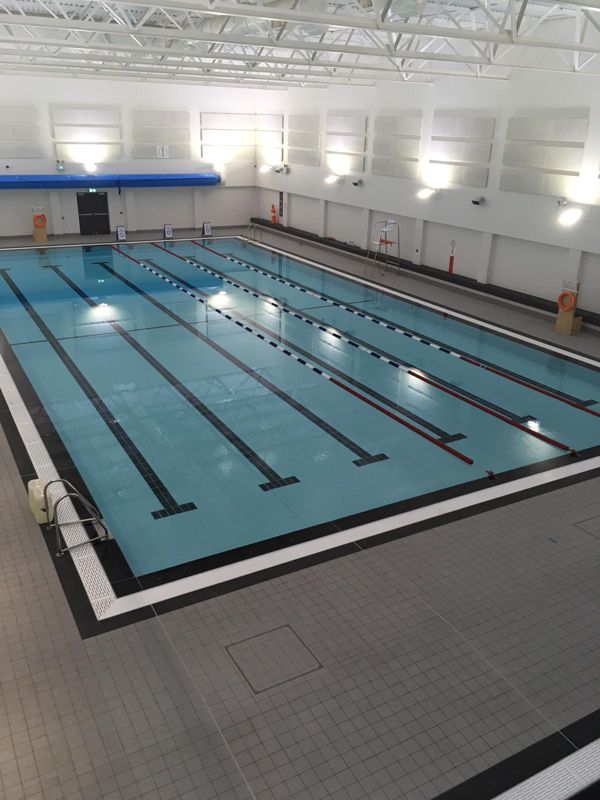
Light waterline scale can sometimes be managed in a full pool with suitable products and soft tools, as part of routine maintenance. Any product added to or used near pool water needs to be compatible with the pool's treatment, and its use agreed with whoever manages the water.
Heavier scale across floors and walls is generally better dealt with during a drain-down, where the process can be controlled and residues removed.
Stopping scale coming back
Cleaning removes the deposit but not its cause. If the water is still scale-forming, deposits will return. Reviewing water balance with whoever manages the pool chemistry, using recognised guidance such as PWTAG's, is usually the most effective prevention.
Hard source water, high temperatures in spas and hot tubs, and heavy evaporation all make scaling more likely. Regular brushing at the waterline helps stop thin films building up into hard crusts.
Pool cleaning is one of our services and is often the first stage before tile repairs or regrouting. We look at the pool and its finish and agree a scope before starting.
Common questions
Will descaling damage my pool grout?
It can if the product is too strong, left on too long or not rinsed off. Cement grout is particularly vulnerable to acid. A test area, correct dilution and thorough rinsing reduce the risk considerably.
Is it scale or efflorescence?
They can look alike. Efflorescence is lime or salts carried out of the grout or background by moisture, usually showing as white deposits along joints. The cause is different, so work out which you have before treating it.
Why does scale build up faster in our spa pool?
Warmer water is more inclined to deposit scale, and spas also tend to have high evaporation and aeration. Tiled spa seating and waterlines often need more frequent attention than a main pool.
Can scale be removed with a pressure washer?
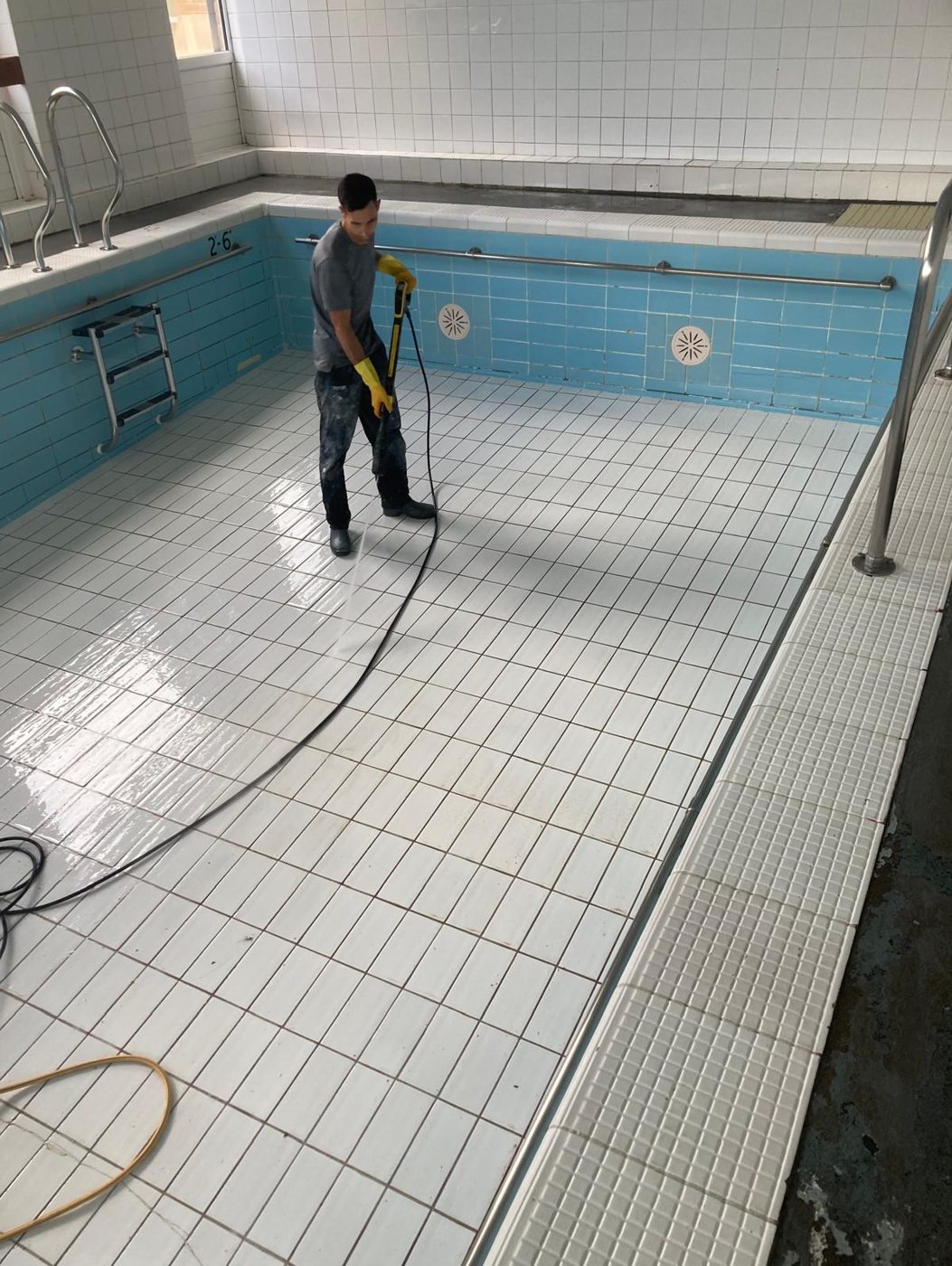
Pressure washing helps rinse and remove loosened deposits, but on its own it rarely removes hard scale, and held too close it can damage grout. It is usually one part of a controlled process.