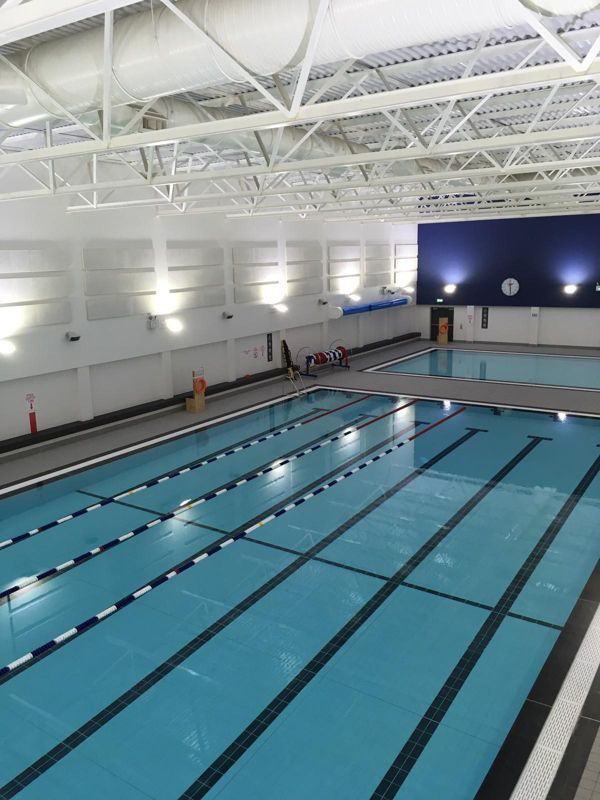
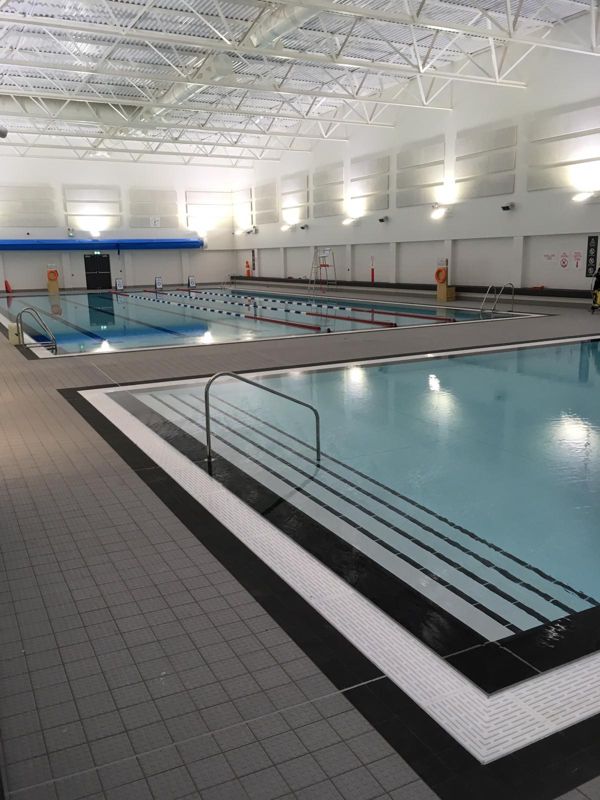
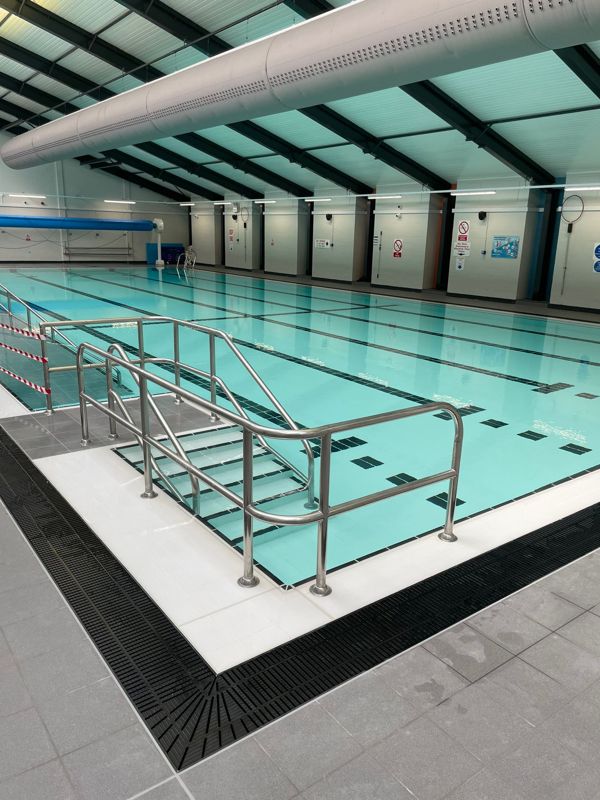
A pool risk assessment should look at every surface people walk, sit, stand or hold on to: poolside floors, edges, steps, channels, grilles and changing areas. Typical hazards are slips, trips, sharp edges from broken tiles and surfaces that are hard to clean. The assessment should record the controls in place, such as cleaning, inspection and repairs, and who is responsible.
The legal background in brief
Under regulation 3 of the Management of Health and Safety at Work Regulations 1999, employers must make a suitable and sufficient assessment of the risks to their staff and to others affected by their undertaking. HSE adds that employers with five or more people must record the significant findings: the hazards, who might be harmed and how, and the controls.
HSG179, Health and safety in swimming pools, is HSE's guidance on the measures pool operators can take to reduce risks and comply with the law. Operators should take advice on how the law applies to their own site; this guide focuses on the practical side of surfaces.
Who uses the pool
Who uses each area changes the level of risk. Young children in a learner pool, older swimmers or people with limited mobility on entry steps, and hydrotherapy users may all be more affected by a damaged or slippery surface. School groups and lesson programmes bring large numbers of people onto poolside at once.
The assessment should consider those users when deciding how quickly defects in particular areas need to be repaired.
Poolside floors
Poolside floors are wet by design, so the assessment usually considers the tile's slip resistance, how clean it is kept and how water drains away. Contamination such as body oils, soap residue and scale can make a floor more slippery than when it was installed.
Drainage falls that hold water, worn or polished areas and changes from one floor finish to another are also worth recording. Our guide on slip resistance for pool surrounds covers tile selection in more detail.
Edges, steps and depth changes
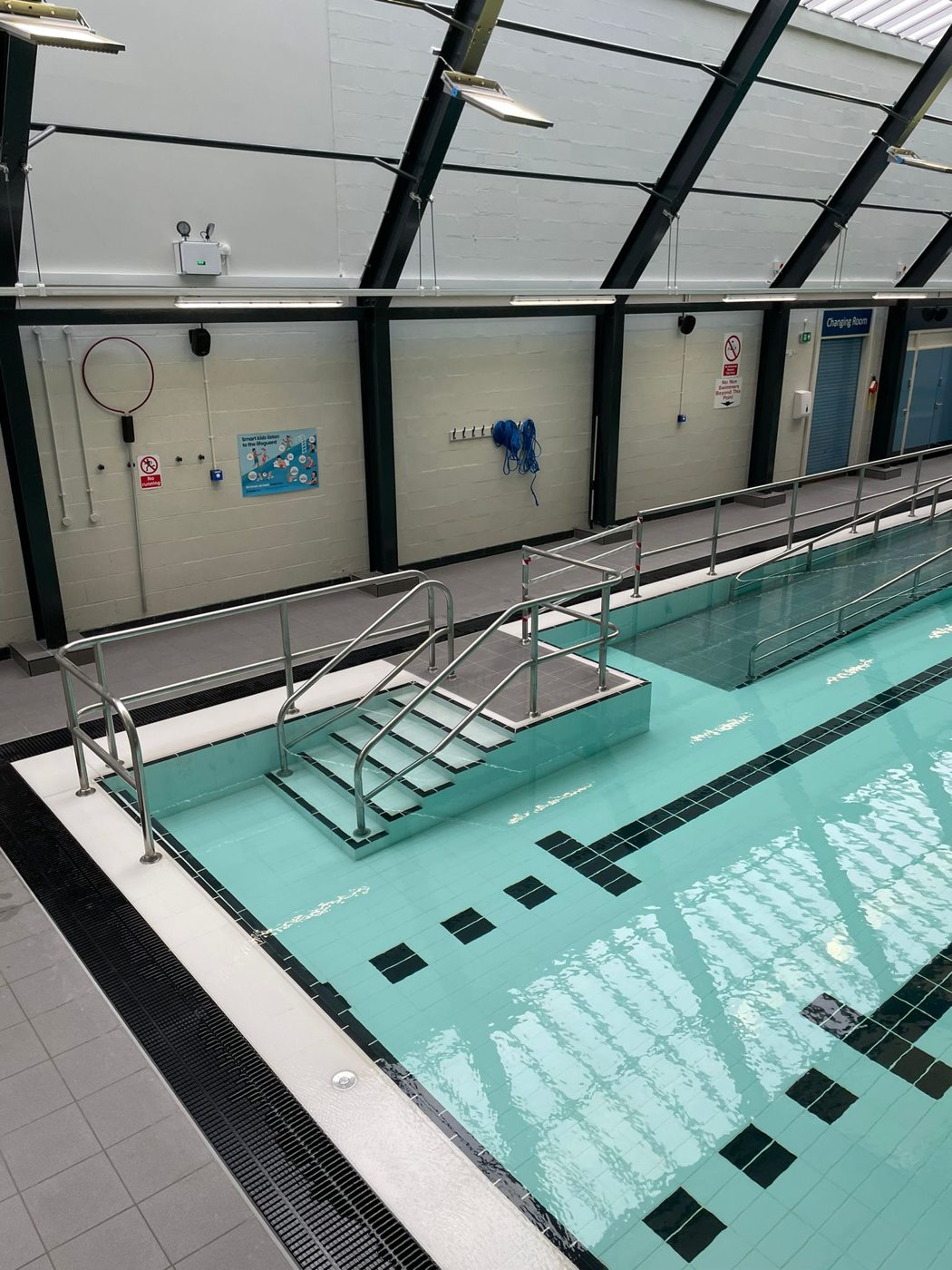
The pool edge and steps are where people move between dry and wet, often while turning or holding on. Damaged or missing tiles here can cause cuts and trips, and faded contrast on step nosings or edges can make them harder to see.
- Cracked, chipped or missing edge and coping tiles
- Step treads and nosings that are worn, loose or poorly contrasted
- Handrail and ladder fixings set into tiled surfaces
- Depth markings and lane markings that have faded or come away
- Uneven tiles or lips at changes in level
Channels and grilles
Overflow channels and grilles collect debris and can harbour biofilm. Broken grilles or chipped channel tiles can leave sharp edges or gaps at foot level. The assessment should cover how often channels are cleaned and inspected, and what happens when a grille or tile is damaged.
Grilles and channel fittings are often the operator's or a pool engineer's responsibility. Tiled channel surfaces and the tiles around fittings can be repaired by a tiling contractor.
Changing rooms and showers
Changing rooms and showers are often busier and less supervised than the poolside. Wet floors, soap residue, failed grout and mould on sealant are common issues. Drainage that does not clear water quickly adds to slip risk.
Tiled changing room floors should be included in the same inspection and cleaning regime as the poolside, with defects recorded and repaired in the same way.
Controls you might record
Controls for surface hazards tend to be practical and routine. Recording them helps show that risks are being managed, and makes it clear who does what.
- A written cleaning schedule with suitable products and methods
- Regular visual inspection of floors, steps and edges
- A defects log with target times for repair
- Temporary barriers and closures for damaged areas
- Drain-down inspections including tile and grout condition
- Competent contractors for repairs and regrouting
How inspections support the assessment
Many tile defects are only visible when the pool is drained. An inspection by a tiling contractor can describe the condition of tiles, grout and movement joints, identify hollow-sounding areas and suggest which repairs are urgent and which can be monitored. Tapping finds hollow-sounding areas; it does not prove a tile has failed.
PoolRevive carries out pool inspections, tile repairs, regrouting and refurbishment. We do not write risk assessments, but our findings can help the operator keep theirs accurate.
Surfaces change slowly, so it is easy for an assessment to fall out of date. Reviewing it after drain downs, after repairs, after incidents or near misses and when use of the pool changes keeps it relevant. Some incidents may also need to be reported to HSE under RIDDOR; operators should check HSE's guidance.
Common questions
Do we need to list every cracked tile in the risk assessment?
Usually the assessment records the hazard and the controls, such as inspection and repair, rather than every individual tile. A separate defects log is often used to track specific items. Operators should take advice on what suits their site.
Can you inspect our pool surfaces for the assessment?
Yes. We can inspect tiled surfaces, ideally with the pool drained, and report what we find. The risk assessment itself stays with the operator and their adviser.
How often should surfaces be inspected?
Daily visual checks by staff are common, with more detailed inspections when the pool is drained. The right frequency depends on use and condition, and is for the operator to set.
Should contractors working in the pool be in the risk assessment?
Contractors working on site, especially in a drained pool, are usually covered by the operator's arrangements and by the contractor's own risk assessment and method statement. Both should be agreed before work starts.
Sources and further guidance
- HSE: HSG179 Health and safety in swimming pools
- HSE: Steps needed to manage risk
- The Management of Health and Safety at Work Regulations 1999, regulation 3
- HSE: RIDDOR
This guide is general information, not legal, health or safety advice for a specific site. Pool operators should follow current official guidance and take advice from competent specialists.