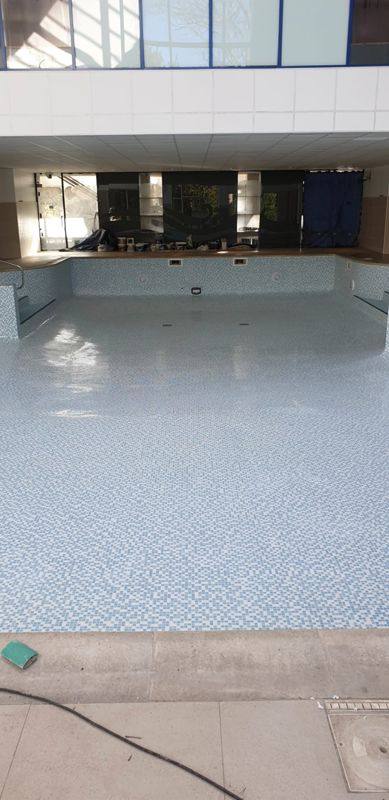
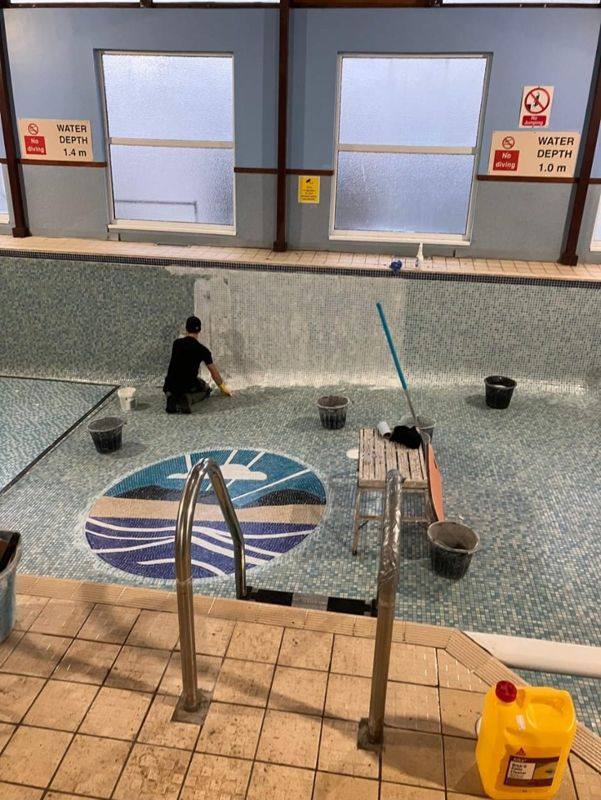
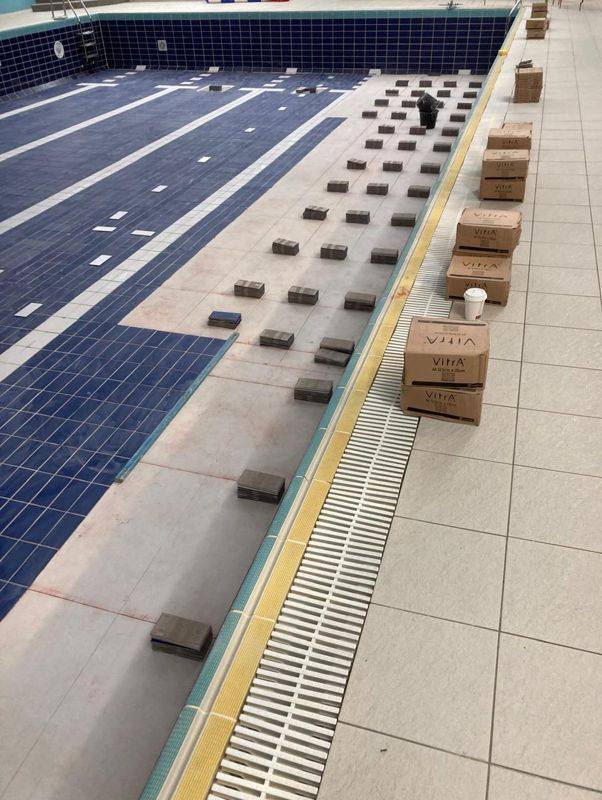
There is no fixed interval for how often a commercial swimming pool, or a private one, should be regrouted. Grout life depends on the grout type, how well it was installed, water balance, the cleaning regime and bather load. Rather than working to a calendar, inspect the joints at every drain-down and regrout when they show real signs of failure.
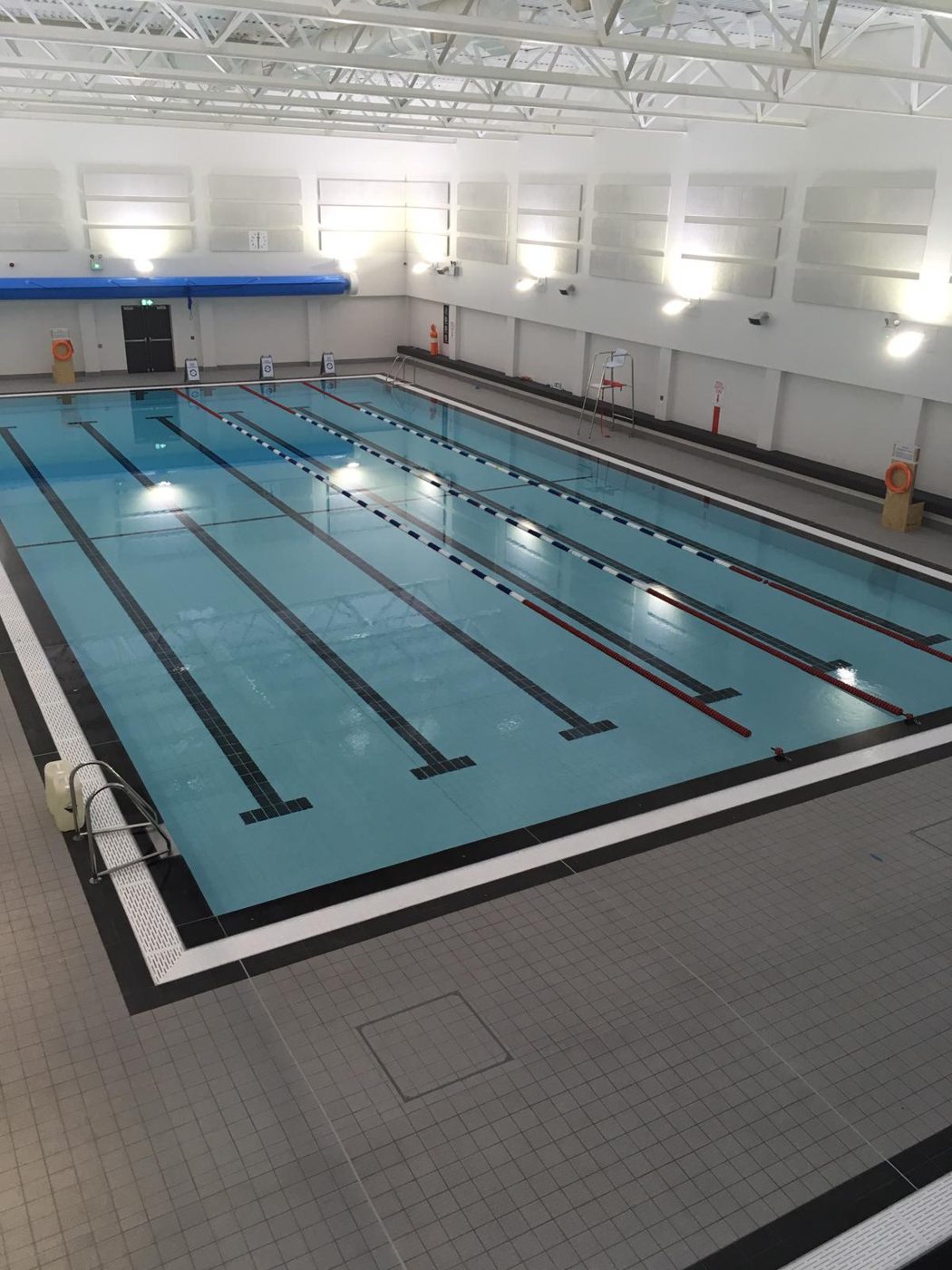
Why there is no single answer
You will see confident figures quoted for how long pool grout lasts. Treat them with caution. Two pools built at the same time with the same materials can need regrouting years apart, because they are run, cleaned and dosed differently.
No grout has a guaranteed lifespan. Know what wears your pool's joints and look at them properly whenever the pool is empty.
What affects how long grout lasts
Several factors work together, and a weakness in one can shorten the life of joints that are otherwise well chosen.
- Grout type: pool-suitable epoxy is generally less affected by water chemistry than cement grout.
- Installation: joints raked and filled to full depth, compacted and properly cured last far better than shallow or rushed ones.
- Water balance: water that is aggressive to cement-based materials slowly dissolves cement grout.
- Cleaning: the wrong chemical for the job, harsh scrubbing and high-pressure washing too close to the surface all wear joints.
- Use: heavily used commercial pools see more wear and more cleaning than lightly used private pools.
- Movement and tile bond: joints around loose tiles or in areas of movement fail early whatever the grout.
Signs that regrouting is due
The joints themselves usually tell you when they need attention. Look closely when the pool is drained, and run a finger or a soft tool along a few joints in different areas.
- Joints that are recessed well below the tile face.
- Grout that feels sandy, crumbles or comes away when brushed.
- Open joints or missing grout, especially in floors and steps.
- Persistent dark staining or algae that returns quickly after cleaning.
- Cracked grout lines following corners, changes of plane or across large floors.
Inspect at every drain-down
For many commercial pools, planned drain-downs for maintenance are the natural time to check grout and tiles. A walk-round with photographs and notes, plus a tap test in suspect areas, gives a record you can compare from one closure to the next.
Private pools may be drained less often. When they are, it is worth taking the opportunity to look closely rather than simply cleaning and refilling.
Partial regrouting or the whole pool
Grout often fails unevenly. Steps, entry points, areas under inlets and floors that take most of the traffic may deteriorate before walls in quieter areas. Regrouting only the worst areas can be a reasonable choice, although colour matching between new and old grout needs thought.
Where loss is widespread, a full regrout is usually more efficient than repeated local repairs, because each partial job brings its own drain-down, preparation and cure period.
Regrouting is not always the answer
If grout failure is accompanied by hollow or loose tiles, or by a failing background, regrouting alone will not hold the pool together. Those areas need repairing first, or the decision may move towards a larger refurbishment.
Likewise, if the grout is failing because movement joints are missing or have been filled with rigid grout, those joints need putting right as part of the work.
How often should a commercial swimming pool be regrouted?
Operators of leisure centre, school, hotel and health club pools often ask for a number of years to put in a maintenance plan. We do not know of any British Standard or industry guidance that sets a regrouting interval, and grout manufacturers do not promise a service life in pool water. Any fixed figure would be a guess.
What we can say is what makes commercial joints wear faster or slower, and what to look at each time the pool is empty.
- Bather load: a busy public pool puts far more feet across floors, steps and entry points than a private pool, and those areas wear first.
- Water balance: pH, alkalinity and calcium hardness taken together decide whether water is aggressive to cement-based materials. Water kept balanced in line with PWTAG guidance is much kinder to cement grout than water that drifts soft or low.
- Cleaning regime: nightly vacuuming and floor machines are part of running a commercial pool, but the wrong chemical for the job, or a pressure washer held too close at shutdown, takes grout out quickly.
- Grout type: pool-suitable epoxy is far less affected by water chemistry than cement grout, so the same pool may go longer between regrouts after an epoxy job.
- Installation: joints that were raked out shallow, part-filled or refilled too early wear out sooner, whatever the product.
What to inspect at each commercial shutdown
Many commercial pools have a planned shutdown for plant and maintenance work. That is the natural point to look at the grout properly, rather than cleaning and refilling on autopilot.
- How far joints sit below the tile face on floors, steps and entry points compared with quieter walls.
- Grout that feels sandy, crumbles under a brush or has gone from whole lengths of joint.
- Cracked grout along corners, steps and changes of plane, which often points to movement rather than wear.
- The condition of flexible movement and perimeter joints, and whether any have been filled with grout.
- Hollow or loose tiles around areas of grout loss, found by tapping.
Private pools
Private pools usually see lighter use but can be more variable in water balance, especially where the pool is covered for long periods or topped up from a soft water area. Owners often only notice grout problems when the pool is drained for something else.
Photograph a few marked joints each time and keep the pictures with the date. Comparing them from one shutdown to the next tells you far more than a calendar.
Making new grout last
After a regrout, the way the pool is run matters as much as the grout. Keep the water balanced in line with recognised guidance such as PWTAG's, use cleaners that suit the grout, and ask before trying a new descaler.
Respecting cure time before refilling and dosing is just as important. A grout that is put into service early may never reach its intended performance.
Common questions
How often should a commercial swimming pool be regrouted?
There is no set interval. In a busy pool, floors, steps and entry points usually need attention before walls, and cement grout in poorly balanced water goes faster than epoxy in well-balanced water. Inspect at every planned shutdown, record what you find, and regrout when the joints show real failure.
Is regrouting needed when a pool is retiled?
A retile includes new grout as part of the work. Regrouting on its own is a separate option for pools where the tiles remain securely bonded and only the joints are failing.
Does an epoxy regrout mean I never need to regrout again?
No. Epoxy is generally more durable in pool conditions, but it still wears, can be damaged and depends on good installation and maintenance. No grout has a guaranteed lifespan.
What happens if I leave failing grout too long?
Open joints let more water reach the adhesive bed, collect dirt and algae, and expose tile edges. Over time that can contribute to loose tiles, which turns a regrout into a larger repair.
Can I regrout only the steps and floor?
Often, yes, if the walls are in reasonable condition. The decision depends on the condition across the whole pool and on whether the new and existing grout will look acceptable side by side.