Swimming pool grout coming out usually has one of four causes: unbalanced water slowly dissolving a cement grout, joints that were never filled and compacted properly, tiles or background moving, or harsh cleaning wearing it away. Open joints let water and dirt into the bed, so check the tiles either side before anyone refills the gaps.
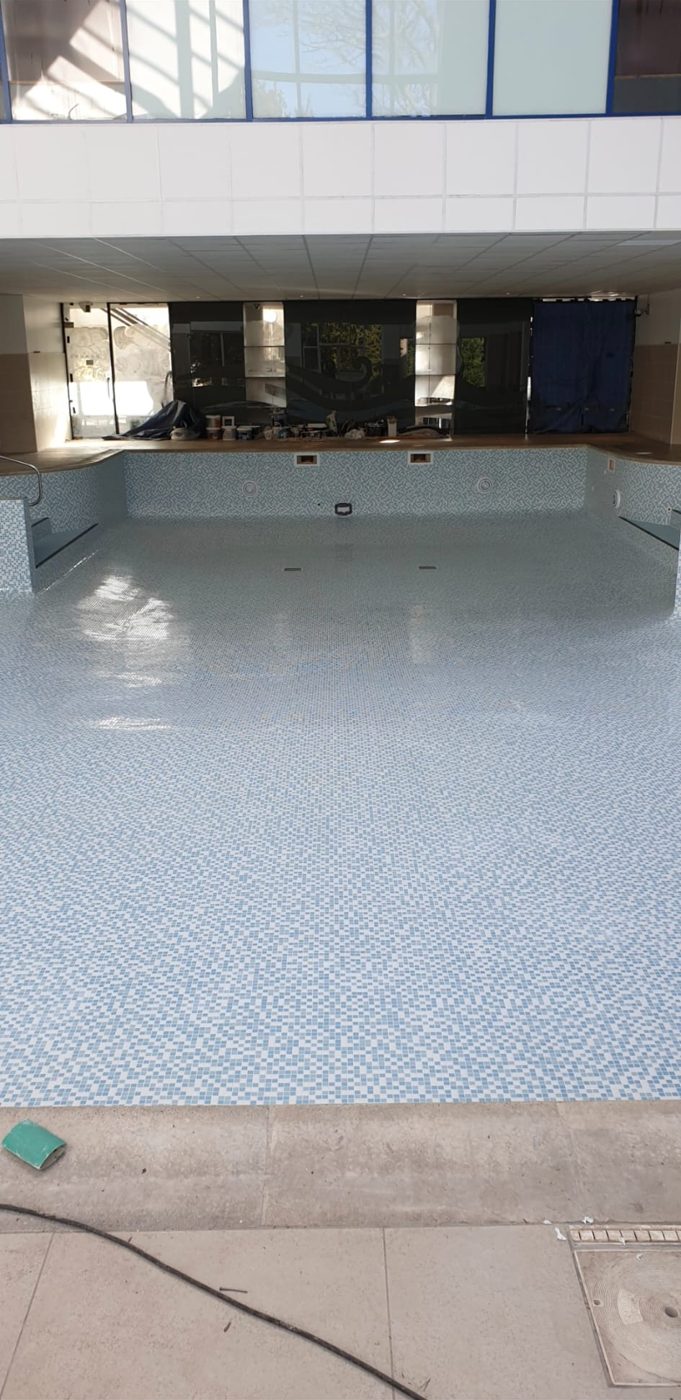
What missing grout is telling you
Pool grout has a hard life. It sits in treated water all year, gets brushed and vacuumed, and in most pools it is warmed and cooled as the seasons change. A slow loss of surface over many years is normal. Joints that are empty, sandy to the touch or crumbling under a brush are not.
Missing grout is usually a symptom. Before anyone fills the gaps, find out why they emptied and whether the tiles either side are still properly bonded.
Common causes of grout loss in pools
There is often more than one cause at work. Where the grout has gone, and where it has not, helps narrow it down.
- Aggressive water: water that is out of balance, for example soft or low in calcium hardness, can slowly dissolve cement-based grout and leave joints sandy and recessed.
- Original installation: joints that were not filled to full depth, not compacted, or washed too hard before the grout set can fail earlier than expected.
- Movement: where tiles, render or the shell are moving, rigid grout cracks and breaks out, often in lines along walls, corners or changes of plane.
- Hollow or loose tiles: a tile that flexes under load works the grout loose around its edges.
- Cleaning methods: the wrong chemical clean for the job, repeated aggressive scrubbing or high-pressure washing held too close can erode cement grout.
- Age: every grout has a working life, and that life varies widely with water chemistry, use and maintenance.
Reading the pattern
Grout that has thinned evenly across floors and walls often points towards water chemistry or the type of grout originally used. Losses concentrated in steps, entry points, under inlets or around lane markings may reflect wear, local turbulence or cleaning habits in those areas.
Loss that follows straight lines, such as along the junction of wall and floor or across a large floor area, can suggest that movement is not being accommodated. Where grout has gone around individual tiles that sound hollow or rock under the hand, the tile bond becomes the main concern rather than the grout itself.
Why open joints matter
Open joints collect dirt and can harbour algae, which makes the pool harder to keep clean. They can also let water reach the adhesive bed more readily and leave tile edges exposed to knocks and cleaning equipment.
On floors and steps, deep open joints and exposed tile edges are uncomfortable underfoot. On a busy pool it pays to deal with the losses while they are still small.
Can you just fill the gaps?
Sometimes a small, well-defined area can be repaired locally, but simply pressing new grout into shallow, dirty joints rarely lasts. New grout needs a clean, sound joint of adequate depth to key into, and it has to be compatible with the existing system.
If the joints are failing across a large area, a planned regrout is usually more sensible than repeated patching. Where tiles are loose or the background is unsound, regrouting alone will not solve the problem. Those areas need repair first.
How we regrout a pool
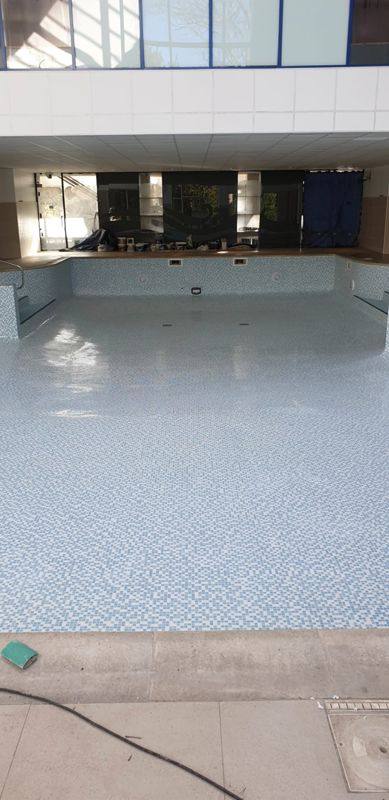
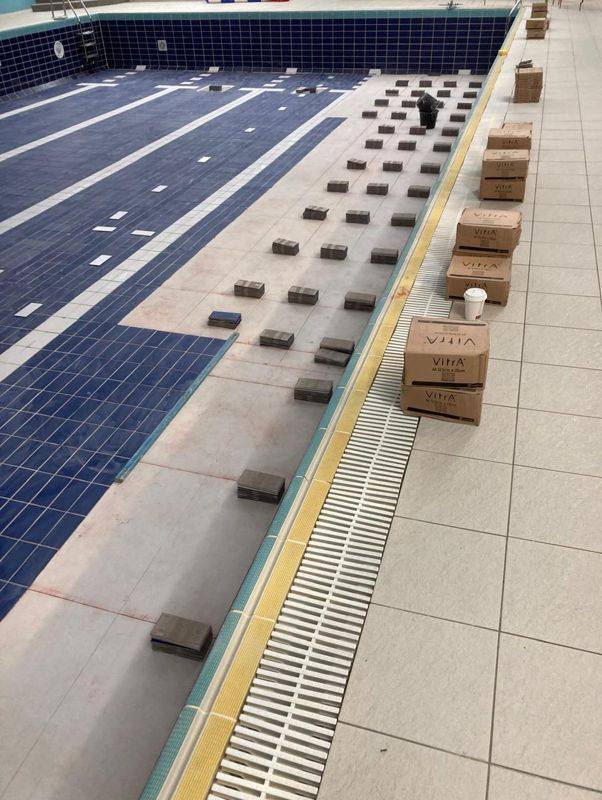
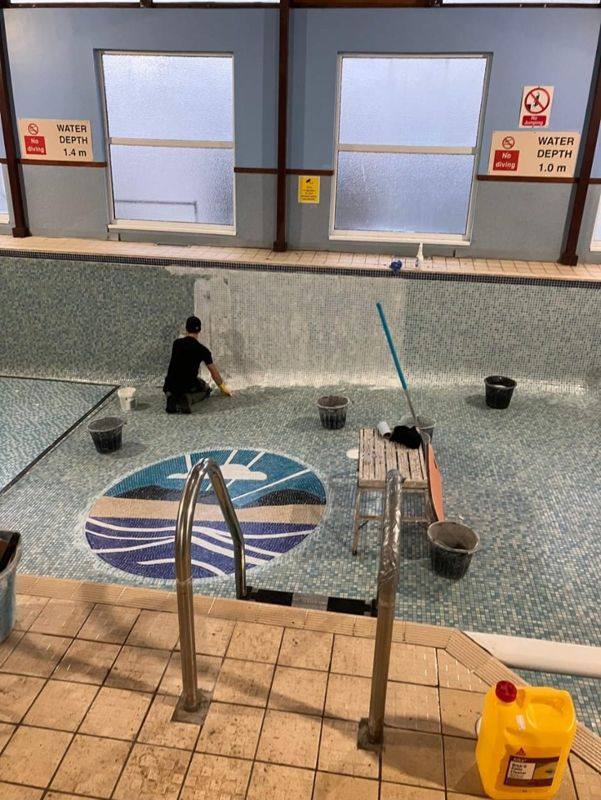
With the pool drained and safe, Dan and Jay tap over the tiles to find hollow areas and mark anything that needs lifting first. The old grout is raked out to a consistent depth without chipping tile edges, then the joints are brushed and vacuumed clean.
The new grout, often a pool-rated epoxy, is worked fully into the joints, struck off and washed off the tile face within the product's working time. The pool stays empty until the grout has cured as the manufacturer's data sheet requires.
Preventing the problem returning
No grout has a guaranteed lifespan, but you can give new joints a fair chance. Keeping water balanced in line with recognised guidance, such as that published by PWTAG, protects cement-based materials. Using the correct chemical clean for each job, one that does not harm the grout, also helps.
It is also worth checking movement joints. If they are missing or have been filled with rigid grout, the same cracking may return after regrouting.
Common questions
Is swimming pool grout coming out a sign the tiles will come off?
Not necessarily. Many pools lose grout while the tiles stay firmly bonded. It does make sense to check the tiles around the losses, because loose tiles and grout loss often appear together and open joints let more water reach the bed.
Can I swim in a pool with missing grout?
That is a judgement for the operator or owner. Small areas of shallow loss are common. Sharp tile edges, loose tiles or deep open joints on floors and steps should be assessed promptly, particularly in public or busy pools.
Will epoxy grout stop this happening again?
Epoxy is far less affected by water chemistry than cement grout, so it helps where aggressive water was the cause. It will not hold down a loose tile or cope with a moving background, and like any grout it has no guaranteed lifespan.