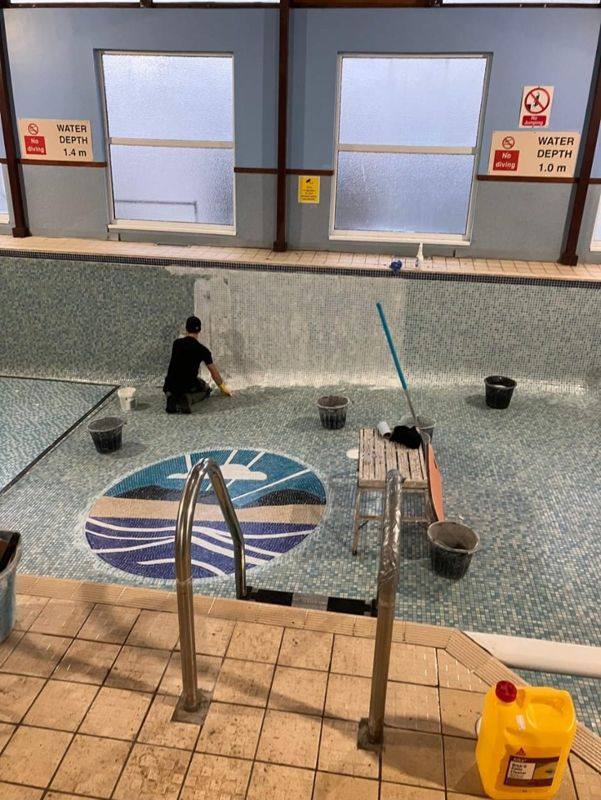
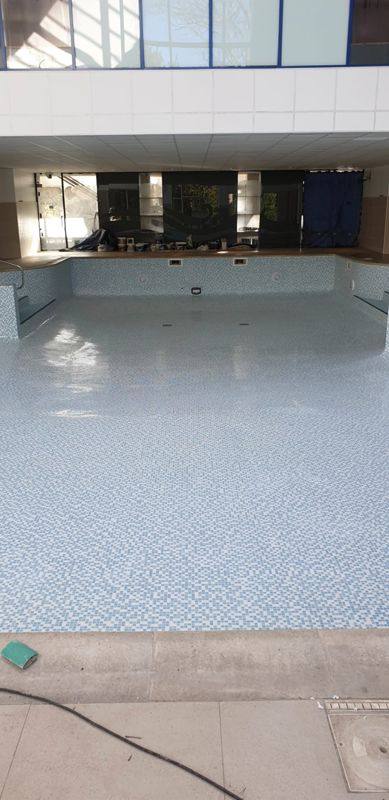
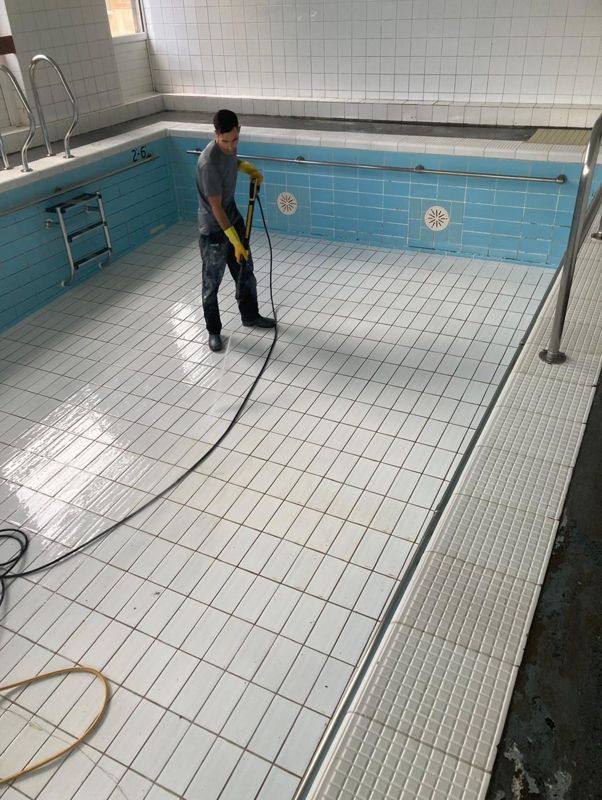
Yes. Water that is out of balance can either deposit scale or slowly draw calcium out of cement-based materials such as grout and render, leaving joints soft and recessed. PWTAG points operators to a Langelier or Palin balanced water test to check this. Managing the balance is for your water treatment specialist; repairing damaged joints and tiles is our side.
What water balance means
Water naturally tends towards a balance with the materials around it. If it holds less dissolved calcium carbonate than it could, it tends to take some from the surfaces it touches. If it holds more, it tends to drop it out as scale. Balanced water sits close to the point where neither happens much.
Several measured values affect this balance, including pH, total alkalinity, calcium hardness, water temperature and total dissolved solids. Changing one moves the balance, which is why operators look at them together rather than one at a time.
The saturation index, simply put
The Langelier saturation index is a calculation that combines those values into a single figure. Broadly, a figure near zero suggests the water is close to balance, a positive figure suggests it tends to form scale, and a negative figure suggests it tends to dissolve calcium carbonate. Water on the negative side is often described as aggressive or corrosive.
PWTAG, the Pool Water Treatment Advisory Group, refers to checking a Langelier or Palin balanced water test and adjusting pH, alkalinity and hardness according to the findings. The target range for a particular pool is for the operator and their water treatment specialist to set; we do not give dosing or chemistry advice.
How aggressive water affects grout
Cement grout and render contain calcium compounds. Water that tends to dissolve calcium carbonate can slowly draw calcium from these materials. Over time this can leave cement grout softer, sandier and recessed below the tile face, with a rougher texture that holds dirt.
The effect is usually gradual and depends on the materials, the water and how long conditions have been out of balance. Other causes, such as abrasive cleaning, poor installation or movement, can produce similar symptoms, so it is worth looking at all of them before deciding on a repair.
- Grout that feels sandy or can be scratched out
- Joints sitting below the tile face
- Exposed sand grains in joint surfaces
- Etching or dulling on some cement-based finishes
- Dirt and algae collecting in recessed joints
Scale-forming water has its own problems
Water on the scale-forming side can leave rough deposits on tiles, grout, fittings and in pipework. PWTAG lists scaling on surfaces, fittings and inside pipes among typical pool problems and puts it down to water that is too hard. Scale makes surfaces rougher, traps dirt and can be hard to remove without risking the finish.
Removing scale needs care, especially from cement grout, because acid-based products that dissolve scale can also attack the joint. Our guide on removing scale from pool tiles explains the approach.
Does epoxy grout solve the problem?
Pool-suitable epoxy grouts are generally less affected by water chemistry than cement grouts, which is one reason they are often used in pools. That said, epoxy is not always the right choice, and it does not remove the need to keep water in balance. Render, bedding, other finishes and plant can all still be affected.
Nor will epoxy hold down a loose tile or cure a movement or waterproofing fault. Its life, like any grout's, depends on preparation, installation, water chemistry and maintenance.
Working with your water treatment specialist
If grout is failing faster than expected, share what you are seeing with the person who manages your water. They can review records of pH, alkalinity, hardness and temperature over time and judge whether balance may have played a part. A pool that is refilled after works may also need particular attention while the water settles, which is for the specialist to plan.
When we regrout or repair a pool, we tell the operator what the product manufacturer requires before the pool returns to service.
Fresh water after a refill
Water used to refill a pool after works can have different characteristics from water that has been treated and balanced over months. Depending on the local supply, fresh fill water may be soft or hard. How it is brought into balance is for the water treatment specialist to manage.
On our side, new grout and repair materials must be fully cured, to the product instructions, before the pool is refilled and dosed. A joint that sees water too early may never perform as intended.
Where we come in
PoolRevive inspects tiled pools, regrouts eroded joints and repairs damaged tiles and local render. We can describe the condition of the joints and finish, and where water chemistry may be a factor we will say so and suggest you discuss it with your specialist.
Common questions
Can you test our pool water balance?
No. Water testing, balance and dosing are for the operator and their water treatment specialist. We work on the tiles, grout and surfaces.
Is soft grout always caused by the water?
No. Water balance is one possible cause, but abrasive cleaning, poor original installation, movement and loose tiles can all lead to grout failure. An inspection helps narrow it down.
Should we change the water chemistry after regrouting?
That is a decision for your water treatment specialist. We follow the grout manufacturer's instructions on cure time before refill and chemical treatment and pass that information to the operator.
Can water balance damage tiles as well as grout?
Glazed ceramic and glass tiles are generally resistant, but some finishes, natural stone and cement-based materials such as render and bedding can be affected. Scale from water on the other side of balance can also build up on tile faces.
Sources and further guidance
This guide is general information, not legal, health or safety advice for a specific site. Pool operators should follow current official guidance and take advice from competent specialists.