Black spots on pool tiles and grout are often algae. PWTAG notes algae can be dark green, almost black, and links it to sunlight and to poor hydraulics, mixing and turnover. Similar marks can be metal staining, scale, mould above the waterline or dirt held in eroded grout. Your water treatment specialist handles the water; cleaning and, where needed, regrouting deal with the surfaces.
Not every dark mark is algae
The first step is working out what the mark actually is. Dark spots and lines in a pool can have several causes, and each needs a different response. Treating staining as algae, or algae as staining, wastes time and can damage the finish.
PWTAG, the Pool Water Treatment Advisory Group, lists discolouration of pool walls and floor, and black on grouting, among typical pool problems. It puts this down to algal growth, which it says may be green, dark green (almost black) or red-brown.
- Algae: often in spots or patches, sometimes with a slightly raised or slimy feel
- Biofilm: a slippery layer, often in joints and channels
- Metal staining: often near inlets or fittings
- Scale: rough, pale or grey deposits that can trap dirt and darken
- Mould: above the waterline, on grout and sealant in humid pool halls
- Eroded grout: dark because the joint is recessed and holds dirt
Why algae takes hold
PWTAG puts algal growth down to sunlight (UV) and to poor hydraulics, mixing and turnover. Corners, steps, behind ladders and under overhangs are common spots because water movement is lower there. Rough or porous surfaces give algae something to cling to, so eroded grout and scaled tiles tend to suffer first.
If algae keeps coming back in the same places, ask your water treatment specialist to look at circulation and treatment there, and get the joints in those spots checked.
Who does what
The water side of algae control belongs to the operator and their water treatment specialist. PWTAG's listed actions include raising the disinfectant level and scrubbing the discoloured areas vigorously; decisions about chemical levels and dosing should be made by people trained to do so, not by a cleaning or tiling contractor.
Our role is the surfaces: cleaning tile faces and joints when the pool is drained, removing stubborn staining with methods that suit the finish, and regrouting or repairing where the surface itself has failed.
Cleaning algae and staining from tiles
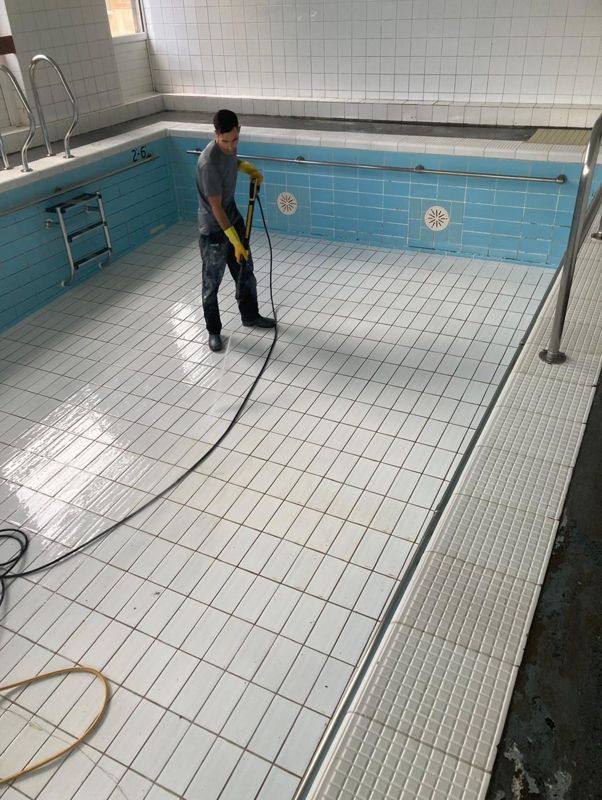
When the pool is drained, we assess the type of contamination and the tile and grout before choosing a method. A small test area helps confirm that the product and method work and do not mark the finish. The chemical clean is matched to the job, whether that is scale, rust marks or a general clean, so it does not harm the existing grout.
After cleaning, loosened material, rinse water and residue are removed with wet-vacuum equipment and the surface is inspected for haze or residue before handover.
When black spots mean the grout has failed
Sometimes cleaning reveals the real problem. If the grout beneath the black marks is soft, sandy or recessed, the marks will usually return because the joint keeps holding dirt and organisms. In that case, regrouting may give a more lasting result.
Regrouting only makes sense where the tiles are well bonded. If tiles around the affected area sound hollow or move, those need assessing first. Our guide on black or stained pool grout looks at grout discolouration in more detail.
Black marks above the waterline
Black spots on grout and sealant around the pool hall walls, in showers and in changing areas are often mould rather than algae. They usually relate to humidity and condensation. Cleaning removes the growth, but ventilation and air handling are for the operator's HVAC specialist to assess.
Flexible sealant in movement joints can become stained beyond cleaning. Renewing it with a suitable sealant system can be part of a refurbishment.
Spas, learner pools and warm water
Smaller, warmer pools such as learner pools, hydrotherapy pools and spas can show algae and biofilm more quickly, often because of a higher bather load for the volume of water and partly because of their many steps, seats and corners. Those features are also where grout tends to wear first.
The same principles apply: the operator's specialist manages the water, and the surfaces need to be clean and sound enough to be brushed effectively. Our guide on legionella and spa pools covers the extra considerations for spa systems.
Reducing the chance of return
Regular brushing, especially in low-flow areas, and sound grout both help. A drain down is the time to deal with the staining and the joints together.
- Brush steps, corners and low-flow areas regularly
- Note where spots keep returning and share that with your specialists
- Ask your water treatment specialist to review circulation and treatment
- Plan a deep clean and grout check at the next drain down
- Regrout areas where joints have eroded
Common questions
Is black algae harmful to swimmers?
Questions about water safety are for the operator and their water treatment specialist, based on their testing. Algae is usually treated as a sign that treatment, circulation or cleaning needs attention. For personal health concerns, speak to a medical professional.
Can you remove black spots without draining the pool?
Routine brushing by the operator's staff can be done with the pool in use. Our deeper cleaning, stain removal and regrouting work is usually carried out with the pool drained, so the surfaces can be properly assessed, cleaned and rinsed.
Why do the spots come back in the same place?
Often because the conditions there have not changed: low water movement, rough or eroded grout, or a surface that holds dirt. Dealing with both circulation and the condition of the joints tends to work better than cleaning alone.
Will regrouting stop algae coming back?
Regrouting does not stop algae on its own. It replaces rough, eroded joints with full, smooth ones that are easier to brush clean, which supports the operator's treatment and cleaning regime.
Sources and further guidance
This guide is general information, not legal, health or safety advice for a specific site. Pool operators should follow current official guidance and take advice from competent specialists.