Dark or stained pool grout is usually algae or biofilm in porous joints, iron or copper staining from the water or equipment, organic debris, or scale holding dirt. Eroded grout makes all of these worse. Many stains lift with the right cleaner, tried on a test area first, but deeply stained or eroded cement grout is often better replaced.
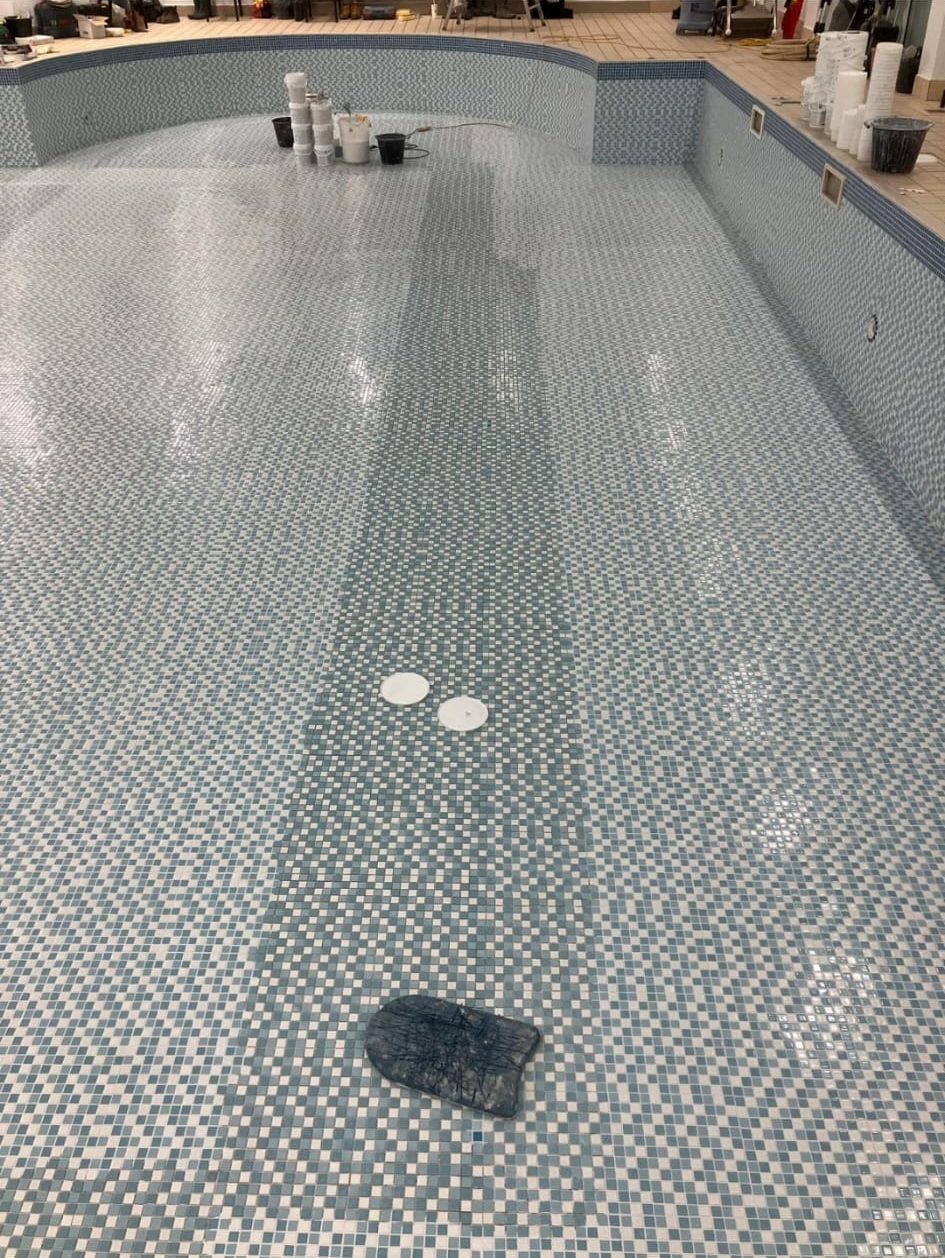
Identify the stain before treating it
Discoloured grout is one of the first things owners notice and one of the easiest to make worse. Different stains need different treatments, and the wrong product can damage grout or tiles without shifting the mark.
Colour, location and how the stain reacts to a gentle test all give clues. Spend a little time on diagnosis before reaching for anything strong.
Note whether the staining is spread evenly, concentrated near inlets or the waterline, or confined to areas of poor circulation such as corners and steps. The pattern often says as much as the colour.
Common causes by colour
These are common associations rather than certainties. More than one cause can be present at once.
- Black or dark green spots that return after brushing: often algae rooted in porous grout.
- Green or slimy films: algae or biofilm, often where circulation is poor.
- Brown, orange or rust coloured marks: often iron, sometimes from source water or corroding fittings.
- Blue, green or dark marks without slime: can be copper, sometimes linked to equipment or certain treatment products.
- Grey or dirty joints with white crust: scale trapping dirt, often near the waterline.
- Brown or tan marks under trees or covers: organic staining from leaves and debris.
Why cement grout stains more easily
Cement-based grout is slightly porous, and as it ages or is attacked by unbalanced water its surface becomes rougher and more open. That gives algae, dirt and metal deposits more to cling to.
Epoxy grout is much less porous, so it generally resists staining better, although it can still pick up surface deposits.
Lighter grout colours show staining most clearly. Darker grouts can disguise marks, but the underlying algae or deposit is still there and still worth dealing with.
How cleaning is approached
Cleaning is chosen for the actual contamination and for the materials in the pool. A small test area helps confirm the method before broader treatment, and it shows whether the stain is on the surface or deep in the joint.
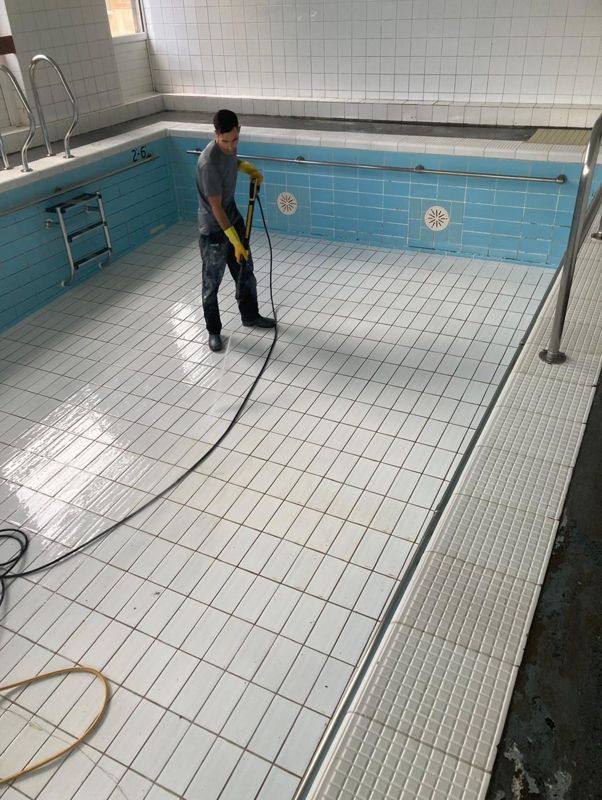
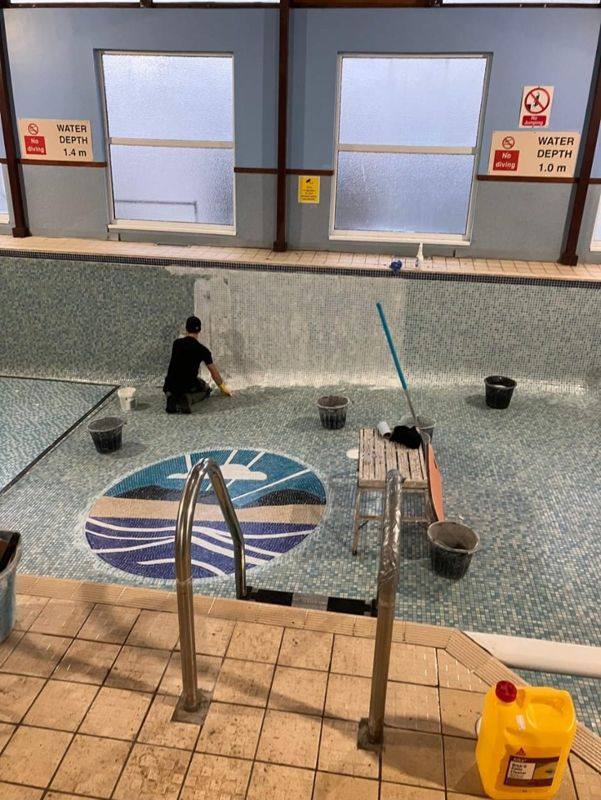
We use the correct chemical clean for the job: one product to take out old grout before new joints go in, another for calcium scale or rust marks, another for a pool surround or a general clean. The wrong product can etch cement grout and some tile finishes, and a pressure washer held too close can cut into joints. Products are used at the manufacturer's dilution and contact time, and cleaning chemicals are never mixed: acid and chlorine-based products together can release chlorine gas.
After cleaning, loosened residue and rinse water are removed properly, typically with wet-vacuum equipment, so it does not settle back into the joints.
Treating the cause, not just the mark
Stains tend to come back if the cause is still there. Recurring algae can point to circulation dead spots, sanitiser levels or porous grout. Metal staining can trace back to source water, heaters, fittings or certain products.
Water treatment questions sit with whoever manages the pool's chemistry, and recognised guidance such as PWTAG's is a sensible reference. Our role is the tile and grout surface, but we will point out patterns that suggest an underlying cause.
When regrouting makes more sense
If grout is eroded, sandy or recessed, cleaning can only do so much. Stains sit deep in the damaged surface and return quickly, and repeated aggressive cleaning wears the joints further.
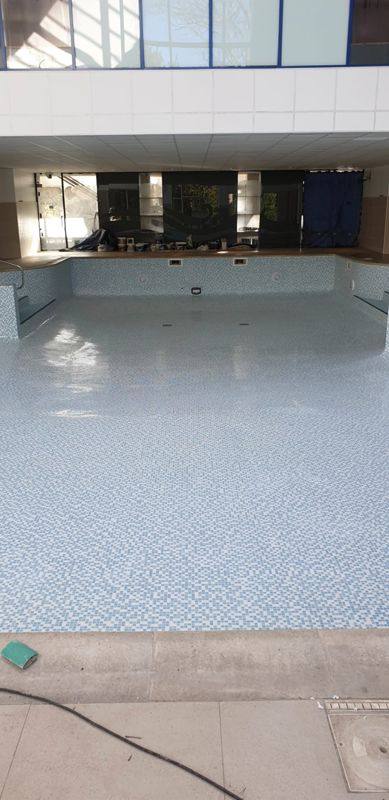
In that situation, removing the old grout and replacing it, often with a pool-suitable epoxy, can be the more practical answer. It is worth checking the tiles at the same time, since old, failing grout and hollow tiles often appear together.
What owners can do day to day
Regular brushing of floors, walls and steps, good circulation and steady water balance all help. Check with your grout supplier or contractor before using a new cleaner, especially one marketed as a descaler.
If a stain appears suddenly, note when it started and anything that changed around then, such as new equipment, a change of treatment product or a new water source. That information often shortens the search for the cause.
Common questions
Can black grout be bleached?
Some chlorine-based cleaners can help with algae, but strength, contact time and compatibility matter, and residues must be removed. A test area is sensible, and recurring algae usually needs its cause addressed too.
Will new grout stain again?
It can, if the cause remains. Epoxy is generally more stain resistant than cement grout, and steady water treatment and suitable cleaning help keep new joints looking clean for longer.
Can stained grout be recoloured or painted?
Grout colourants and coatings exist for some tiling situations, but most are not designed for permanent immersion in treated pool water. In a pool, cleaning or replacing the grout is usually the more dependable route.
Is stained grout a health risk?
Algae and biofilm in joints can make a pool harder to keep clean and can be slippery. Whether an area needs closing is a decision for the operator, guided by their pool water management procedures.