Rust marks on pool tiles usually come from metal: corroding fittings, ladder or handrail fixings, iron in the fill water, or metal objects left on the floor. They are removed with a stain remover suited to metal staining, tried on a small test area first. Find and deal with the source, or the marks will come back.
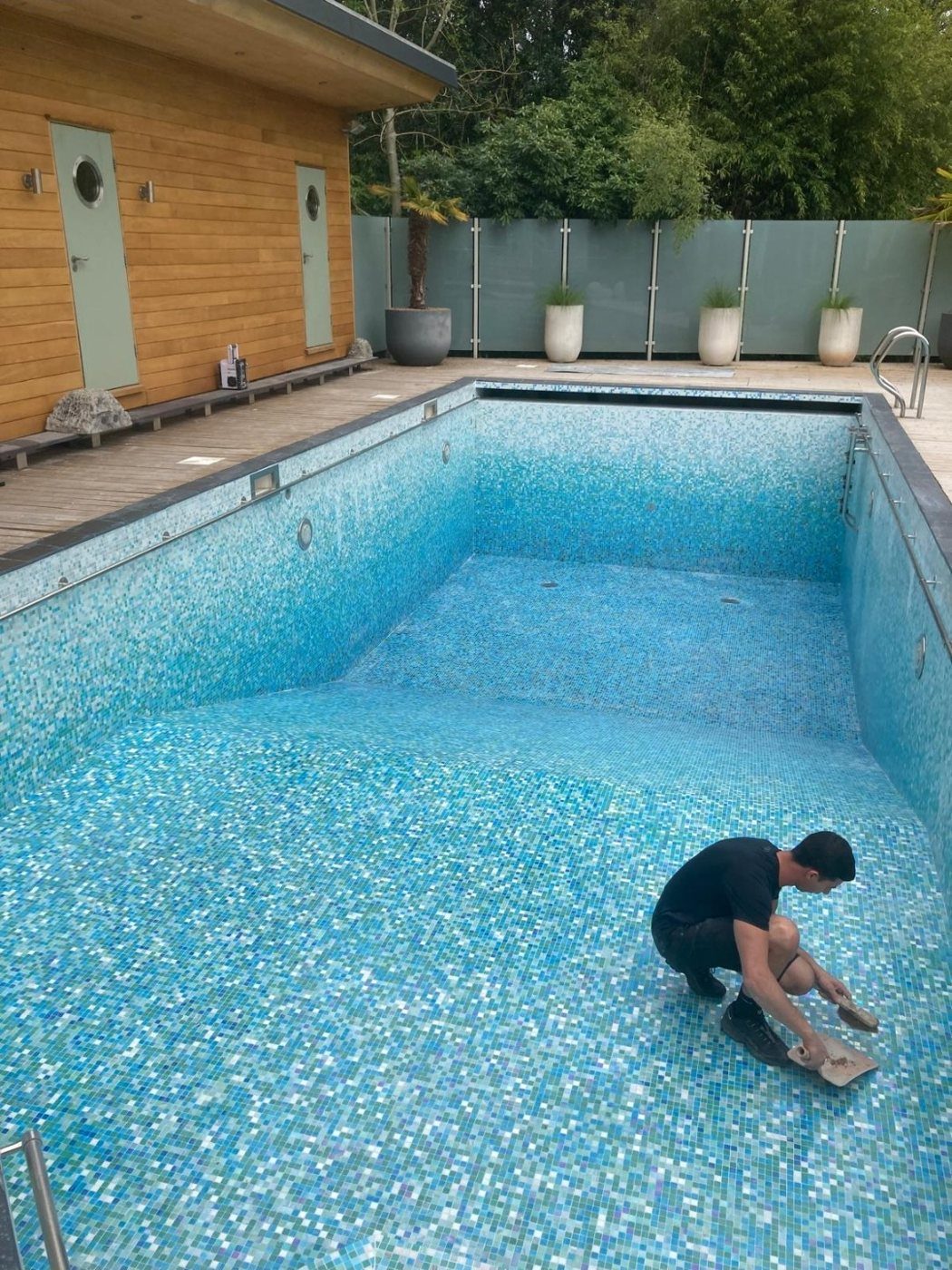
Common causes of rust and metal stains
- Corroding fittings, fixings, grilles or handrail and ladder bases.
- Iron in the source water, which can drop out onto the surface.
- Hair grips, coins and other metal objects left on the pool floor.
- Heaters and pipework, especially where water balance has been poor.
- Rust coming through from beneath the tiles, which can mean corroding metal in the structure and should be looked at properly.
What about chlorine stains?
Chlorine itself does not usually leave brown or orange marks. Marks called chlorine stains are more often scale, metal staining or dirt. Very strong or badly dosed chemicals can, though, bleach coloured grout and fade some finishes.
If you are unsure what a stain is, note its colour and where it is, and whether it rubs off. Our guide to black or stained pool grout covers the common causes by colour.
How rust stains are removed
Metal staining needs a product made for that job. A general cleaner or a descaler meant for calcium may not shift it, and the wrong product can etch cement grout or dull the tile surface.
We use the correct chemical clean for the stain: one product for calcium scale and rust marks, another for a pool surround or general clean. Every method is tried on a small test area first. Afterwards the area is rinsed and the water and residue are cleared away, so nothing is left in the joints.
Deal with the source
Stains come back if the cause is still there. Replace or treat corroding fittings, keep the floor clear of metal objects and ask whoever manages the water chemistry to check for metals in the water.
Water treatment sits with the pool's operator or water specialist, and PWTAG's guidance is a good reference. Our part is the tile and grout surface, but we will always point out anything that suggests an underlying cause.
Keep on top of it
Rust and calcium marks are much easier to remove when they are fresh. They are usually most noticeable on the pool surround, where tiles are repeatedly splashed and left to dry, leaving calcium and residues on the surface wherever the water dries out. For busy pools we often recommend a deep clean of the surround once or twice a year, which does not require draining. Left untreated, marks build up and can permanently stain tiles and grout. Every pool is different, so we assess each one before recommending a cleaning plan.
Tiles under the water usually stay cleaner, and marks inside the pool are dealt with when it is drained for other works. If grout is deeply stained or eroded, regrouting may be the better answer than repeated cleaning.
Common questions
What causes rust stains in a swimming pool?
Usually metal: corroding fittings or fixings, iron in the fill water, or metal objects left on the floor. Rust coming through from beneath the tiles needs investigating properly.
Does chlorine stain pool tiles?
Chlorine does not usually cause brown or orange marks; those are more often metal or scale. Very strong chemicals can bleach coloured grout and fade some finishes.
Can rust stains be removed from pool grout?
Often, with a product suited to metal staining, tested on a small area first. Deeply stained or eroded cement grout may be better replaced.
How do I stop rust stains coming back?
Find the source: replace corroding fittings, keep metal objects off the floor and have the water checked for metals by whoever manages the pool chemistry.
Sources and further guidance
This guide is general information, not legal, health or safety advice for a specific site. Pool operators should follow current official guidance and take advice from competent specialists.