Most staining and damage to pool tiles and grout comes from three things: water chemistry, cleaning methods and sunlight. Water that is out of balance can soften cement grout, leave scale or cause metal staining. The wrong acids or abrasive cleaning can permanently damage a tile's surface. Once the surface is damaged, staining can set in and may not clean off.
At a glance
The common causes, and what each one typically looks like on a pool:
- Low pH or aggressive water: soft, sandy grout sitting below the tile face.
- High pH or hard water: white or grey scale, heaviest at the waterline.
- Metals in the water: orange, brown, blue-green or purple-black stains, often after the pool has been shocked.
- Sulphate attack: eroding grout and a white cloud in the water when joints are brushed.
- High chlorine or bromine: faded or patchy grout colour and weakened joints.
- Salt: white deposits on the surround and grout loss near the waterline.
- Unsuitable acids or abrasive cleaning: dull, rough or etched tiles.
- Sunlight and UV: faded grout, faster scale build-up and more algae.
pH and water balance
pH shows how acidic or alkaline the water is. Published guidance for tiled pools commonly gives an ideal range of about 7.2 to 7.8, but the exact target is set by the pool's water treatment specialist.
pH works together with alkalinity, calcium hardness and temperature. Together these decide whether the water is balanced, which is often checked using the Langelier saturation index (LSI).
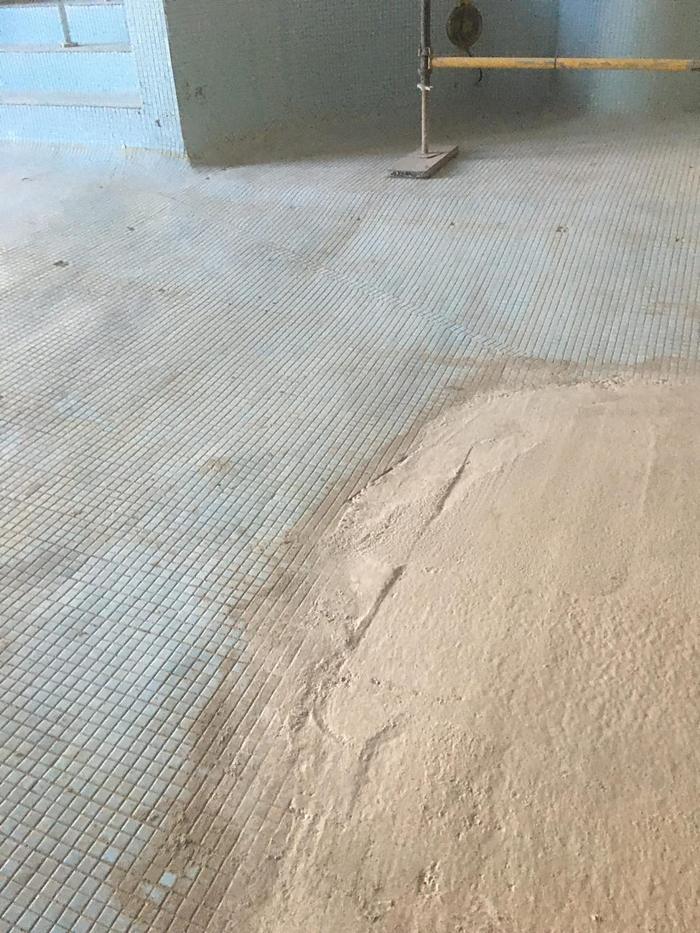
- pH too low (aggressive water): the water dissolves calcium, so it slowly draws it out of cement grout and render. Joints become soft, sandy and recessed. It can also corrode heaters and metal fittings, releasing metals that later stain the tiles.
- pH too high (scale-forming water): calcium comes out of the water and forms scale on tiles and grout. Dissolved metals also stain surfaces faster.
Scale
Scale forms when water holds more calcium than it can keep dissolved. Evaporation concentrates the minerals, so scale is usually worst at the waterline and on the surround, where water is splashed and left to dry.
There are two main types. Calcium carbonate is white and flaky, fizzes when acid touches it and is relatively easy to remove. Calcium silicate is grey-white, does not fizz and is much harder to remove. Knowing which one is present helps choose a safe removal method.
Metal staining
Iron, copper and manganese can be dissolved in pool water without being visible. When chlorine reacts with them, they come out of the water and settle on the tiles and grout. This often shows up after the pool has been shocked, and it happens faster when pH is high.
- Iron: orange, brown or red.
- Copper: blue, green or turquoise.
- Manganese: purple or black.
- Common sources: fill water, corroding heaters and fittings, copper-based algaecides and copper ionisers.
Sulphate attack
Sulphates build up in pool water when sulphate-based chemicals are used, such as sodium bisulphate (dry acid) to lower pH or aluminium sulphate as a coagulant. PWTAG has documented a growing number of pool problems linked to them.
Over time, sulphate weakens cement-based grout from within. The first sign is usually grout eroding, with a white cloud in the water when joints are brushed. BS 5385-4 sets a maximum sulphate level for tiled pools, and epoxy grout is often used where sulphate is a risk.
Chlorine, bromine, salt and magnesium
- Chlorine: very high levels can harm cement-based materials and bleach coloured grout, so joints above and below the waterline can end up different shades.
- Bromine: often used in spas, and very aggressive to grouts and adhesives.
- Salt: in salt-chlorinated pools, salt is left in the pores as water dries. As it repeatedly dissolves and crystallises, it can cause white deposits, grout loss near the waterline, flaking natural stone and corroded fittings.
- Magnesium: in mineral pools, magnesium can replace calcium in cement grout and leave it powdery, so epoxy grout and adhesive are recommended.
Cleaning acids and abrasion
The wrong cleaning product or method can cause damage that cannot be undone.
Acid cleaners are widely used on pools and are generally suitable for porcelain and ceramic tiles when correctly diluted, tested on a small area and thoroughly rinsed. However, some tile manufacturers warn that certain acids, including hydrofluoric, hydrochloric and phosphoric acid, can damage particular glazes and glass tiles. Acid should never be used on natural stone. Once a glaze has been etched, it cannot be restored.
Abrasion does similar damage. Pumice stones, wire brushes and heavy scrubbing can leave tiles dull and rough. Every method should be tested first and matched to both the deposit and the tile.
UV and sunlight
UV affects the colour and strength of grouts and other polymer-based products, and can fade pigments over time. This applies to outdoor pools and also to indoor pools with large glazed areas or rooflights, because standard glass and many clear roof materials let part of the UV spectrum through.
Sunlight also speeds up evaporation, so scale and residues build up faster, and it encourages algae. Where a pool gets a lot of direct sun, check the manufacturer's data for UV and colour stability when choosing grout and sealant.
Why some staining becomes permanent
A sound glaze is dense and smooth, so most deposits sit on top and can be removed with the right method. Once a tile's face has been etched, worn or attacked, it becomes rougher and more open. Scale, metals and residues then build up in the damaged surface and become ingrained, especially in sunny areas.
At that stage even specialist cleaning may not fully remove the staining, and replacing the affected tiles may be the only way to restore the finish. Balanced water, careful cleaning and dealing with deposits early are the best prevention.
How we help
Water treatment is the responsibility of the pool operator and their water treatment specialist, working to PWTAG guidance. Our role is the tiles and grout.
Every pool is different, so we start with an assessment. We identify the likely cause, test cleaning methods on a small area, and carry out chemical cleaning, repairs and regrouting. Where water chemistry looks to be a factor, we explain what we have found so it can be discussed with your water treatment specialist.
Common questions
What pH should a swimming pool be for tiles and grout?
Published guidance for tiled pools commonly gives an ideal range of around 7.2 to 7.8. The exact target is set by the pool's water treatment specialist, alongside alkalinity, calcium hardness and temperature.
Can low pH damage pool grout?
Yes. Low pH, or water low in alkalinity or calcium, is aggressive to cement-based grout and can leave joints soft, sandy and recessed. It can also corrode metal fittings, which can lead to staining.
Why have stains appeared after shocking the pool?
Raising chlorine sharply can oxidise dissolved metals such as iron, copper or manganese, which then come out of the water and stain tiles and grout.
What is the hardest scale to remove from pool tiles?
Calcium silicate scale. It forms slowly, does not fizz with acid like calcium carbonate scale, and is notoriously difficult to remove.
Can acid damage pool tiles?
It can. Correctly diluted acid cleaners are generally suitable for porcelain and ceramic, but some acids can damage particular glazes and glass tiles, and an etched glaze cannot be restored. Always check the tile manufacturer's guidance and test first.
Does sunlight affect indoor pools?
It can. Glass and many clear roof materials let part of the UV spectrum through, so pools with large glazed areas or rooflights can see grout fading, faster scale build-up and more algae.
Sources and further guidance
- PWTAG: Sulphate attack (Technical Note 3)
- ARDEX: Pool water chemistry and its effects on tiles
- Tile & Stone Journal (ARDEX): Grouting swimming pools
- Orenda: Heavy metal oxidation and staining
- Eco Outdoor: Calcium carbonate and calcium silicate scale
- Jeffrey Court: Pool tile maintenance guide
- CTaSC: Acid etch on ceramic pool tiles
- Floors Center: Pool water, chlorine and salt effects on tile and grout
- IQ Glass: UV transmission through glass
This guide is general information, not legal, health or safety advice for a specific site. Pool operators should follow current official guidance and take advice from competent specialists.