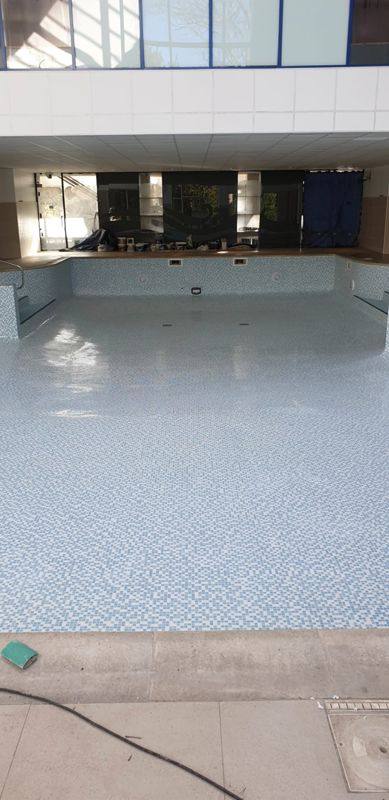
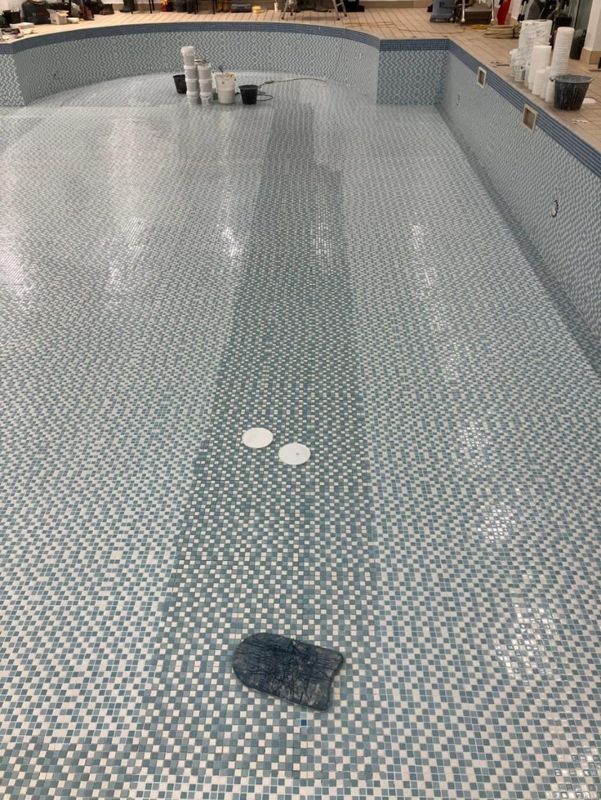
Failed or missing grout leaves open, rough joints between tiles. Dirt, body oils and biofilm collect in those recesses where brushes and cleaning equipment struggle to reach, so the pool becomes harder to keep clean. Sound, full joints finished flush with the tile face are easier to clean. Regrouting can restore that, as long as the tiles themselves are still well bonded.
What grout is doing in a pool
Grout fills the joints between tiles. In a pool it helps lock the tile edges in place, protects the bedding behind from direct water flow and gives a continuous surface that can be cleaned. When grout is in good condition, a brush or cleaning machine passes over tile and joint alike.
When grout erodes, cracks or drops out, each joint becomes a small channel. That changes how the surface collects dirt and how well it can be cleaned.
Why open joints trap dirt and biofilm
A recessed or porous joint is a sheltered place. Fine debris settles in it, body oils and cosmetics coat it, and microorganisms can form biofilm on it. PWTAG, the Pool Water Treatment Advisory Group, lists biofilm among typical pool problems and points to surface scrubbing as part of the remedy. Scrubbing is much less effective in a joint the bristles cannot reach.
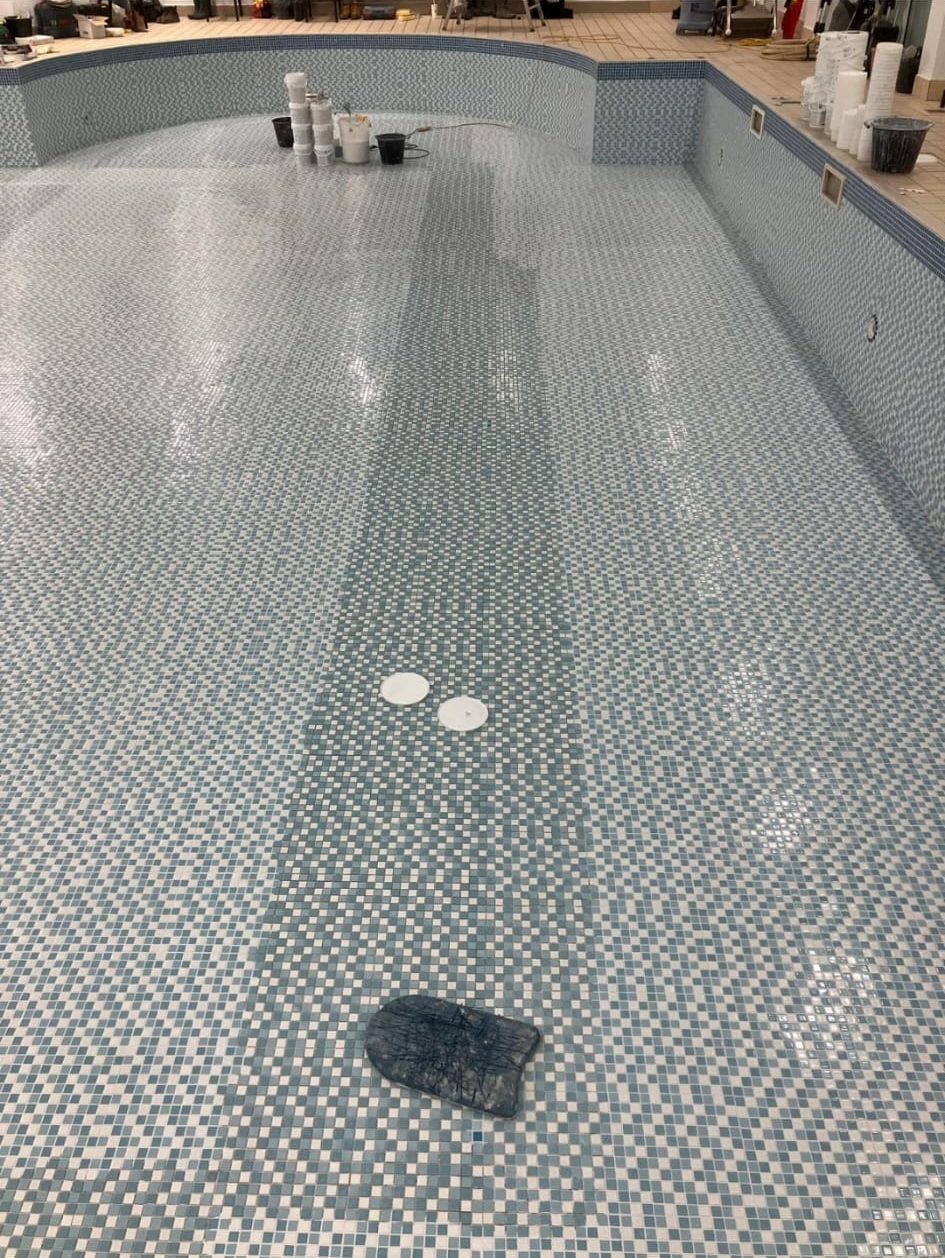
Mosaic pools have far more joint area than pools with larger tiles, so grout condition has a bigger effect on how they look and how easy they are to clean. Steps, waterlines and channels are often where problems show first.
Signs grout has become a hygiene problem
Grout does not need to have fallen out completely to cause trouble. These are common signs that joints are no longer doing their job.
- Joints sitting noticeably below the tile face
- Dark lines that return soon after cleaning
- A slimy feel in joints on steps and at the waterline
- Sandy or soft grout that can be scratched out
- Cracks along joints or around fittings
- Visible gaps where grout has washed out
Why harsh cleaning backfires
It is tempting to attack dark joints with the strongest product to hand or high pressure washing. On worn cement grout, that can remove more of the joint and leave it rougher and deeper than before, which makes the hygiene problem worse over time. Strong products can also mark some tile surfaces.
Our approach is to identify what the contamination is, try a small test area and use compatible products to the manufacturer's instructions. Where the joint itself has failed, we say so rather than trying to clean our way out of it.
Why grout fails
Grout wears for several reasons, and the cause affects the fix. Water chemistry can play a part: water that is not in balance can slowly attack cement-based materials, and this is something to discuss with your water treatment specialist. Abrasive cleaning, poor original installation, movement and loose tiles are other common causes.
If tiles are loose or hollow, regrouting alone will not fix them. Those tiles need to be dealt with first. Our guide on pool grout falling out covers the causes in more detail.
How regrouting helps
Where tiles remain securely bonded and the system beneath is suitable, worn grout can be raked out to an adequate depth and replaced. The joint is cleaned and prepared, filled fully and finished neatly to the tile face, so it can be cleaned in the same pass as the tiles.
Where epoxy suits the job, we use pool-suitable epoxy grouts chosen for the tile, joint width and site conditions. It can give a harder wearing joint that is easier to clean, but it is not always the right answer and cement grout still has its place. Nobody can promise a grout lifespan: preparation, installation, water chemistry and maintenance all affect it.
Grout around fittings and channels
Joints around lights, inlets, grilles, handrails and channel edges are often the first to fail. They see more water movement, more cleaning effort and more stress from fixings. They are also awkward to clean, so dirt and biofilm can build up there unnoticed.
When we inspect a pool, we pay particular attention to these areas. Repairs around fittings need care so that the fitting itself is protected and any flexible joints are kept flexible.
Keeping new joints clean
A new joint stays easier to clean when it is looked after. Using compatible cleaning products, avoiding unnecessary harsh treatments and keeping water balance under review with your specialist all help. Movement joints are a separate matter: they take flexible sealant, and they should be checked at routine inspections.
PoolRevive carries out regrouting, pool cleaning and tile repairs on residential, commercial and leisure pools.
Common questions
Is missing grout a health risk?
Missing grout makes a pool harder to keep clean, because dirt and biofilm can collect in open joints. Whether there is a water quality concern is for the operator and their water treatment specialist to judge from testing. From a surfaces point of view, failed joints are worth repairing.
Can grout be cleaned instead of replaced?
If the grout is sound and only stained, cleaning may be enough. If it is eroded, soft or missing, cleaning will not restore the joint and regrouting is usually the more lasting option.
Does epoxy grout stop biofilm?
No grout stops biofilm from forming. A dense, full joint finished flush with the tile is easier to clean, which helps a regular cleaning routine do its job.
Can you regrout without draining the pool?
Regrouting below the waterline usually needs the area drained and dry so the joint can be prepared, filled and cured properly. Our guide on regrouting without draining explains the limited situations where other approaches may be considered.
Sources and further guidance
This guide is general information, not legal, health or safety advice for a specific site. Pool operators should follow current official guidance and take advice from competent specialists.