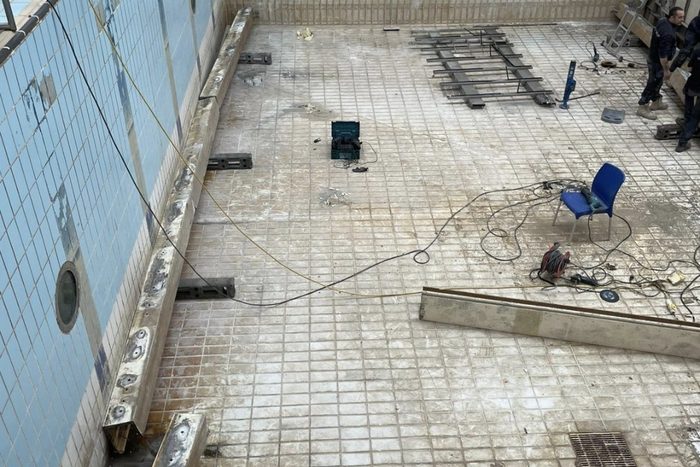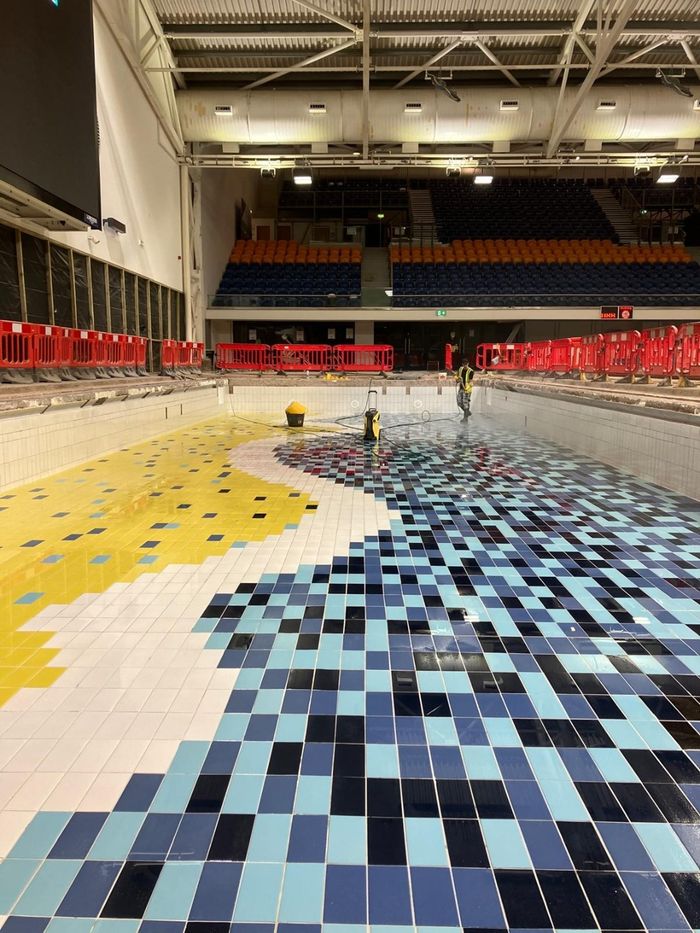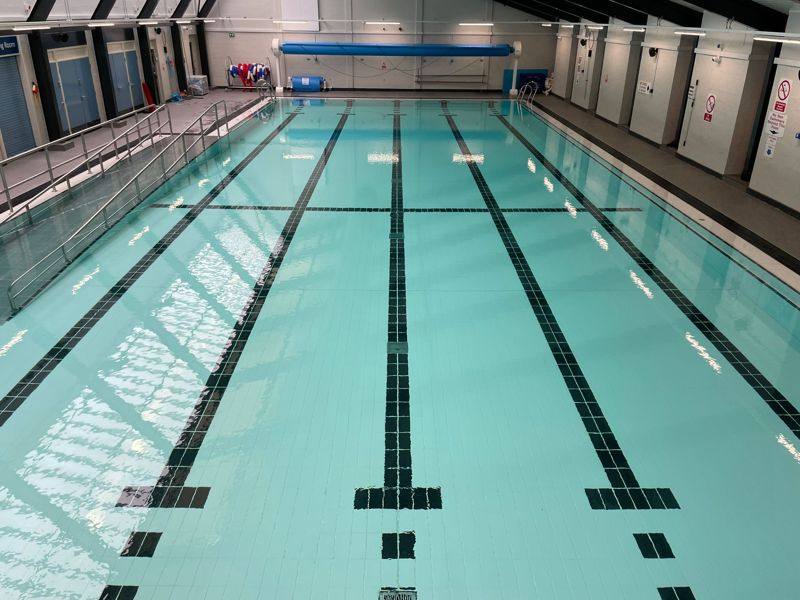
Pool tiles usually turn white because calcium builds up on them. When the water is scale-forming, for example with high pH, high calcium hardness or warm water, calcium comes out of the water and sets on the tiles, heaviest at the waterline. It can be cleaned off with the right product and method, but it will come back unless the water balance is corrected.
The usual cause: calcium build-up
In most pools the white film or crust on tiles is calcium scale, mainly calcium carbonate. It forms when the water holds more calcium than it can keep in solution, so the excess deposits on the surfaces it touches.
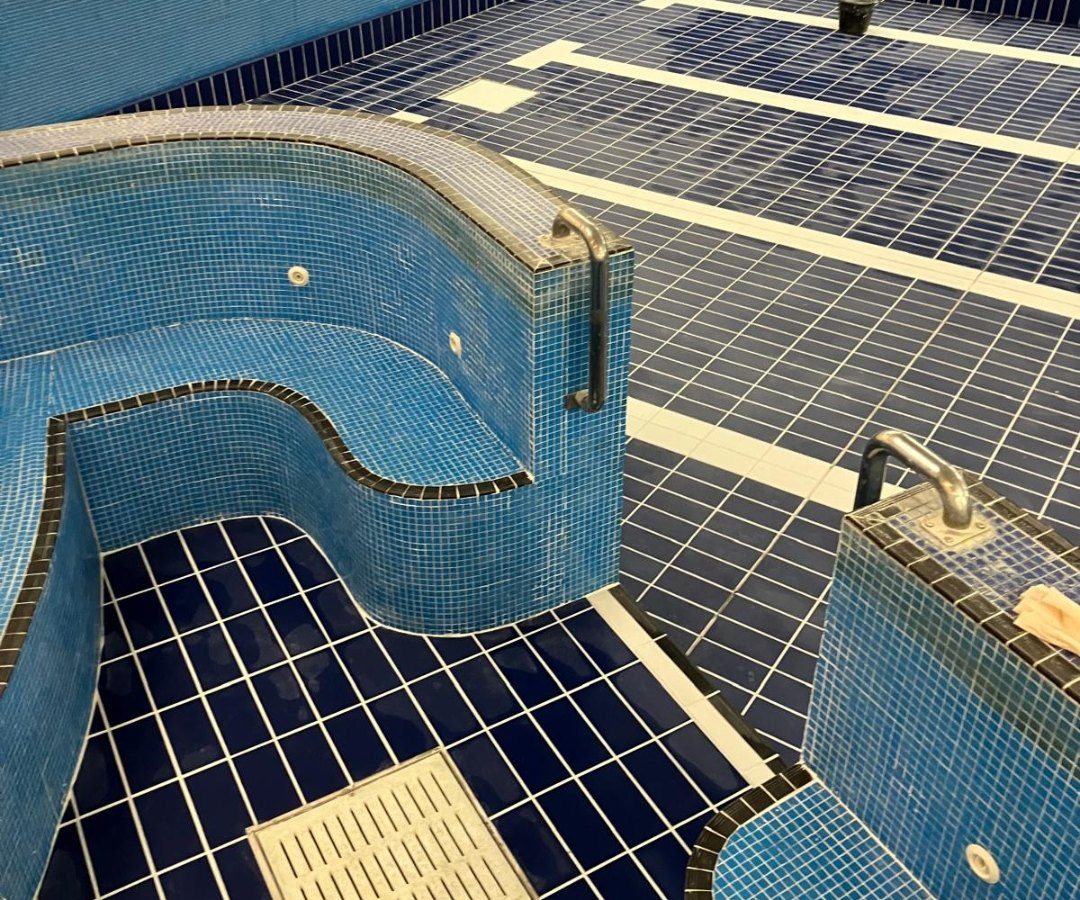
It is normally worst along the waterline, where evaporation concentrates minerals, and around spa seating, jets and water features. Left alone, a light film hardens into a crust that traps dirt and turns grey.
What makes calcium build up
- pH running too high.
- High calcium hardness or total alkalinity.
- Warm water, as in spas, hydrotherapy pools and heated leisure pools.
- High evaporation, which leaves minerals behind at the waterline.
- Hard source water topping the pool up.
Calcium or efflorescence?
Not all white marks are scale. Efflorescence is lime or salts carried out of the grout or the background behind the tiles by moisture. It tends to appear along the joints rather than across the tile faces.
The difference matters. Scale points to the water balance; efflorescence points to water moving through the grout or bed, which can be a sign of failed grout or other problems behind the tiles. If you are not sure which you have, send us photos.
How white scale is removed
Calcium is removed with a suitable descaling product and careful agitation, always tested on a small area first. Products strong enough to shift heavy scale can also etch cement grout and some tile finishes, so the method is chosen for the tiles and grout in your pool, then rinsed and extracted thoroughly.
Heavy, long-standing scale across floors and walls is best dealt with during a drain-down. Our guide to removing scale from pool tiles covers the process in more detail.
Stopping the tiles turning white again
Cleaning removes the deposit, not the cause. Unless the water balance is corrected, the white build-up will return. Water treatment is normally handled by the pool operator or plant contractor, using recognised guidance such as PWTAG's for commercial pools.
Regular brushing at the waterline stops thin films hardening into crusts, and busy pools benefit from a professional deep clean of the surround once or twice a year, which does not require draining, to remove calcium and rust marks before they stain the tiles. Every pool is different, so we assess each one before recommending a cleaning plan.
Common questions
Is white build-up on pool tiles harmful?
Scale is mainly a cleaning and appearance problem, but it roughens surfaces, gives dirt and algae something to hold onto and can hide damaged grout or tiles underneath.
Why is the white build-up worst at the waterline?
Evaporation concentrates minerals at the surface, so calcium deposits there first. Spas and warm pools tend to scale faster for the same reason.
Can I remove calcium from pool tiles myself?
Light waterline marks can often be managed with a suitable pool-safe product and soft tools. Always follow the product label, wear gloves and eye protection, and take care around the pool whether it is full or empty: don't work alone, and never work at height without safe access. For anything more than a light film, get advice first, as the wrong product can damage grout and some tile finishes. Send us photos and we'll tell you what you're dealing with.
The white marks are along the grout lines. Is that scale?
It may be efflorescence rather than scale. That suggests moisture moving through the grout or background, which is worth checking, as it can point to failing grout.