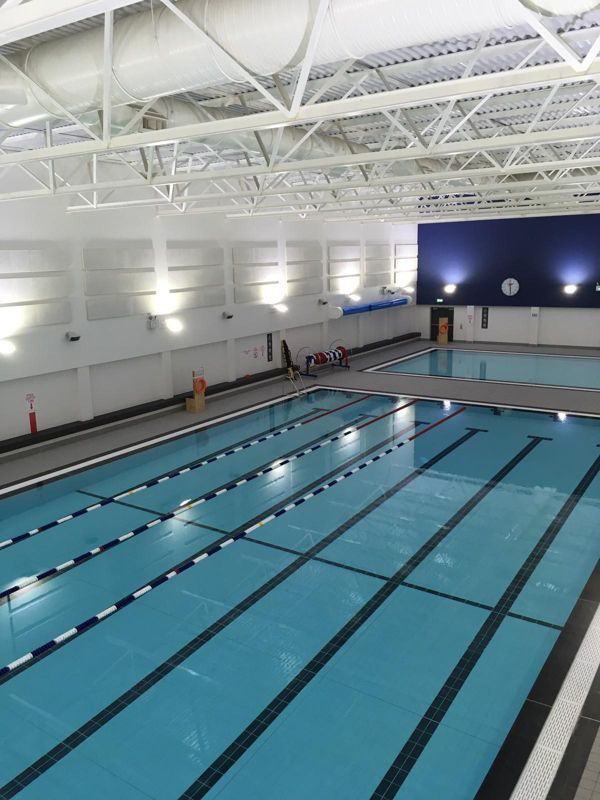
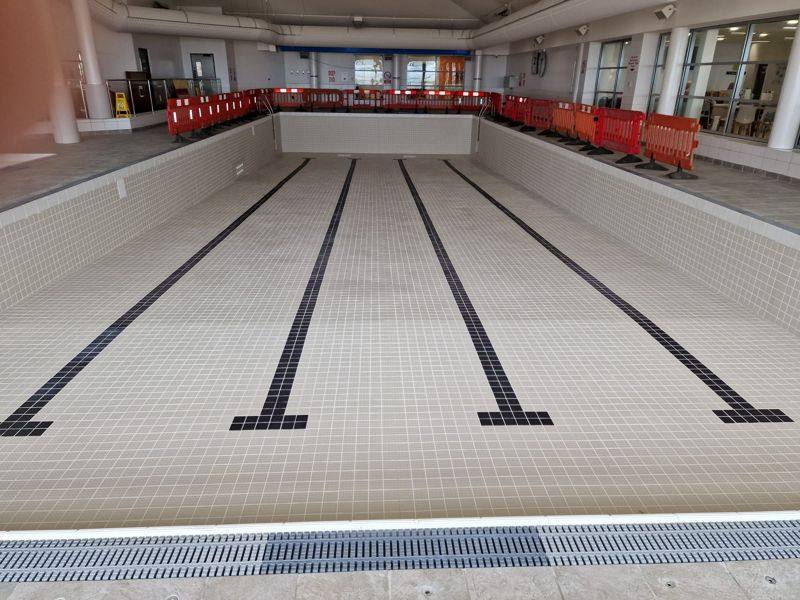
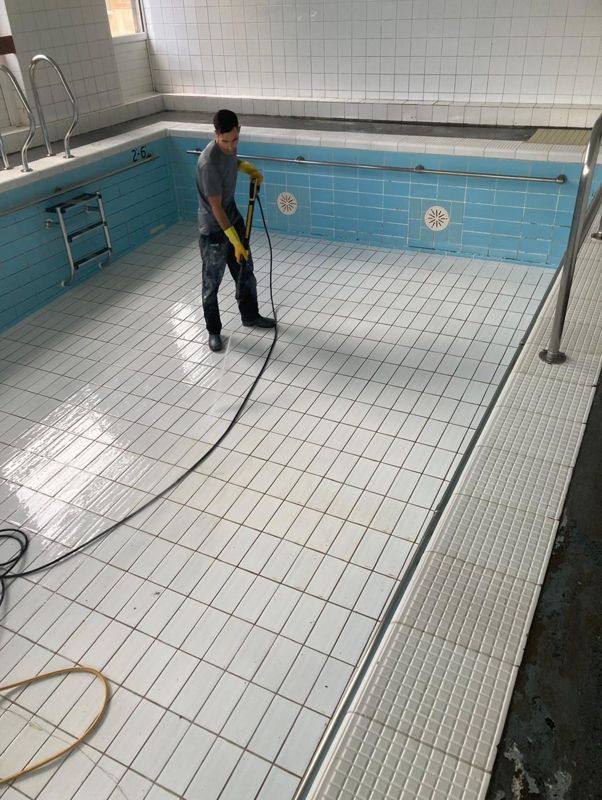
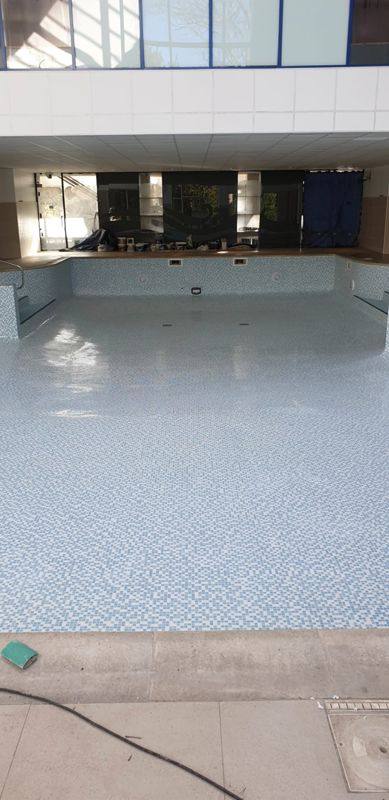
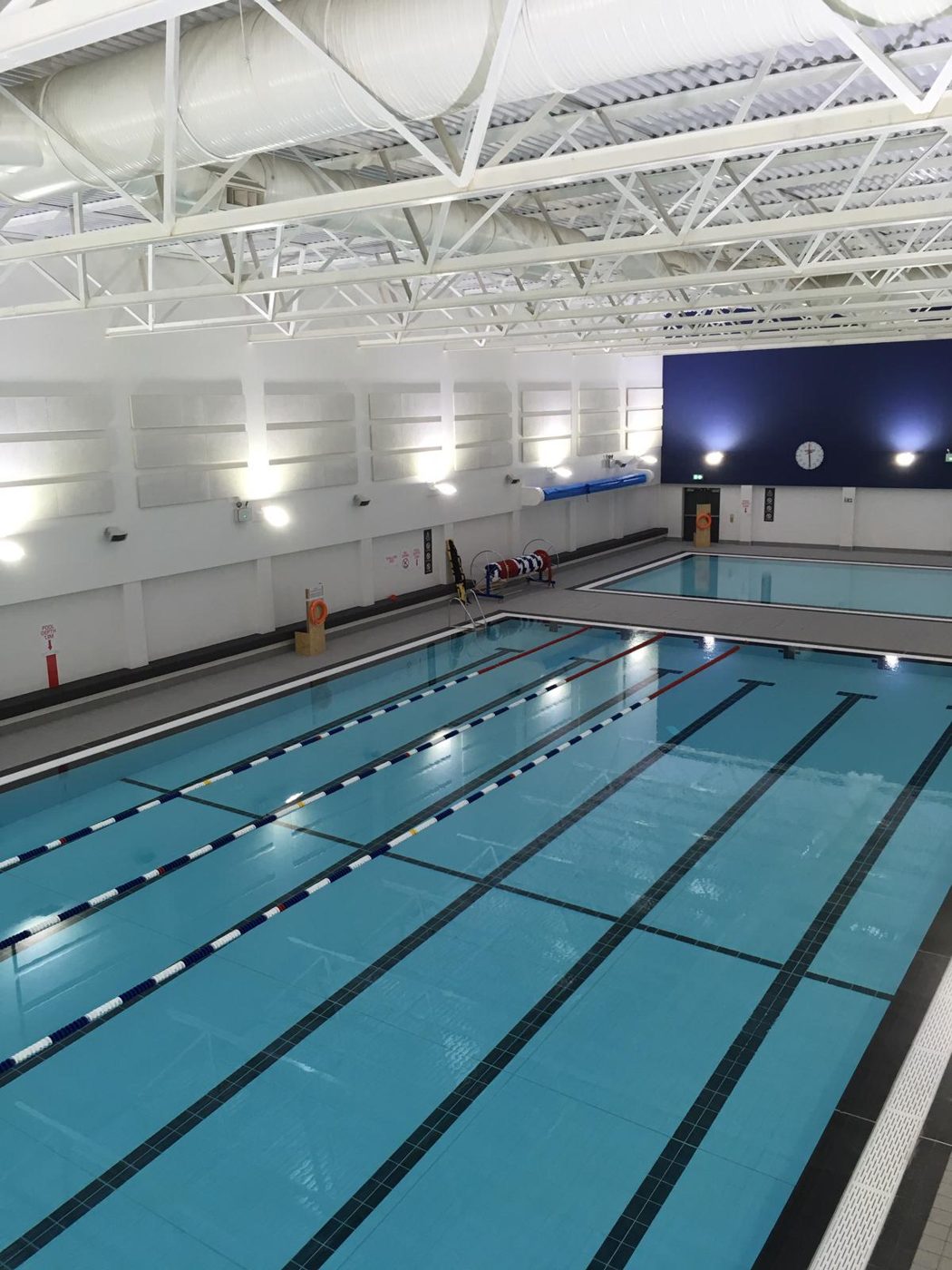
Indoor pool refurbishment covers the tiled pool and the pool hall around it. Warm water and humid air are hard on grout, surrounds and wet areas, so plan the tiling, surround and changing area work together. Agree access and protection for the building, check the air handling with its specialist, and allow full cure times before refilling.
Why indoor pools wear differently
Indoor pools are usually kept warmer than outdoor ones and used all year. The pool hall air is warm and humid, and if ventilation or dehumidification is not working well, condensation forms on cooler surfaces.
That puts extra demands on grout, movement joints and surround tiling, and on the walls and ceilings around the pool. Wear tends to show first on steps, at the waterline and around channels.
What an indoor refurbishment usually covers
- The pool tank: tile repairs, regrouting or retiling
- Steps, edges, channels and lane or depth markings
- Poolside and surround tiling, including slip resistance
- Showers, changing rooms and wet areas off the pool hall
- Spa pools and steam rooms where they share the space
The pool hall environment
Tiling is only part of an indoor pool's condition. Air handling, dehumidification and heating are specialist systems, and if they are struggling, the pool hall will keep suffering however good the new tiling is.
If you are planning a refurbishment, it is worth asking the air handling specialist to check the system at the same time, so any work there can be done in the same closure.
Access and protection inside a building
Indoor pools sit inside homes, hotels, clubs and leisure buildings. Materials, tools and waste have to come in and out through doors and corridors that are still in use.
We agree the route, working hours, dust and noise control and protection for floors and finishes before we start. In a private home that usually means one agreed route and a sealed-off work area.
Timing and cure
Draining, inspection, repairs, regrouting, cure time and a controlled refill all take time, and the pool hall needs to be kept in suitable conditions while adhesives and grouts cure.
We agree the programme before the pool is drained and build in the cure times the product manufacturers specify, rather than cutting them short to hit a date.
Plan your indoor pool refurbishment
Common questions
Can you refurbish an indoor pool in a private home?
Yes. We work on private indoor pools as well as commercial ones. We agree access, protection and working hours before we start so the rest of the home is looked after.
Does condensation damage pool tiles?
Tiles themselves cope well, but persistent condensation can affect grout, sealants, surrounds and the pool hall finishes. Good ventilation and dehumidification help protect the work.
Should the changing rooms be done at the same time?
Often it makes sense. They share the same water, cleaning and foot traffic, and doing them in one closure avoids shutting twice.
Sources and further guidance
This guide is general information, not legal, health or safety advice for a specific site. Pool operators should follow current official guidance and take advice from competent specialists.