Identify the original tile from records, spares or the tile itself, then check size, thickness, colour, finish and suitability for pool use. An exact match is not always possible because of batch variation, ageing of the old tiles or discontinued ranges. Then a close match, a planned contrast band or retiling a defined area usually looks neater than scattered odd tiles.
Why matching pool tiles can be difficult
Tiles are made in batches, and shade can vary slightly between batches of the same range. The tiles already in the pool may have changed too: glazes can dull or etch, surfaces wear, and scale or staining builds up. A new tile from the right range can still look different next to an old one.
Ranges are discontinued, and sizes and thicknesses change. In an older pool the original tile may simply not be made any more.
Start by identifying what is there
A removed tile, even a broken one, is the most useful thing you can have. A supplier can compare it against samples, and it shows the exact thickness and edge profile.
- Check original specifications, drawings or handover records.
- Look for spare tiles stored on site from the original installation.
- Check any markings on the back of removed tiles.
- Measure the size and thickness of the existing tiles accurately.
- Note the finish: gloss, matt, textured or glass.
- Photograph tiles in good light, both wet and dry.
Check more than colour
A match needs the right size, thickness and edge profile as well as colour. A slightly thicker tile sits proud; a slightly thinner one leaves a dip. A small difference in size pushes joints out of line, which shows badly on lane markings and mosaic.
The replacement must also be suitable for swimming pools and immersion, with appropriate slip resistance where people walk or stand. A good colour match never justifies an unsuitable tile.
Using spare tiles and harvested tiles
Spares from the original batch are the likeliest match. If there are none, tiles can sometimes be taken from a less visible spot, such as behind a fitting or in an area being retiled, and used where appearance matters most. The less visible spot then takes a close match.
Lifting tiles for reuse takes care: they have to come out whole and be cleaned of old adhesive before refixing. It is not always practical, but it works well for small, visible repairs.
When there is no exact match
Without an exact match there are still sensible options. Aim for a repair that looks intentional, not a scattering of slightly different tiles.
- Choose the closest available tile and use it in a defined area.
- Introduce a contrast band or border so the change of tile looks deliberate.
- Retile a whole section, such as a step, wall band or lane strip, in a new tile.
- For mosaic, use a planned blend or pattern to disguise small differences.
- Use the old tiles where they are most visible and new tiles where they are less so.
Mosaic blends and sheets
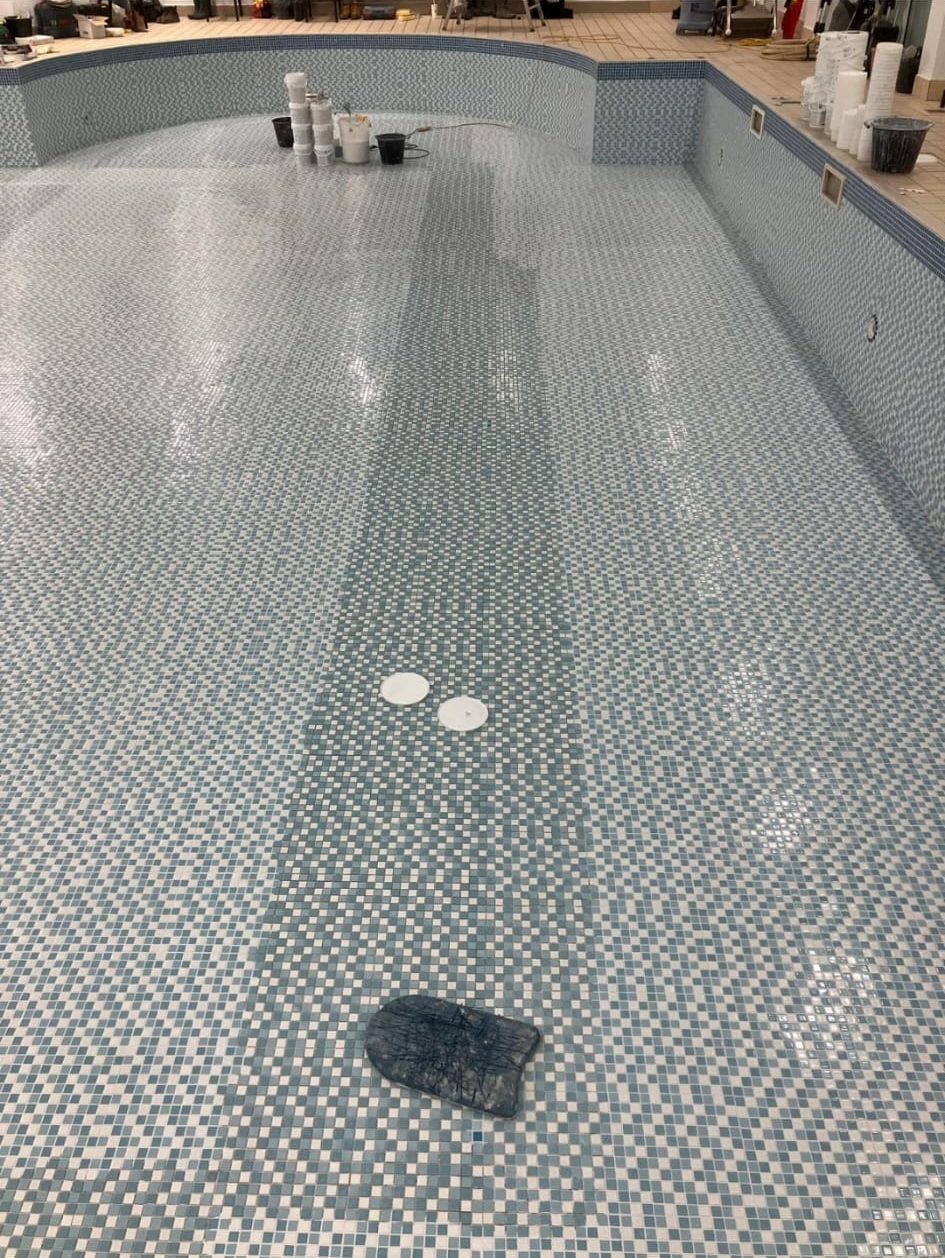
Mosaic is harder. Many pools use blends of two or more colours, and the proportions can vary between batches. A single replaced piece in a blend is easy to disguise; a whole sheet with a different mix can show as a patch.
Where whole sheets are needed, lay them out dry beside the existing tiles first to check the match. Pieces can sometimes be swapped between sheets to adjust the blend, and the joint width should match so the grid carries straight through the repair.
Matching grout as well
Grout colour changes how a repair looks, especially in mosaic. Old grout may have faded or stained, so new grout in the original colour can stand out. Cleaning the surrounding grout, or picking a colour that suits the aged grout, helps repairs blend in.
Where a pool is being regrouted, the colour choice can be reviewed for the whole area rather than only the repair.
Planning ahead
When a pool is tiled or retiled, order extra tiles from the same batch and store them safely. Record the range, colour, size and batch, along with the grout colour and system. Future repairs become much easier to match, even after the range is discontinued.
Common questions
Can you match tiles that have been discontinued?
Sometimes. Suppliers may hold old stock, or a similar tile may be available in the right size and thickness. Where no close match exists, planning the repair around a band or defined area often gives a better result.
Will new tiles fade to match the old ones?
Do not rely on it. Most glazed ceramic and porcelain tiles change very little in colour, so a difference in shade is likely to stay. Plan the repair so any difference looks intentional.
Does tile thickness matter for a small repair?
Yes. A tile that sits proud or low can catch feet or equipment and looks untidy. The bed can sometimes be adjusted for a small difference, but the replacement should finish flush with its neighbours.
Should we look at samples wet or dry?
Both, if possible. Tiles can look noticeably different when wet and under pool lighting, and colour under water can differ again. Comparing samples beside the existing tiles in the pool gives the most reliable impression.