It depends on how the pool was built. A tiled concrete pool is normally refurbished by repairing, regrouting or retiling the tiles. A liner pool is relined by fitting a new liner. Painted, rendered and fibreglass pools are resurfaced with their own systems. Each is a different trade, so start by confirming what finish your pool actually has.
Why the words get mixed up
Resurfacing, relining, renovating and retiling are often used as if they mean the same thing. They do not. Each describes renewing a different kind of pool finish, and each is usually done by a different specialist.
The quickest way to work out what you need is to look at the surface you swim on. Is it tiles with grout joints, a flexible sheet liner, a painted or rendered finish, or a moulded fibreglass shell?
Tiled pools: repair, regrout or retile
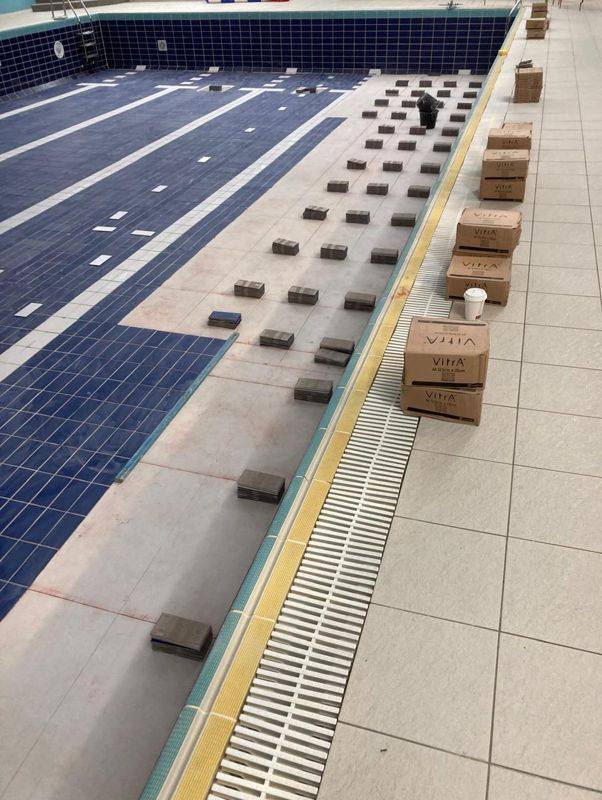
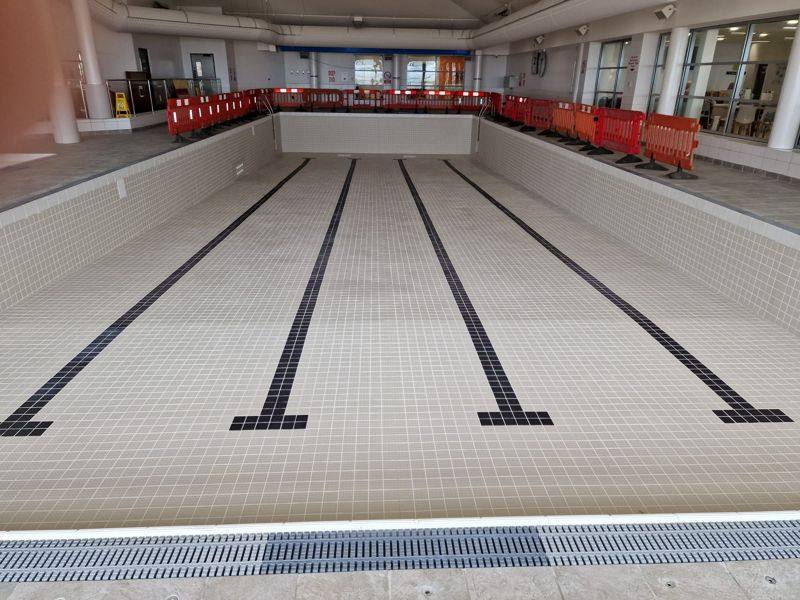
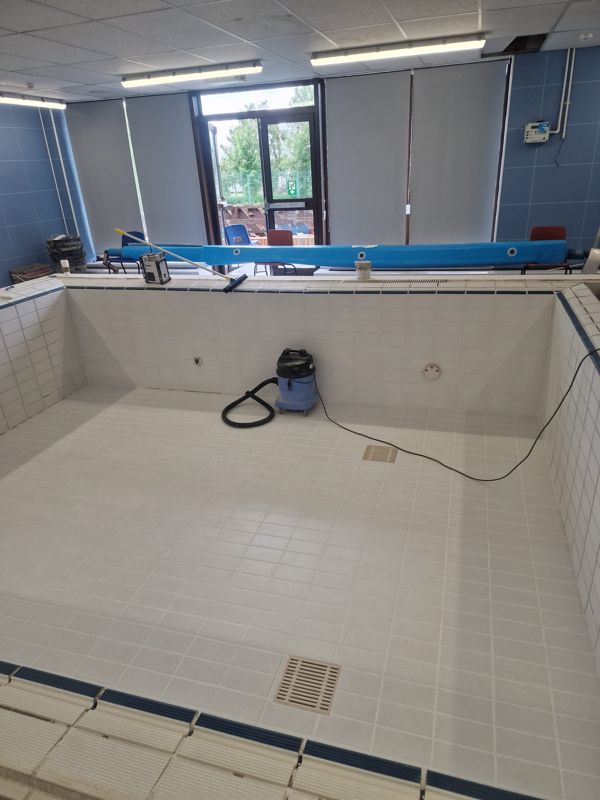
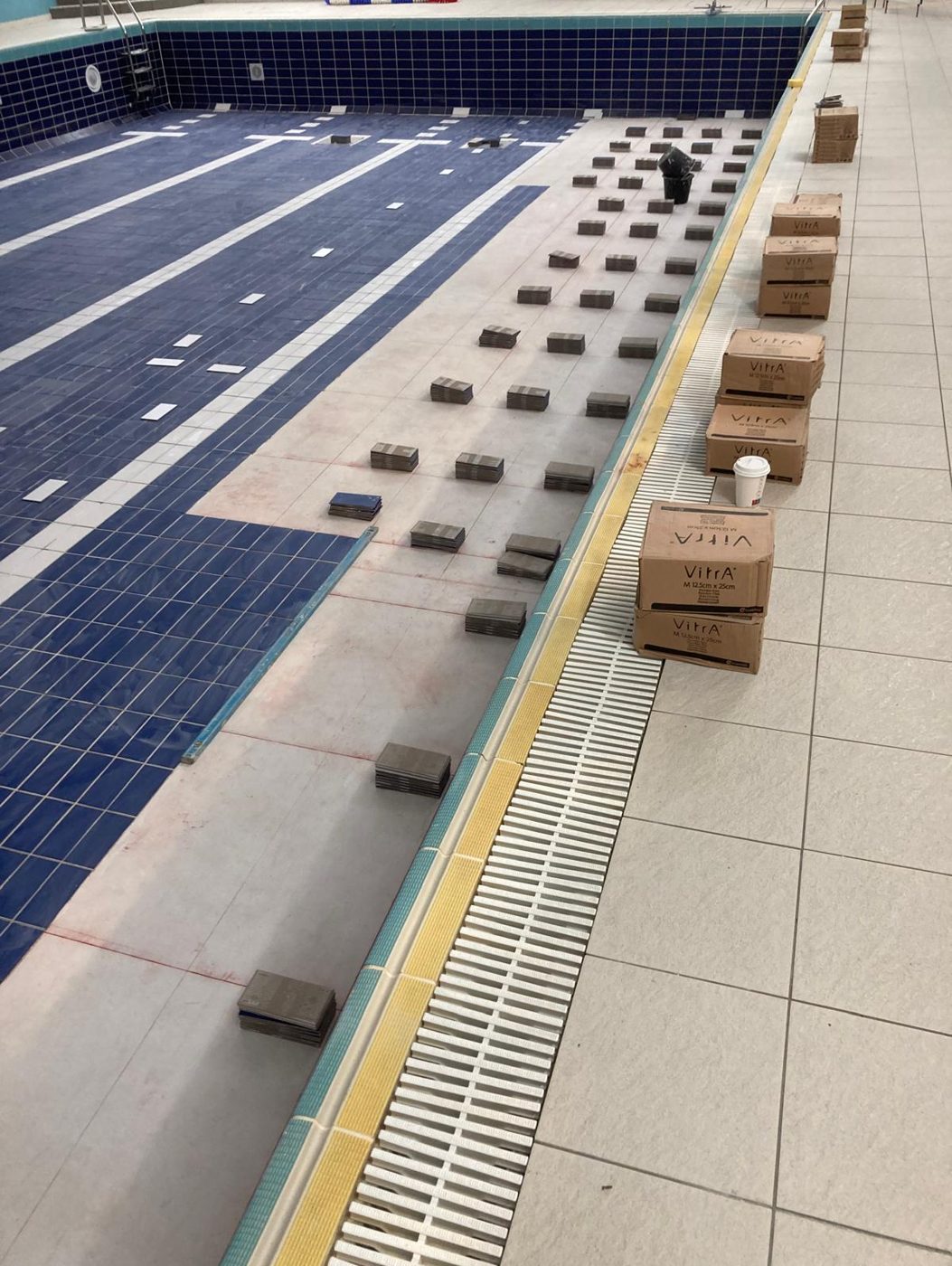
Most commercial pools in the UK, and many private indoor pools, are concrete shells finished with ceramic or glass mosaic tiles. When these pools wear, the work is in the tiles, the grout and the background behind them.
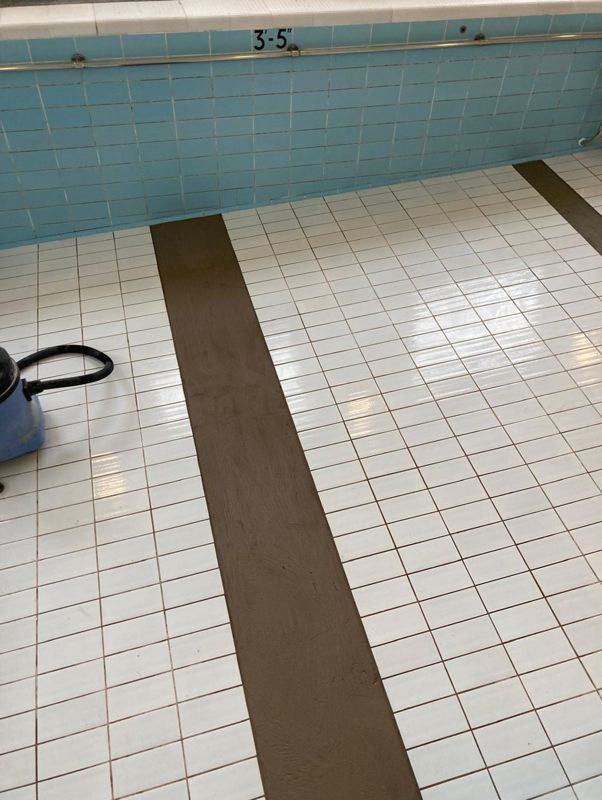
Often the tiles themselves are fine and the joints are the problem, so a regrout restores the pool. Where tiles have lost their bond or the background has failed, the affected areas are lifted, repaired and retiled. A full retile is the answer when failures are widespread or the owner wants a new look. This is the work PoolRevive does.
- Regrouting or epoxy regrouting where the tiles are well bonded
- Tile repairs for loose, cracked or missing tiles
- Partial retiling of failed areas
- Full retiling where repair no longer makes sense
Liner pools: relining and liner replacement
Many outdoor and some indoor private pools use a flexible liner, usually PVC, over a block or panel structure. When the liner fades, wrinkles, tears or leaks, it is replaced with a new liner made to fit the pool.
Liner replacement is a job for a liner specialist or pool builder, not a tiler. Some liner pools have a tiled coping or surround, and that part we can help with.
Painted, rendered and fibreglass pools
Some pools are finished with pool paint or a cement-based render or plaster. Resurfacing these means preparing the old surface and applying a new coating or render, using the specialist's own system.
Fibreglass pools are moulded shells. Repairs and recoating are carried out by fibreglass specialists, using materials designed for that shell.
Where waterproofing fits
Pool tiles and grout are not the waterproof layer. The concrete shell, and in many pools a waterproofing membrane under the tile bed, are what hold the water in.
That matters during a refurbishment. If the pool has been losing water, or the inspection suggests the shell or membrane has a problem, that needs a specialist assessment before new tiles go on. Regrouting will not stop a leaking shell.
Can a liner or painted pool be converted to tiles?
Sometimes, but it is a significant change. The structure has to be suitable for a tiled finish and for the weight and fixing of a tile system, which may involve a pool builder or engineer as well as a tiler. If you are considering it, start with an assessment of the structure.
If you are not sure what finish your pool has, send us photos. We will tell you honestly whether it is a job for us or for another specialist.
Common questions
Do you replace pool liners?
No. PoolRevive works on tiled pools. Liner replacement is a job for a liner specialist or pool builder. We can help with a tiled coping or pool surround around a liner pool.
Is resurfacing the same as retiling?
Not quite. Resurfacing usually means renewing a painted, rendered or plaster finish. Retiling means lifting and replacing the tiles on a tiled pool. Both refresh the pool's surface, but they are different trades.
Are pool tiles waterproof?
Tiles and grout are a durable finish, but they are not what keeps the water in. The pool shell and any waterproofing membrane do that, which is why a leak needs investigating separately.
Which lasts longer, tiles or a liner?
A well-installed tiled finish generally lasts much longer than a liner, but no finish has a guaranteed lifespan. Pool use, water treatment, installation and maintenance all make a difference.
Sources and further guidance
This guide is general information, not legal, health or safety advice for a specific site. Pool operators should follow current official guidance and take advice from competent specialists.