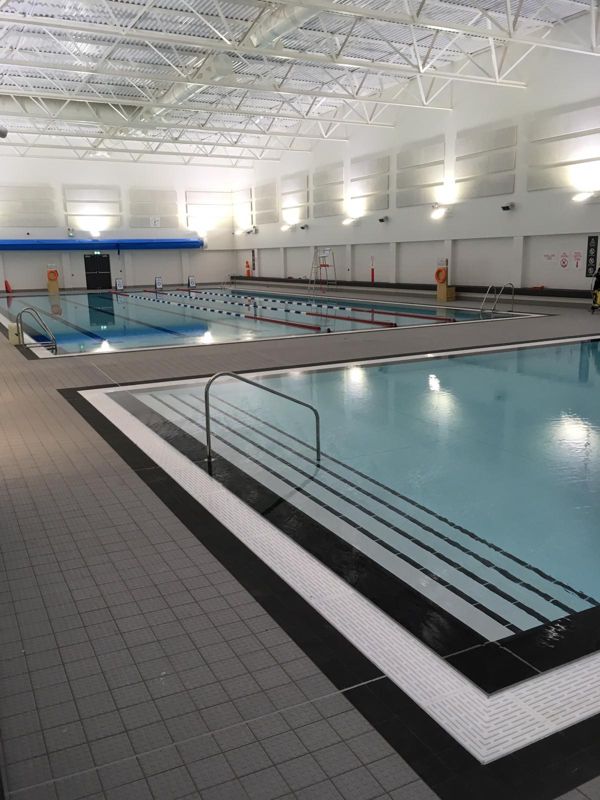
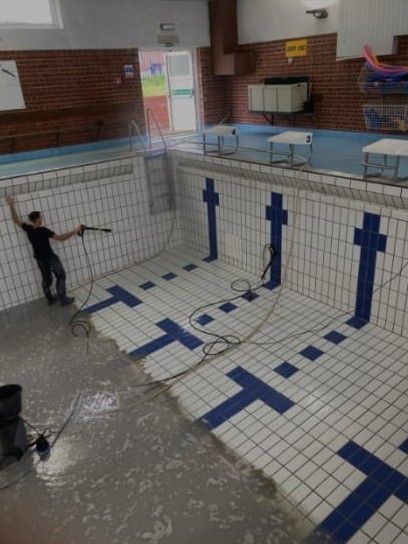
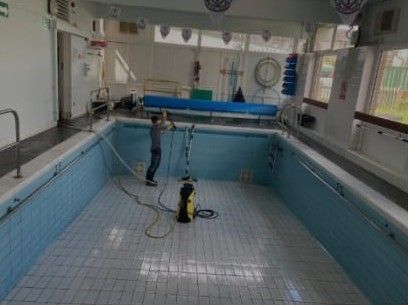
Cleaning has a direct effect on how slippery a poolside is. Body oils, soap, scale and biofilm can reduce grip, while the wrong product, too much detergent or residue left behind can create a film of its own. A regular routine with suitable products, correct dilution and thorough rinsing usually helps a slip-resistant tile perform as it was designed to.
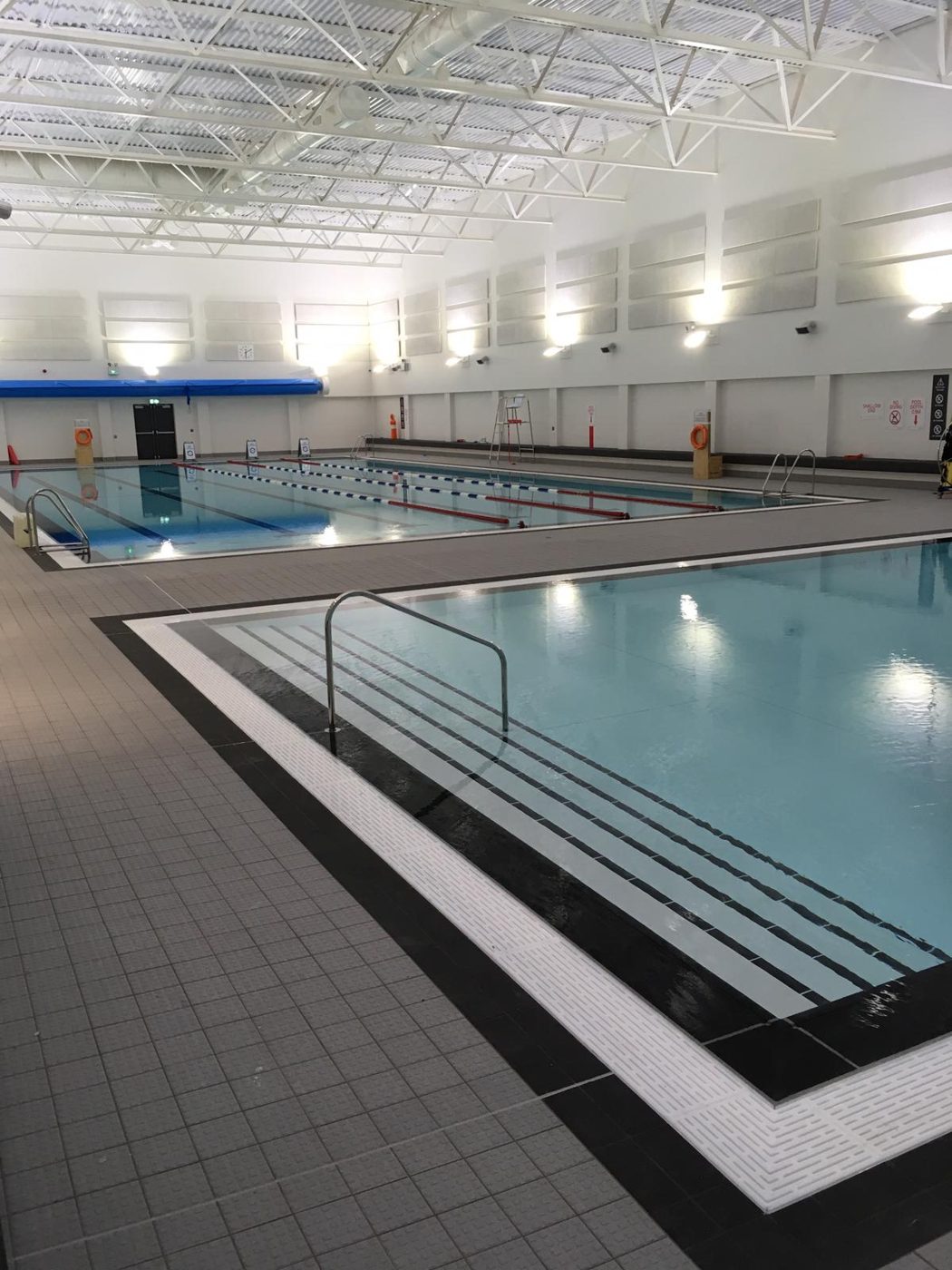
Wet is normal, contaminated is the problem
HSE says people rarely slip on clean, dry floors and that contamination is involved in almost all slip accidents. A poolside is always going to be wet, which is why pool surrounds use tiles designed to give grip in wet conditions. What changes that performance over time is mostly contamination and wear.
A tile that performed well when new can feel noticeably more slippery once its surface texture is filled with oils, soap residue or scale. Cleaning restores some of that texture; it cannot restore texture that has been worn away.
Common contaminants on a poolside
Knowing what is on the floor helps choose how to clean it.
Each contaminant behaves differently. Oils and sun cream need a detergent that breaks down grease, scale needs a descaling approach suited to the tile and grout, and biofilm needs regular physical scrubbing rather than a quick wipe.
- Body oils, sun cream and cosmetics
- Soap and shampoo carried from showers
- Scale deposits from evaporating pool water
- Biofilm in low areas, around drains and in channels
- Detergent residue from previous cleaning
- Dirt carried in on footwear from outside routes
When cleaning makes things worse
HSE's floor cleaning guidance makes several points that apply directly to pools. Detergent concentration is critical, and too strong a solution can be as ineffective as too weak. Greasy contamination needs the detergent to stay on long enough to work. Even a well wrung mop leaves a thin film of water that can be enough to create a slip risk on a smooth floor.
On a textured tile, a mop can push dirt into the texture rather than lift it out. HSE notes that scrubber-driers can be an effective way to clean most floors, though on very rough or profiled surfaces the squeegee may not be flexible enough to remove the water. The right method depends on the tile.
Timing and keeping people away
HSE suggests cleaning during quiet hours and keeping people off smooth floors until they are dry. It also points out that cones only warn of a hazard. On a poolside that usually means cleaning before opening, and using barriers rather than relying on signs.
Changing room floors, shower areas and routes from changing rooms to the pool are worth particular attention, because people move through them quickly and soap residue builds up there.
Scale and slip resistance
Pool water that splashes onto the surround and evaporates can leave scale behind. On a textured tile, scale can fill the surface and change how it feels underfoot. Regular rinsing of the surround and periodic descaling with a product suitable for the tile and grout can help.
Water balance affects how much scale forms, and that is for the operator's water treatment specialist. If scale builds up quickly on the surround, it is worth mentioning to them.
Matching the method to the tile
Slip-resistant tiles come with different surface textures, and each responds differently to cleaning. A product or brush that suits one may be ineffective or damaging on another. Tile manufacturers often provide cleaning guidance, and it is worth asking for it when tiles are installed or replaced.
Acid-based descalers can remove scale but can also etch some glazes and erode cement grout. Always test a small area first and follow the manufacturer's dilution.
When cleaning is not enough
If a poolside remains slippery after thorough cleaning, the problem may be wear, polishing or a tile that was never suitable for the location. Drainage falls that leave standing water, failed grout that holds dirt and damaged tiles all play a part too.
In that case, the operator may want specialist slip resistance testing and advice on options. Our guide on slip resistance for pool surrounds explains how tiles are selected for wet barefoot areas. Replacing tiles in the worst areas, or retiling a surround, is something we can quote for once the cause is understood.
Training and records
HSE says staff who clean should have the right information, instruction and training to work safely and effectively. A short written method for each floor type, including product, dilution, equipment and rinsing, helps keep cleaning consistent across shifts.
PoolRevive carries out deep cleaning of tiled pools and surrounds, tile repairs and pool surround tiling. We assess the surface, test first and use compatible products to manufacturers' instructions.
Common questions
Why is our poolside more slippery after cleaning?
Common reasons are detergent residue, too strong a solution, insufficient rinsing or a floor left damp. Reviewing the product, dilution and rinsing method usually helps. If the problem persists, the tile surface itself may be worn.
Can deep cleaning improve slip resistance?
It can help where contamination has filled the tile's surface texture. It cannot restore texture that has been worn away or make an unsuitable tile suitable.
Should we test slip resistance?
Some operators commission slip resistance testing, particularly after complaints or incidents. Whether it is needed is for the operator to decide, ideally with specialist advice.
Can drainage problems make a poolside more slippery?
Yes. Areas where water pools rather than draining stay wet longer and collect contamination. Falls, drains and grates are worth checking, and local relaying or retiling may be an option where the falls are wrong.
Sources and further guidance
- HSE: Slips and trips, cleaning
- HSE: Slips and trips, the importance of floor cleaning
- HSE: HSG179 Health and safety in swimming pools
This guide is general information, not legal, health or safety advice for a specific site. Pool operators should follow current official guidance and take advice from competent specialists.