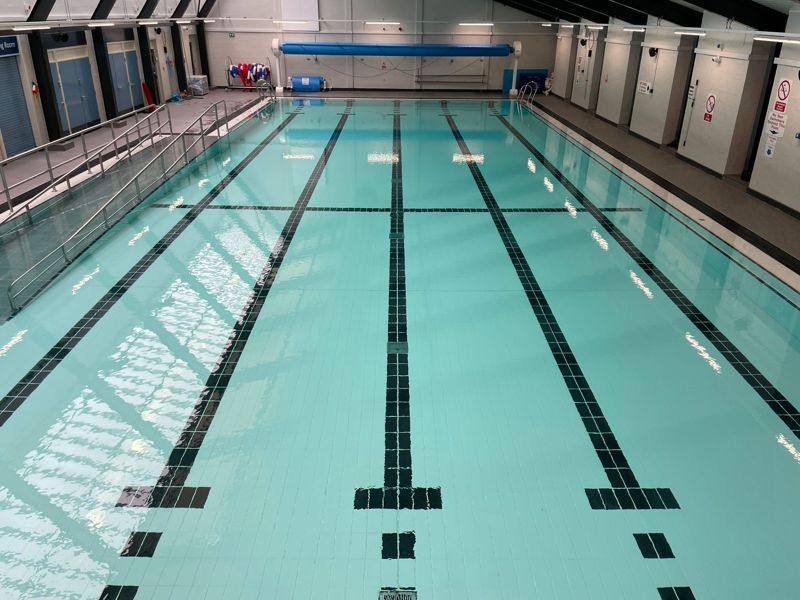
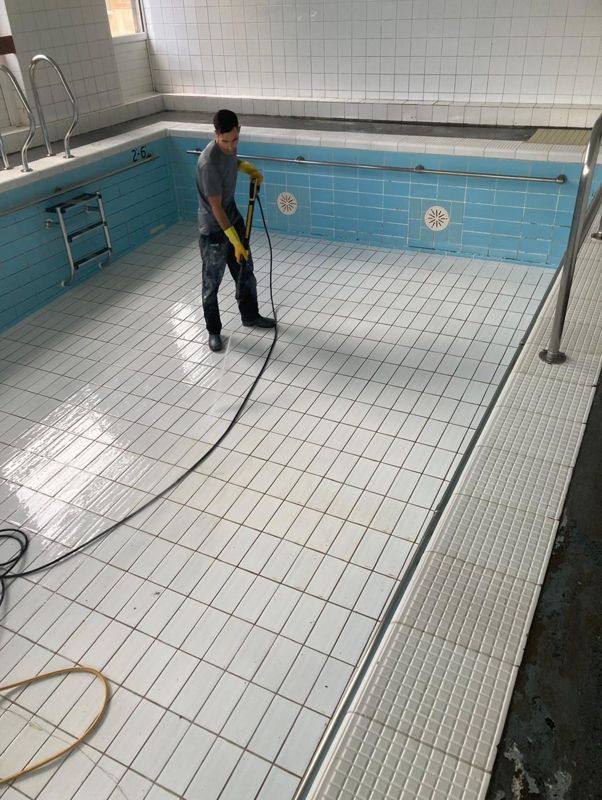
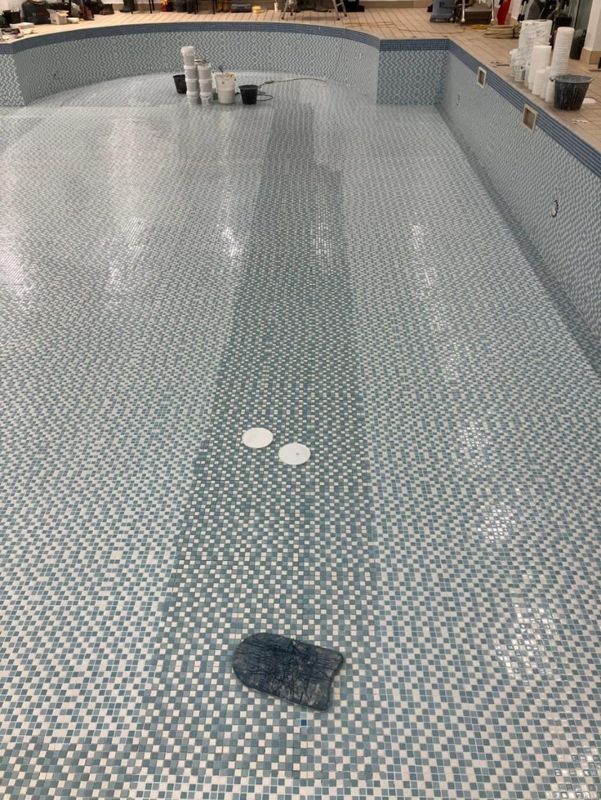
Slip resistance on a pool surround depends on the tile surface, contamination, cleaning, drainage and how people use the area, not on the tile alone. Use HSE guidance, including HSG179 Health and safety in swimming pools, with the tile manufacturer's slip resistance data, and keep the surface clean so its texture can do its job.
Why pool surrounds need particular care
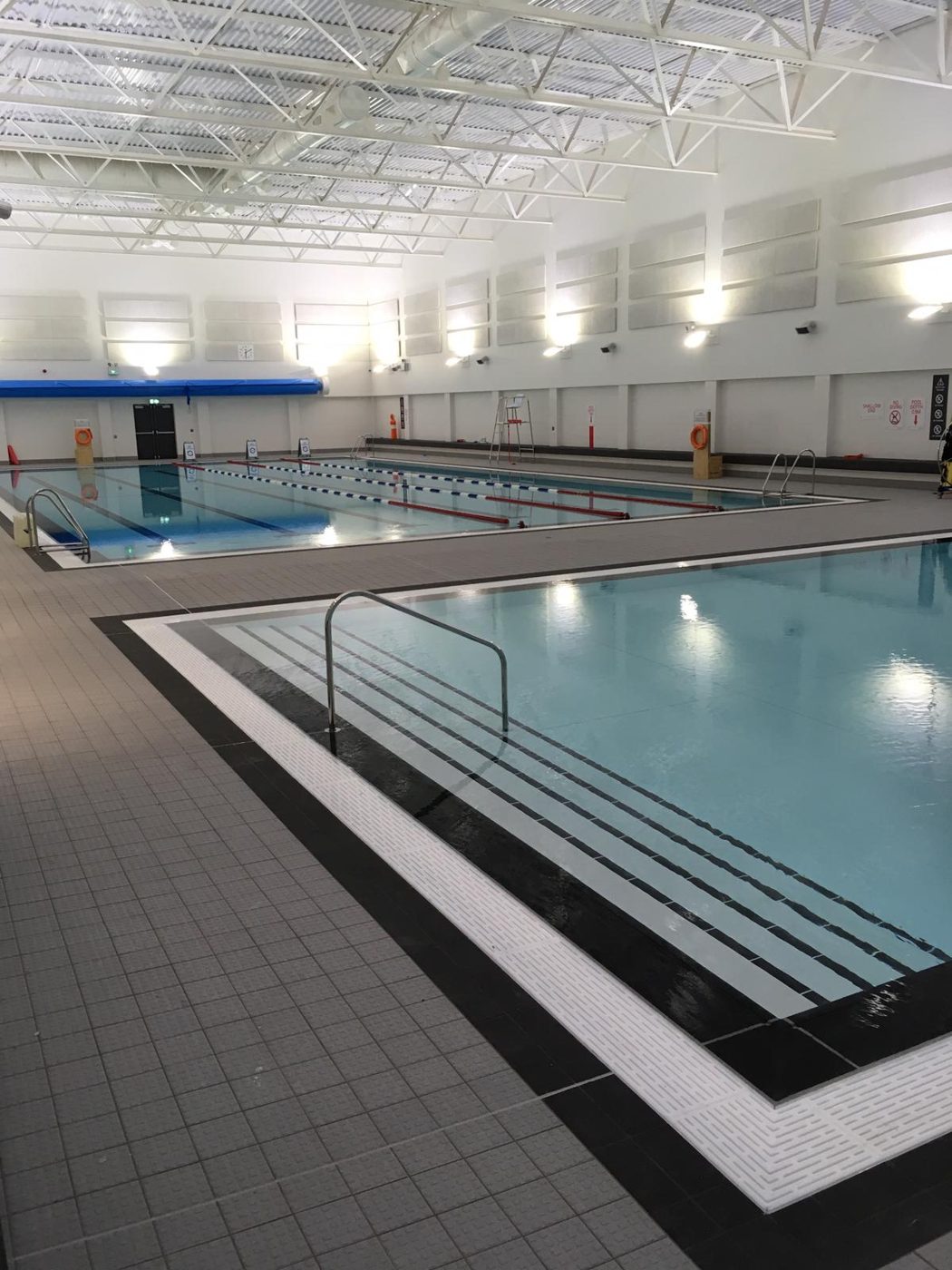
Pool surrounds, steps, changing areas and showers are wet, used barefoot and often busy. Slips here can cause serious injuries, so the floor is a real part of running a pool safely.
No tile makes a surround safe on its own. Slip risk comes from the floor surface together with contamination such as water, soap and body products, the cleaning regime, the environment and the people using it.
Where to find reliable guidance
HSE's HSG179, Health and safety in swimming pools, is the main reference for operators on managing pool safety, and HSE publishes wider guidance on assessing and preventing slips. Start there for any decision about floors around a pool.
For a specific tile, use the slip resistance data published by its manufacturer, including the test method and the conditions it was tested under. If the data is unclear, ask the manufacturer or supplier to explain it before you order.
Understanding slip resistance data
Slip resistance is measured in different ways. In the UK the pendulum test is widely used and is the method HSE generally refers to for assessing floors, with surface roughness readings as a useful indicator alongside it. Some manufacturers also publish ramp test results, barefoot or shod.
Results from different methods cannot be compared directly, and a laboratory result on a new tile may not reflect the floor after fixing, wear and cleaning. Use published figures to compare products, and take advice on what suits the specific area.
- Check which test method a published figure relates to.
- Check whether it was tested wet, and whether barefoot or shod conditions apply.
- Ask whether results apply to the specific finish and colour you are ordering.
- Consider testing the installed floor where there is doubt about its performance.
Cleaning has a big effect
A textured tile only works as intended when its surface is clean. Body oils, soap, sun cream, scale and cleaning residues build up in the texture and can reduce slip resistance over time.
Match the cleaning method to the tile. Textured tiles often need different equipment or products from smooth ones, so follow the tile manufacturer's cleaning guidance. Harsh methods can damage tiles and joints, so try a small test area before changing products or methods.
Design and layout points
Layout affects slip risk as much as the tile. When a surround is designed or refurbished, look at these details.
- Falls and drainage so water does not pond on walking routes.
- Suitable surfaces at steps, ramps and pool entries, where slips can have more serious consequences.
- Clear, contrasting step edges so each tread can be seen.
- Consistent surfaces, avoiding sudden changes in slip resistance between neighbouring areas.
- Matwells, drainage gratings and channel covers that sit flush and are themselves suitable for wet barefoot use.
When surrounds are repaired or retiled
Replacing a few tiles on a surround can introduce a surface that behaves differently from its neighbours. Where possible, use replacements with similar slip characteristics, and treat any difference as part of the operator's risk assessment.
For a full retile, choose with the slip data, the intended use and the cleaning regime in front of you, and bring in whoever does your risk assessments early.
What a tiler can and cannot tell you
A specialist tiler can explain how different tiles are fixed, which ranges include suitable surround and step pieces, and how the finish should be cleaned. They can also make sure falls, joints and transitions are laid properly.
What a tiler cannot do is certify that a floor is safe in every situation. Slip risk depends on how the area is used and managed, so it stays within the operator's own risk assessment, informed by HSE guidance and the manufacturer's data. For an objective measurement of an existing floor, use someone qualified to test floors on site.
Checking an existing surround
If an existing surround worries you, look at cleaning and contamination first. A floor that has turned slippery may simply be carrying residue that the right cleaning will lift. If the surface itself has worn, or the tile was never suitable for wet barefoot use, other options need considering.
Record slips and near misses, with where they happened, and review the area against your risk assessment. It shows where changes are most needed.
Common questions
What slip rating do pool surround tiles need?
There is no single number that applies to every surround. Refer to HSE guidance, including HSG179 Health and safety in swimming pools, and the slip resistance data published by the tile manufacturer, and consider the specific area, its use and its cleaning as part of your risk assessment.
Can anti-slip treatments be applied to existing tiles?
Treatments exist for some surfaces, but results vary with the tile, the product and how the floor is maintained afterwards. Any treatment should be checked with the tile manufacturer and assessed for its effect on appearance, cleaning and the joints.
Why has our surround become more slippery over time?
Usually residue building up in the tile texture, scale, wear of the surface, or a change in cleaning products or methods. Review the cleaning before thinking about replacing tiles.