Brush floors, walls, steps and the waterline regularly, and use only products that are compatible with your pool's water treatment. The surround usually shows staining and scale soonest, so for busy pools we often recommend a professional deep clean of the surround once or twice a year, which does not require draining. Submerged tiles often stay in reasonably good condition, so cleaning inside the pool is usually carried out when it is drained for other works. Every pool is different, so we assess each one before recommending a cleaning plan.
Routine cleaning in a full pool
Most of the work is little and often. Regular brushing of the floor, walls, steps and waterline stops dirt, body oils and thin mineral films building up into something harder to shift.
Waterline tiles collect the most grime because oils and scum float at the surface. A soft pool brush or a waterline pad usually keeps them clean if it is done regularly. Any product used in or near the water must be compatible with the pool's treatment, and its use should be agreed with whoever manages the water chemistry.
Match the cleaner to the problem
There is no single product that cleans every pool problem. Scale, metal staining, algae and general dirt each need a different approach, and the wrong one can etch cement grout or dull a tile finish without shifting the mark.
- White or grey crust, mostly at the waterline: usually calcium scale. See our guide to removing scale.
- Brown or orange marks: often iron or rust. See our guide to rust and stains on pool tiles.
- Black or green spots in the grout that come back after brushing: often algae rooted in porous joints.
- General grey, greasy dirt: body oils, sun cream and dirt, usually lifted with a suitable pool tile cleaner.
Always try a test area first
Before using a new product or a stronger method, try it on a small, out-of-the-way patch. Check afterwards for etching, dulling, residue or colour change in the grout.
Avoid household bleach, scouring powders and abrasive pads that have not been tested on your tiles. Mosaic, textured anti-slip tiles and older glazes can all scratch or dull more easily than you would expect.
Deep cleaning the pool surround
Pool surrounds typically show staining and scale sooner than the pool itself. Surrounds are laid to falls so that water drains away, but staining can build up anywhere across them. Because surround tiles are repeatedly splashed and left to dry, rather than permanently submerged, calcium and residues from treated pool water remain on the surface, and wherever water sits or dries out, those areas can become heavily stained over time without regular cleaning. For busy pools we often recommend a professional deep clean of the surround once or twice a year, which can be carried out without draining the pool. Every pool is different, so we assess each one before recommending a cleaning plan.
A deep clean keeps the surround hygienic and stops calcium and rust marks building up until they stain the tiles for good. The right chemical is used for each deposit, tried on a test area first, then the surround is rinsed and the water and residue are cleared away.
Cleaning inside the pool
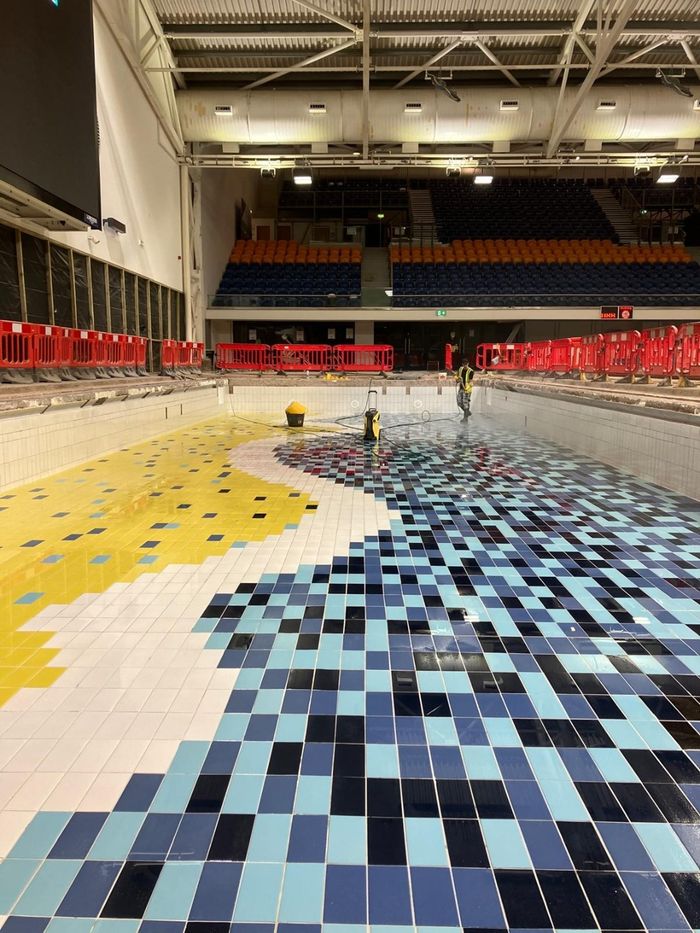
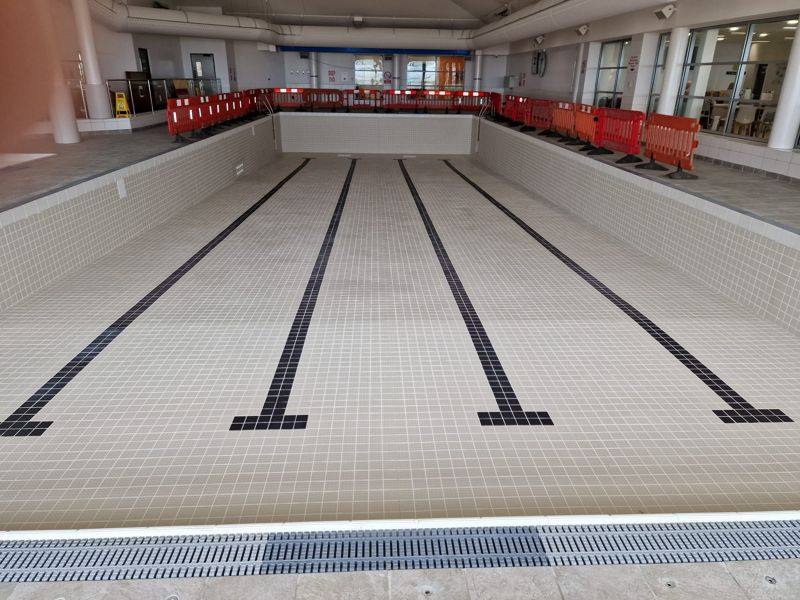
Submerged tiles often stay in reasonably good condition between drain-downs, so most pools, particularly larger commercial pools, are not drained solely for cleaning. Cleaning inside the pool is usually carried out when it is drained for repairs, regrouting or other planned works. Once a pool is emptied, scale and marks can become more visible as the tiles dry. Depending on the pool, a clean, or at least a light clean-down, soon after draining can be worthwhile. Every pool is different, so we assess each one before recommending a cleaning plan; what it needs depends on how well it is maintained and on its quality and condition.
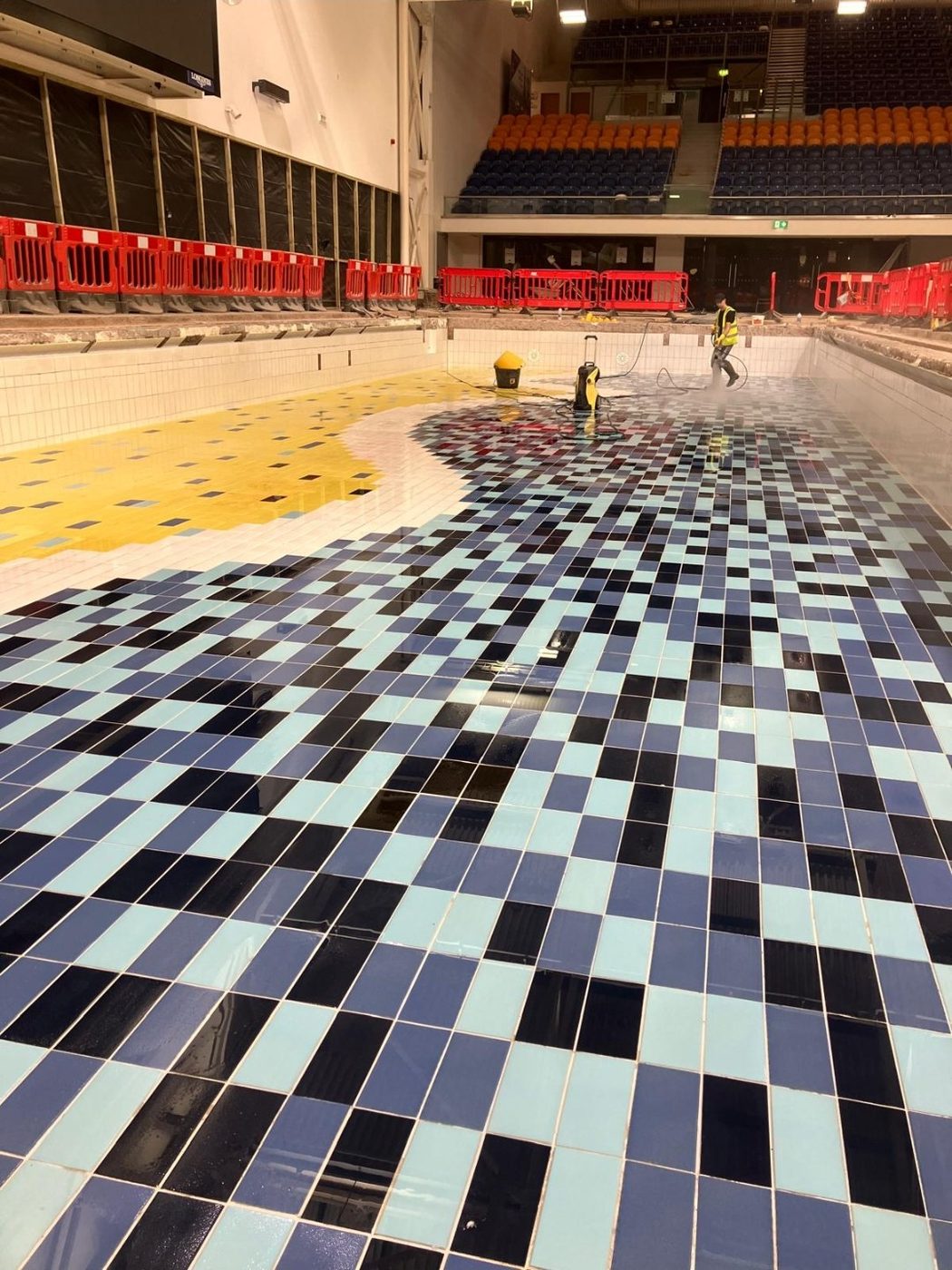
With the pool empty, the floor, walls, steps and channels are cleaned with the right chemical for each deposit, then pressure washed. Water and residue are pumped out, and standing water is wet-vacuumed so nothing is left in the joints.
It is also the best time to look closely at the tiles. Cleaning often reveals missing grout, hollow tiles or the odd broken tile that were hidden under the dirt. We always point these out, because touching them up early is the cheapest way to look after a pool.
When cleaning is not enough
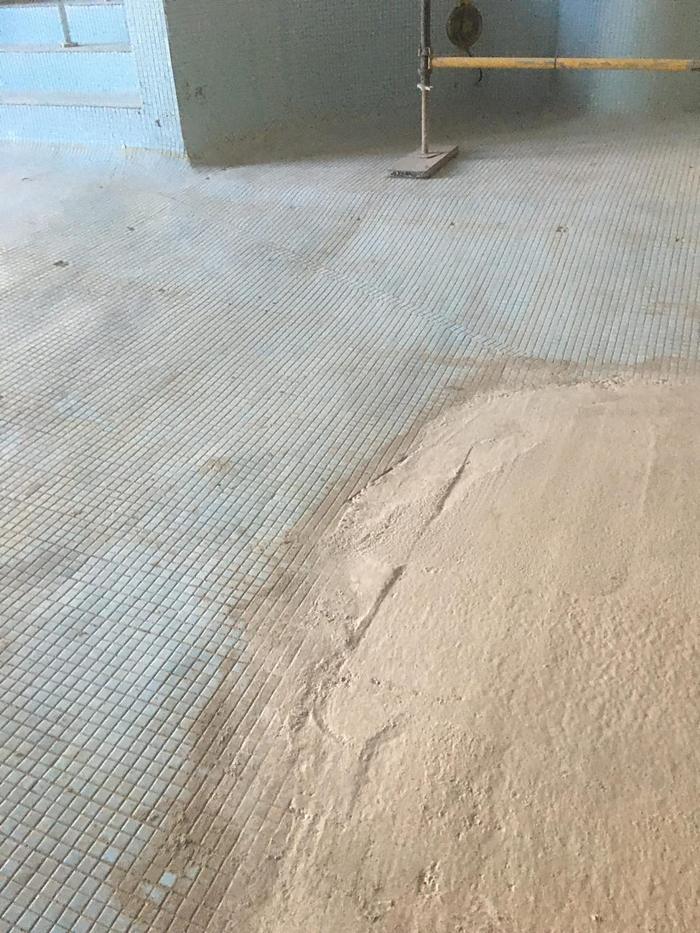
If the grout is eroded, sandy or recessed, dirt and stains sit deep in the damaged surface and come back quickly. Repeated aggressive cleaning only wears the joints further.
In that case, removing the old grout and regrouting, often with a pool-suitable epoxy, is usually the better answer. Send us photos if you are not sure which you need.
Common questions
What is the best thing to clean pool tiles with?
It depends on what is on the tiles. Scale, rust, algae and general dirt each need a different product. Use one that is compatible with your pool's water treatment and try it on a test area first.
Can I use bleach on swimming pool grout?
Household bleach is not recommended. It can affect the pool's water balance and may discolour coloured grout. Use a product designed for pool tiles and agreed with whoever manages the water.
How do you clean the waterline on pool tiles?
Regular brushing with a soft pool brush or waterline pad keeps most waterline grime under control. Hard white crust is usually scale and needs a suitable descaler, tested on a small area first.
How often should a pool be professionally cleaned?
For busy pools, we often recommend a deep clean of the surround once or twice a year, without draining the pool. Inside the pool, cleaning is usually carried out when it is drained for planned works. Every pool is different, so we assess each one before recommending a cleaning plan; what it needs depends on how well it is maintained and on its quality and condition.
Do you have to drain a pool to deep clean it?
Not for the surround, which can be deep cleaned without draining. Submerged tiles often stay in reasonably good condition, so cleaning inside the pool is usually carried out when it is drained for other planned works.
Sources and further guidance
This guide is general information, not legal, health or safety advice for a specific site. Pool operators should follow current official guidance and take advice from competent specialists.