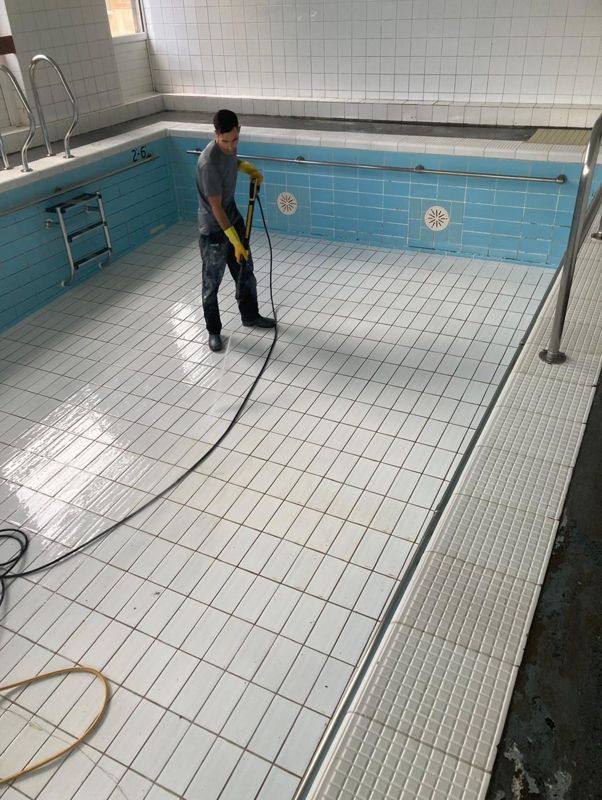
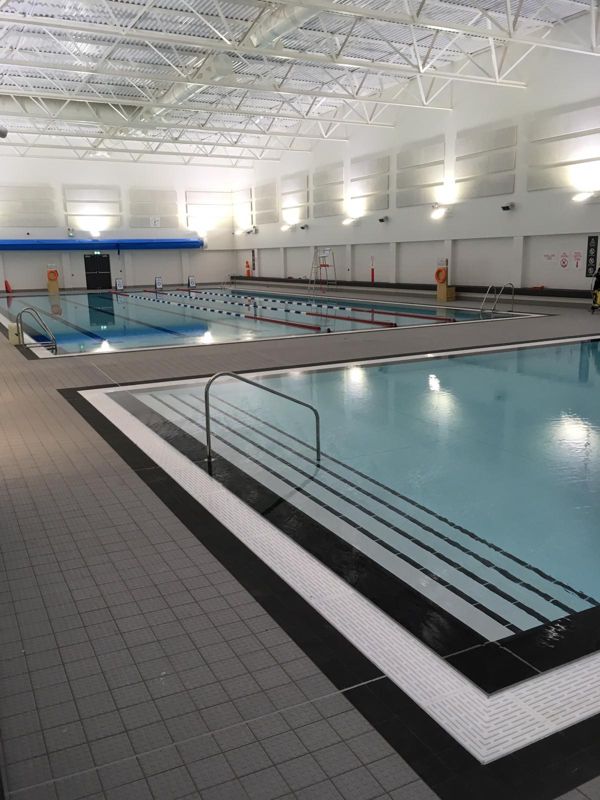
Most tiled pools benefit from a layered routine: daily checks and cleaning of poolsides, steps and channels; weekly brushing of waterlines, corners and grilles; periodic deeper cleans of joints and changing areas; and a full clean and inspection whenever the pool is drained. The right frequency depends on bather load, the finish and the operator's own risk assessment.
Why a written schedule helps
Cleaning that depends on memory tends to slip when the pool is busy. A written schedule makes it clear what is cleaned, how often, by whom and with what. It also gives the operator a record to review if a problem appears, such as a slippery step or recurring black spots.
The schedule below is a starting point, not a standard. Every pool is different, and the operator should adapt it to their own risk assessment, the products approved for their site and advice from their water treatment specialist.
Daily tasks
Daily work is mostly about keeping contamination off walking surfaces and spotting new defects early. Staff should use products approved by the operator, at the dilution the manufacturer specifies, and keep cleaning areas clear of swimmers until they are dry or safe.
- Clean poolside floors, paying attention to routes from changing rooms
- Check and clear overflow channels and grilles of debris
- Wipe or brush step treads and handrail bases
- Walk the poolside looking for chipped, cracked or missing tiles
- Clean changing room and shower floors, rinsing off detergent residue
- Record any defects and report them for repair
Weekly tasks
Weekly tasks reach the places that collect dirt more slowly but are easy to miss. Many operators schedule these at quieter times or before opening.
- Brush the waterline to remove scum and early deposits
- Brush corners, steps and low-flow areas where algae tends to settle
- Clean behind ladders, handrails and around fittings
- Check grout on steps and the waterline for erosion or dark lines
- Inspect movement joint sealant for splits or staining
- Review the defects log and arrange repairs
Periodic tasks
Some cleaning needs more time, specialist equipment or a quieter period, but does not need the pool drained. Monthly or quarterly is common, depending on use.
This is a good point to look at how the surfaces are responding to the routine. If waterline scale is building or joints are darkening despite cleaning, it may be time to talk to your water treatment specialist and a tiling contractor.
- Deep clean of poolside and changing room floors, with thorough rinsing
- Descaling of poolside areas using a product suitable for the tile and grout
- Cleaning of channel interiors and grilles in detail
- Check that floor drainage is clearing water properly
- Photograph problem areas to compare over time
Annual or drain-down tasks
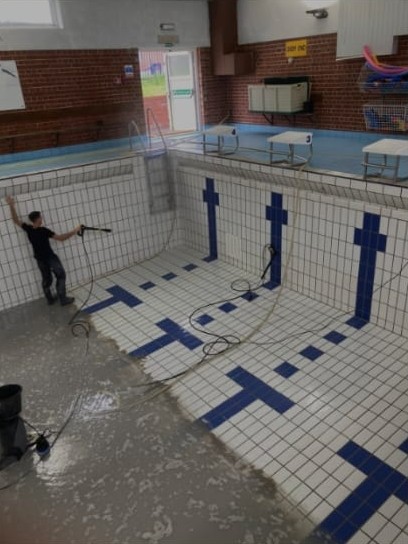
When the pool is drained, the whole tank can be cleaned and inspected. This is usually the only time the floor, walls and lower steps can be properly assessed, so plan it well ahead. Our guide on the annual pool shutdown deep clean covers planning in detail.
On a drained pool we assess the contamination and surfaces first, try a test area, then clean with suitable products and controlled agitation. Loosened soil, rinse water and residue are removed with wet-vacuum equipment, and the finish is checked before handover.
- Full clean of floor, walls, steps and waterline
- Removal of scale and staining with methods suited to the finish
- Tap test screening of tiles for hollow areas
- Grout and movement joint inspection
- Local tile repairs and regrouting where needed
- Updated record of condition for the risk assessment
Matching methods to the surface
Cleaning products and methods should suit the tile and the grout. The wrong chemical can erode cement grout and mark some tile faces. High pressure washing can damage weak joints. Too much detergent, or residue left behind, can leave a film that affects slip resistance. HSE's guidance on floor cleaning makes the point that detergent concentration matters and that too strong a solution can be as ineffective as too weak.
If you are unsure whether a product is suitable for your finish, check with the tile or grout manufacturer, or ask your tiling contractor to look at it.
Keeping the schedule realistic
A schedule only works if it fits around the pool's opening hours and the staff available. Tasks that keep being missed may need a different time slot or a different person rather than more emphasis. Reviewing the schedule after each drain down, when the condition of the surfaces is clear, helps keep it in step with what the pool actually needs.
Who does what
Most daily and weekly tasks are carried out by the operator's own staff. Periodic and drain-down work often involves contractors. PoolRevive carries out pool cleaning, tile repairs and regrouting, mainly when pools are drained. We do not carry out water treatment or chemical dosing; those stay with the operator's specialists.
HSE's floor cleaning guidance says effective training and supervision are essential to get the standard of cleaning right. Cleaning chemicals also need to be covered by the operator's COSHH assessment.
Common questions
How often should a pool be drained for cleaning?
There is no single answer. It depends on the type of pool, its use, the water treatment and the operator's policies. Many operators drain periodically for cleaning and maintenance, and the timing is usually agreed with their water treatment specialist.
Can staff clean grout with acid?
Acid-based products can dissolve scale but can also attack cement grout and some finishes. Use only products approved for the surface, at the manufacturer's dilution, and test a small area first.
Should cleaning be recorded?
Recording cleaning helps operators show that the schedule is being followed and spot patterns, such as a step that keeps becoming slippery. How records are kept is for the operator to decide.
Can you take on our routine daily cleaning?
Our cleaning work is mainly deeper cleaning, typically when a pool is drained, alongside repairs and regrouting. Daily and weekly cleaning is usually carried out by the operator's own staff.
Sources and further guidance
This guide is general information, not legal, health or safety advice for a specific site. Pool operators should follow current official guidance and take advice from competent specialists.