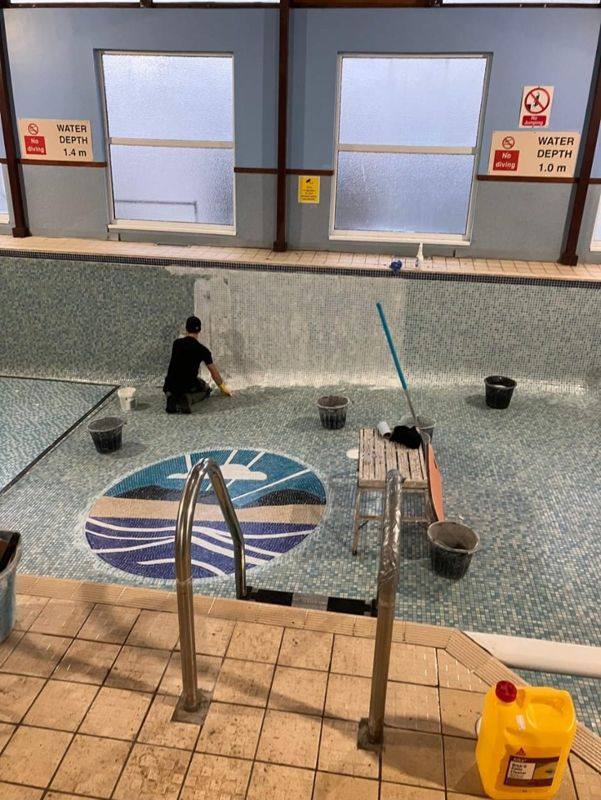
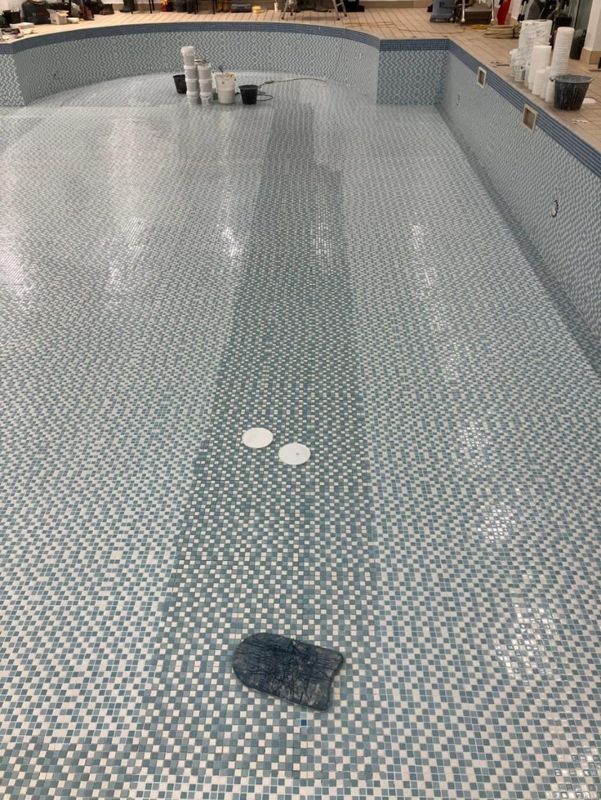
A mikveh immersion pool needs tiles suitable for permanent immersion, fully filled joints and a grout that copes with warm, treated water. Epoxy grout is often a good choice because it is dense and easier to keep clean, but it suits only sound, well bonded tiles. Any material choice that might affect the mikveh itself should be checked with your rabbinic authority.
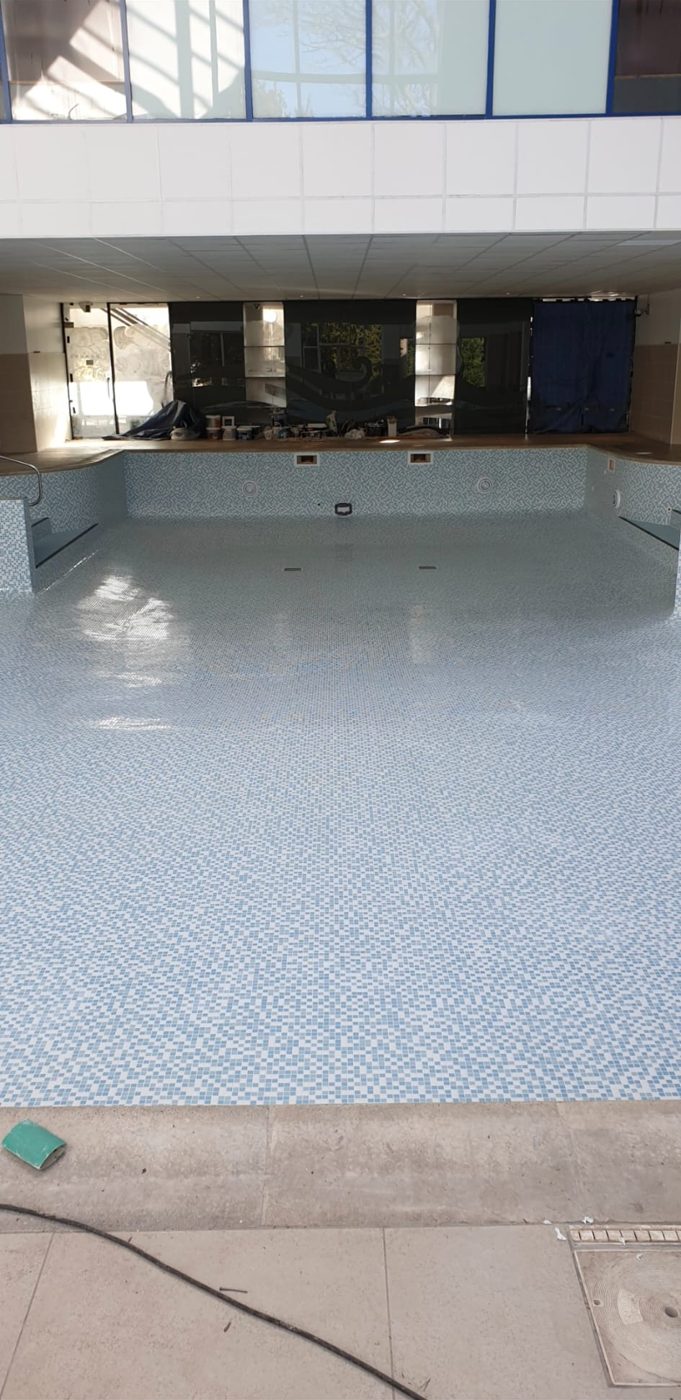
Why mikveh conditions are demanding
A mikveh immersion pool is usually small, often warm and used by many people in turn. The water is commonly heated for comfort and treated for hygiene, and it may be filtered and topped up regularly. In that respect it has a lot in common with a spa or hydrotherapy pool, and it is hard on tiling materials over time.
The immersion pool is only part of the picture. Preparation rooms, bathrooms and showers around it are wet areas in daily use, with their own humidity, cleaning and slip demands.
Tiles for the immersion pool
Tiles in the immersion pool need to be suitable for permanent immersion and fixed with adhesives designed for submerged use. Porcelain and glass mosaic are both widely used in pools. Mosaic follows curves and steps well, while larger tiles mean fewer joints to keep clean but need a flatter background.
Some communities prefer particular materials or finishes in the mikveh, and some materials may raise questions for the rabbinic authority. We do not decide those questions. We set out the practical options and the committee confirms the choice with whoever supervises the mikveh before anything is ordered.
- Suitability for permanent immersion in warm, treated water
- Surface texture on steps and floors where people stand
- Colour and contrast, so step edges and the pool floor are easy to see
- Availability of spares for future repairs
- How easily the surface can be cleaned by the people looking after the building
What happens to grout in warm water
Cement-based grout slowly wears in pool water, and warmth tends to speed up chemical processes. Water that is out of balance can dissolve cement grout and leave joints sandy and recessed. Harsh cleaning, such as the wrong chemical for the job or aggressive scrubbing, can add to the wear.
Once a joint is recessed or open, dirt and biofilm can collect in it and it becomes harder to clean properly. Missing grout also lets water reach the bedding behind the tiles. Deal with worn grout early rather than waiting for tiles to loosen.
When epoxy grout helps, and when it does not
Epoxy grout is dense, resistant to many cleaning chemicals and less absorbent than most cement grouts, which makes it a popular choice for warm, heavily used pools. It can help a mikveh stay cleaner between deep cleans.
It is not always better, though. Epoxy needs careful application and cleaning off, it must cure fully before the pool is refilled, and it cannot fix tiles that are hollow or loose, or a background that is moving or leaking. Movement and perimeter joints take a flexible sealant, not epoxy or cement grout. And no grout comes with a guaranteed life: water chemistry, cleaning and use all affect it.
Regrouting without disturbing what matters
Regrouting a mikveh means raking out old grout, cleaning the joints and refilling them to full depth. Around reservoir connections, openings, inlets and pipework we take extra care, and we do not narrow, cover or alter any of them without the approval of whoever supervises the mikveh. Where we are unsure whether an opening is significant, we ask.
Tiling choices that support hygiene
Good hygiene in a mikveh depends mainly on the water treatment and cleaning regime, which are set by the people who run it and their specialists. Tiling can make that job easier or harder.
- Joints fully filled and finished flush, with no voids where dirt can sit
- Clean, well formed junctions at corners, steps and changes of plane
- Sealant at movement joints kept in good condition and replaced when it fails
- Preparation room floors laid to falls so water drains rather than pooling
- Cleaning products chosen to suit the grout, used to the manufacturers' instructions
Cleaning and looking after the finish
Regular gentle cleaning is kinder to tiles and grout than occasional harsh treatment. Before any deep clean or descaling, we test products on a small area first. If scale or staining keeps returning, ask whoever looks after the water to review the balance; the cause often lies there rather than in the tiles.
Common questions
Is epoxy grout suitable for a mikveh?
It is often a good practical choice in warm, treated water where the tiles are sound. If there is any question about materials in the mikveh itself, the committee should confirm with its rabbinic authority.
Why is the grout in our mikveh turning dark?
Dark joints can be surface staining, biofilm in recessed grout, or grout that has worn and become porous. We look at the joints and test cleaning on a small area before recommending regrouting.
Can new tiles match our existing mikveh tiles?
Current ranges can often be matched closely. Older or discontinued tiles may only be approximated, so we discuss options, including any spare tiles you hold, before work starts.
How long must new grout cure before refilling?
It depends on the product and conditions. We follow the manufacturer's instructions and do not refill early to meet a date.