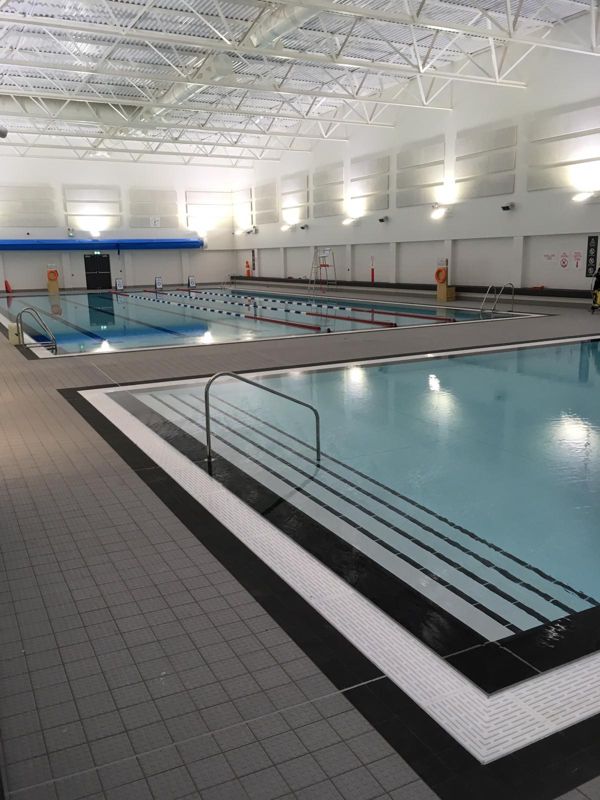
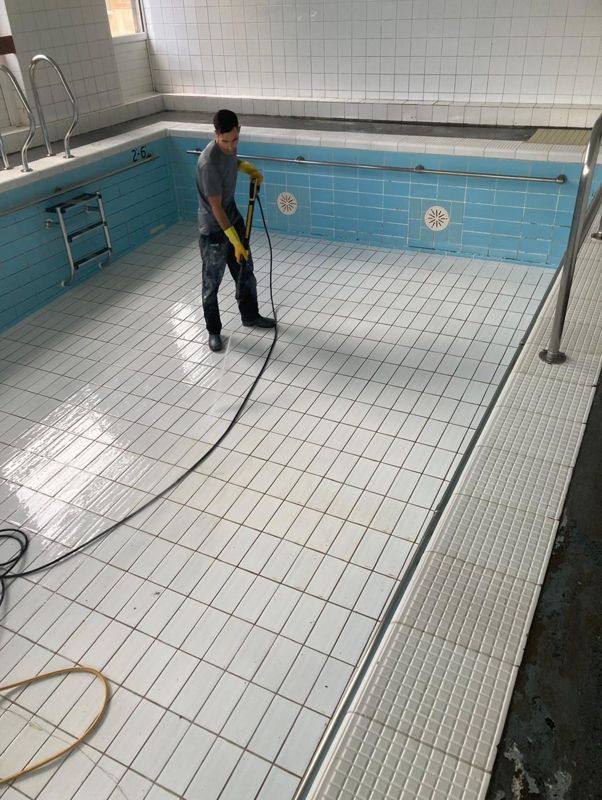
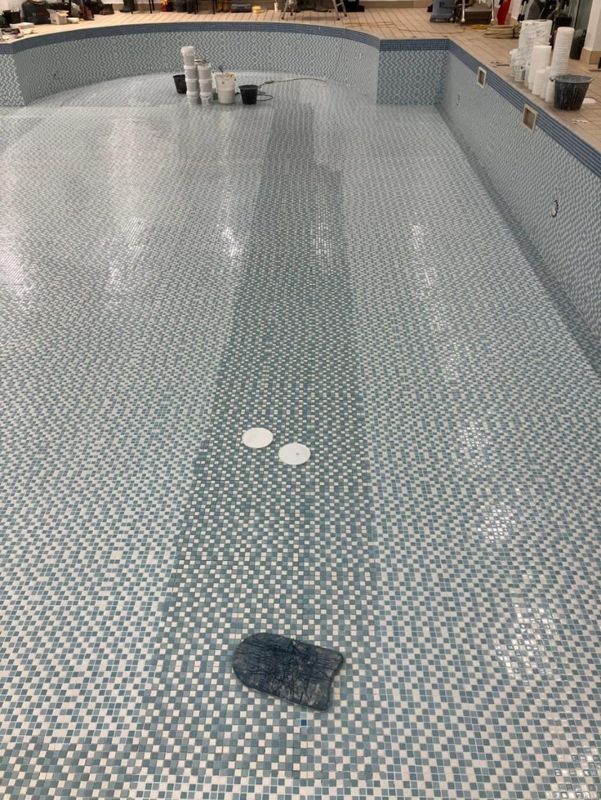
Safer mikveh steps usually come from sound, suitably textured step tiles, clearly visible step edges, firm handrails and lighting that lets people see the steps while respecting privacy. Preparation room floors need suitable wet area tiles, sound grout and falls to drains. Any change to the immersion pool's design should be agreed with your rabbinic authority first.
Why the steps deserve particular attention
In a mikveh, everyone uses the steps. People walk down into warm water and back up again, barefoot, sometimes without their glasses, and sometimes in soft lighting chosen for privacy. Some are elderly, pregnant or less steady on their feet. Much of the risk in the building sits on the steps and handrails.
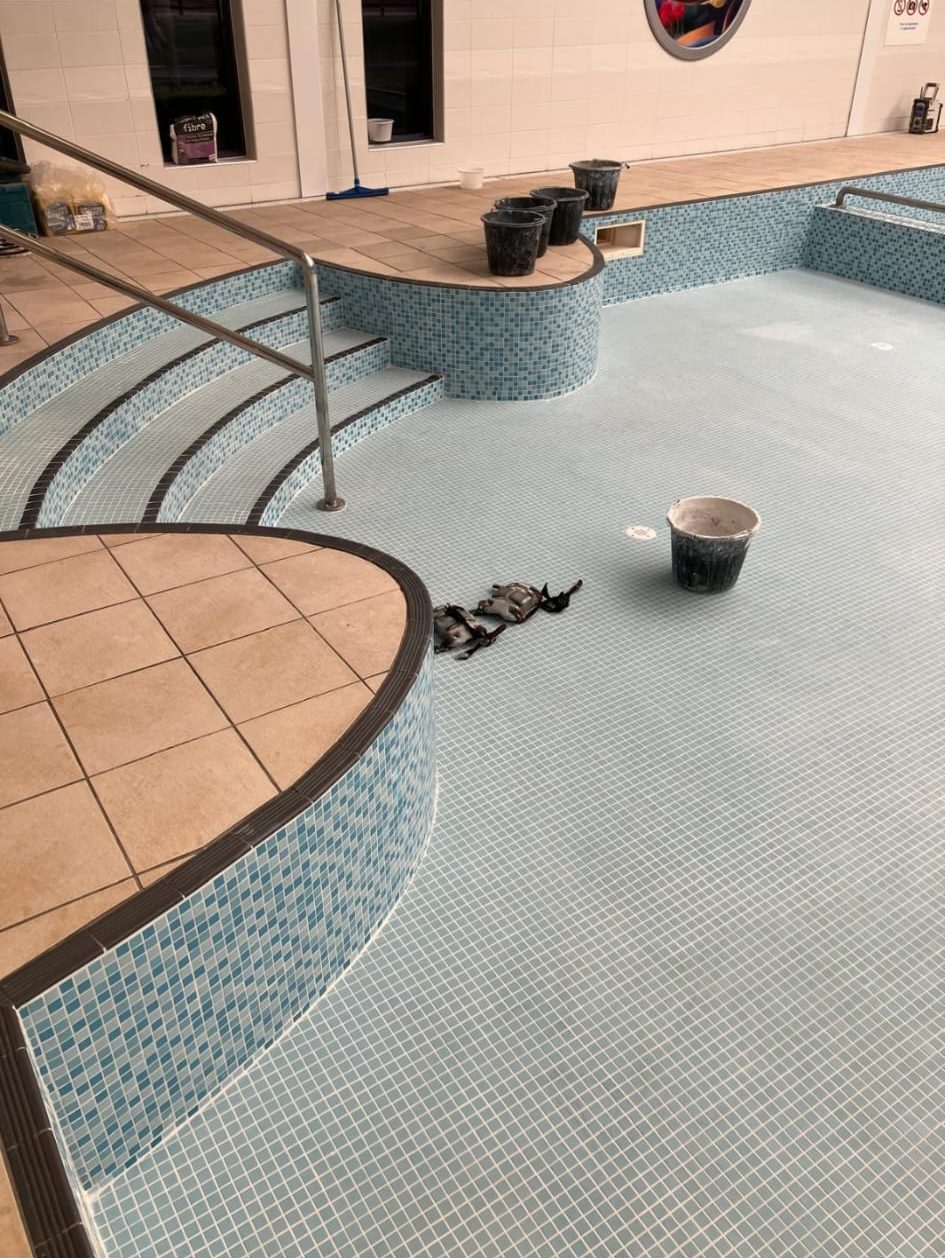
Many immersion pools are compact, so steps can be steep or narrow by the standards of a public pool. We cannot change the layout of a mikveh on our own initiative, but we can make sure the tiled surfaces on the existing steps are as safe and as easy to see as practical.
Step tiles and slip considerations
Smooth glazed tiles that look attractive on a wall can be slippery underfoot when wet. For treads and landings, tiles with a suitable textured surface for barefoot wet areas are usually a better choice. Slip resistance is not only about the tile: worn or recessed grout, a film of residue from cleaning products and build up of scale all change how a step feels.
Texture has to be balanced with cleaning. A heavily textured surface can be harder to keep clean, so we discuss options that suit both safety and the mikveh's cleaning regime, and the committee confirms the choice with whoever supervises the mikveh.
- Treads and landings tiled with surfaces suited to wet barefoot use
- Contrasting nosing tiles or edge bands so each step edge is easy to see
- Sound, flush grout so feet do not catch on open joints
- Cracked or chipped step tiles replaced promptly
- Cleaning products chosen so they do not leave a slippery film
Handrails
Handrails give people something to hold as they enter and leave the water. Where they are fixed through tiles, the tiling around the fixing needs to be sealed and sound so water does not track behind it, and loose or corroded fixings should be dealt with by the appropriate trade.
If the committee is considering adding or changing handrails, raise it with the rabbinic authority and the mikveh's designers before any drilling, because fixings in the immersion pool may need their agreement. We tile neatly around agreed fixings and make good afterwards.
Lighting and visibility
Lighting in a mikveh is often soft, which suits privacy and calm. It still needs to be enough for people to see each step clearly. Colour contrast between treads, nosings and the pool floor helps a great deal, especially for anyone who has taken their glasses off.
Lighting itself is a matter for an electrician and the committee. From a tiling point of view, we can help by choosing finishes that make step edges stand out without adding glare.
Preparation room and bathroom floors
Preparation rooms are where people bathe and get ready before immersion, so the floors are wet, warm and walked on barefoot. Suitable wet area floor tiles, sound grout, and floors laid to falls so water drains away all reduce the risk of slips.
Where showers drain poorly or water collects in the same places, it is often a sign that falls or drains need attention. We point out what we notice so the committee can decide what to do.
- Floor tiles suitable for wet barefoot areas
- Falls to drains checked before retiling
- Movement joints at perimeters and thresholds kept flexible
- Junctions between floor and shower areas sealed properly
Care, privacy and modesty during the works
The way work is carried out in a mikveh matters. We keep the team small, agree working hours and access with the committee, and plan around opening hours and the community's calendar. Where part of the building stays open, the working area is separated and attendants know when we are on site.
Our role is limited to the tiling. Decisions about the mikveh itself, including anything that affects reservoir connections, openings or the immersion pool's design, are made by the rabbinic authority, and we work to them.
Looking after steps between refurbishments
Regular checks by attendants catch most problems early. Look for open or dark joints on treads, tiles that sound or feel loose, chips on nosings, and any area that feels slippery after cleaning. A small repair now is far less disruptive than a long closure later.
Common questions
Can we make existing mikveh steps less slippery without retiling?
Sometimes. Removing scale and cleaning residue, and regrouting worn joints, can improve how steps feel. Where the tiles themselves are too smooth, replacing treads is often the more reliable route.
Can contrasting step edges be added to a mikveh?
Often, by replacing nosing tiles with a contrasting colour. As it changes the immersion pool, the committee should confirm it with the rabbinic authority first.
Who decides on new handrails in the immersion pool?
The committee, with the rabbinic authority and the mikveh's designers. Fixings are installed by the appropriate trade, and we tile around them.