Start with tiles the manufacturer states are suitable for swimming pools and permanent immersion. Then weigh slip resistance where people walk barefoot, tile size against the pool's shape, colour and markings, available trims and nosings, and whether the range will still be made in years to come. Choose the adhesive, grout and movement joints alongside the tile, not afterwards.
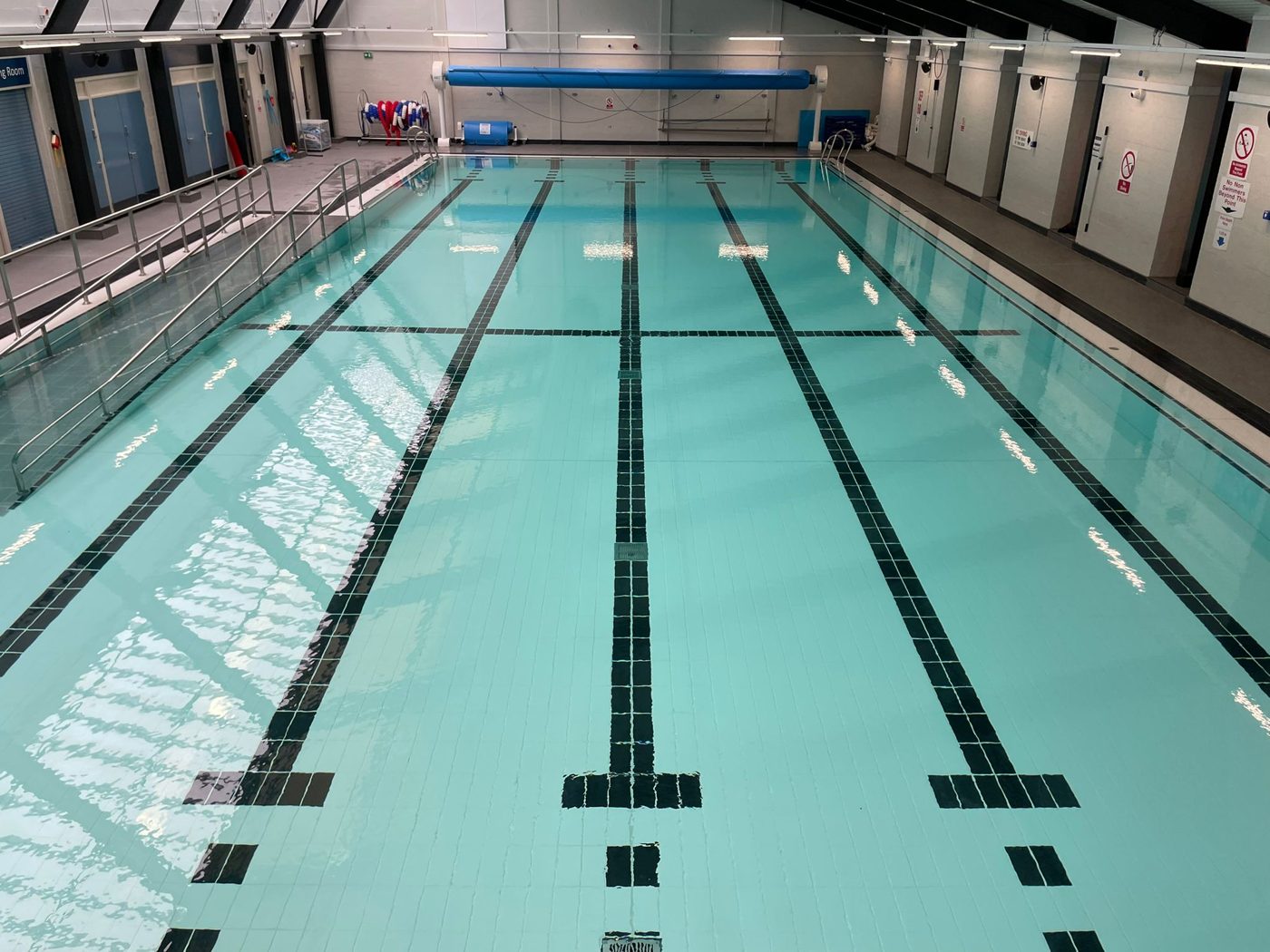
Start with suitability for pool use
A tile can look right for a pool and still be unsuitable. Pool tiles sit permanently in treated water, go through temperature changes and are cleaned often. The manufacturer's technical data should confirm the tile is suitable for swimming pools and for the area where it will be fixed.
Check whether the data treats immersion, surrounds, steps and changing areas separately, because a range may recommend different finishes for each.
Consider the whole tiling system
The tile is only as good as what holds it. Adhesive, grout, movement joints, background preparation and any waterproofing need to be compatible with each other and suitable for immersion.
BS 5385-4 covers the design and installation of ceramic tiling in specific conditions, including swimming pools, and is a useful reference for designers and installers. Manufacturers' instructions for each product should also be followed.
Slip resistance for wet areas
Floors around the pool, steps and shallow areas where people stand need appropriate slip resistance for wet barefoot use. The right choice depends on where the tile is going, how the area is used and how it will be cleaned.
Use the slip resistance data published by the tile manufacturer, alongside HSE guidance for swimming pools. Rougher surfaces are usually harder to keep clean, so think about slip resistance and cleaning together.
Tile size and the shape of the pool
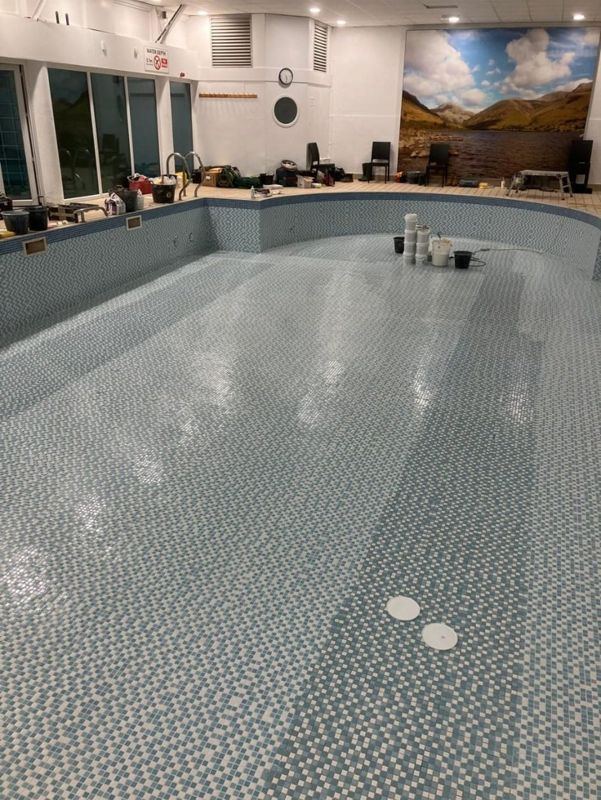
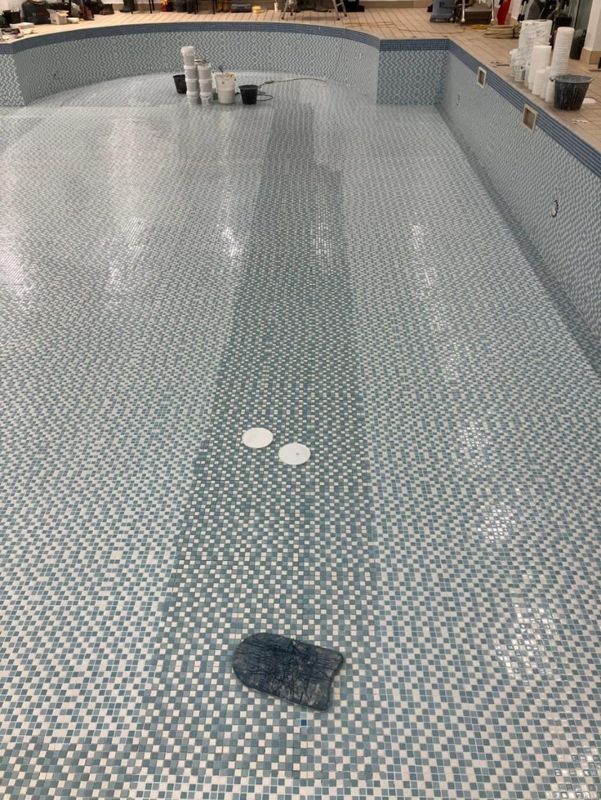
Small mosaics follow curves, steps and features more easily, while larger tiles suit flat, straight runs. The choice affects how the pool looks, how many joints there are and how carefully the background must be prepared.
Tile size also affects how lane lines, targets and depth markings are formed, and how well cuts can be planned around fittings.
Larger tiles need a flatter background, so the state of the walls and floor can limit which sizes are practical without extra preparation.
Colour, markings and appearance
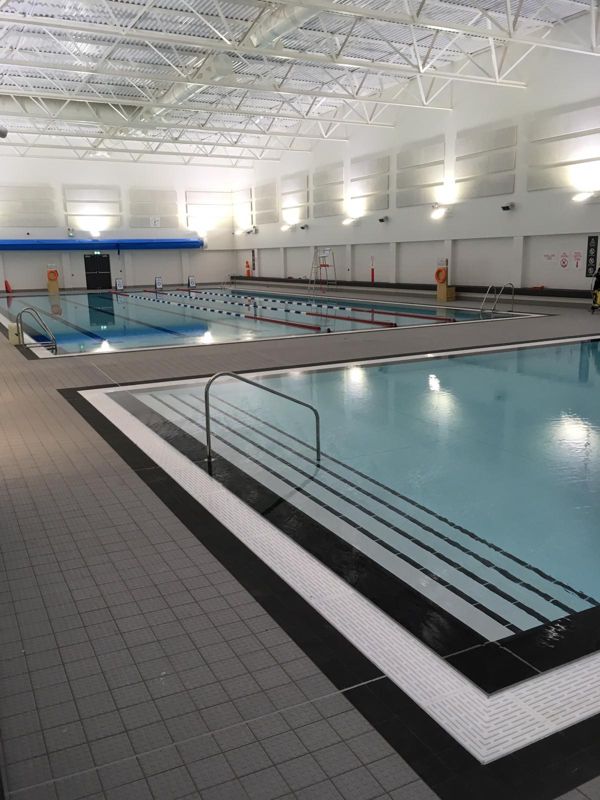
Colour changes how the water looks. Lighter tiles tend to make it look brighter; darker colours give depth but can show scale and residue differently. Lane lines, step edges and depth markings must stay clearly visible, and contrasting nosings help people see each step.
Commercial operators should check what markings the pool needs for its intended use. Private owners may care more about how the pool looks in daylight and under its lights.
Choosing tiles for a repair or part retile
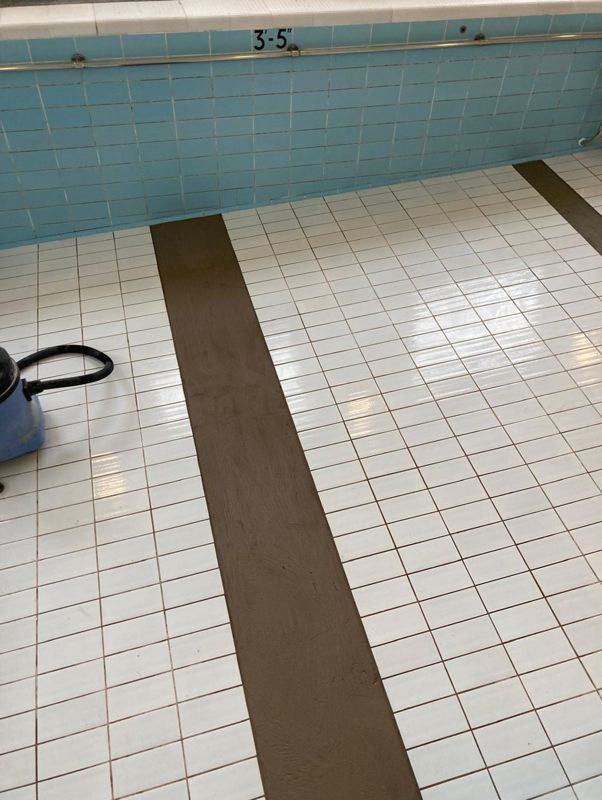
When only part of a pool is being retiled, the choice is shaped by what is already there. The new tiles need to sit at the right level against the existing ones, line up with joints and markings, and look acceptable next to tiles that may have aged.
If an exact match is not available, the options include a close match from another range, a deliberate contrast such as a band, or retiling a whole defined area so the change of tile follows a natural line. Thickness and size matter as much as colour, because a small difference can leave an edge proud or a joint misaligned.
Practical points that are easy to overlook
With the tile chosen and confirmed as suitable, a few details still need checking. They are easy to miss at design stage and awkward to fix later.
- Availability of matching trims, nosings, edge and channel tiles.
- Whether the tile is likely to stay available for future repairs.
- Batch and shade variation, and ordering enough from one batch.
- Spare tiles to keep for future repairs.
- How the surface will be cleaned and what products are compatible with it.
- Lead times, especially for special colours or shapes.
Taking advice
A specialist pool tiler can help weigh appearance against practicality. On commercial pools the choice may also need to fit a designer's or consultant's specification.
Whatever you choose, look for confirmed suitability for pool use, clear slip resistance data where people stand, compatible system products and a plan for repairs later on.
Ask to see a sample in the conditions it will be used in. A tile looks quite different dry on a desk, wet under pool hall lighting and under water.
Common questions
Can I use porcelain tiles in a swimming pool?
Some porcelain tiles are suitable for pool use and some are not. Check that the manufacturer confirms suitability for immersion and swimming pool use, and that the adhesive and grout system is suitable for the tile and conditions.
Should I keep spare tiles after a pool is tiled?
Yes. Spares from the same batch make future repairs far easier to match, particularly if the range is later discontinued.
Do pool steps need different tiles?
Steps often need contrasting nosings or edge tiles so each step can be seen clearly, and suitable slip resistance where people stand. Many tile ranges include specific step and edge pieces for this purpose.
Are glass mosaics suitable for pools?
Many glass mosaics are designed for swimming pools, but not all. Check that the manufacturer confirms suitability for immersion, follow their guidance on adhesive and grout, and consider whether the finish needs appropriate slip resistance where people will stand on it.