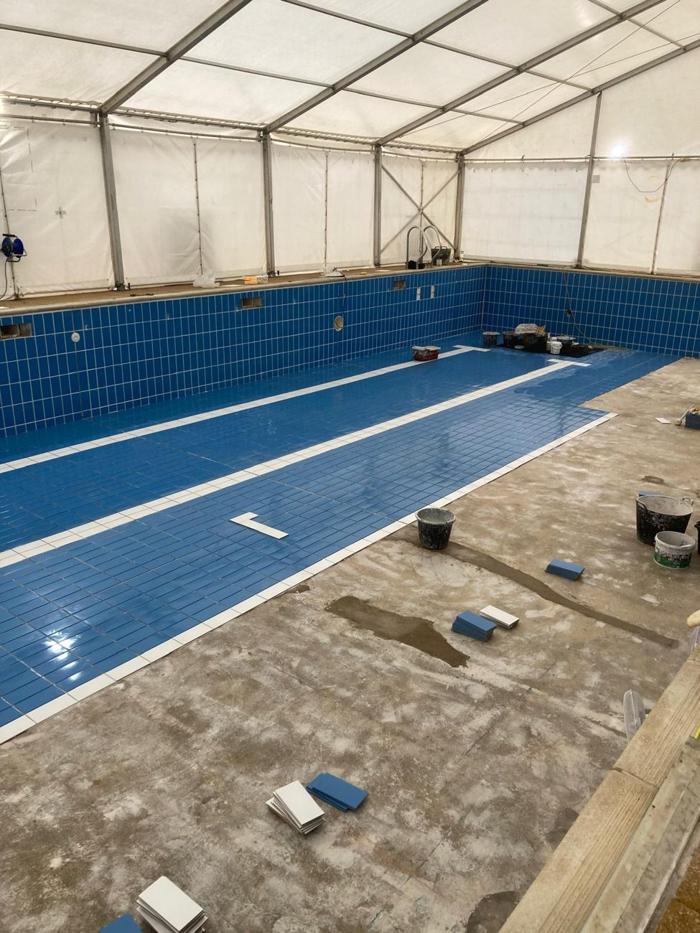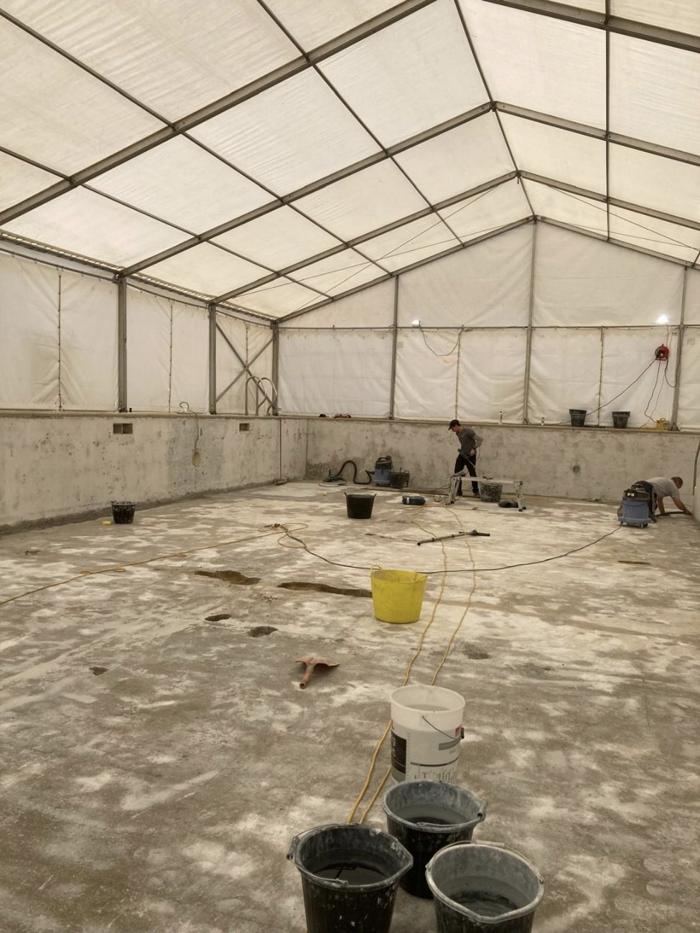
A professionally installed tiled finish can provide a durable, long-term finish that is easy to keep clean, and most commercial pools in the UK are tiled. Plaster (often called marbelite) costs less to apply and is renewed periodically. The right choice depends on how the pool was built, how heavily it is used and your budget.
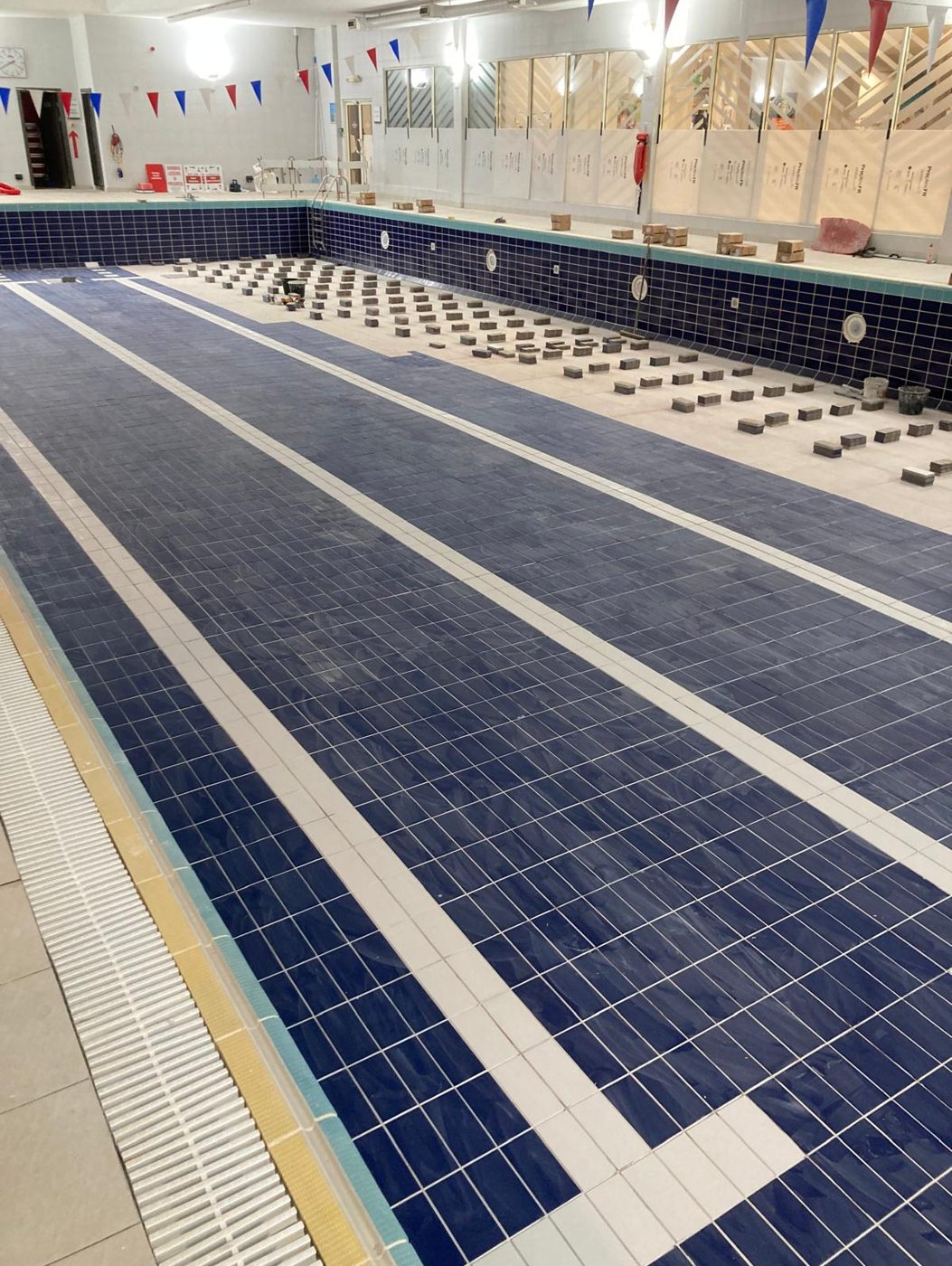
Two different finishes
A plastered pool has a cement-based render, often with marble dust in the mix, applied over the concrete shell. A tiled pool has ceramic, porcelain or mosaic tiles fixed to the shell with pool adhesive and grouted with cement or epoxy grout.
Both sit on a concrete structure, and neither is the part that holds the water in. That job belongs to the shell and, in many pools, a waterproofing layer behind the finish.
How plaster wears
Plaster is softer and more porous than a glazed tile. Over time it can roughen, etch, stain and develop small cracks, especially where water balance is not kept steady. A rough plaster surface is harder to clean and can be uncomfortable on feet.
How long pool plaster lasts depends heavily on water chemistry, use and how well it was applied, and it is refinished periodically as it wears.
How tiles wear
A glazed tile surface is hard, smooth and resists staining. In a tiled pool the weak points are usually the grout joints and the bond behind the tiles, not the tile faces. That is why many tiled pools are kept going for decades with regrouting and targeted repairs rather than a full renewal.
Tiles also give you lane lines, step edges, depth markings and mosaic detail that last as long as the tiles themselves.
- Tiles: hard, smooth surface that is easy to clean, higher cost to install
- Plaster: lower cost to apply, more sensitive to water balance
- Tiles: maintenance is mostly grout and the odd repair
- Plaster: maintenance means periodic refinishing of the whole surface
Which is better for your pool?
Busy commercial, school and hotel pools are usually tiled, because a hard glazed surface suits heavy use and frequent cleaning. For a private pool, plaster can make sense where budget is the main concern and you accept that it will need refinishing from time to time.
Changing a plastered pool to tiles is possible, but the shell needs assessing first, and the change in level and thickness has to be planned around fittings, steps and edges.
What we do
PoolRevive works on tiled pools: tile repairs, regrouting and full retiling. We do not apply plaster or render finishes. If you have a plastered pool and are thinking of tiling it, send us photos and we will tell you honestly whether it looks like a job for us.
Common questions
Is it better to tile or plaster a pool?
It depends on the pool. A professionally installed tiled finish can be a durable, long-term option and is easy to clean, which is why most commercial pools are tiled. Plaster costs less to apply and is refinished periodically.
How long should a pool replaster last?
It depends on water chemistry, use and workmanship, so there is no fixed figure. Unstable water balance is one of the main things that shortens its life.
Can you tile over pool plaster?
Sometimes, if the plaster and the shell behind it are sound and well bonded, but it needs assessing first. Loose or hollow plaster has to come off, otherwise the new tiles inherit its problems.
Do you replaster pools?
No. PoolRevive works on tiled pools only. We can advise on whether a plastered pool is suitable for tiling.
Sources and further guidance
This guide is general information, not legal, health or safety advice for a specific site. Pool operators should follow current official guidance and take advice from competent specialists.