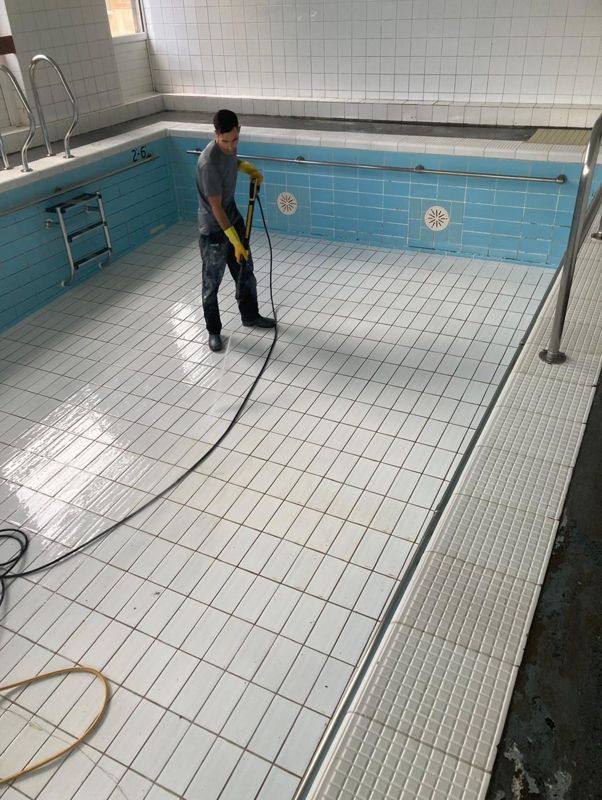
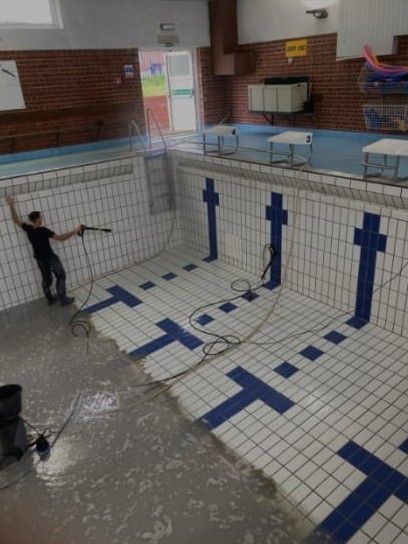
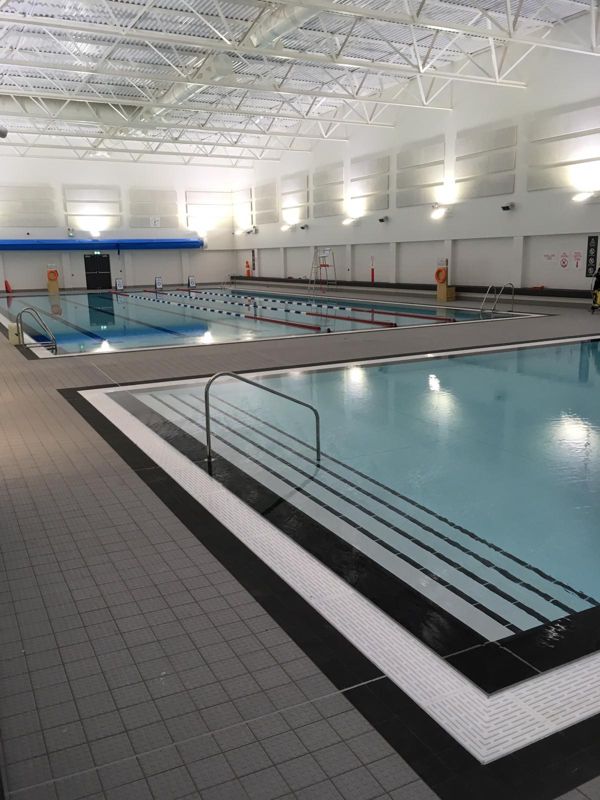
Treat every tile cleaner as a hazardous substance to be managed under COSHH: assess the risks, read the safety data sheet, use suitable protection and never mix products. Try a small area first, ventilate well, rinse and extract residue thoroughly, and keep cleaning chemicals completely apart from the pool's water treatment chemicals.
COSHH applies to cleaning products
The Control of Substances Hazardous to Health Regulations, known as COSHH, require employers to manage substances that can harm health at work. HSE sums it up as planning, managing and monitoring those substances, and identifying, assessing and controlling the risks they pose.
Many tile cleaners, descalers and degreasers fall within COSHH. So do the operator's water treatment chemicals, which are a separate and more specialised area. Operators should make sure all of them are covered by their assessments.
Read the safety data sheet first
The product's safety data sheet sets out its hazards, the protective equipment needed, safe storage and what to do in an emergency. The product label and technical data give dilution rates, contact times and the surfaces it is suitable for.
If a product is not described as suitable for the tile, the grout or the setting, do not assume it is. Check with the manufacturer or a competent contractor before using it.
Never mix products
Mixing cleaning products can cause dangerous reactions, including the release of harmful gases. This is a particular concern around pools, where water treatment chemicals are stored and handled on site.
Keep cleaning chemicals away from pool plant rooms and chemical stores, use clean, clearly labelled containers, and never pour one product into another or into equipment that has held something else. Rinse surfaces between different products where the manufacturer's instructions call for it.
- Never mix acid-based and chlorine-based products
- Keep tile cleaning products separate from water treatment chemicals
- Do not decant into unlabelled containers
- Follow the manufacturer's dilution, not a stronger guess
- Rinse thoroughly before changing products
Test areas protect the finish
A product that is safe for people can still damage a surface. Acid-based descalers can etch some glazes and natural stone, and erode cement grout. Some cleaners can discolour epoxy grout or sealants. A small test area, checked after rinsing and drying, helps confirm the method before broader cleaning.
We try a small patch before any broad cleaning and pick the method for the actual soiling, not the strongest product on the van.
Ventilation and enclosed spaces
Pool halls, changing rooms and especially drained pool tanks and spas can trap vapours. Good ventilation reduces the build up of fumes. Where work is in an enclosed or low area such as a deep drained pool, the risk assessment should consider air quality and how people get out quickly if needed.
Ventilation systems in pool halls are designed for normal operation; the operator's HVAC specialist can advise whether they are suitable during cleaning works.
Protecting people nearby
Cleaning near an open pool, changing room or reception area needs planning so that other people are not exposed to products, fumes or wet floors. Work outside opening hours or close the area. HSE points out that cones only warn of a hazard, so a physical barrier does more than a sign. Waste rinse water and slurry also need disposing of in line with the product's instructions and local requirements.
Rinsing and residue
Cleaning residue left on a pool surface can make floors slippery and can affect the water when the pool is refilled. HSE's floor cleaning guidance notes that detergent concentration matters and that too strong a solution can be as ineffective as too weak.
On drained pools we rinse and remove loosened soil, rinse water and slurry with suitable wet-vacuum equipment, repeating as needed, before the surface is inspected for residue.
Using competent contractors
Specialist cleaning of drained pools often involves stronger products, larger areas and confined working conditions. Operators should use contractors who can show how they assess the surface, select products and control the risks, and who will share safety data sheets and method statements.
PoolRevive carries out controlled cleaning of tiled pools. We use compatible products to manufacturers' instructions, test before broad treatment and work within the operator's site rules. We do not handle the pool's water treatment chemicals, which stay with the operator and their specialist.
Common questions
Can we use our pool chemicals to clean the tiles?
Water treatment chemicals are for treating water and should be handled only by trained people in line with the operator's procedures. Use cleaning products that are designed and approved for the tile and grout, and never mix them with pool chemicals.
Is hydrochloric acid safe on pool tiles?
Strong acids can remove scale but can also etch some finishes and erode cement grout, and they need careful handling under COSHH. Whether any acid-based product is suitable depends on the surface. Test first and follow the manufacturer's instructions, or ask a competent contractor.
Will you provide safety data sheets?
Yes. We can share safety data sheets and details of the products and methods we plan to use so they can be checked against the operator's own procedures.
What should we do if a product has been mixed by mistake?
Follow the emergency advice on the safety data sheet and your own site procedures, move people away from the area and get help. Prevention is the main control, which is why clear labelling, separate storage and training matter.
Sources and further guidance
- HSE: COSHH
- HSE: Slips and trips, the importance of floor cleaning
- HSE: HSG179 Health and safety in swimming pools
This guide is general information, not legal, health or safety advice for a specific site. Pool operators should follow current official guidance and take advice from competent specialists.