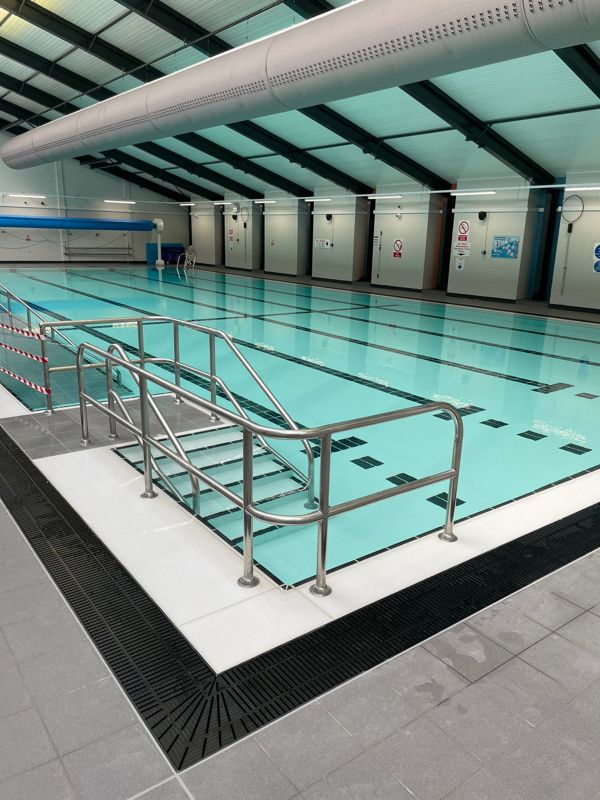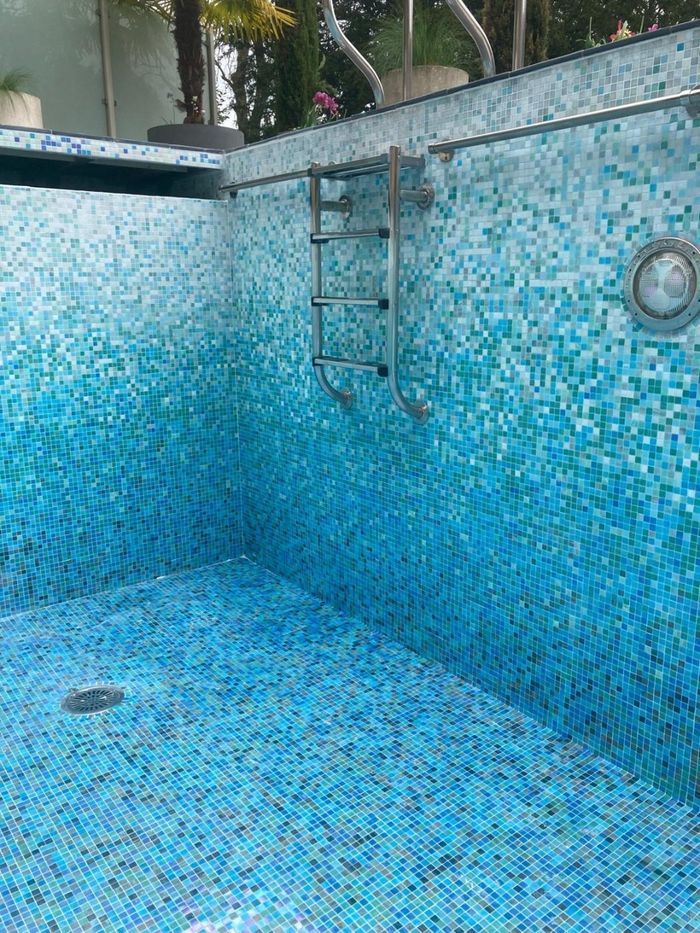
Use a grout the manufacturer states is suitable for swimming pools. At the pool edge, where coping and edge tiles take splashing, chemicals and heavy foot traffic, a pool-suitable epoxy grout is often the most durable choice. The joint where the coping meets the surround, and other movement joints, should be filled with a flexible pool sealant, not grout.
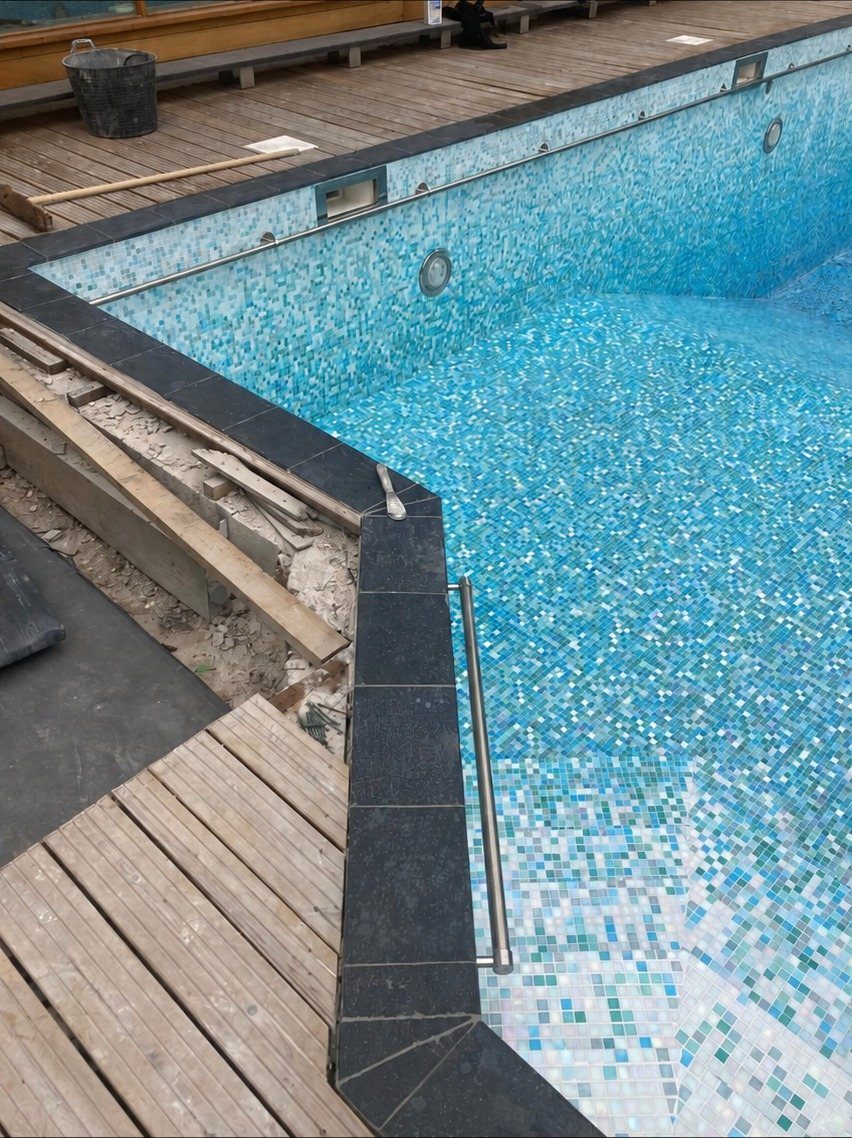
Why the pool edge is hard on grout
Coping and edge tiles sit at the waterline. They are splashed constantly, hold the most treated water as it evaporates, are grabbed by swimmers and walked on by everyone getting in and out.
That is why grout fails at the edge first in many pools. Missing or eroded grout here also lets water get behind the edge tiles, which can lead to loose or hollow tiles.
Choosing the grout
Whatever is used, it must be stated by the manufacturer as suitable for swimming pools. Epoxy grout is often used on edges in leisure centres and busy pools because it is much less porous, resists pool chemicals and lasts longer. It typically needs around seven days to cure before the pool can be refilled, depending on the product.
Many private pools can use a pool-suitable cement grout if the water balance is kept right, though it will need regrouting from time to time. Our guide to epoxy vs cement grout explains the trade-offs.
Grout or sealant? Know where each goes
Grout fills the joints between tiles. Movement joints are different: they allow the structure to move and should be filled with a flexible pool sealant.
A common place for a movement joint is where the pool shell meets the surround, often along the back of the coping. Filling that joint with rigid grout can lead to cracking and loose tiles as the pool and surround move at different rates. Follow the pool's design and the tile and adhesive makers' guidance on where movement joints go.
Where movement joints usually go
Movement joint positions depend on the pool's size, design and tiles, and the pool designer's details take priority where they exist. In our experience, joints are commonly placed at the centre of a wall, depending on its length, and then at intervals of around 6 to 7 metres, as well as at the corners and around the perimeter. Joints inside the pool follow the same principles, again depending on its size, design and tiles.
The pool surround is treated in the same way, and its joints are normally lined up with those in the pool. A joint is also usually formed either side of the channel grating, against its plastic edge.
One sealant we regularly use for pool movement joints is ARBOKOL 1025 SP from ARBO, a two-part sealant designed for swimming pool perimeter and compression joints. It must be fully cured before the pool is refilled, which takes around 48 hours at 20°C and longer in cooler conditions. Other suitable pool sealants are available, and we choose the product to suit each job.
Regrouting coping and edge tiles
When edge joints have worn, the old grout is removed to a good depth and the joints are cleaned out and vacuumed before new grout is worked in fully. Depending on the tiles, the old grout is either cut out carefully, so neighbouring tiles are not chipped, or removed with a suitable acid wash followed by a jet wash. An acid wash is generally suitable for porcelain and ceramic tiles, but not for natural stone, which acid can etch and damage.
It is a good time to tap-test the edge tiles too. Hollow or loose tiles are refixed with a pool-suitable adhesive before regrouting, otherwise new grout will just crack again.
Spotting problems early
Look along the edge for grout that is recessed, sandy, missing or cracked, and for tiles that sound hollow or move underfoot.
The same applies to movement joints. Check for sealant that has split, hardened, shrunk or come away from the tile edge, and for joints that have been filled with grout during an earlier repair.
Dealing with missing grout, failed sealant and the odd loose tile early is the most cost-effective way to look after a pool.
Common questions
What kind of grout is used on pool coping?
A grout the manufacturer states is suitable for swimming pools. Pool-suitable epoxy is often used at the edge of busy pools because it is less porous and lasts longer.
Should the joint behind pool coping be grouted?
Often not. Where the coping meets the surround there is usually a movement joint, which should be filled with a flexible pool sealant rather than rigid grout. Follow the pool's design.
How long does pool grout take to cure before refilling?
Epoxy grout typically needs around seven days to cure before the pool is refilled, although this varies by product. Always follow the manufacturer's instructions.
Why is the grout around my pool edge falling out?
The edge takes the most splashing, chemicals and wear, and grout fails there first. Unbalanced water, the wrong grout or hollow tiles underneath can all speed it up.
Sources and further guidance
- PWTAG Code of Practice
- ARBOKOL 1025 SP product information (ARBO)
- ARBOKOL 1025 SP listing (NBS Source)
This guide is general information, not legal, health or safety advice for a specific site. Pool operators should follow current official guidance and take advice from competent specialists.