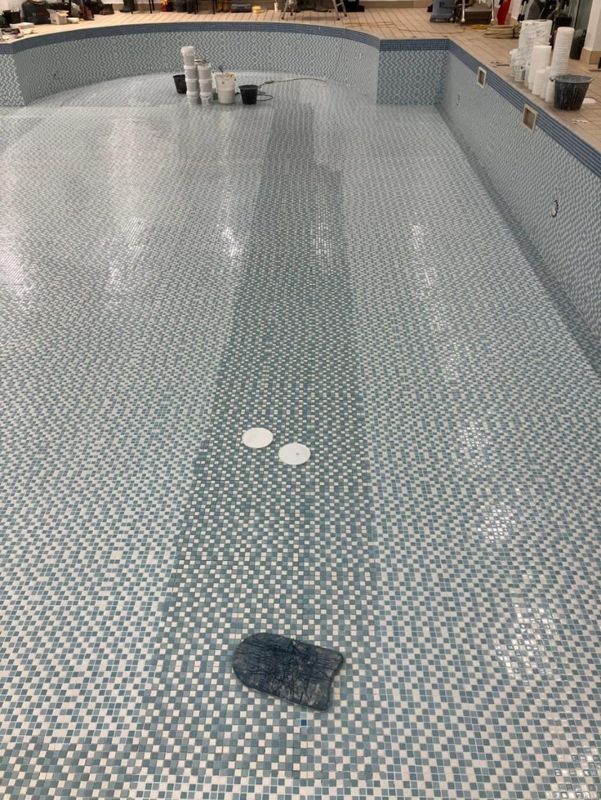
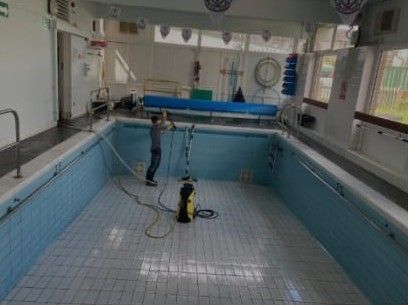
HSE guidance HSG282 covers the control of legionella and other infectious agents in spa-pool systems. HSE describes these systems as a recognised source of disease, and the guidance helps managers and operators assess and control the risk. Water treatment and legionella risk assessment are specialist work, but clean, intact tiled surfaces and seating support the control regime.
Why spa pools get particular attention
HSE explains that people catch Legionnaires' disease by breathing in small droplets of water, or aerosols, containing the bacteria. It also notes that water between 20 and 45 degrees Celsius is suitable for legionella growth, and that deposits such as scale, sludge, organic matter and biofilms can provide nutrients.
Spa pools tend to bring these factors together: warm water, air jets that create aerosols, and a high bather load in a small volume of water. HSE has separate guidance for them.
What HSG282 covers
HSG282, Control of legionella and other infectious agents in spa-pool systems, is HSE's guidance on managing these risks. HSE says it gives information on design, commissioning, operation and maintenance, on testing and monitoring water quality, and on the quality and frequency of inspections.
It is aimed mainly at those who manage or operate spa pools, and also at suppliers, designers, manufacturers and installers. It covers domestic-type hot tubs used as part of a business, for example in holiday-park rental units, hotel bedrooms with a dedicated spa, and systems on display at exhibitions. Operators should read the guidance itself and take specialist advice on how it applies to their system.
Operator responsibilities
HSE says the guidance is there to help managers and operators assess and control the risk of exposure, and to help suppliers, designers, manufacturers and installers meet their own legal duties. Operators commonly bring in a competent specialist to carry out the legionella risk assessment and advise on the control scheme.
PoolRevive does not carry out legionella risk assessments, water testing, chemical dosing or disinfection. Those belong to the operator and their specialists. Our part is the tiled surfaces of the spa and its surroundings.
Why surfaces and seating matter
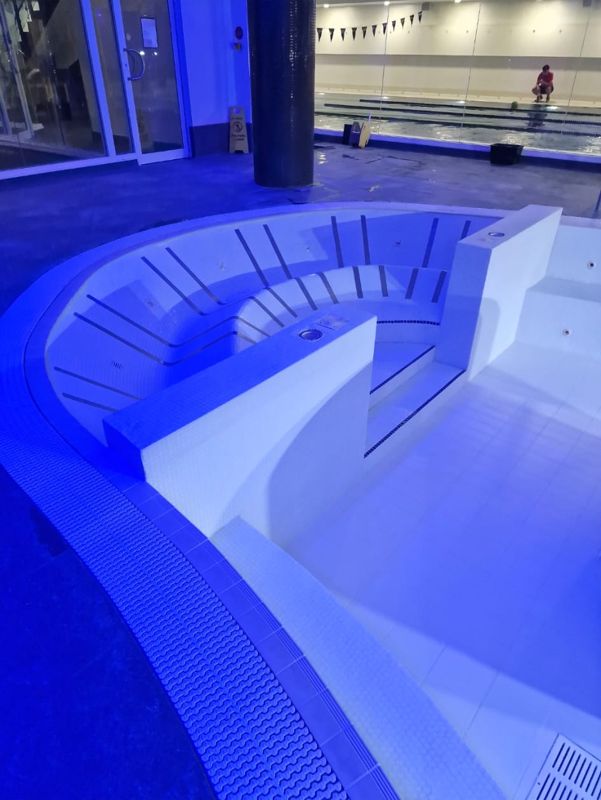
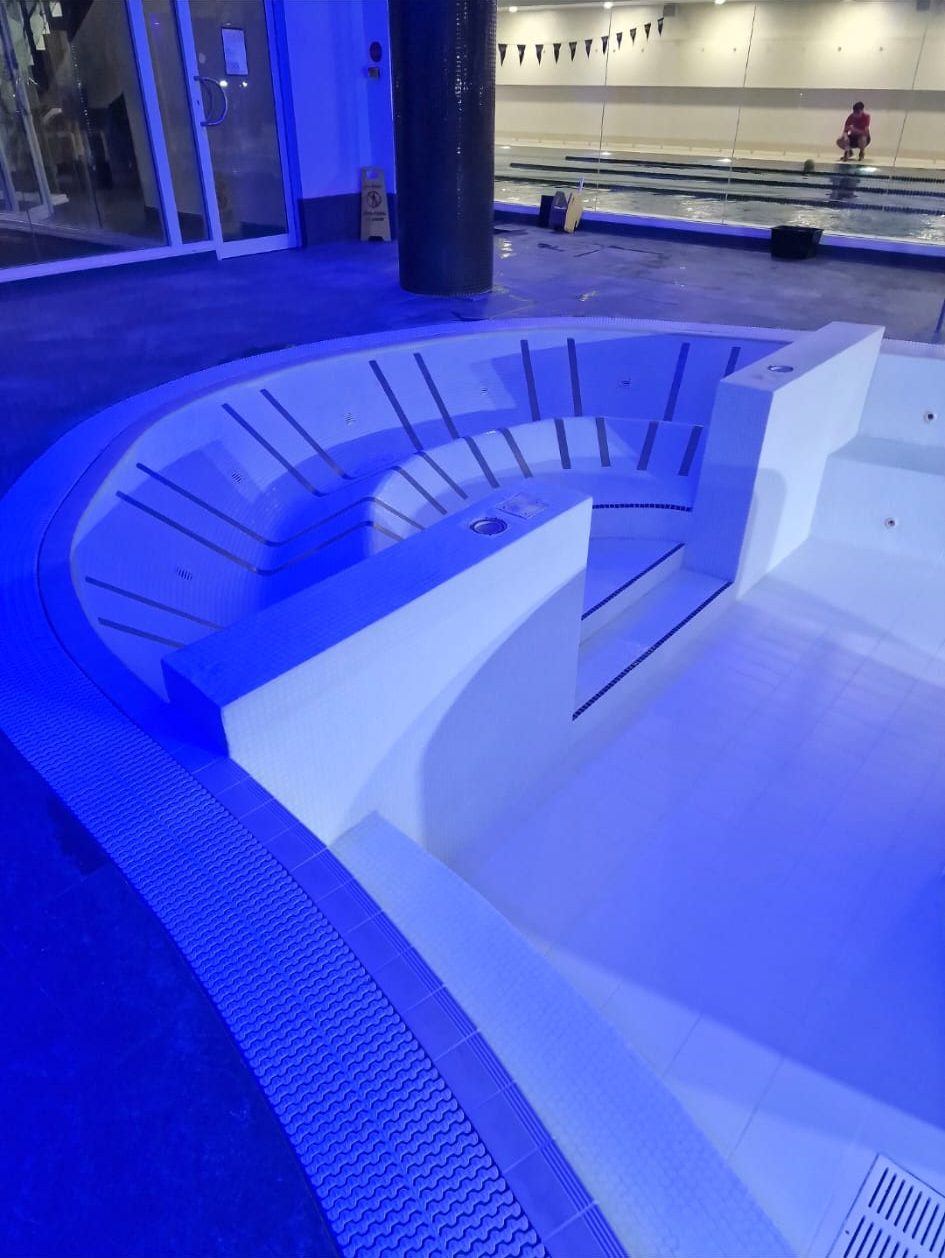
HSE lists scale, sludge, organic matter and biofilms among the deposits that can feed bacterial growth, so the condition of surfaces in contact with spa water is part of the picture. Tiled seats, benches, steps and the area around jets and grilles can collect scale and biofilm, especially where grout has eroded or tiles have cracked.
Surfaces need to be accessible and in a condition that can actually be cleaned. Open joints, hollow tiles, rough scale and awkward recesses all make that harder. When the operator's specialist sets a cleaning regime, the finish needs to be able to support it.
- Tiled seating and bench edges
- Step treads and nosings
- Around jets, grilles, lights and fittings
- The waterline and any overflow or channel
- Surrounding floors and drainage gratings
Cleaning tiled spa surfaces
Spa surfaces are often small, curved and detailed, with mosaic, tight radii and many fittings. Cleaning products need to be compatible with the tile, the grout and the spa's fittings, and suitable for use in a system that will be refilled and treated afterwards. We assess the contamination, try a test area and follow manufacturers' instructions.
Thorough rinsing and extraction of residue matters, because cleaning chemicals left behind can affect the water when the spa is refilled. Refill and return to service follow the operator's requirements and the product instructions.
Repairs and regrouting in spas
Where grout has eroded or tiles have cracked, local repairs or regrouting can restore a surface that is easier to clean. Repairs in spas need care: warm water, frequent draining and constant use can be demanding, so materials are chosen for the conditions and cure times are respected.
Movement joints get a flexible sealant, not grout. Where tiles are loose, regrouting alone is not enough, and the bedding and background need assessing.
Questions to ask before work starts
A short conversation before work begins saves problems at refill. These are useful points to agree with your tiling contractor and your water treatment specialist together.
- Which cleaning products will be used, and are they compatible with the spa's fittings?
- How will residue be rinsed and removed before refill?
- What cure time do the repair and grout products need?
- Who decides when the system is ready to return to use?
- What records will be passed on for the operator's files?
Planning work around the control regime
Spa refurbishment usually fits around the operator's existing draining and cleaning routine. Tell the contractor what your control scheme requires on refill, disinfection and testing, and let your specialist confirm when the system is ready to return to use. Our programme carries the full cure time before the spa is refilled.
Common questions
Do you carry out legionella risk assessments?
No. Legionella risk assessment, water testing and disinfection are for the operator and their competent specialists. We clean, repair and regrout the tiled surfaces of spas and pools.
Does HSG282 apply to hot tubs in holiday lets?
HSE says HSG282 includes advice for businesses using domestic-type hot tubs, such as in holiday-park rental units and hotel bedrooms. Owners should read the guidance and take advice on how it applies to them.
Why does grout condition matter in a spa?
HSE lists biofilm and deposits such as scale as a source of nutrients for legionella. Eroded grout and cracked tiles make surfaces harder to clean, so keeping them in good repair supports the cleaning regime set by the operator.
Are tiled spas harder to keep clean than acrylic hot tubs?
Tiled spas have grout joints and often more detail, so their condition matters. Well maintained tiles and sound joints can be cleaned effectively. Eroded grout or cracked tiles make cleaning harder and are worth repairing.
Sources and further guidance
- HSE: HSG282 Control of legionella and other infectious agents in spa-pool systems
- HSE: Spa-pool systems
- HSE: What is Legionnaires' disease
This guide is general information, not legal, health or safety advice for a specific site. Pool operators should follow current official guidance and take advice from competent specialists.