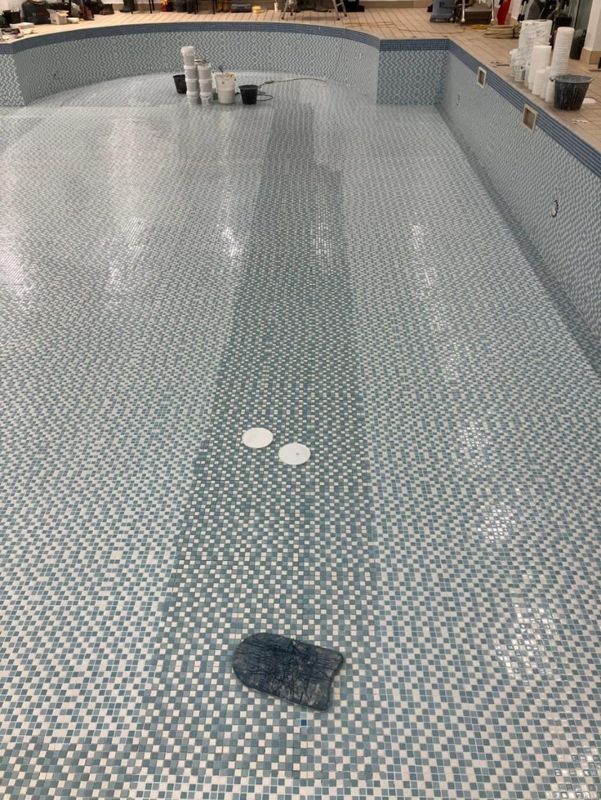
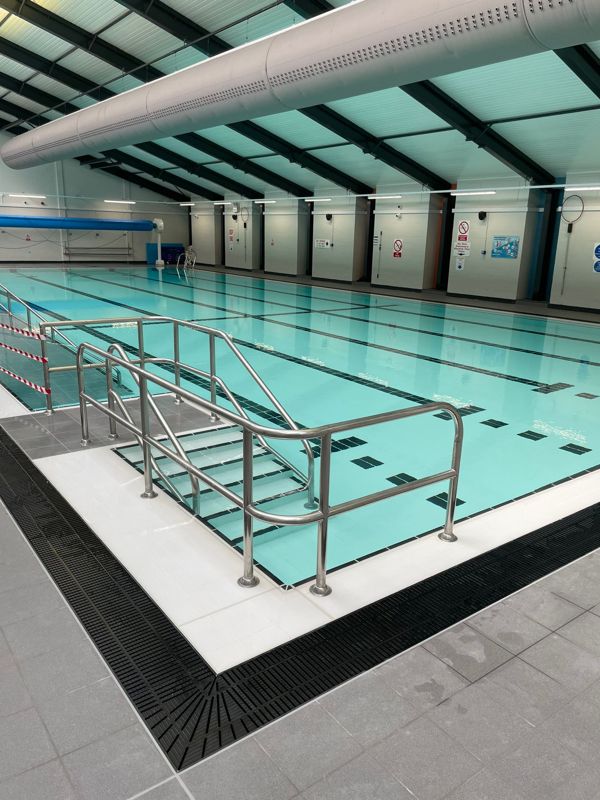
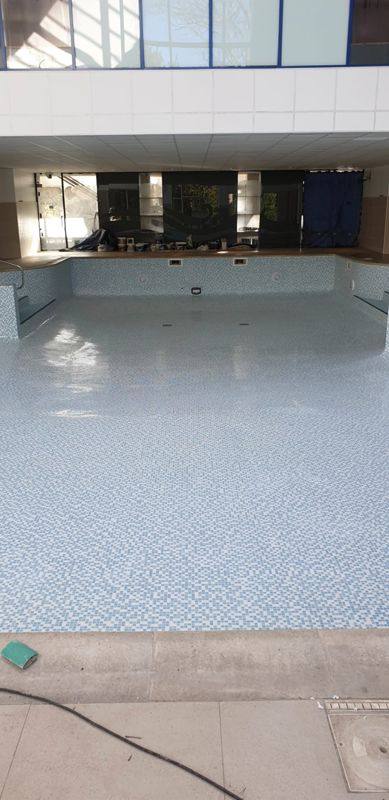
Pool halls are naturally humid, and when warm moist air meets cooler surfaces it condenses. On tiled walls, ceilings and window reveals that can lead to streaking, staining, mould on grout and sealant, and drips onto poolside floors. Ventilation and air handling are for HVAC specialists, but regular cleaning and sound grout and sealant help tiled surfaces cope.
Why pool halls are humid
A heated pool constantly gives off moisture into the air. Swimmers, splashing and wet poolsides add more. Pool halls rely on ventilation and air handling systems to manage this, and PWTAG's list of typical pool problems includes chlorinous smells with high air humidity. It puts that down to ineffective air circulation in the pool hall and points to checks on air handling, dampers, filters, automatic controls and fresh air.
When warm, moist air meets a surface that is cooler than its dew point, water condenses on it. In pool halls that often happens on external walls, windows, cold bridges and in corners where air movement is poor.
What condensation does to tiled surfaces
Glazed tiles themselves usually cope well with moisture. The problems tend to appear in the joints, in sealant and on adjoining finishes.
- Black mould spots on grout and silicone sealant
- Streaks and tide marks running down tiled walls
- Staining around windows and wall to ceiling junctions
- Drips falling onto poolside floors, adding to wet areas
- Discoloured or deteriorating movement joint sealant
- Damage to non-tiled finishes next to the tiling
Ventilation is a specialist matter
The design, settings and maintenance of pool hall ventilation are for the operator's HVAC or building services specialist. Changes to air temperature, humidity targets or fresh air rates affect energy use, comfort and the building fabric, so they should not be adjusted by guesswork.
PoolRevive does not design or service ventilation. If we see signs of persistent condensation while working in a pool hall, we will mention it so the operator can raise it with the right specialist.
Signs to note for your specialists
Operators can help their HVAC specialist by recording what they see. Notes and photos over a few weeks are more useful than a single observation.
- Where condensation forms and at what times of day
- Areas where mould returns soon after cleaning
- Drip points over walkways or seating
- Persistent chlorinous smells in parts of the hall
- Damage to finishes near windows or external walls
Cleaning mould and staining
Mould on grout and sealant can usually be cleaned with suitable products, used to the manufacturer's instructions. Test a small area first, because some products can bleach or damage grout colour and sealants. Work with good ventilation and follow the safety data sheet, especially at height or in enclosed areas.
If mould comes back quickly in the same place, cleaning is only treating the symptom and the conditions there need looking at.
Grout and sealant condition
Porous or eroded grout absorbs moisture and gives mould a foothold. Sound, well finished joints are easier to clean and less likely to hold staining. Where grout above the waterline has failed, regrouting can make walls easier to maintain, provided the tiles are well bonded.
Movement joints, including the joints at wall to floor and wall to ceiling junctions, take a suitable flexible sealant, not grout. Sealant that is heavily stained or has lost adhesion can be removed and renewed as part of a refurbishment.
Drips and slips
Condensation dripping from ceilings, beams or windows can create wet patches in places that are otherwise drier, such as walkways and seating areas. Combined with contamination, that can affect slip risk. Operators may want to note persistent drip points in their risk assessment and cleaning schedule while the cause is investigated.
Where drips land on the pool surround, the extra water also carries dust and residue from overhead surfaces, so those spots may need more frequent cleaning than the rest of the poolside.
Changing rooms and adjoining areas
Changing rooms and showers next to a pool hall share many of the same issues: warm, humid air, wet floors and tiled walls. Mould on grout and sealant, slippery floors from soap residue and failed joints are common. The same approach applies: clean regularly with suitable products, repair failed grout and sealant, and ask specialists to look at ventilation.
We carry out changing room and wet room tiling, regrouting and pool hall tiling repairs as well as work in the pool itself.
Common questions
Can regrouting stop mould on pool hall walls?
Regrouting can replace porous or failed joints with sound ones that are easier to clean, which helps. It does not change the humidity or condensation that allows mould to grow, which needs attention from a ventilation specialist.
Why are our pool hall windows always wet?
Windows are often among the coldest surfaces in a pool hall, so condensation forms there first. Whether the level is a concern is for the operator's HVAC specialist to judge.
Is black mould on silicone a tiling problem?
It is partly a cleaning and maintenance issue and partly a sign of humid conditions. Heavily stained sealant can be removed and replaced with a suitable flexible sealant, while the conditions are investigated separately.
Can you work in the pool hall while it is open?
Some wall and sealant work above the waterline can be carried out in closed sections or outside opening hours, depending on the products and the operator's arrangements. We agree working areas and access in advance.
Sources and further guidance
This guide is general information, not legal, health or safety advice for a specific site. Pool operators should follow current official guidance and take advice from competent specialists.